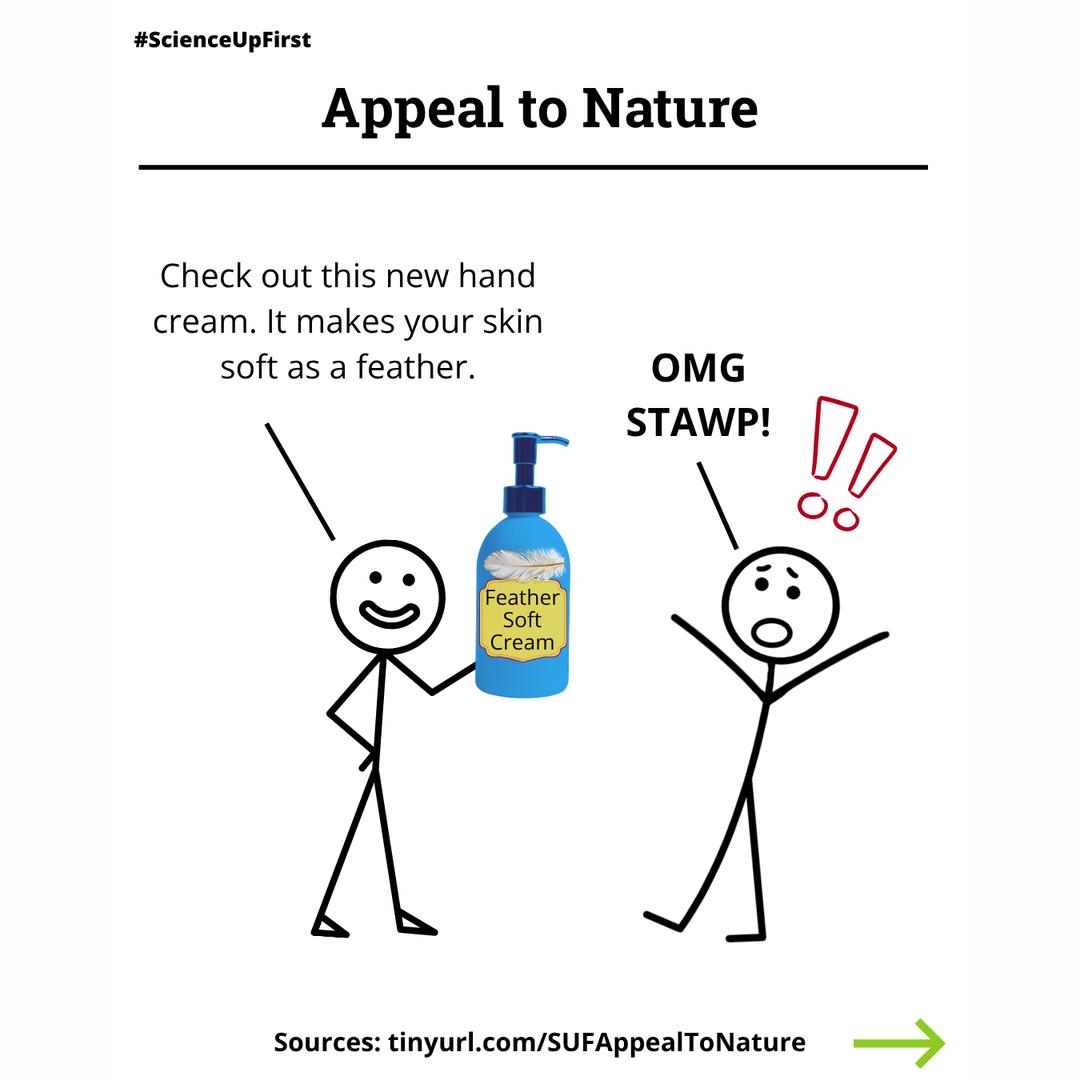
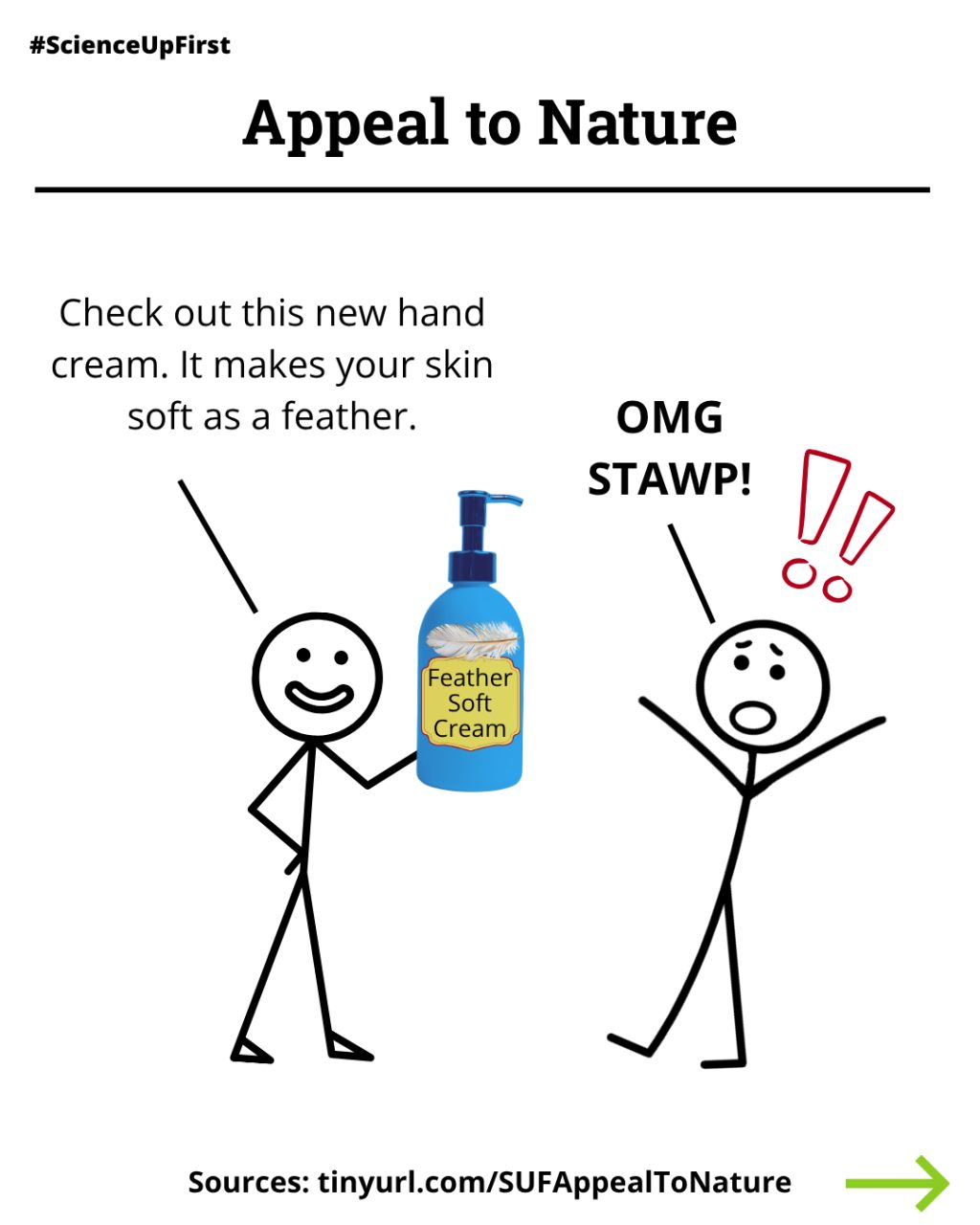
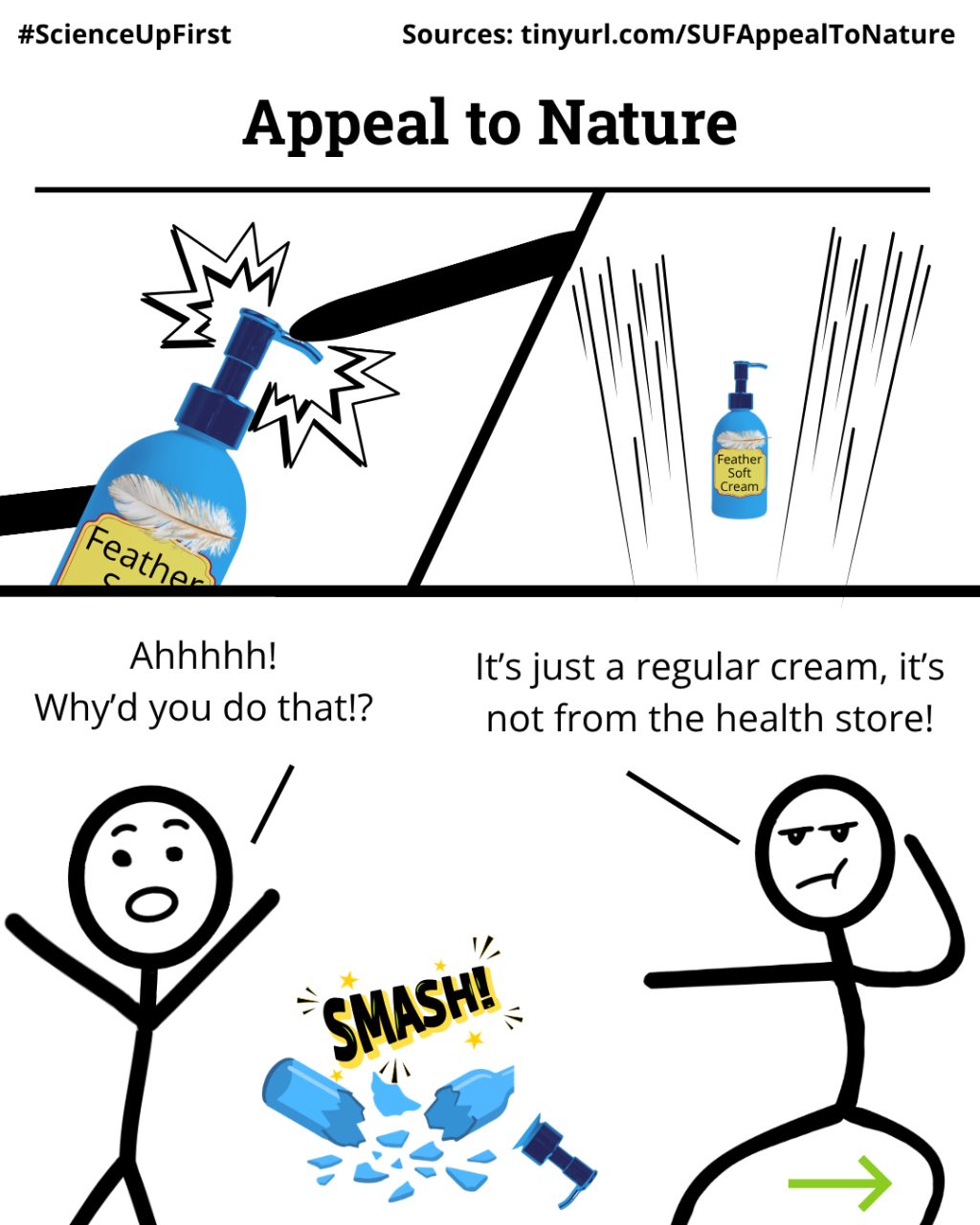
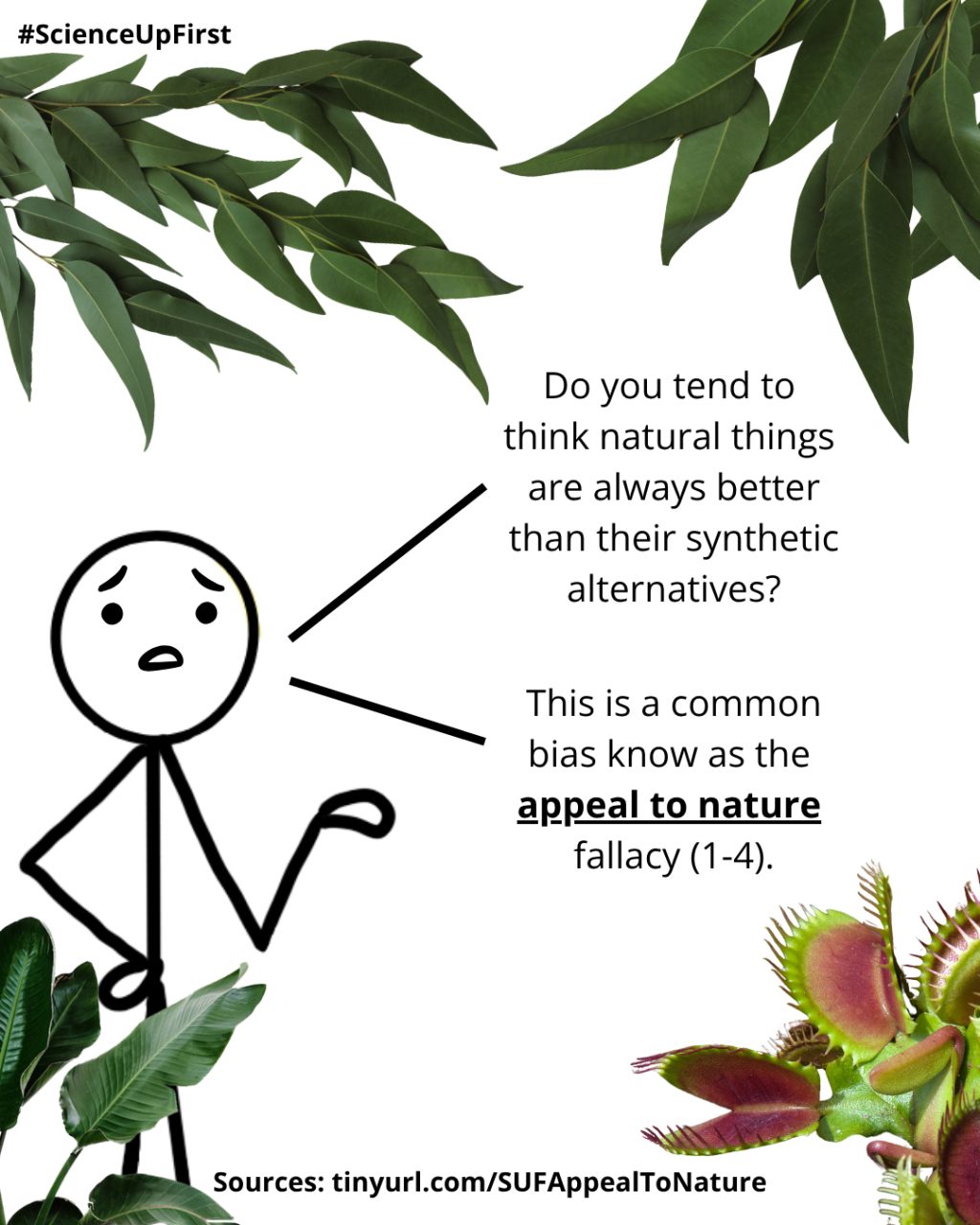
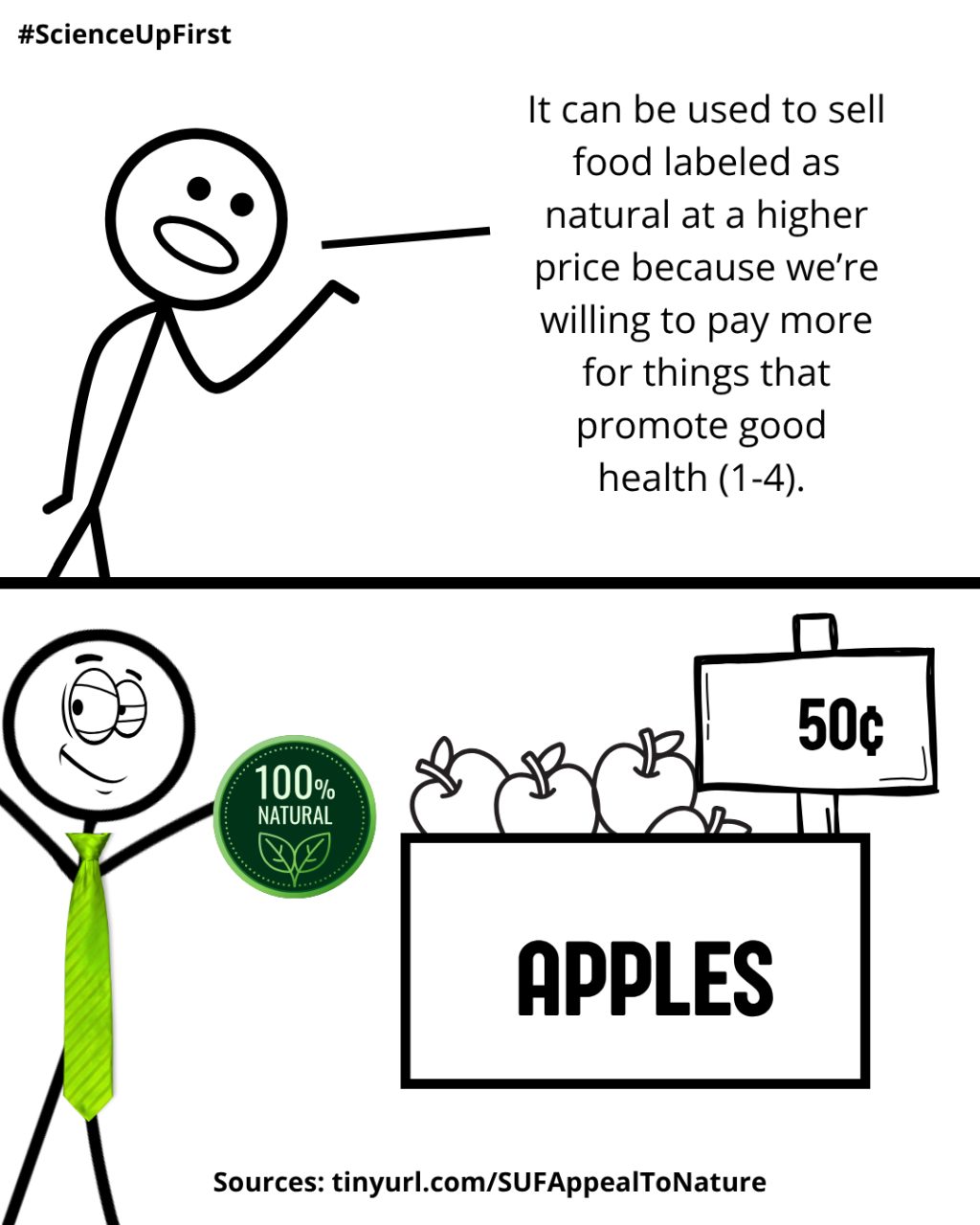
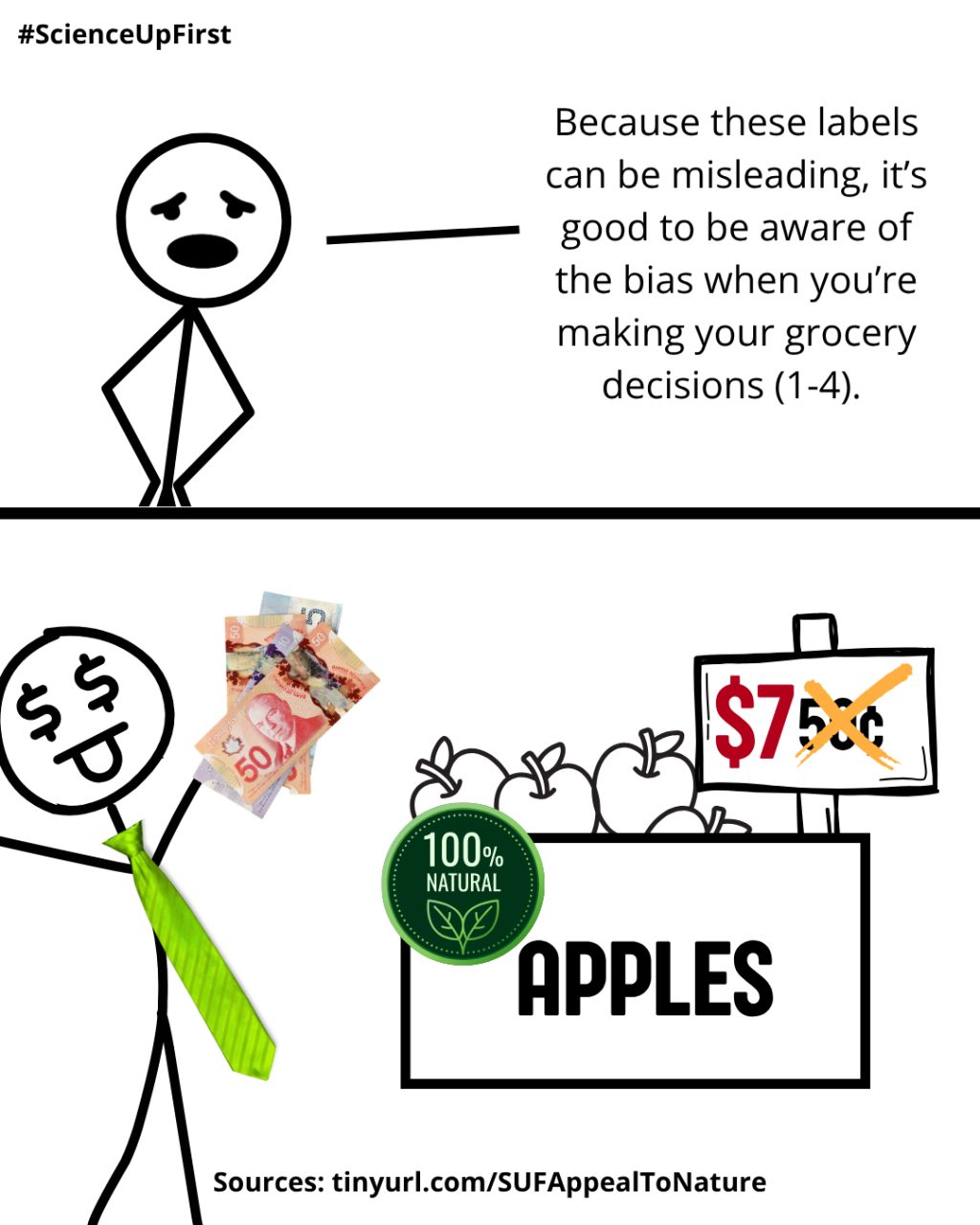
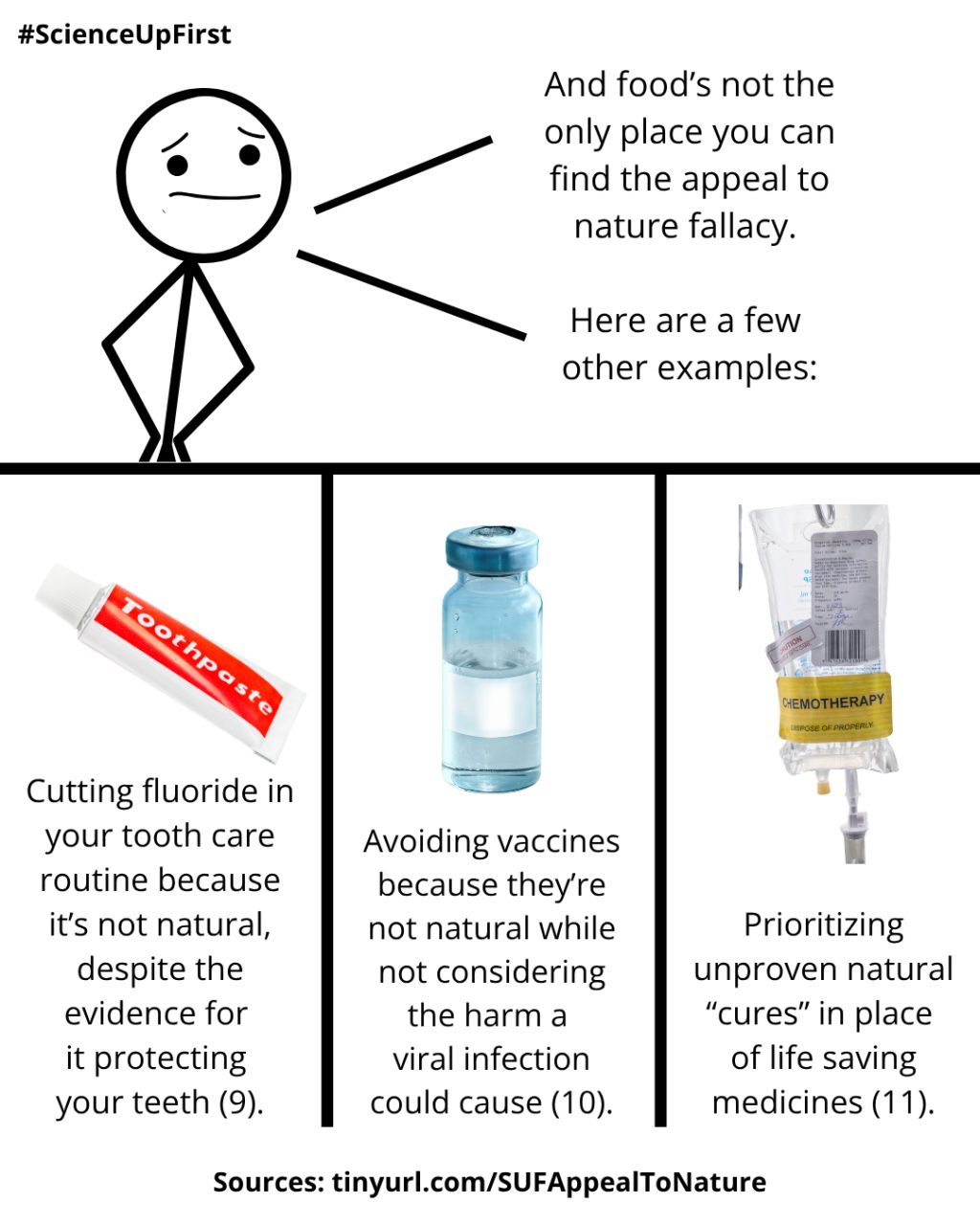
It’s human to have a bias towards nature, whether the reason is concern for our health or concern for the environment. That’s the appeal to nature fallacy.
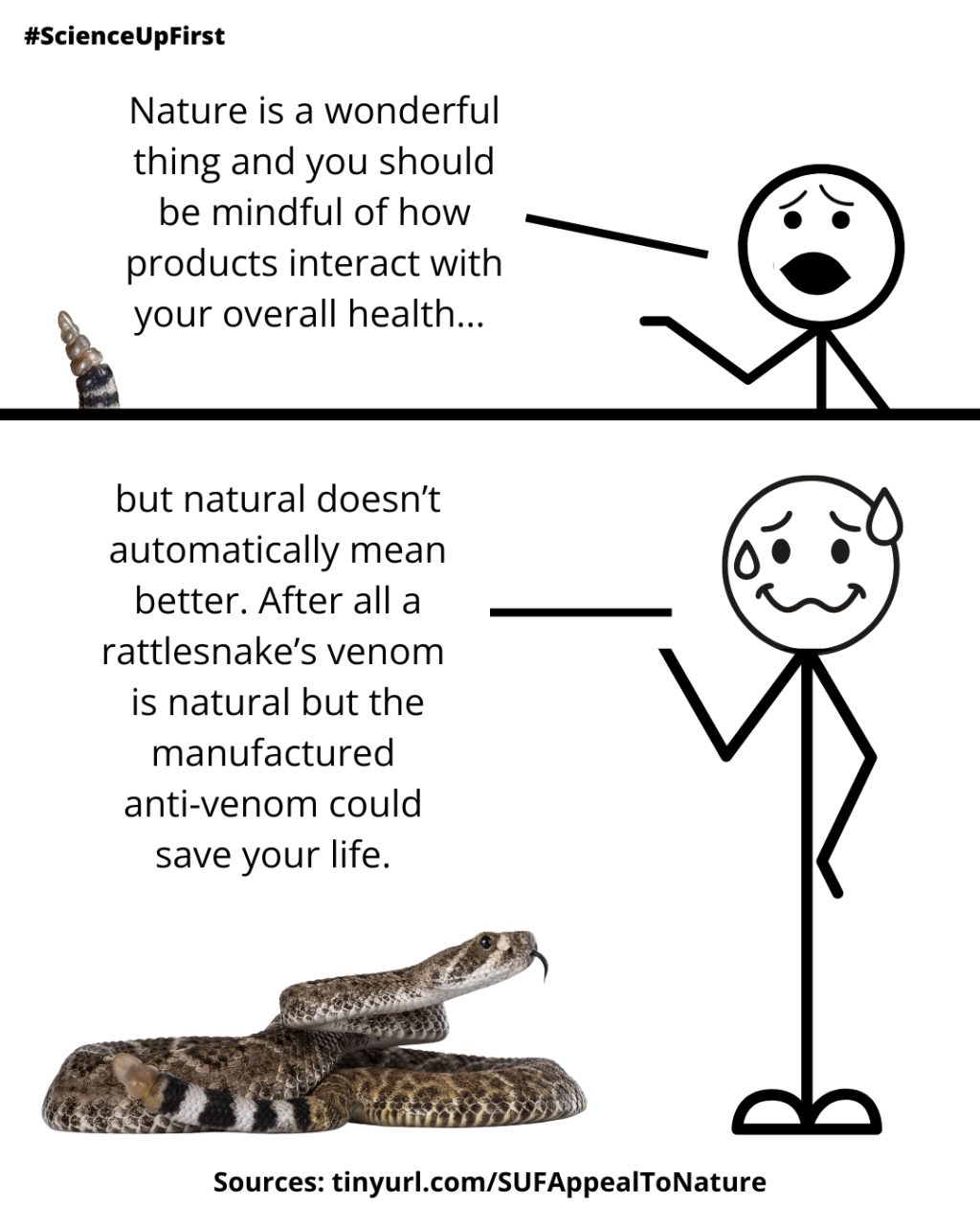
While nature is a wonderful thing not everything natural is good for us (arsenic, earthquakes, venom) and synthetic medications can offer life saving benefits.
The next time you find yourself reaching for something because it’s natural ask yourself if it’s really superior to it’s synthetic alternative or if it’s the bias at work (1-4).
What’s your favourite example of the bias at work? Let us know!
Sources
- “Natural Is Better”: How the Appeal To Nature Fallacy Derails Public Health | Behavioral Scientist | March 2021
- Appeal to Nature — Critical Thinking | Intelligent Speculation | April 2019
- Importance of perceived naturalness for acceptance of food additives and cultured meat | Appetite | June 2017
- Naturally better? A review of the natural‐is‐better bias | Social and Personality Psychology Compass | July 2019
- Should you worry about fluoride in the water? | ScienceUpFirst | October 2024
- Natural immunity is NOT better than vaccines | ScienceUpFirst | October 2021
- Natural Cancer ‘Cures’: What Are the Risks? | Yale Medicine | July 2019
- Consumers’ willingness to pay for natural food: evidence from an artefactual field experiment | Agricultural and Food Economics | Published November 21, 2018
- Should you worry about fluoride in the water? | ScienceUpFirst | October 2024
- Natural immunity is NOT better than vaccines | ScienceUpFirst | October 2021
- Natural Cancer ‘Cures’: What Are the Risks? | Yale Medicine | July 2019
Share our original Bluesky Post!
View our original Instagram Post!