
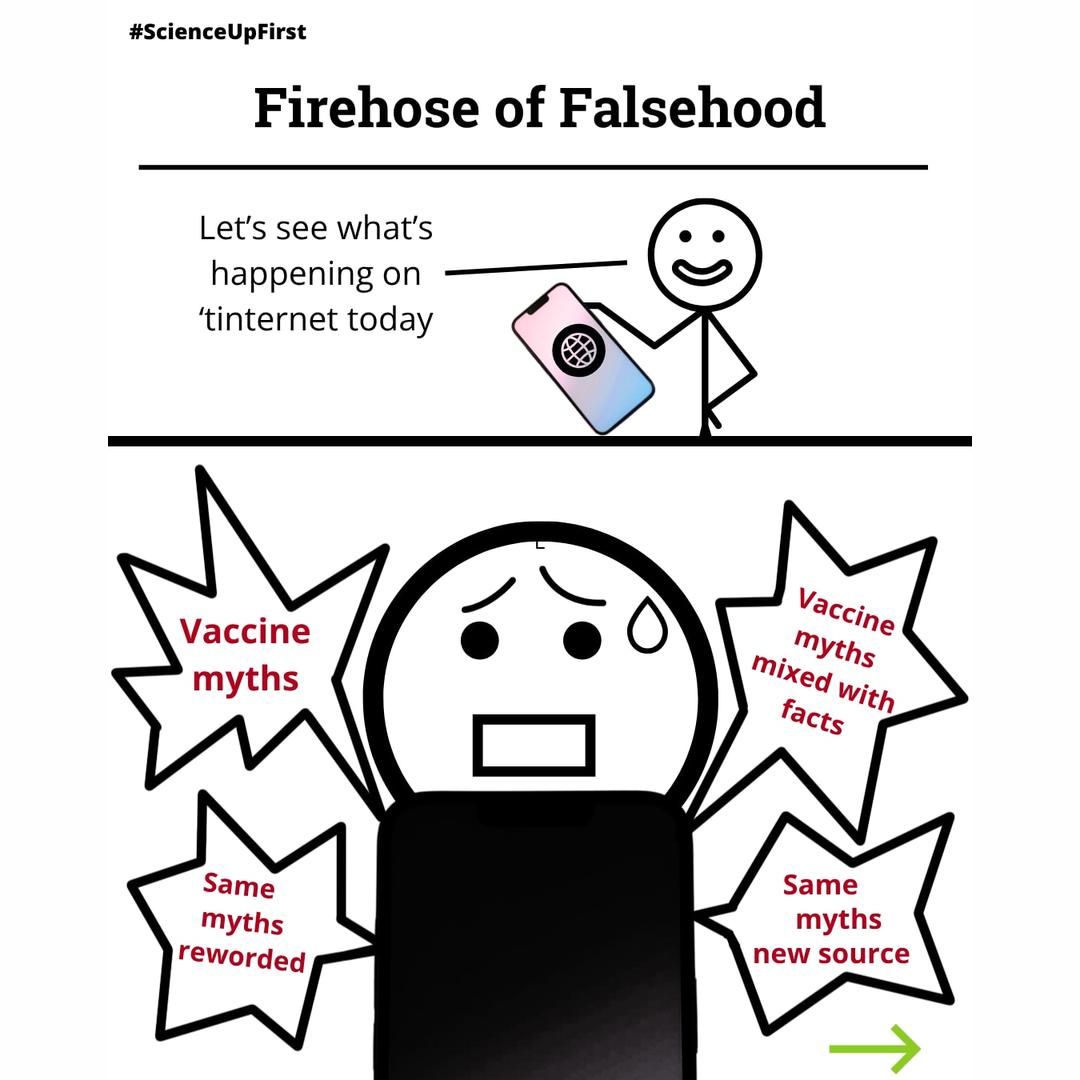
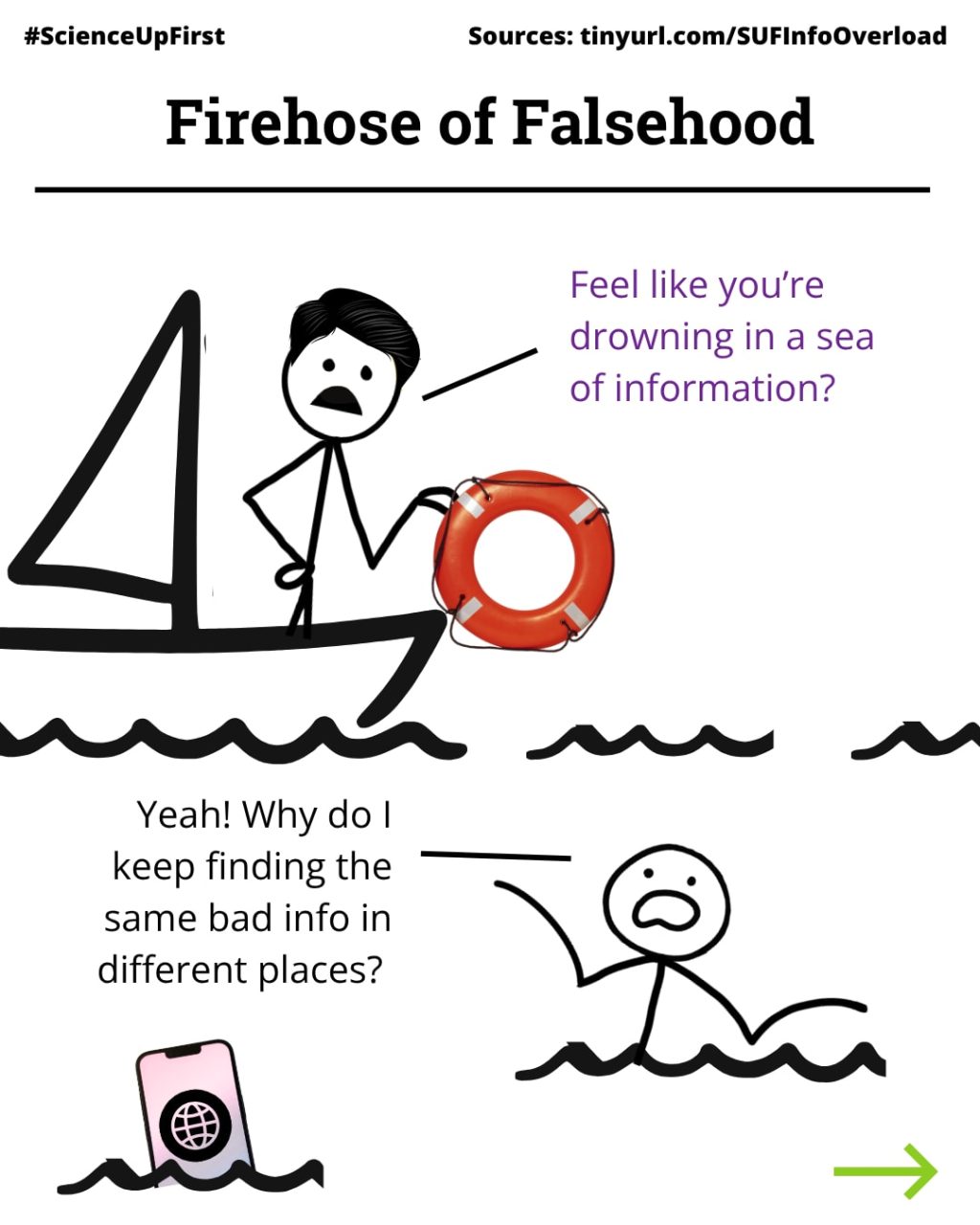
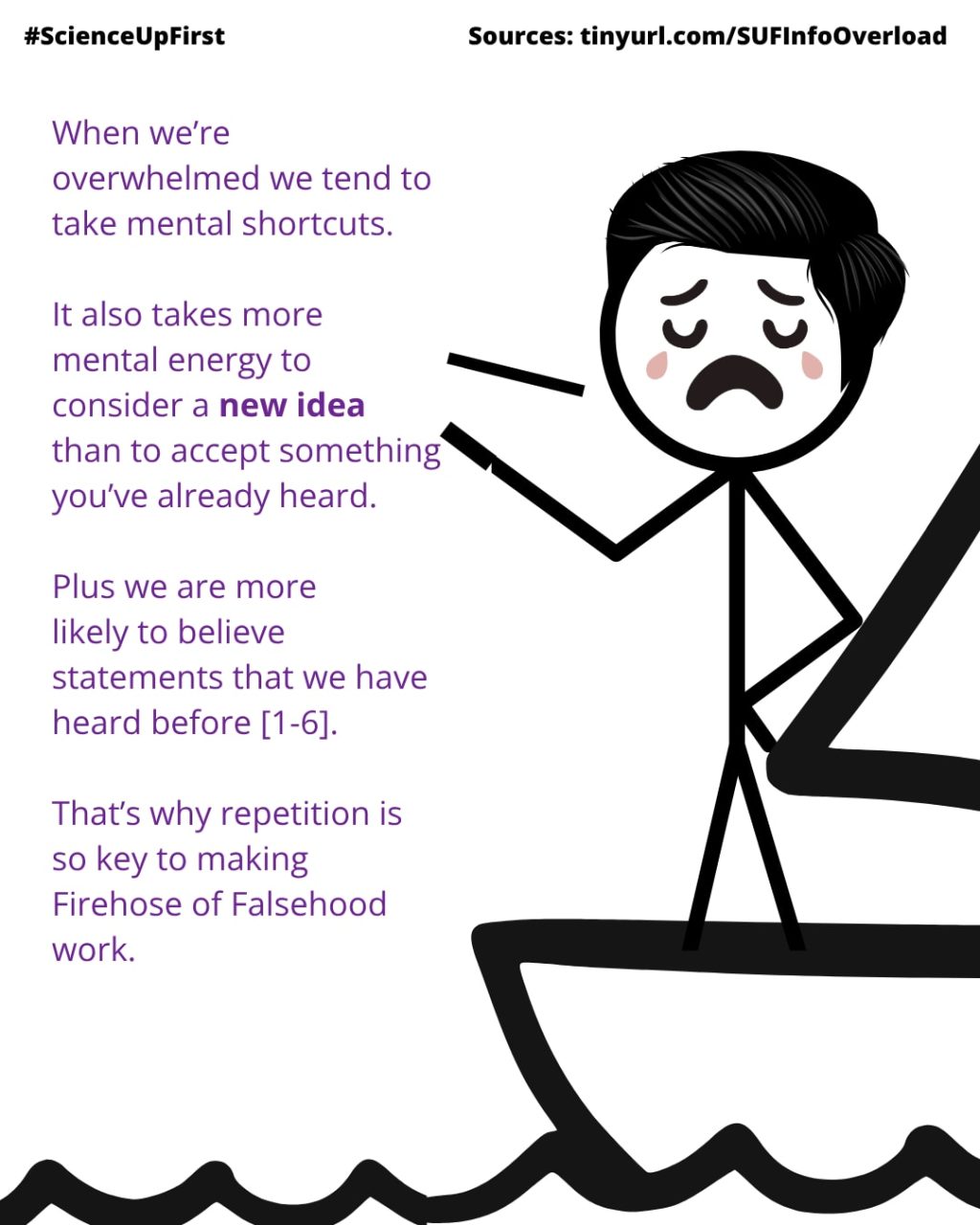
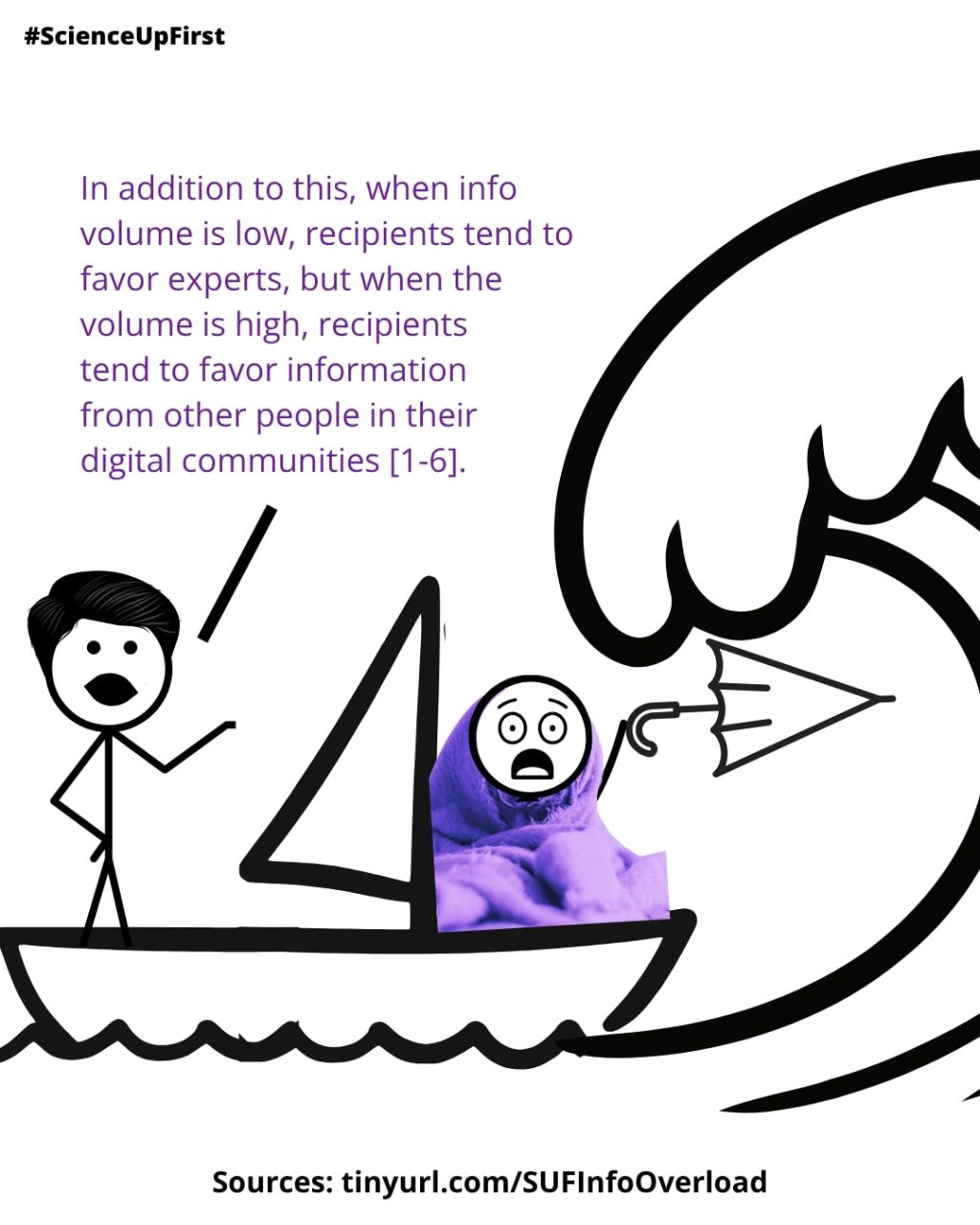
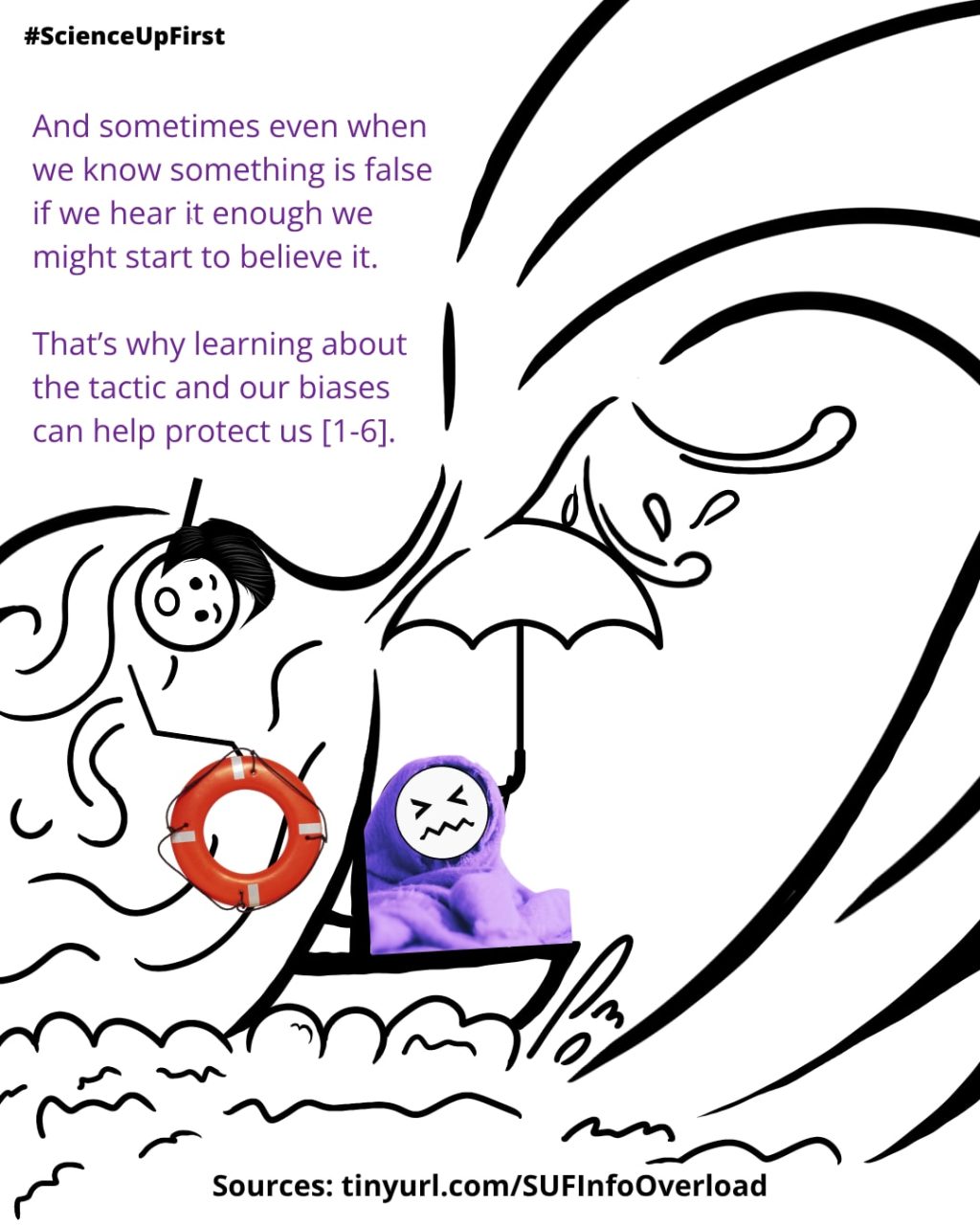
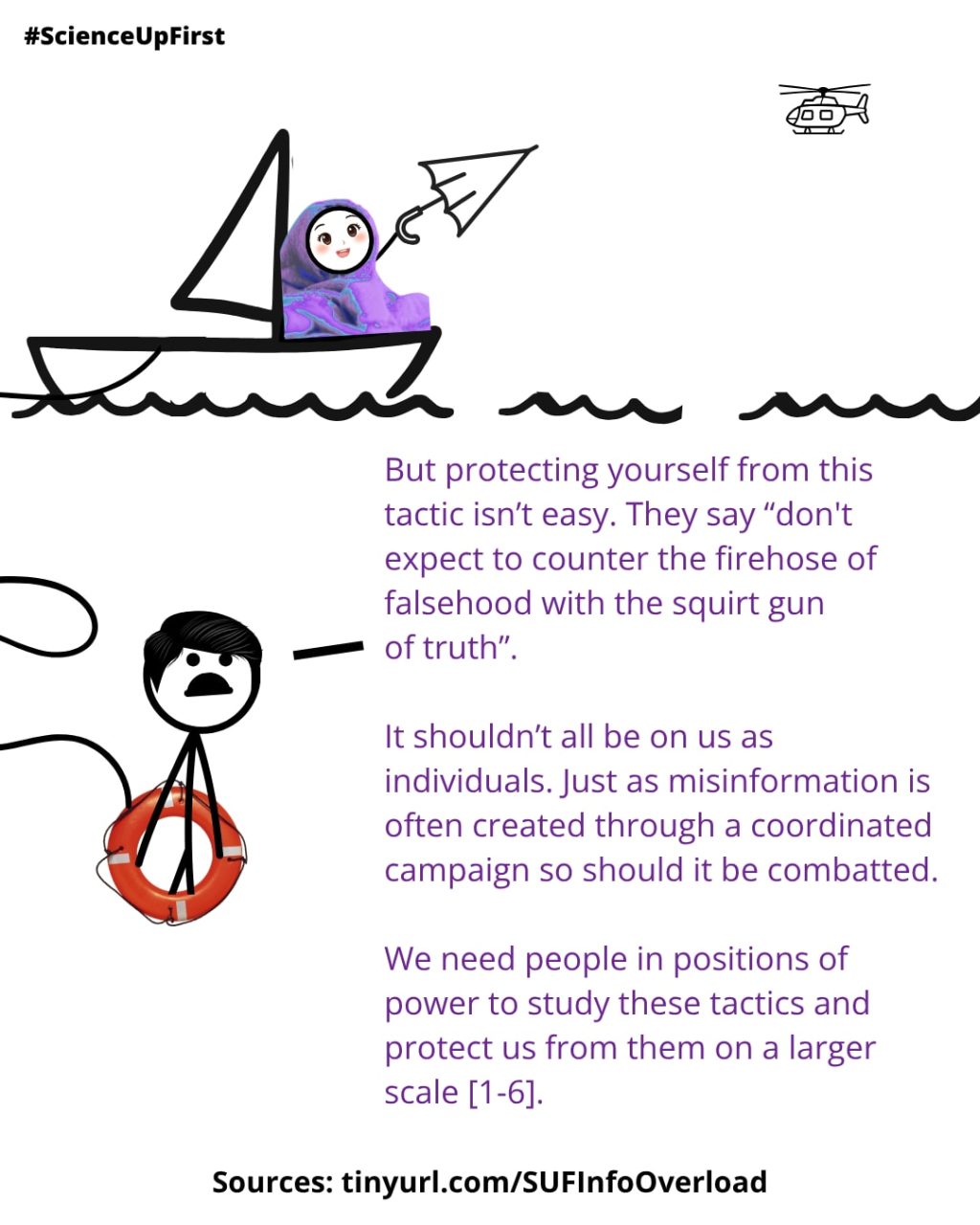
Do you ever feel overwhelmed by the wild amount of information we deal with online?
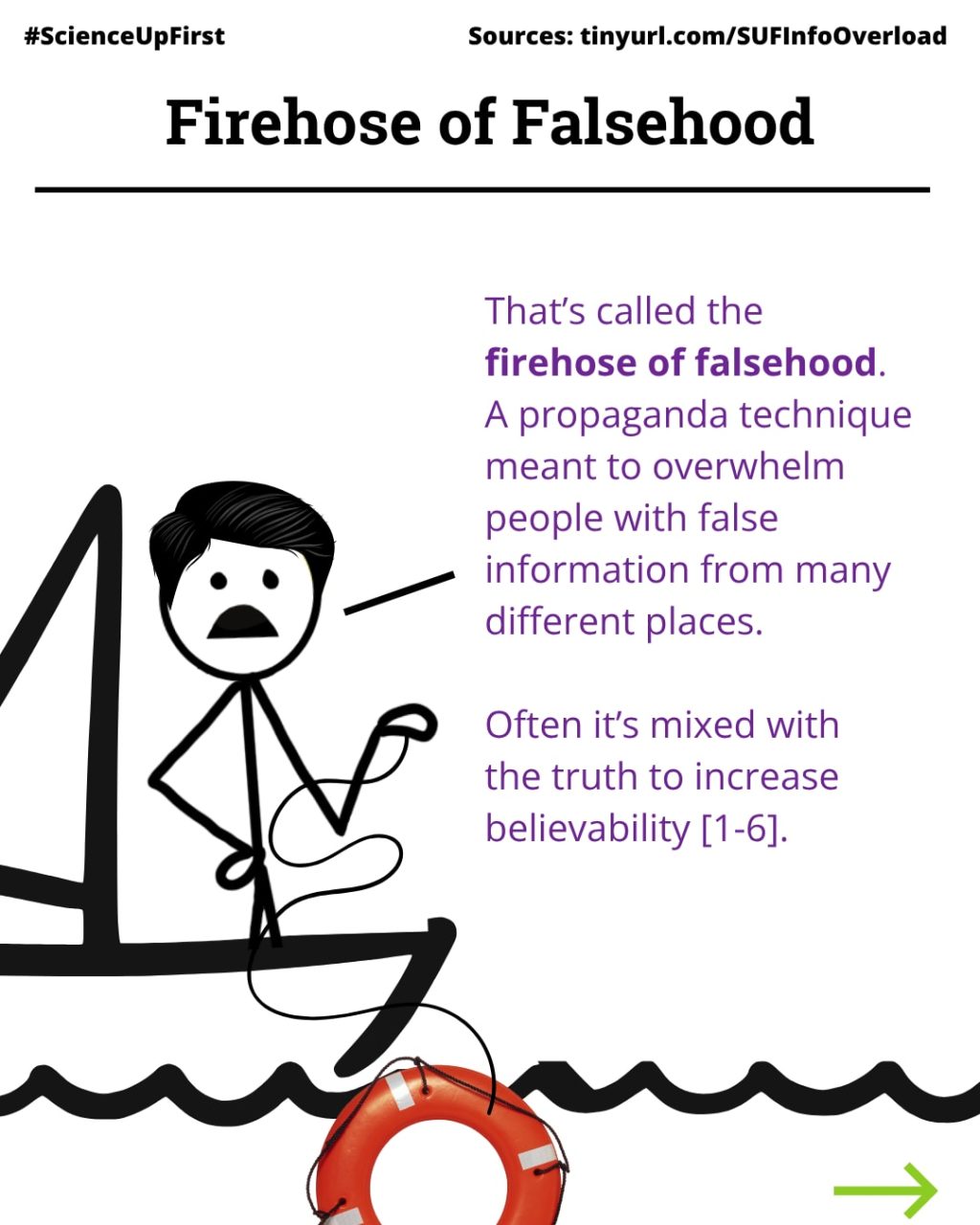
The Firehose of Falsehood capitalizes on this overwhelm to insert lots of false and half-true information into the mix.
Are you hesitant to share things online in case they’re false? If you want to be more confident in finding good information online check out our website, we’ve got all sorts of tools for you!
Sources
- The Russian “Firehose of Falsehood” Propaganda Model | Rand Corporation | Published 2016
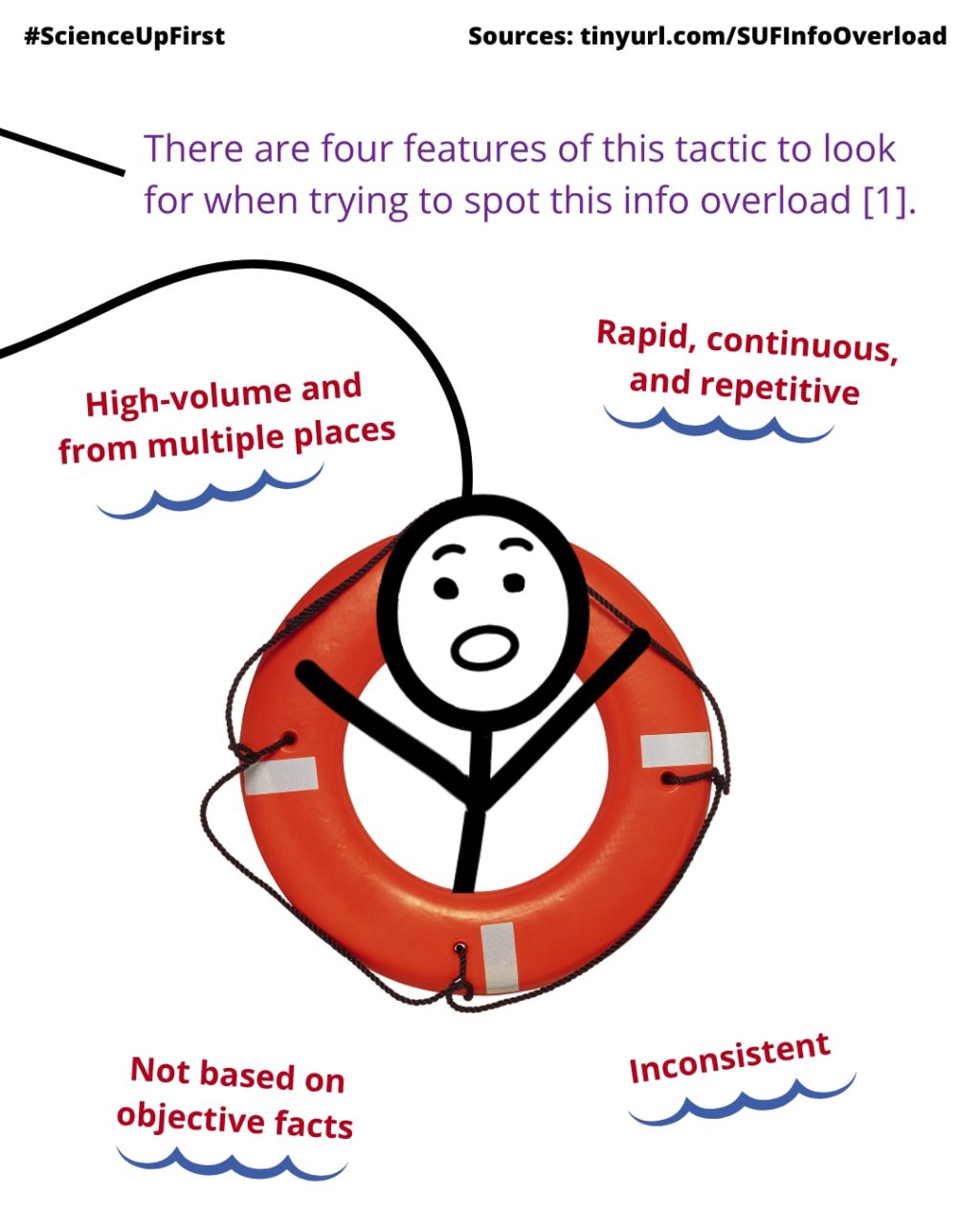
- Firehose of falsehood, or firehosing, is a propaganda technique that aims to confuse and overwhelm the audience with continuous, rapid and repetitive messaging over multiple platforms. The messaging is often false, or composed of half truths and lacks consistency and objectivity.
- This tactic is used by the Russian president Vladimir Putin.
- When you see something being shared by multiple sources, you are more likely to think it is true.
- The best way to counter-attack firehosing is to share evidence-based information instead of getting into comment wars refuting misinformation.
- ‘Firehose of falsehood:’ How Trump is trying to confuse the public about the election outcome | CNN Business | November 30, 2020
- This tactic is used by the former U.S. president Donald Trump.
- Firehosing: the systemic strategy that anti-vaxxers are using to spread misinformation | The Guardian | Posted November 7, 2019
- This tactic is used by anti-vaccine groups to spread misinformation about vaccines.
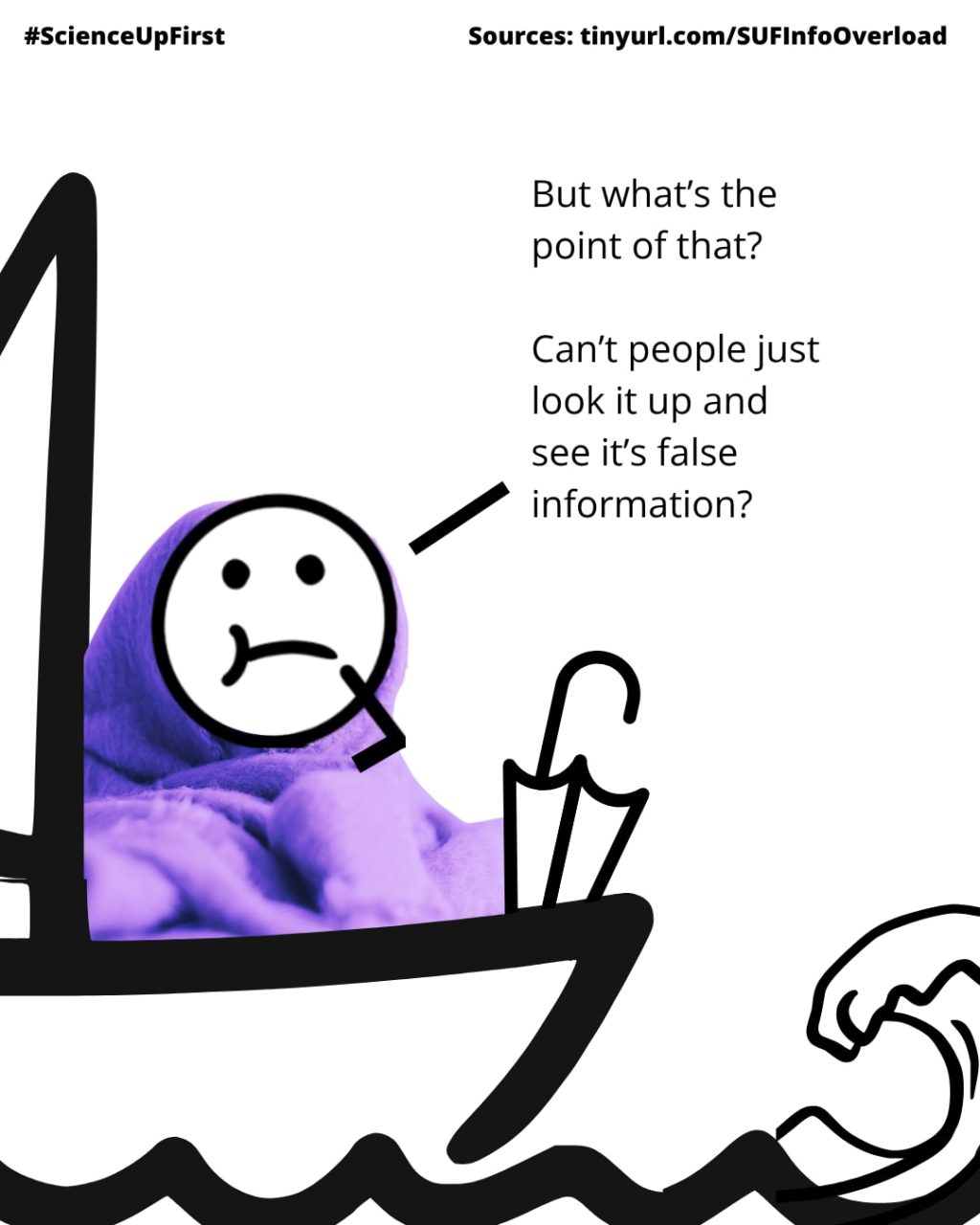
- With firehosing, the lies don’t even have to be believable because the goal is not to persuade, but to bombard people with so much information they become too overwhelmed to fact check everything.
- The best way to counter-attack firehosing is to be aware of the tactic.
- The best way to counter-attack firehosing is to keep reporting false content to disrupt the disinformation’s flow.
- Information utility and the multiple source effect | Journal of Personality and Social Psychology on American Psychological Association | Published in 1987
- Trusting expert- versus user-generated ratings online: The role of information volume, valence, and consumer characteristics | Computers in Human Behavior on ScienceDirect | Published March 7, 2013
- This tactic works because it uses a number of varied sources to spread its lies.
- Discrediting in a Message Board Forum: The Effects of Social Support and Attacks on Expertise and Trustworthiness | Journal of Computer-Mediated Communication on Wiley Online Library | Published March 19, 2014
- This tactic works because it is tapping into our needs for conformity.
Share our original Bluesky Post!
View our original Instagram Post!