

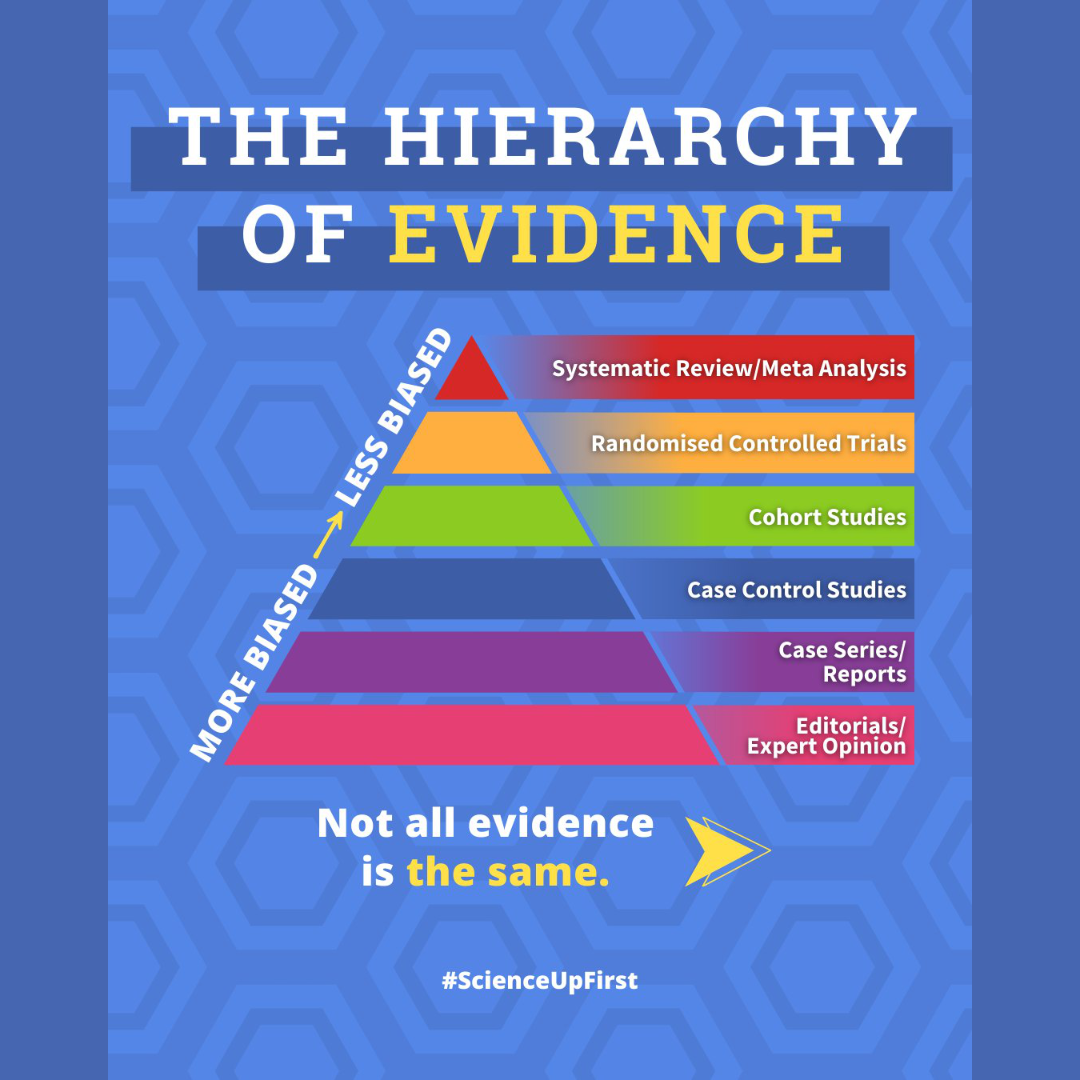
Did you know that not all scientific evidence is equal? 🤔
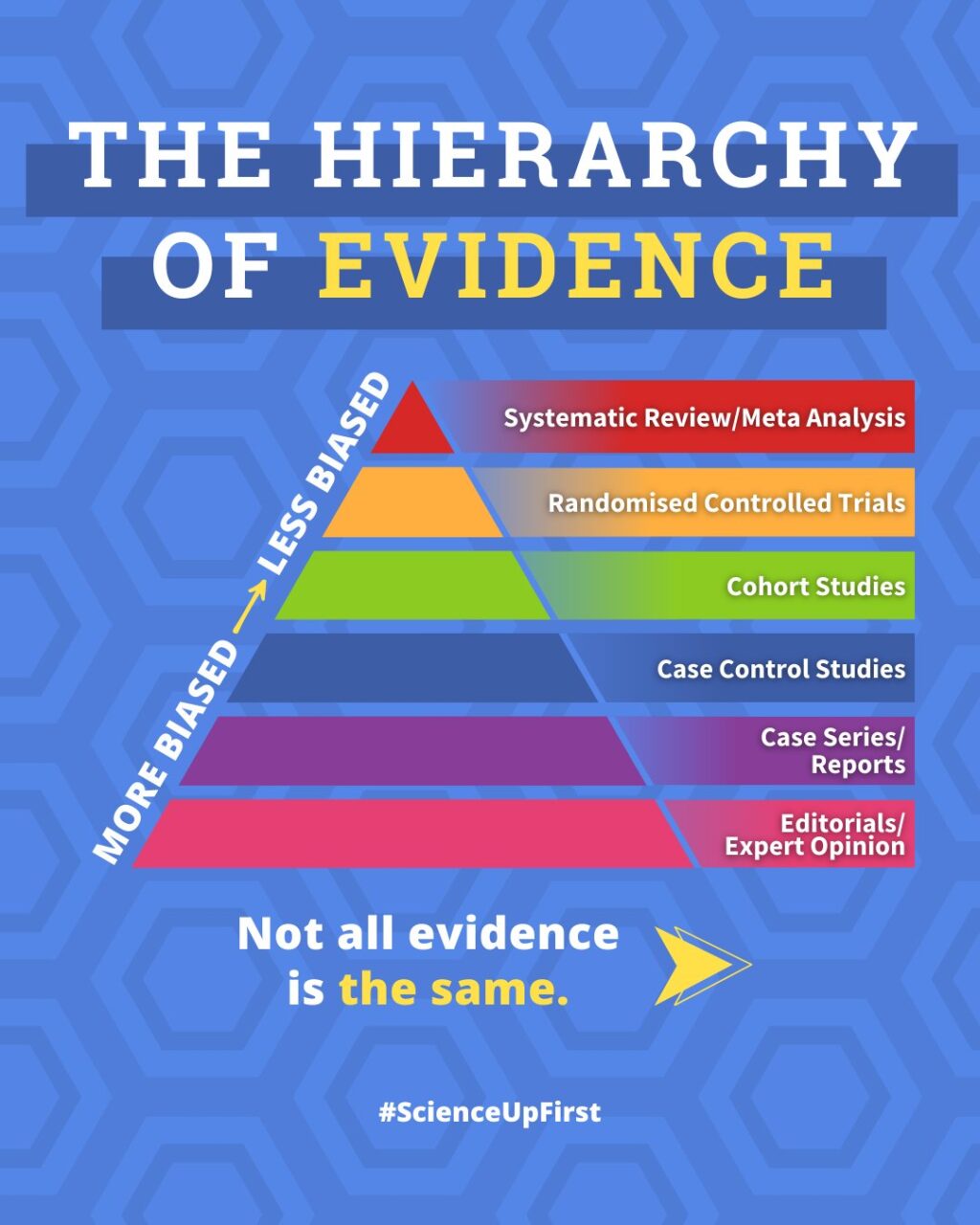
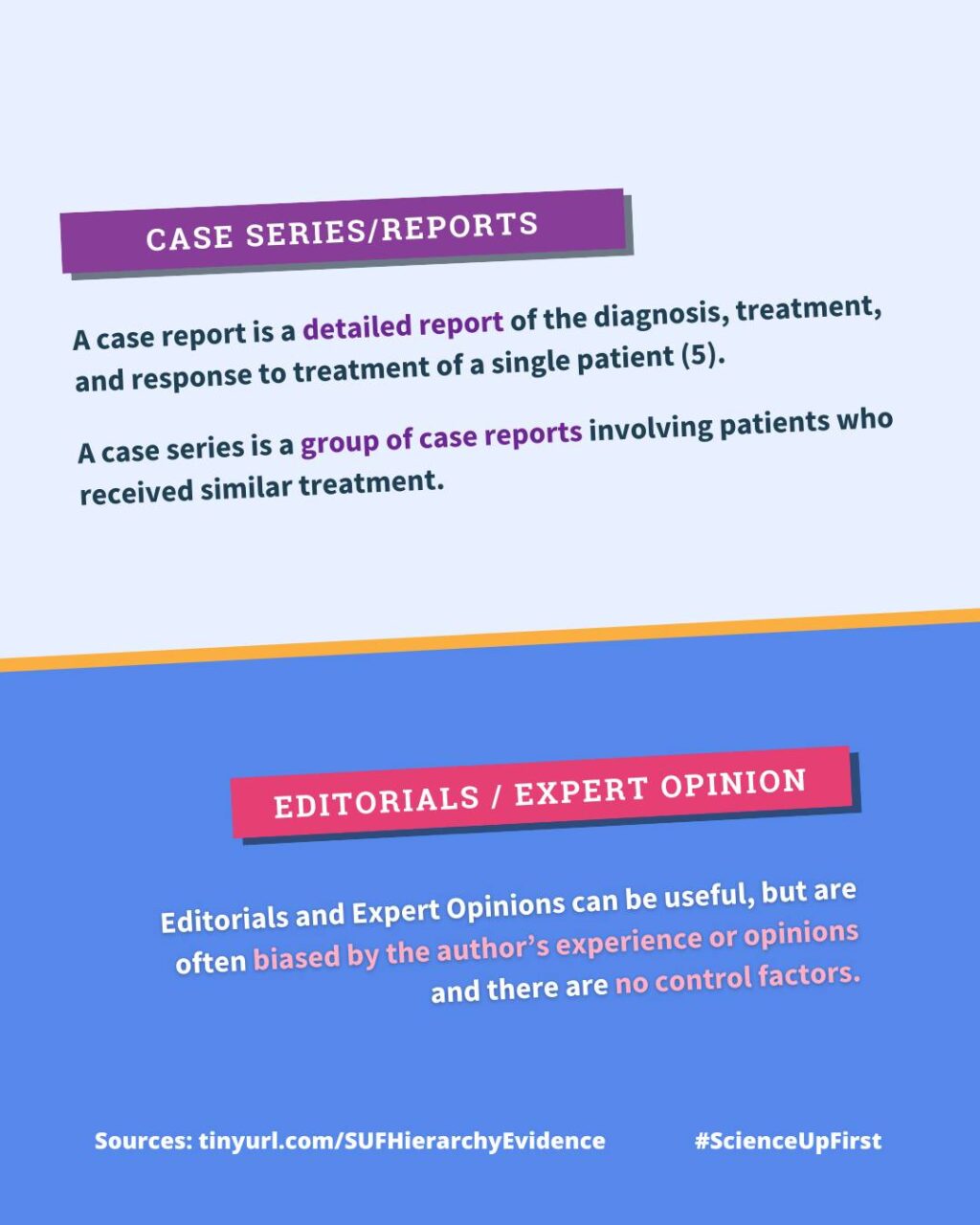
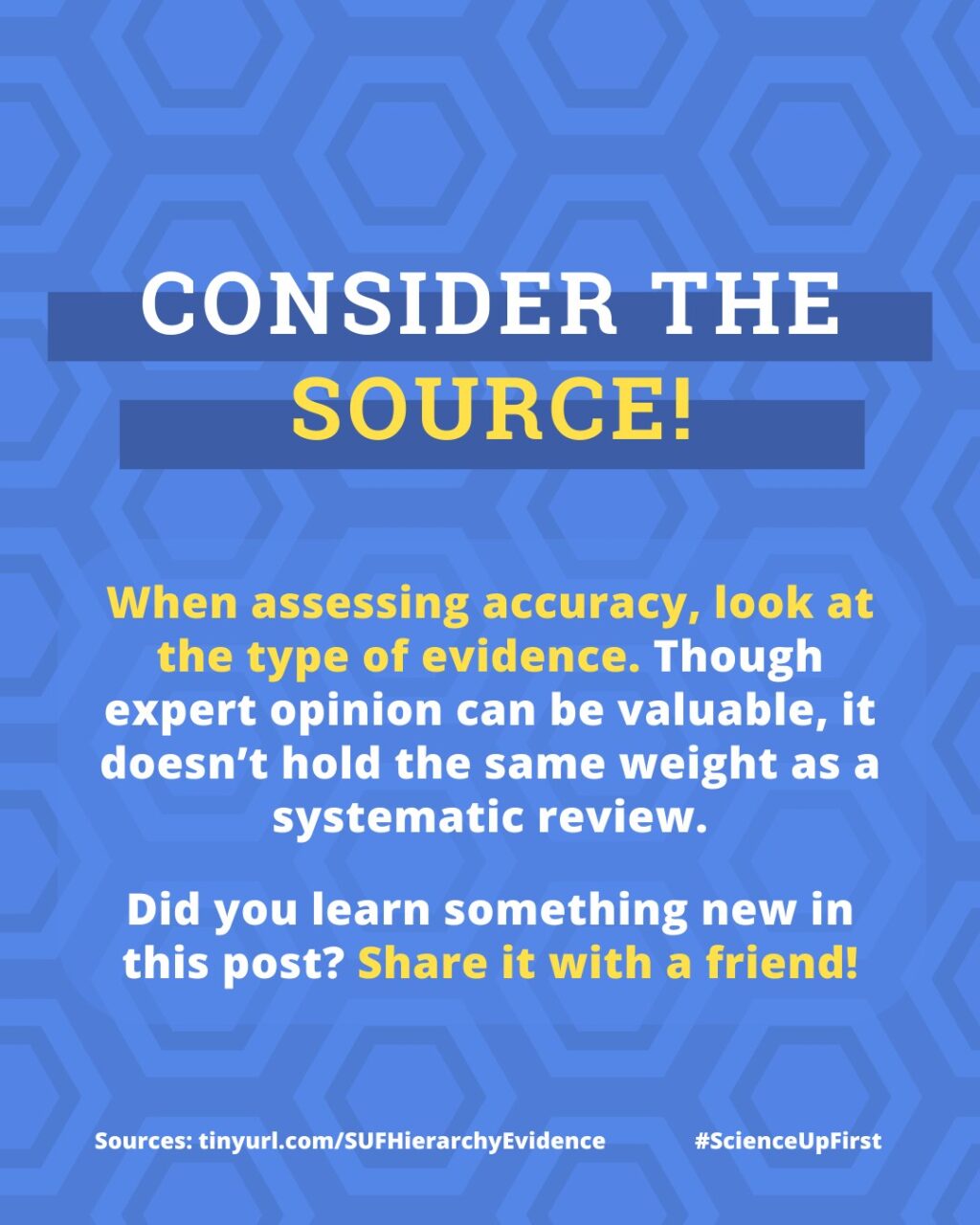
The more the study is influenced by the expert, the higher the risk of bias.
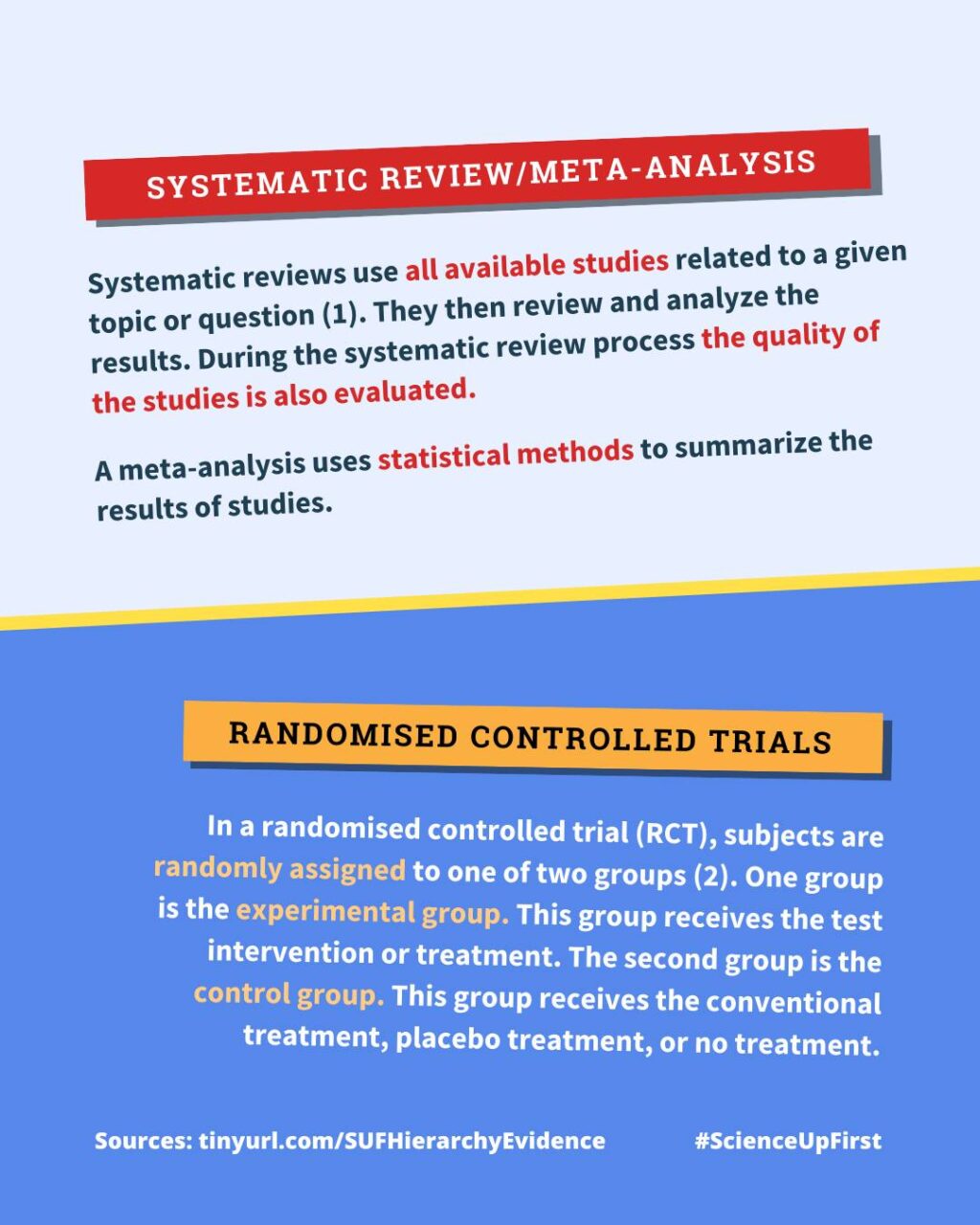
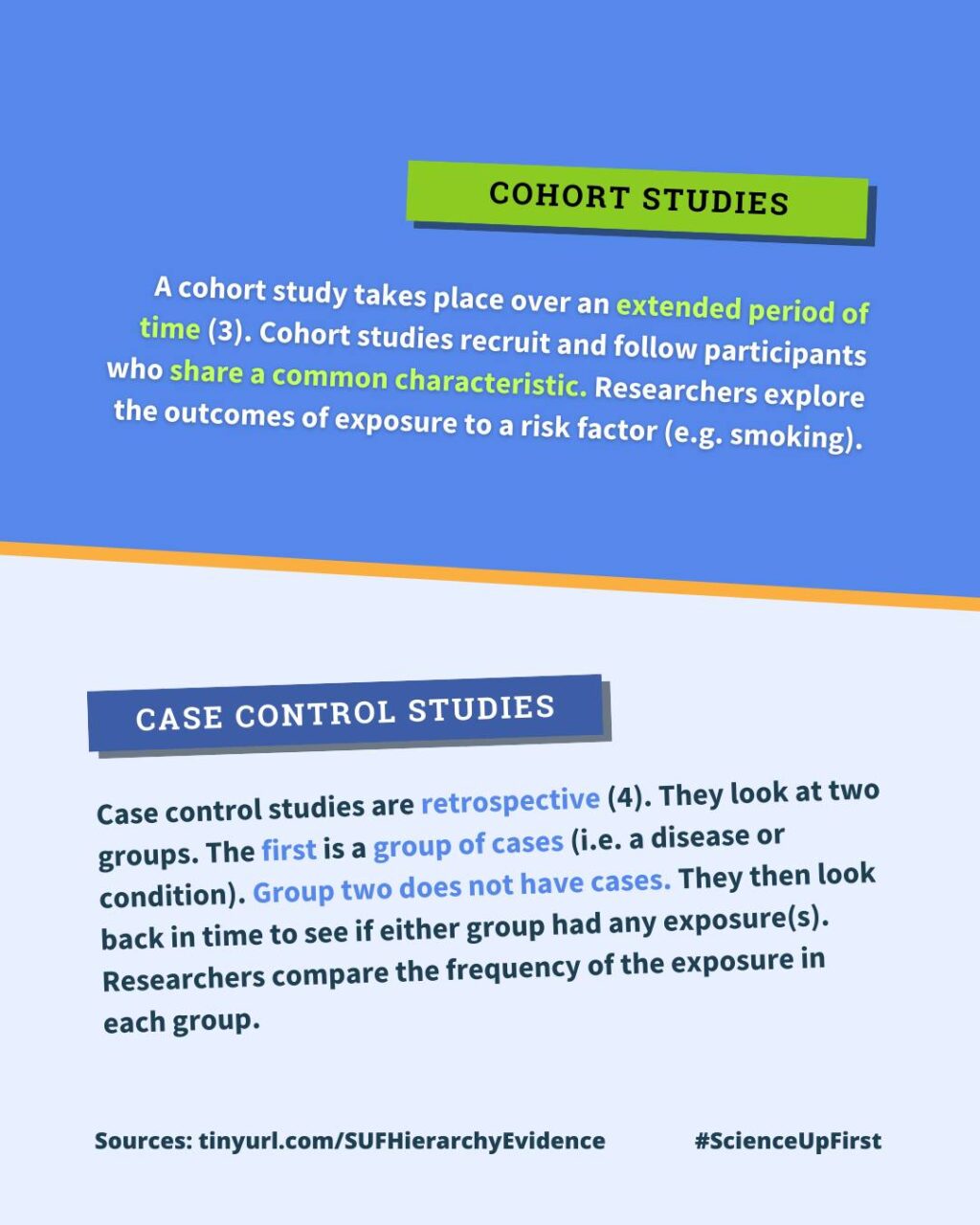
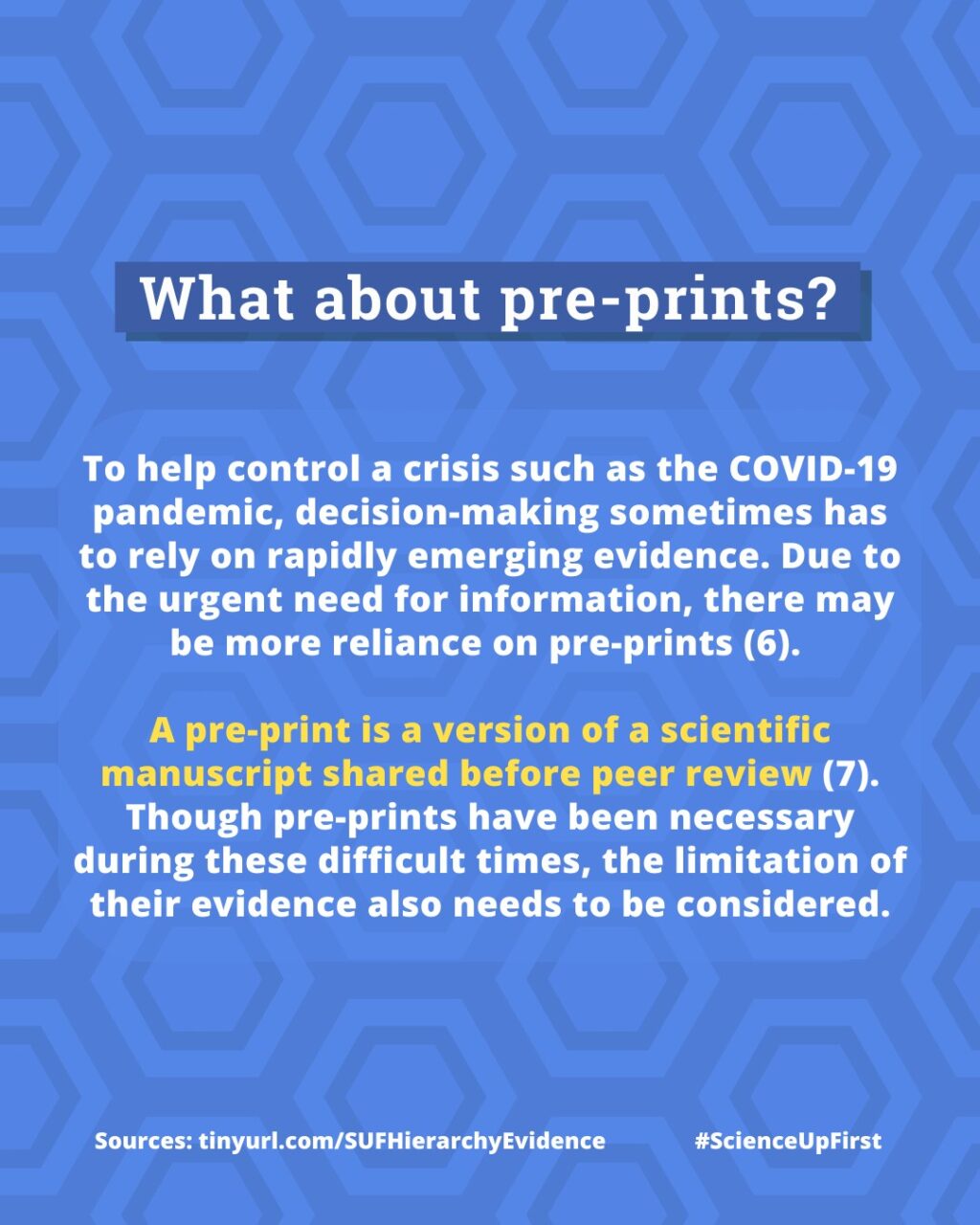
Check out this post for an explanation of the hierarchy of evidence 🔺
Share this post with a friend to help them recognize strong evidence!
Sources
- Introduction to systematic review and meta-analysis | Korean J Anesthesiol. | April 2018
- Designing a research project: randomised controlled trials and their principles | BMJ Journals | March 2003
- What are cohort studies? | BMJ Journals | September 2019
- Epidemiology in Practice: Case-Control Studies | Community Eye Health | 1998
- Case Reports and Case Series | Boston University Medical Campus and Boston Medical Center
- Using preprints in evidence synthesis: Commentary on experience during the COVID-19 pandemic | Journal of clinical epidemiology | October 2021
- Preprints | PLOS
Share our original Bluesky Post!
Did you know that not all scientific evidence has the same weight? The more the study relies on an expert's opinion, rather than many data points and peer-review, the higher the risk of bias. 🔺https://www.scienceupfirst.com/project/hierarchy-of-evidence/ #ScienceUpFirst
— ScienceUpFirst (@scienceupfirst.bsky.social) November 26, 2025 at 12:41 PM
[image or embed]
View our original Instagram Post!