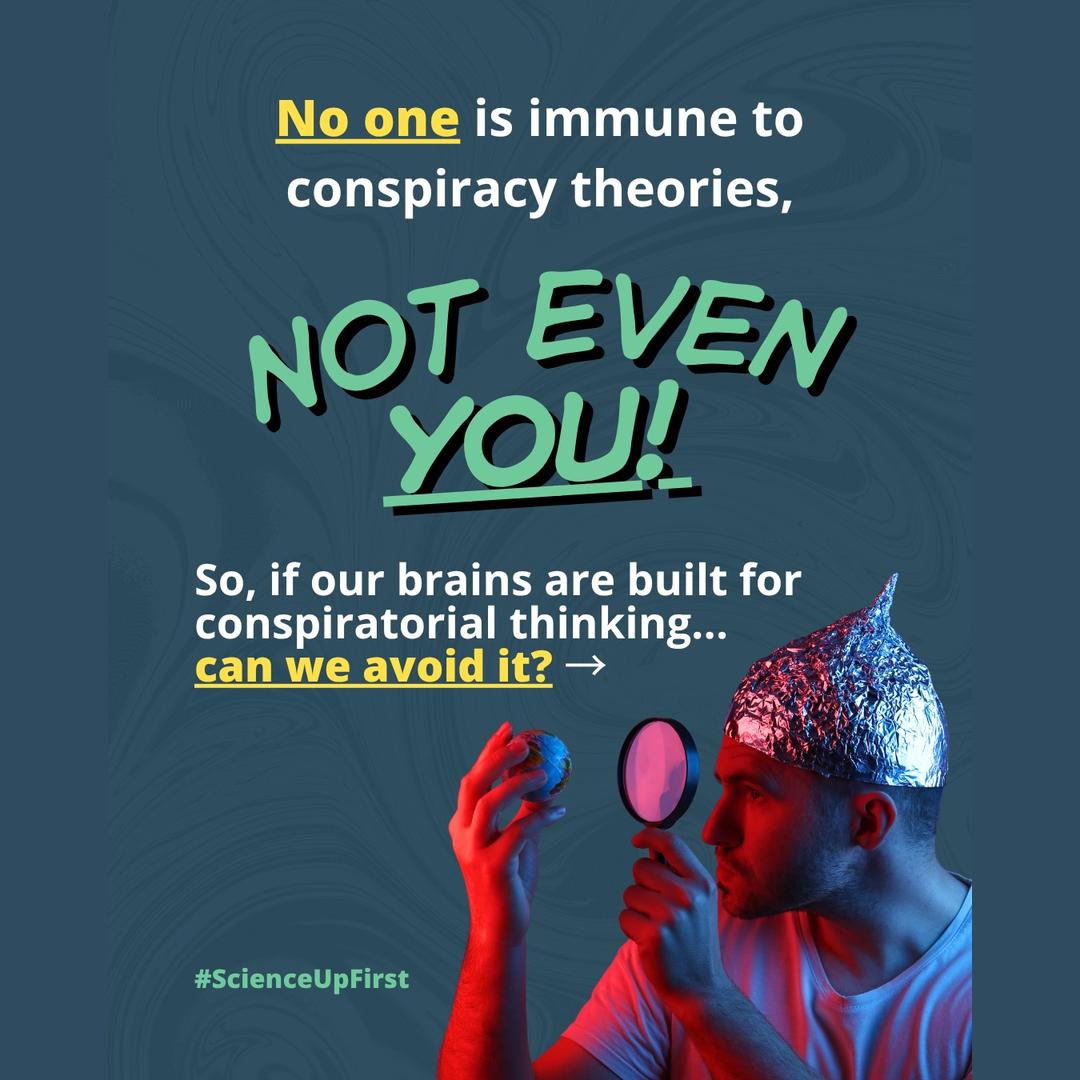
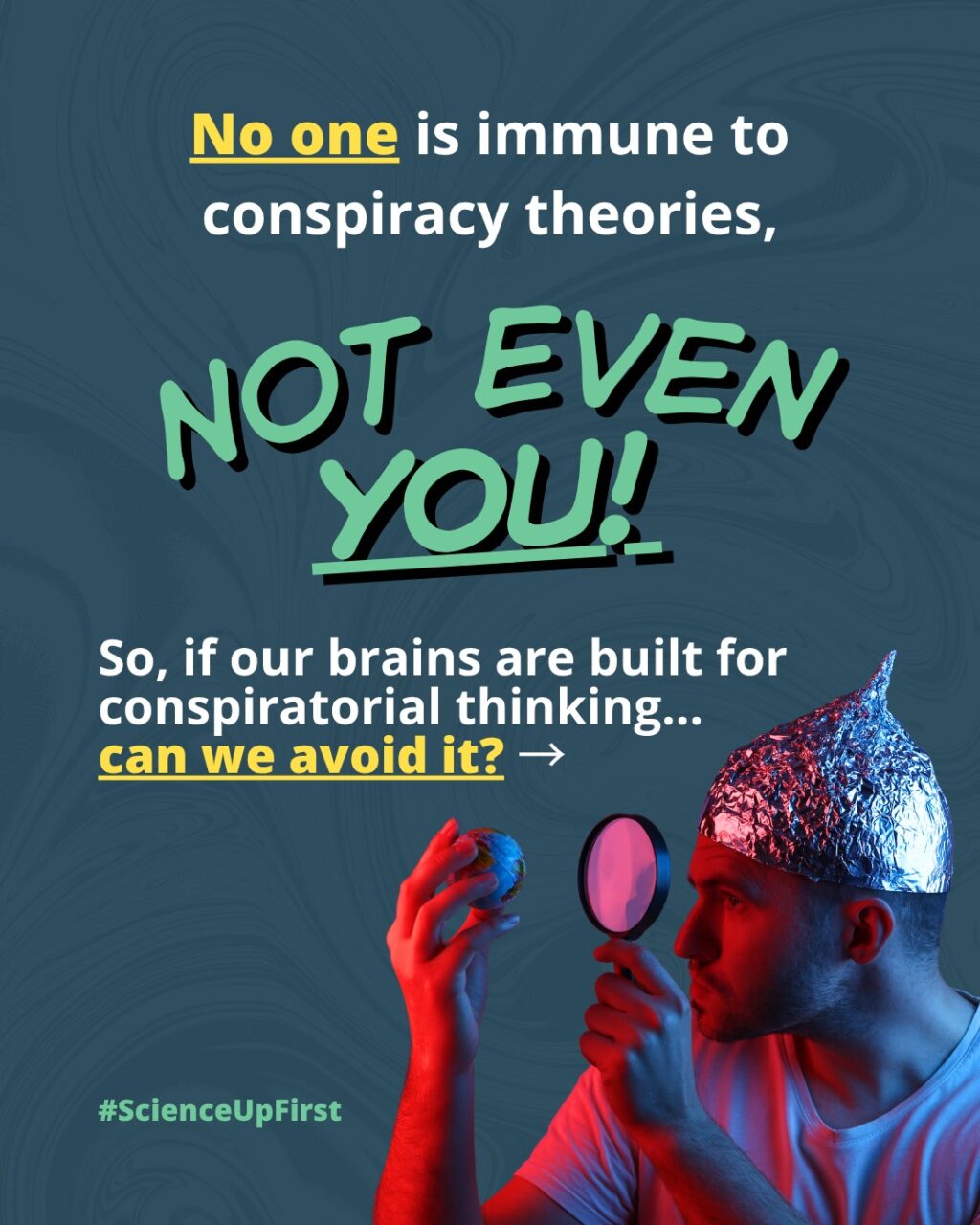
Brains love conspiracy theories. Yes, even yours!!
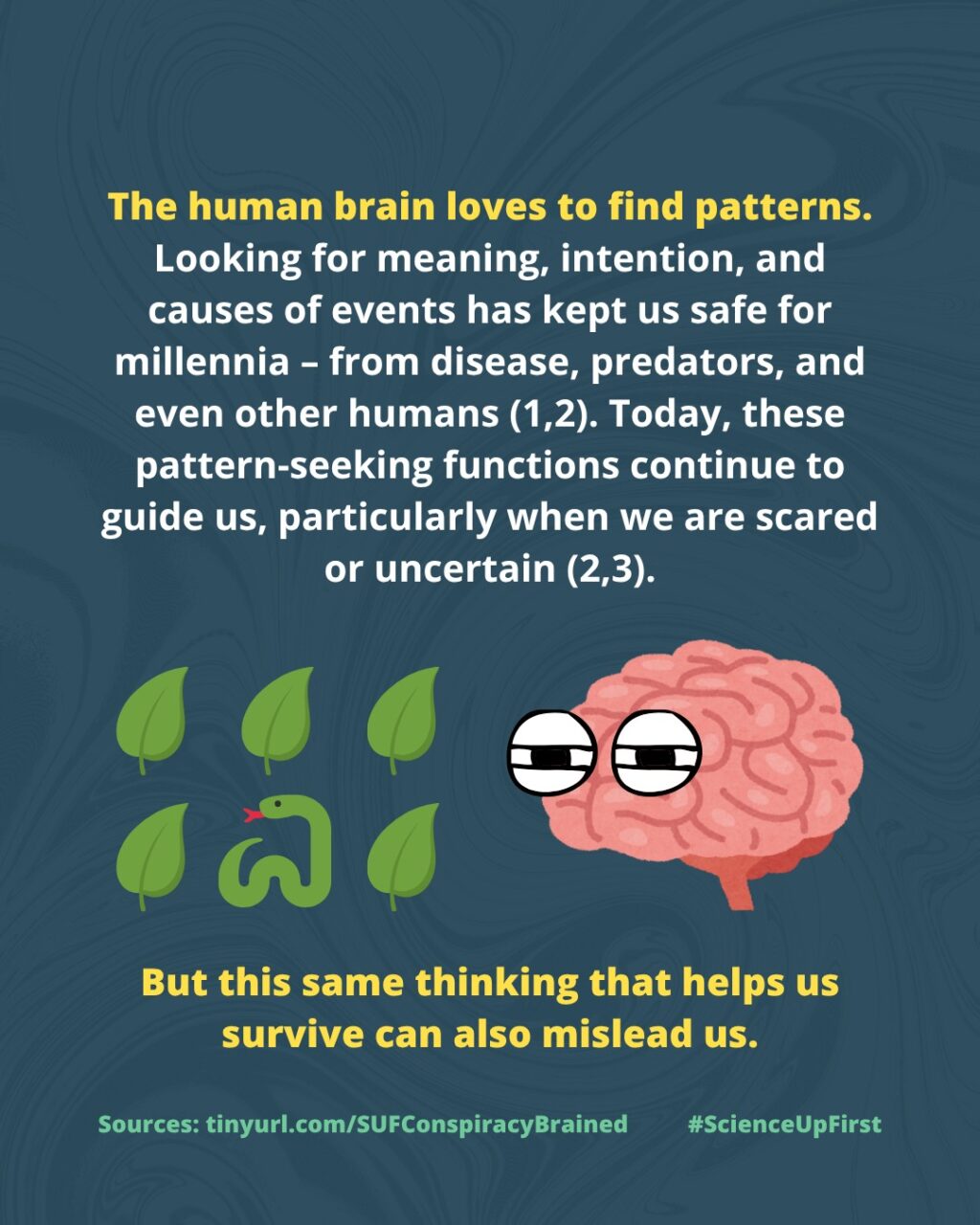
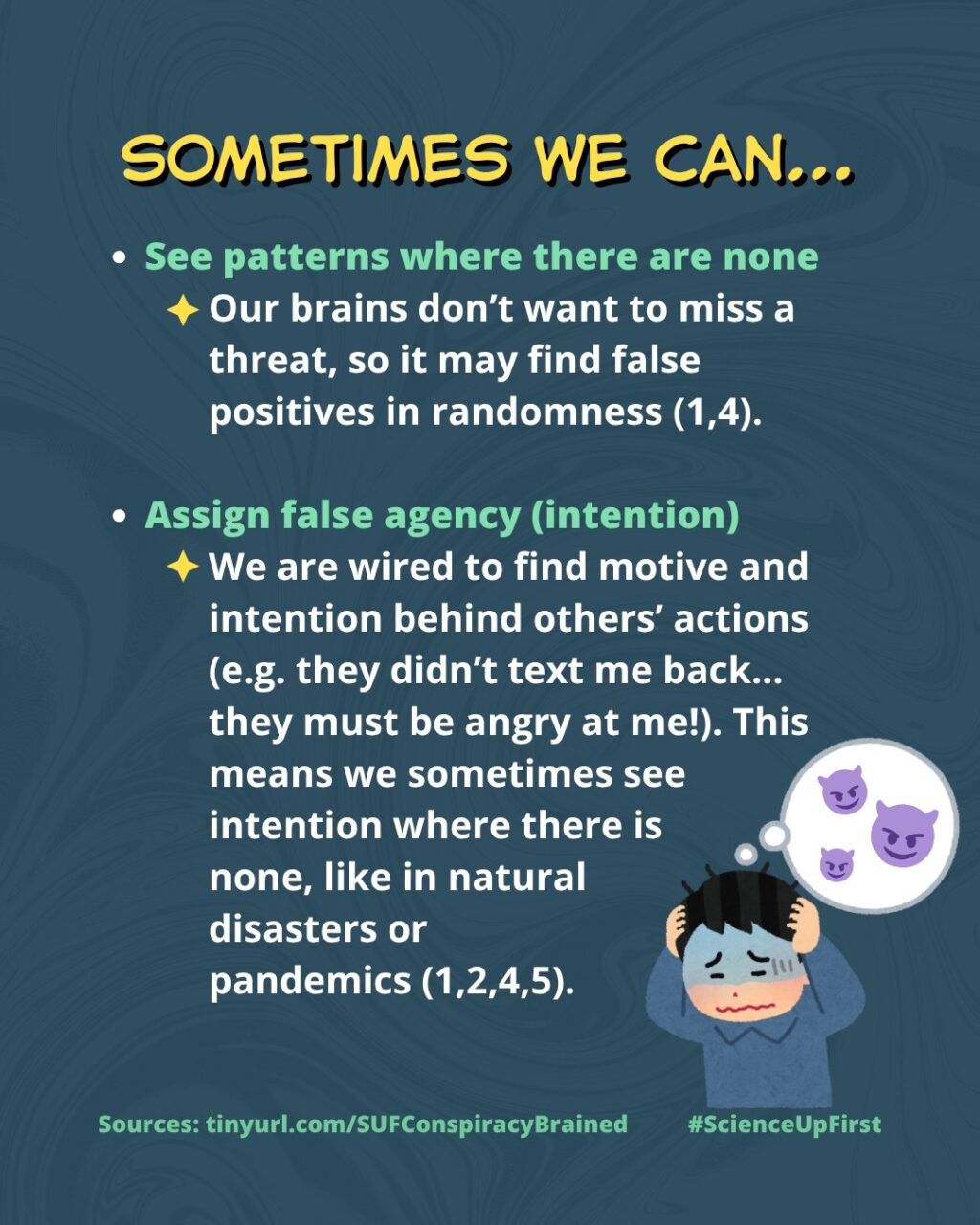
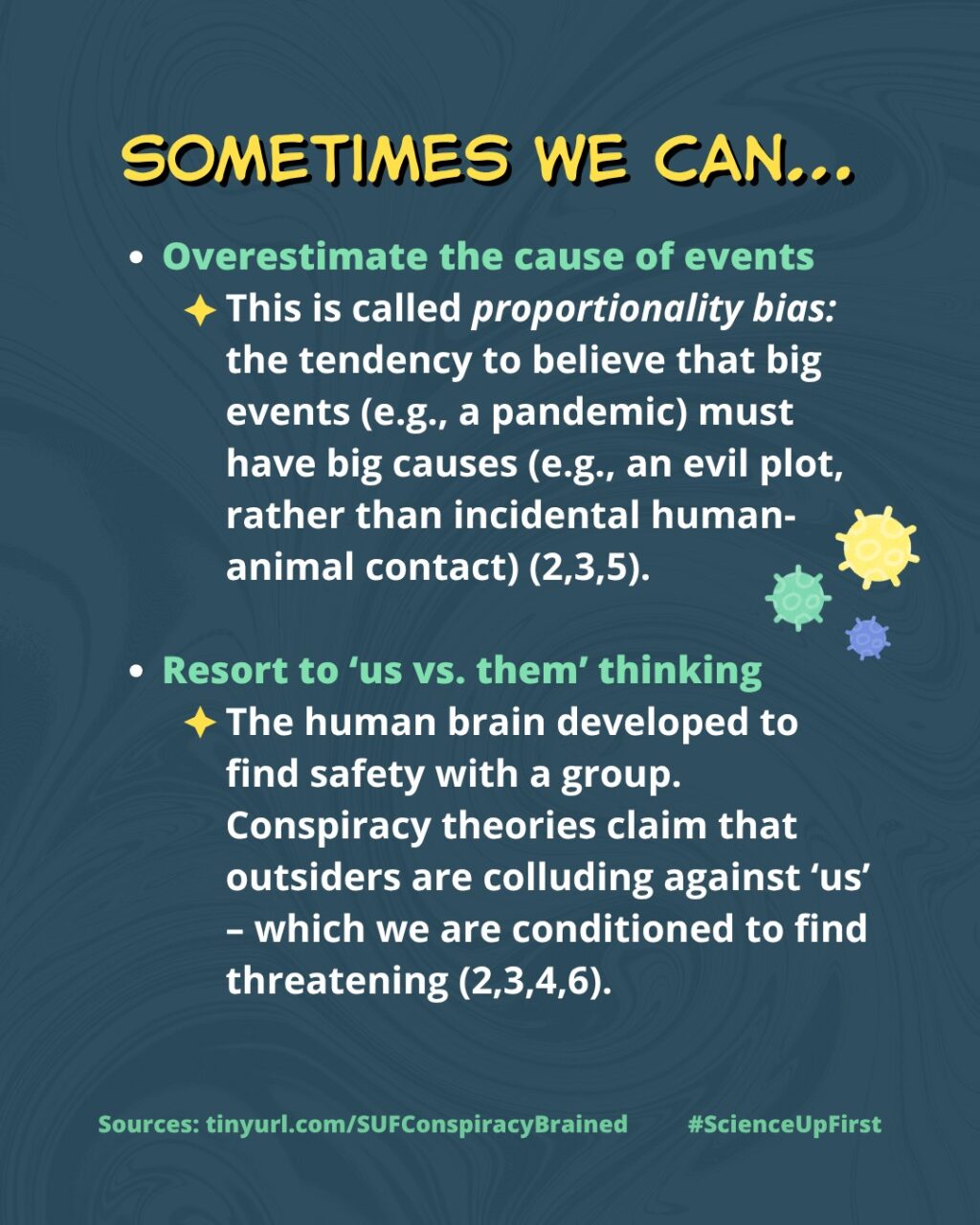
While some people may be more prone to conspiratorial thinking, everyone is susceptible. Conspiratorial thinking has existed for eons, across time and cultures (1,2,4). Falling for a conspiracy theory doesn’t make you foolish. In fact, it’s a side effect of survival mechanisms that the human brain has developed to keep us alive (1,2).
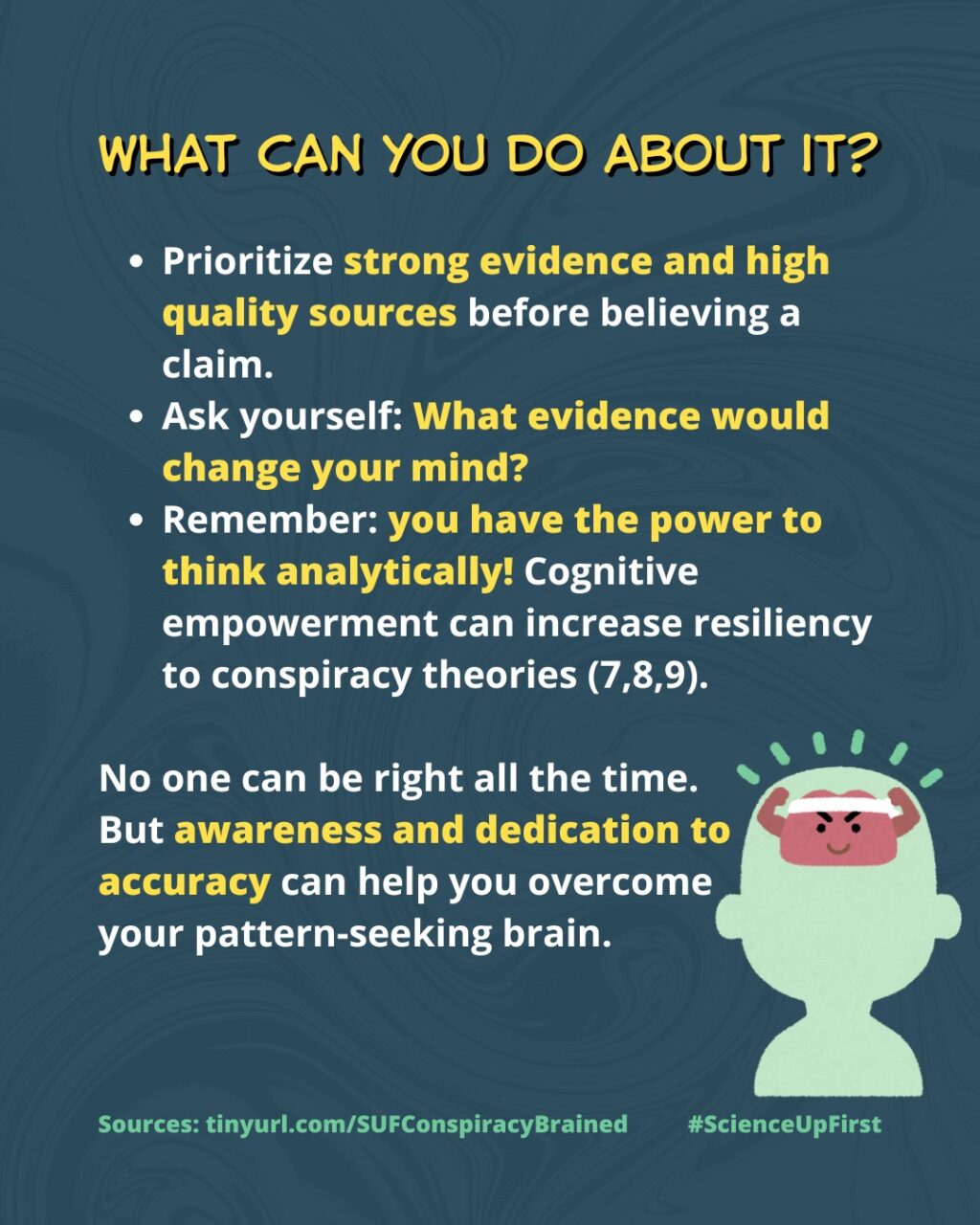
Check out the rest of the post to learn more about why our brains are hardwired for conspiracy, and how you can help reason win out.
Be honest – what’s a conspiracy theory that you’ve fallen for? How did you get out of it? Let us know!
- Conspiracy Theories: Evolved Functions and Psychological Mechanisms | Perspectives on Psychological Science | 19 September 2018
- Medical conspiracy theories: cognitive science and implications for ethics | Medicine, Health Care and Philosophy | 16 April 2020
- The Psychology of Conspiracy Theories | Current Directions in Psychological Science | 7 December 2017
- Belief in conspiracy theories: Basic principles of an emerging research domain | European Journal of Social Psychology | 24 August 2018
- Is it pathological to believe conspiracy theories? | Transcultural Psychiatry | 1 August 2023
- Conspiratorial Claims and Institutional Distrust in Canada’s Online Ecosystem | Media Ecosystem Observatory | 23 February 2026
- The efficacy of interventions in reducing belief in conspiracy theories: A systematic review | PLoS One | 5 April 2023
- Chapter One – Countering misinformation through psychological inoculation | Advances in Experimental Social Psychology | 2024
- The Conspiracy Theory Handbook | Skeptical Science | March 2020
Share our original Bluesky Post!
Brains love conspiracy theories. While some people may be more prone to conspiratorial thinking, everyone is susceptible. Check out the rest of the post to learn more about why our brains are hardwired for conspiracy, and how you can help reason win out.👇 scienceupfirst.com/misinformati…
— ScienceUpFirst (@scienceupfirst.bsky.social) June 9, 2026 at 2:38 PM
[image or embed]
View our original Instagram Post!