
Have you heard of “The Trolley Problem”?
Five people are tied to a train track. A train is coming. You can pull a lever to divert it to another track, but there is one person tied there too.
What do you do?
Option A: Do nothing. Five people die.
Option B: Pull the lever. One person dies, but five are saved.
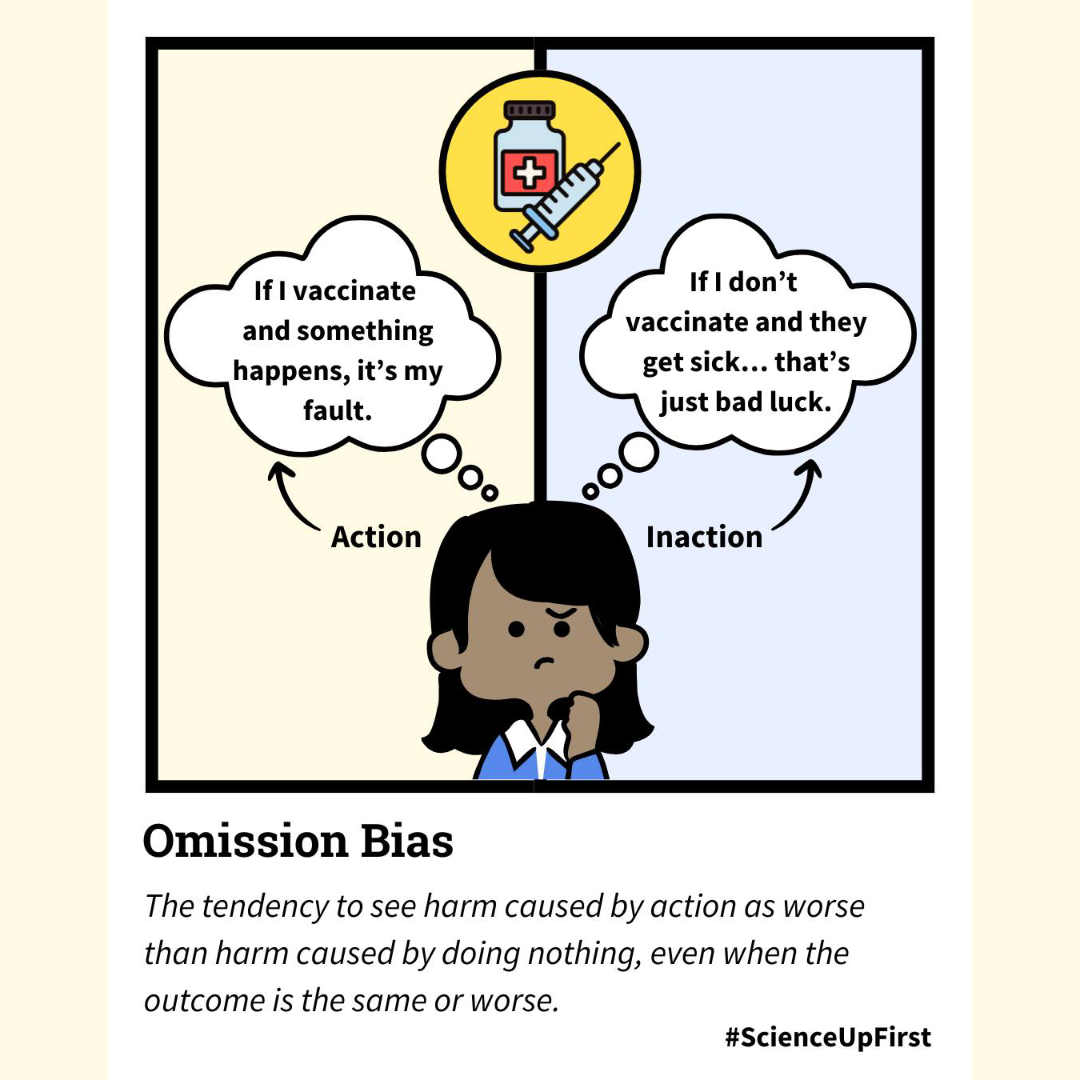
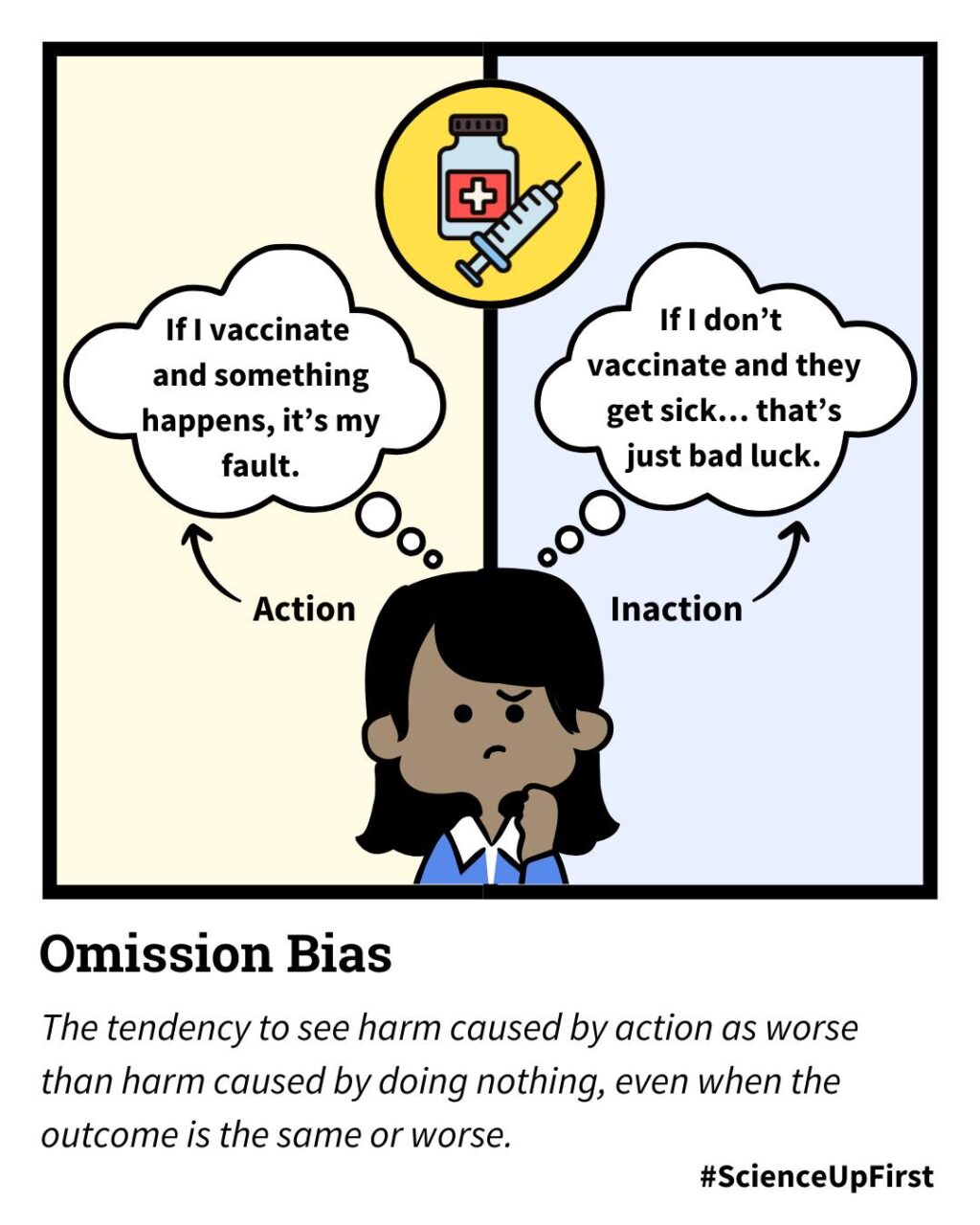
If Option A feels “safer” to you, you might be experiencing Omission Bias.
Omission bias is our tendency to see harmful actions as worse than harmful inaction, even when the outcome is similar, or even worse. In other words, causing harm can feel more morally wrong, more blameworthy, than allowing harm to happen (1,2,3).
In the trolley problem, pulling the lever means someone dies because of something you did. Not pulling it means more people die, but it can feel less direct and less like your fault (1).
This bias is a mental shortcut. When a decision feels heavy or uncertain, it can feel easier to leave things as they are than to weigh risks and benefits (1,3).
We see this often with vaccines. For a hesitant parent, vaccinating can feel like pulling the lever. It is an active choice (1). Vaccines are incredibly safe, and most side effects are mild and short lived. Serious reactions are rare (4). But if something were to happen, it can feel like it happened because of a decision they made. Choosing not to vaccinate can feel safer because it avoids action, but it does not remove the risk (1,5). In fact, the risk of severe illness, complications, or death from vaccine-preventable diseases is significantly higher than the risk of serious vaccine side effects (6).
We are all vulnerable to biases that shape how we see risk and responsibility. Being aware of them can help us make more informed decisions, and also better understand where others are coming from.
- Omission Bias | The Decision Lab
- Action and Inaction in Moral Judgments and Decisions: Meta-Analysis of Omission Bias Omission-Commission Asymmetries | Personality and Social Psychology Bulletin | October 2022
- Omitting Omission Bias in the ICU | CHEST Critical Care | January 2026
- Vaccine safety and possible side effects | Government of Canada
- Omission bias and pertussis vaccination | Medical Decision Making | 1994
- Myth Busters – A Series of Essays Giving the Research Evidence Behind Canadian Healthcare Debates | Immunize Canada | December 2026
Share our original Bluesky Post!
View our original Instagram Post!