
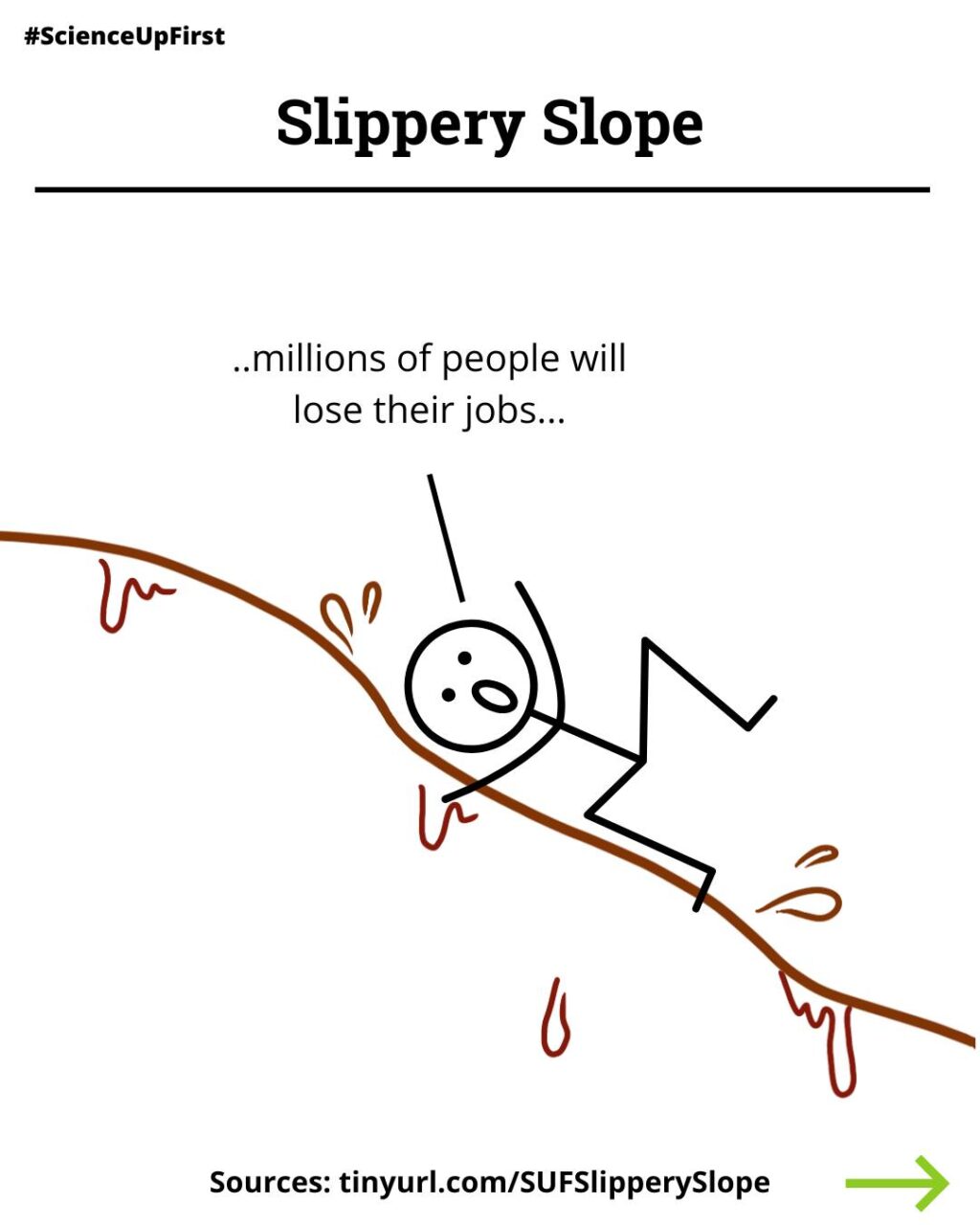
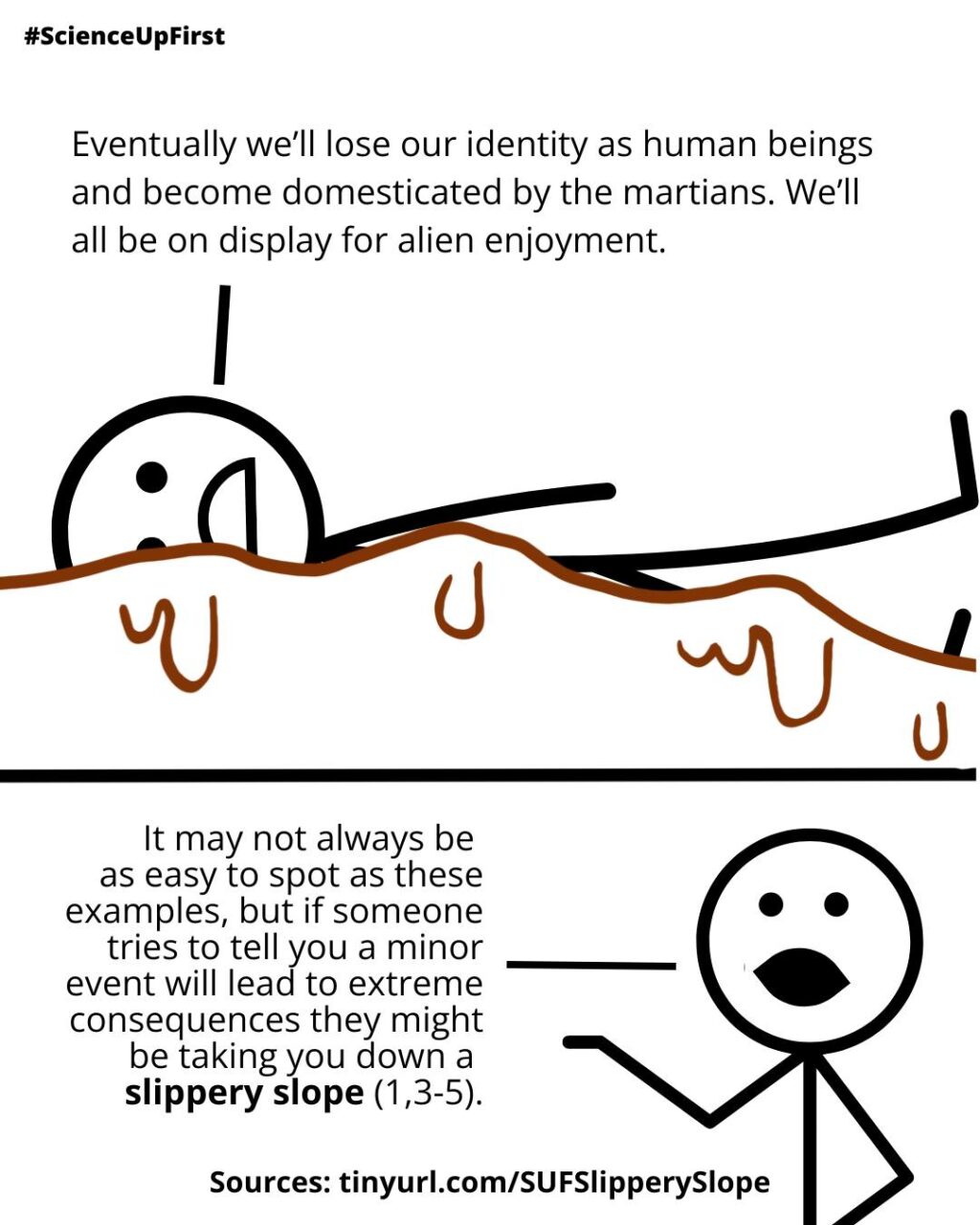

Have you ever heard a statement like “If the government recommends healthier food choices, eventually they’ll be deciding what everyone is allowed to eat. The next thing you know cakes and pies will be illegal”?
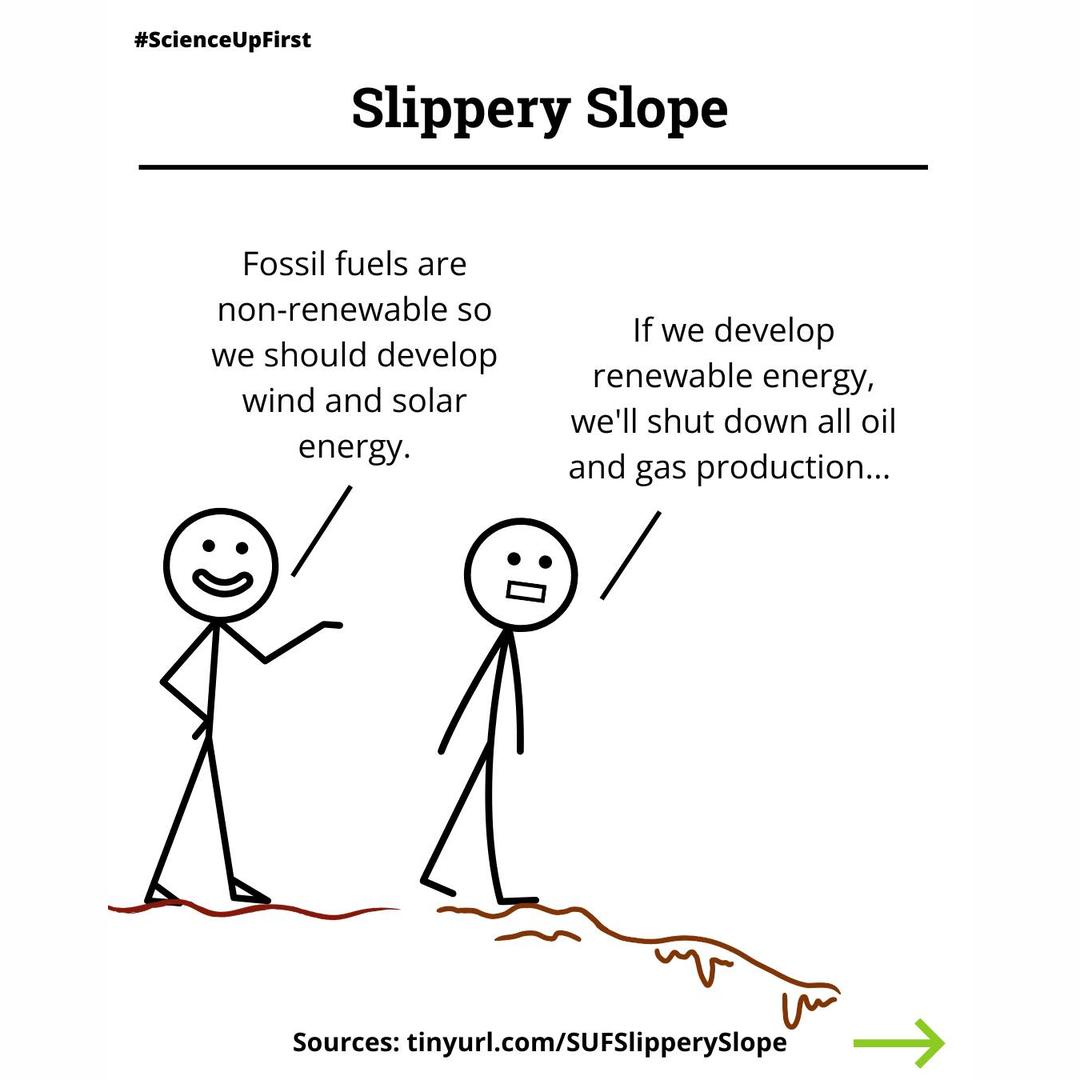
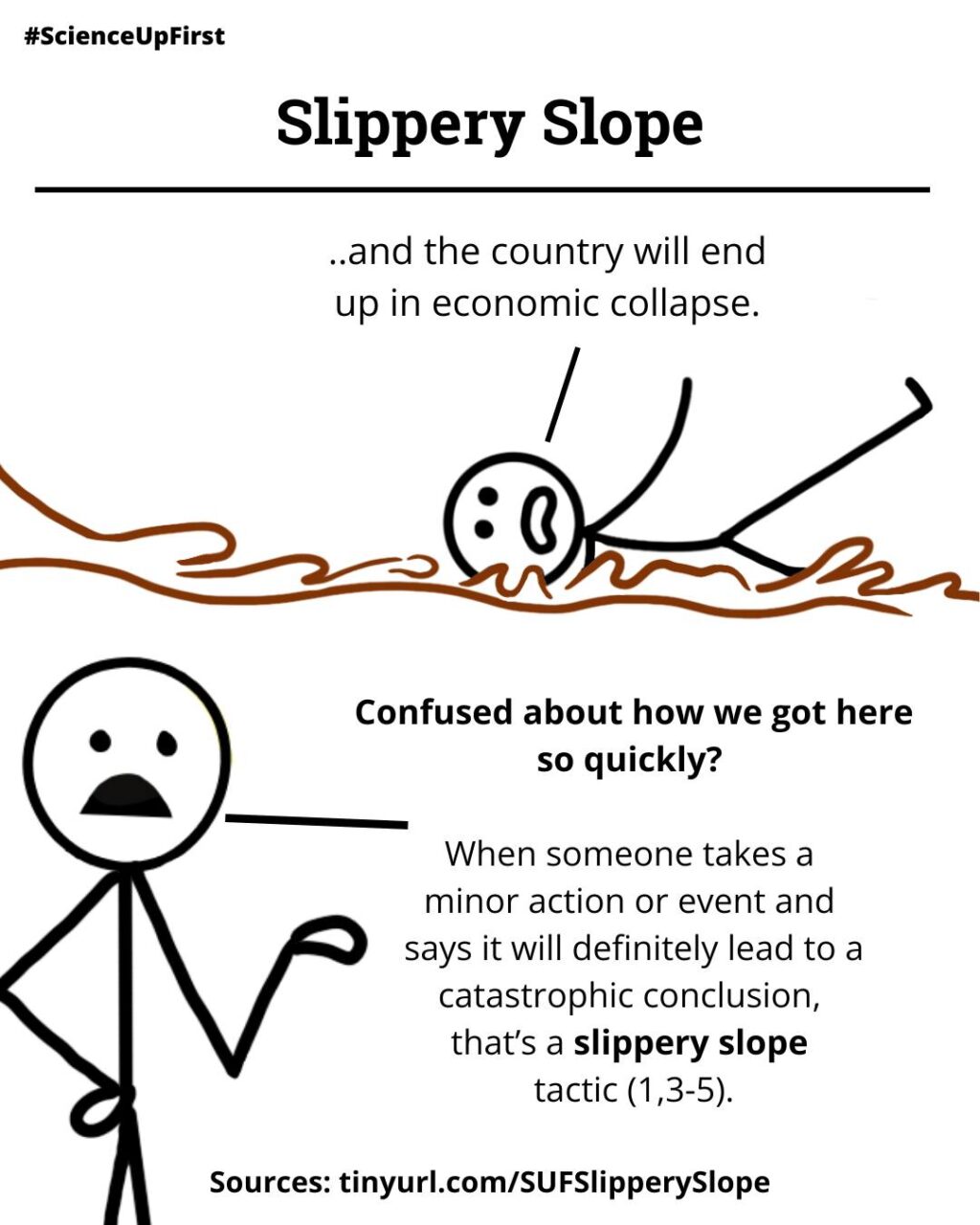
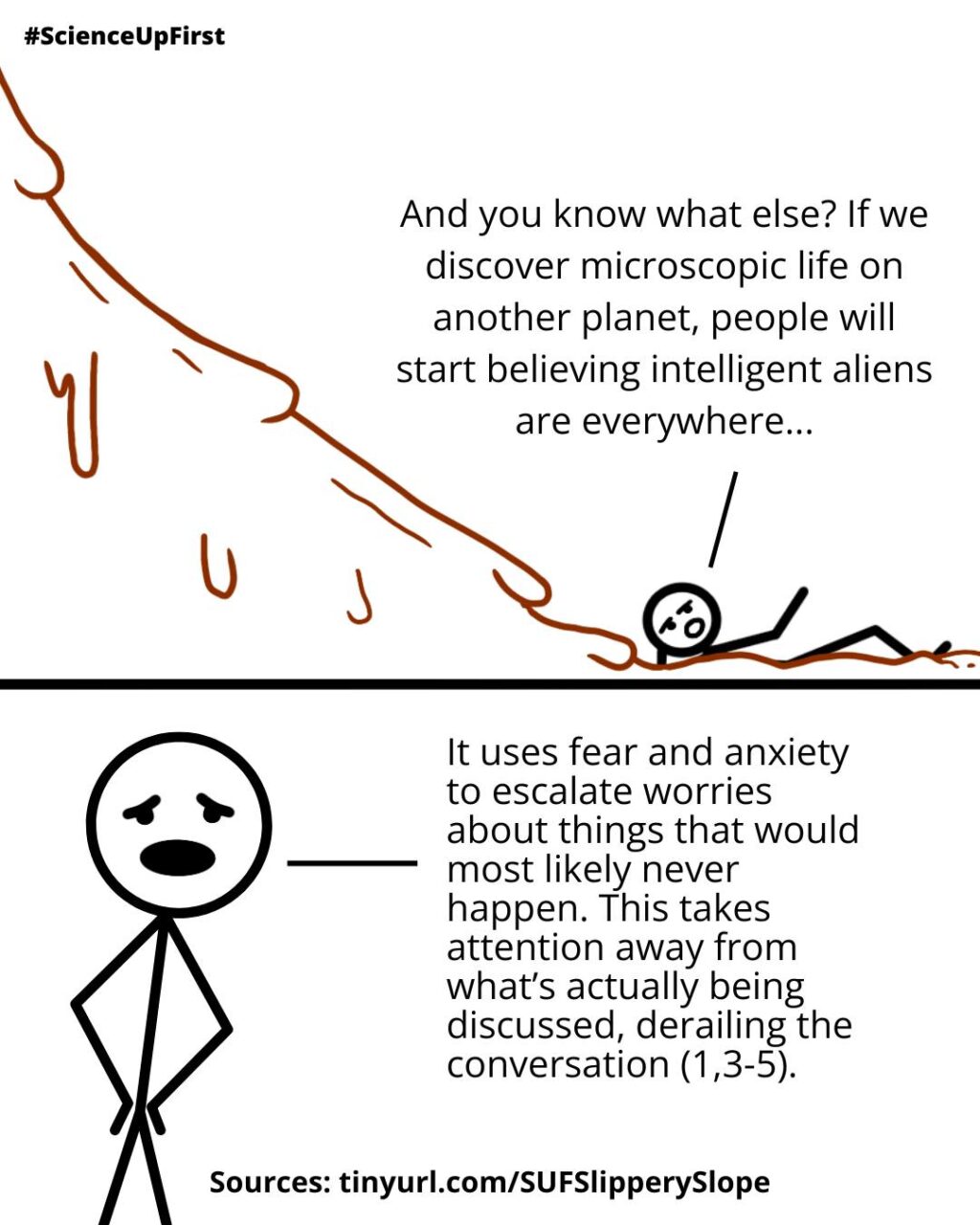
That’s a slippery slope. It’s a fast acceleration from every day situation to total disaster. This shows no consideration for alternate outcomes or the ability to stop before the extreme ending and it distracts from what’s actually being talked about (1,4,5).
This tactic can exploit fear in people without giving proper consideration to the logic of the claim (3).
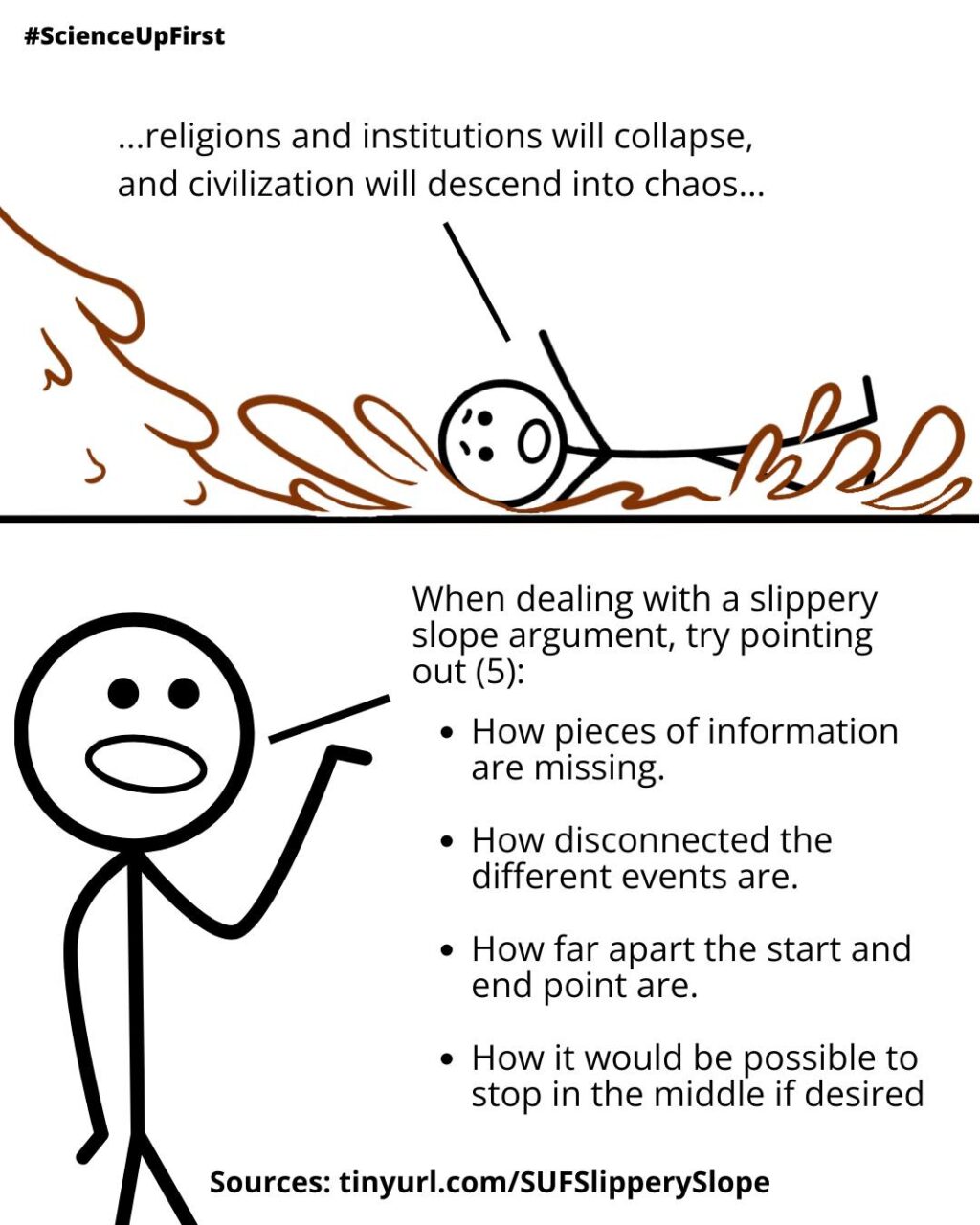
Use our tips to help anchor a conversation that’s starting to go down that hill and remember, the burden of proof is on the person making the claim, not you (5).
Sources
- Slippery Slope Fallacy | Excelsior University OWL
- Do your thoughts ever spiral like this?
- “If I fail today’s test, then I’ll fail my class, and I won’t get my diploma. Without my diploma I won’t get the job I want; I won’t have any money and will become homeless! Therefore, if I fail my test today, I’ll become homeless.”
- Misinformers know catastrophic thinking pulls on your fear and anxiety.
- What is catastrophizing? 6 ways to stop catastrophic thinking
- Misinformers know catastrophic thinking pulls on your fear and anxiety.
- Misinformers will use this cognitive distortion to make you believe that a minor event could lead to the catastrophic event.
- Your logical fallacy is slippery slope
- Misinformers will use this cognitive distortion to make you believe that a minor event could lead to the catastrophic event.
- Slippery Slope Examples in Real Life
- By using the slippery slope tactic misinformers shift your attention from the real issue toward one that is hypothetical and unfounded using extreme exaggeration, emotions, and fears.
- Slippery Slope: What It Is and How to Respond to It
- By using the slippery slope tactic misinformers shift your attention from the real issue toward one that is hypothetical and unfounded using extreme exaggeration, emotions, and fears.
- Slippery slope arguments always have a mild start point and an extreme end point with no way to stop in between and no middle ground. They are fallacious as they don’t acknowledge the small probability that one event will actually lead to the catastrophic event and assume your inability to differentiate between these two opposite events.
- When dealing with a slippery slope argument, try pointing out:
- How pieces of information are missing
- How disconnected the different events are
- How far apart the start and end point are
- How it would be possible to stop in the middle if desired
Share our original Bluesky Post!
View our original Instagram Post!