
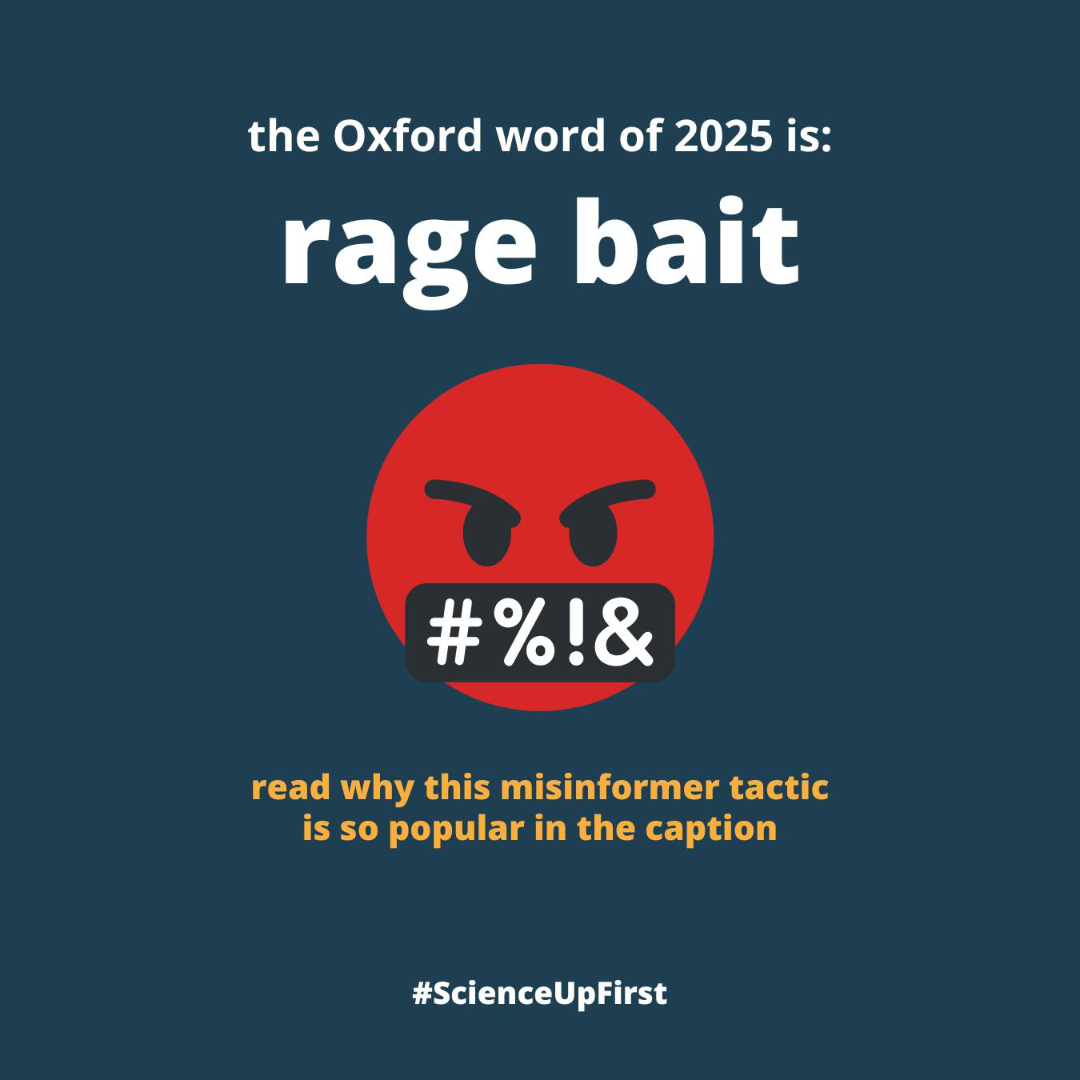
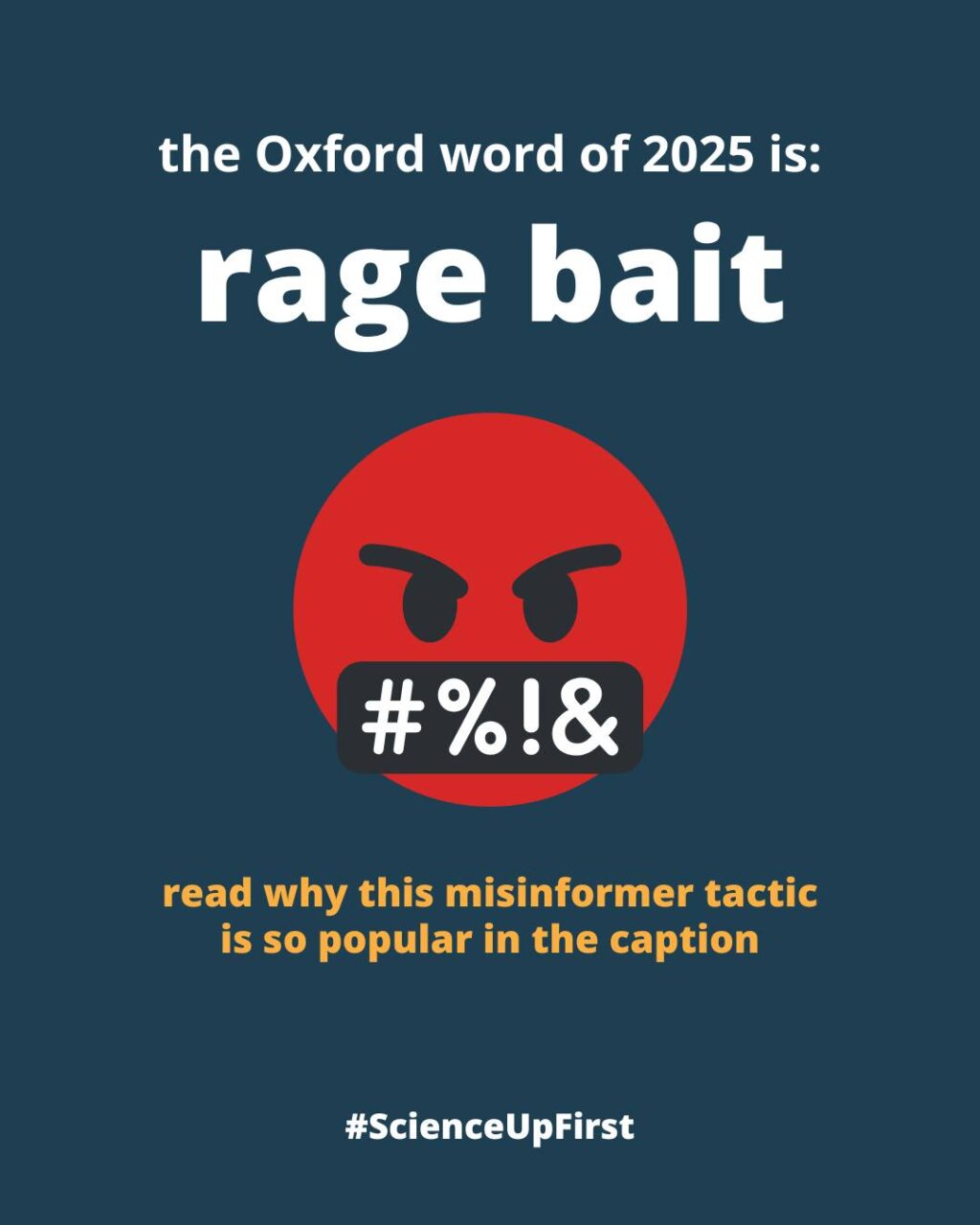
The Oxford word of the year is ‘rage bait’. Defined as “online content deliberately designed to elicit anger or outrage by being frustrating, provocative, or offensive, typically posted in order to increase traffic to or engagement with a particular web page or social media content”.
It’s no wonder that anger is frequently used to make misinformation go viral (1-3) 😡.
Research shows that:
- Tweets that provoke anger rather than joy tend to be retweeted more (3).
- Being angry also makes it easier to believe misinformation (4).
- People who are angry are more inclined to consider false information as “scientifically credible” (5).
Strong negative emotions tend to make us more sensitive to information that confirms our views. This creates an echo chamber (in other words, seeing and believing only what aligns with our perspectives) (6). In fact, emotions such as anger, sadness or frustration scramble the message and diminish our ability to analyze scientific information. Our brains tend to simplify problems and solutions when we’re upset (7). Being aware of this misinformation tactic will help you avoid being fooled (8).
Remember to take your time before sharing any information. Those who read information carefully have better judgment when faced with false information (9,10).
- Emerging and continuing trends in vaccine opposition website content | Vaccines on PubMed | February 2011
- Reliance on emotion promotes belief in fake news | Cognitive Research: Principles and Implications on Springer Open | October 2020
- Anger can make fake news viral online | Frontiers | August 2022
- Anger increases susceptibility to misinformation. | APA PsycNet – American Psychological Association | 2020
- Anger contributes to the spread of COVID-19 misinformation | HKS Misinformation Review | September 2020
- Anger, Fear, and Echo Chambers: The Emotional Basis for Online Behavior | Sage Journals | April 2019
- Emotion and humor as misinformation antidotes | PNAS | February 2020
- Does Debunking Work? Correcting COVID-19 Misinformation on Social Media* | Book Chapter in Vulnerable: The Law, Policy and Ethics of COVID-19 | 2020
- Pausing to consider why a headline is true or false can help reduce the sharing of false news | HKS Misinformation Review | February 2020
- Fighting COVID-19 Misinformation on Social Media: Experimental Evidence for a Scalable Accuracy-Nudge Intervention | Sage Choice on PubMed | July 2020
Share our original Bluesky Post!
Did you know that misinformation on the internet and social media often plays on your emotions to go viral? Rage bait can hinder our critical thinking. Read more on that and how to protect yourself here 👇 www.scienceupfirst.com/project/misi… #ScienceUpFirst
— ScienceUpFirst (@scienceupfirst.bsky.social) December 4, 2025 at 12:55 PM
[image or embed]
View our original Instagram Post!