
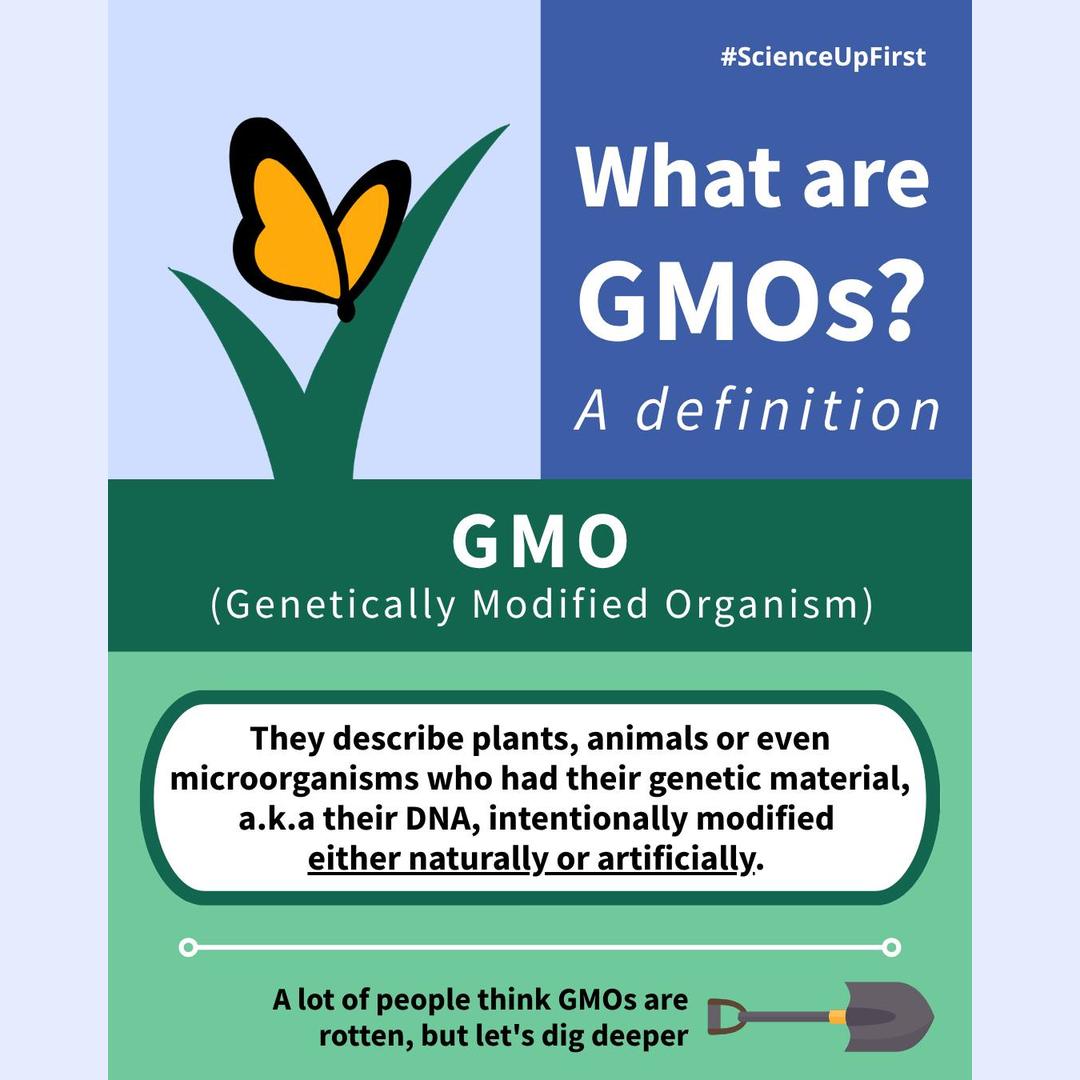
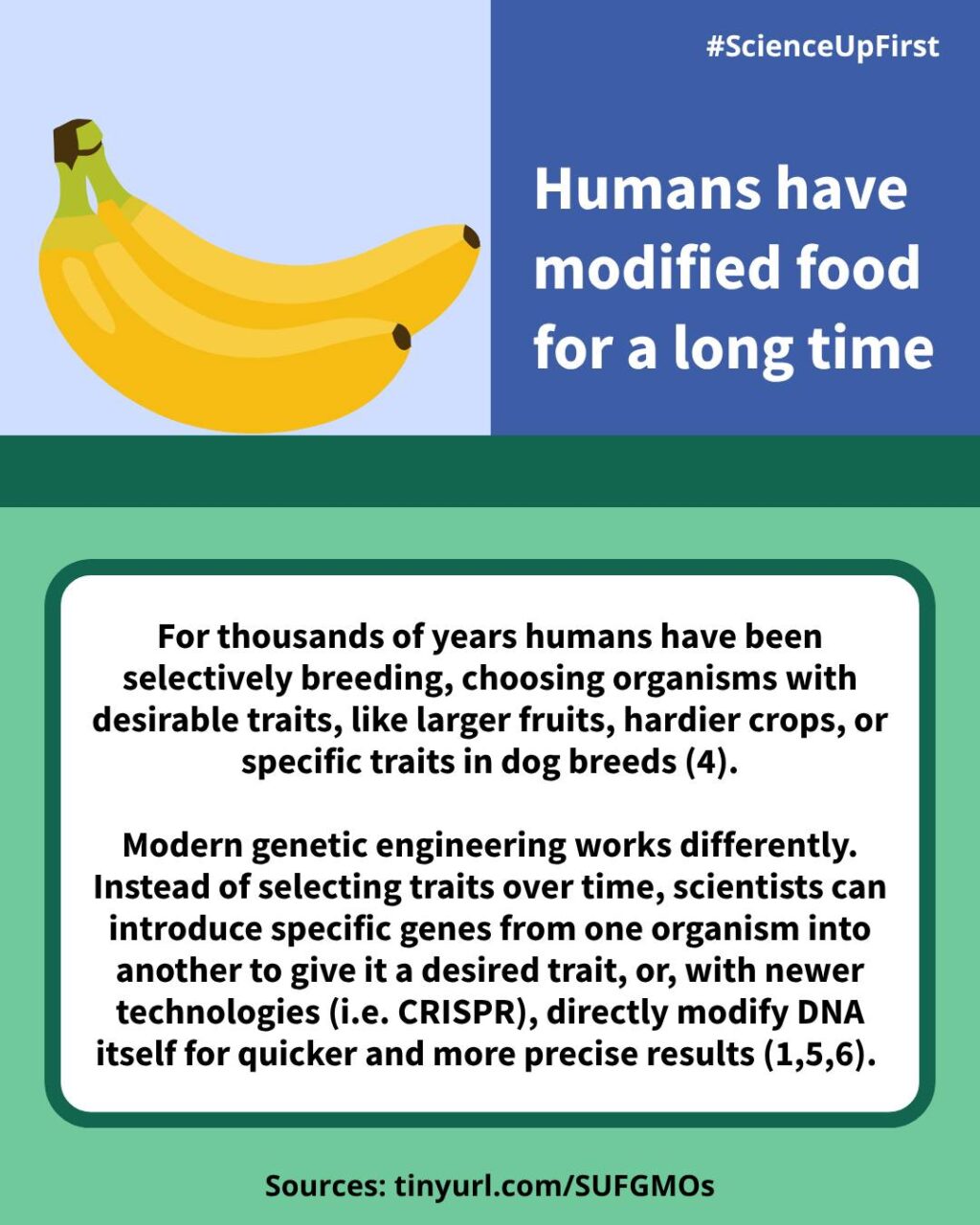
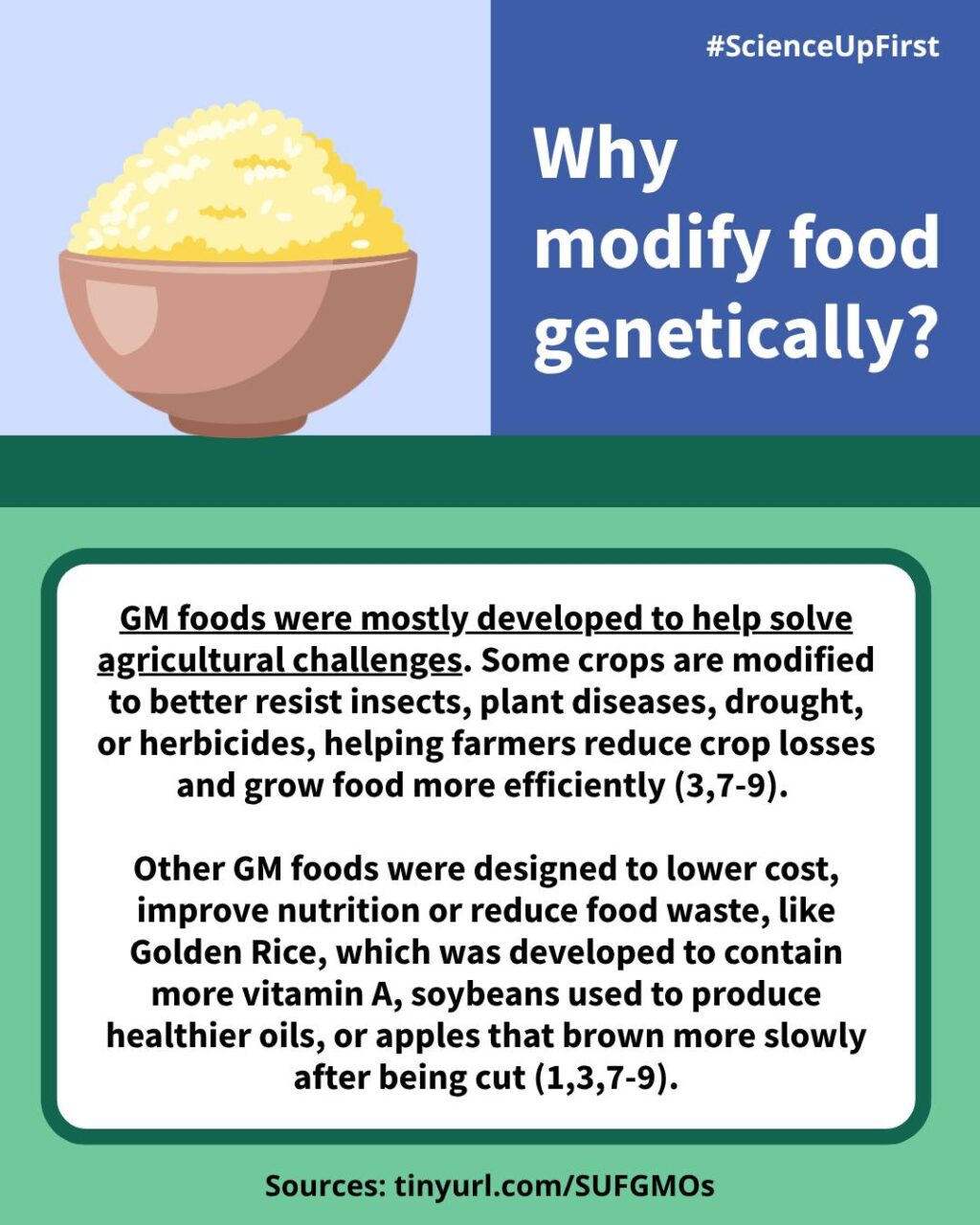
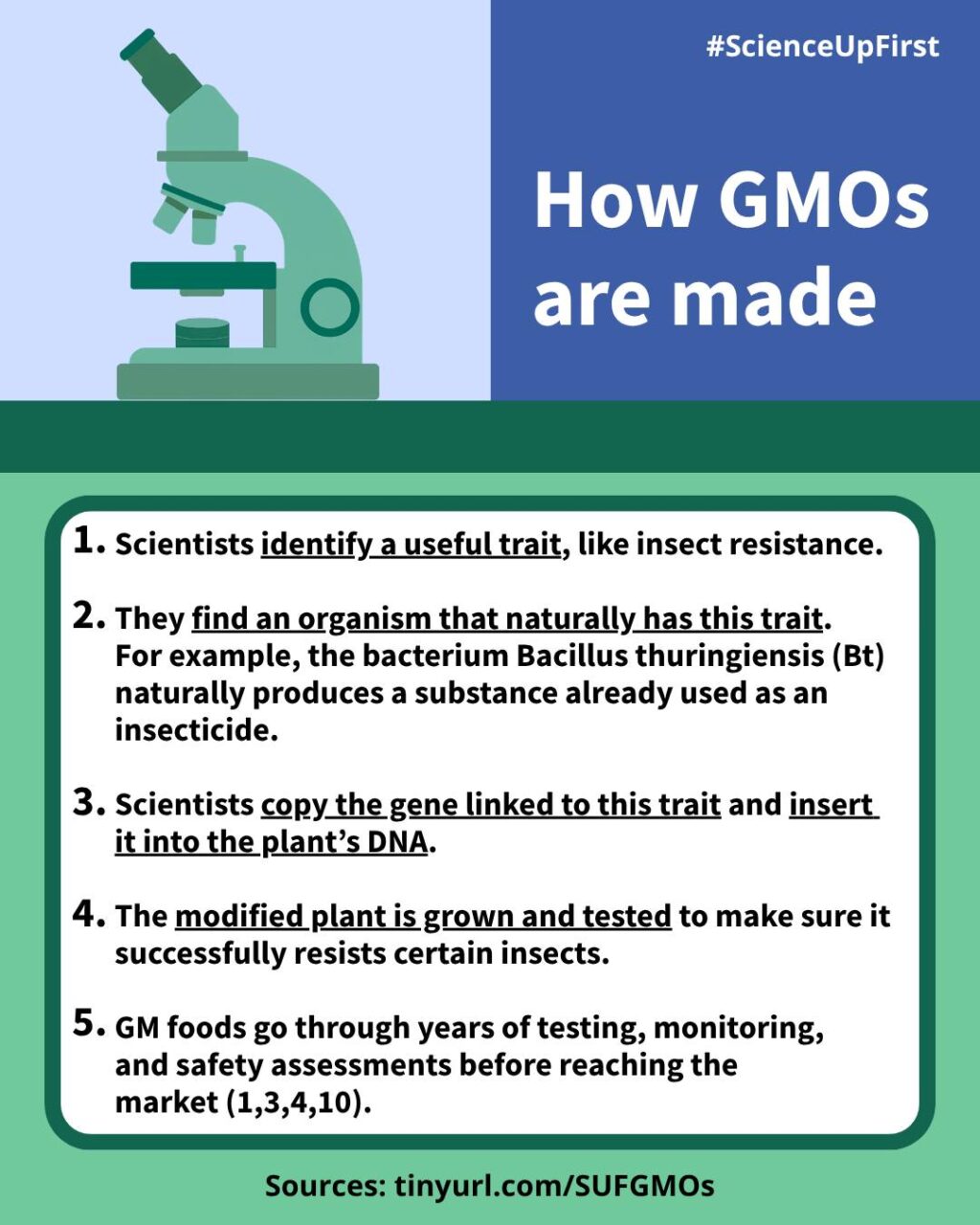
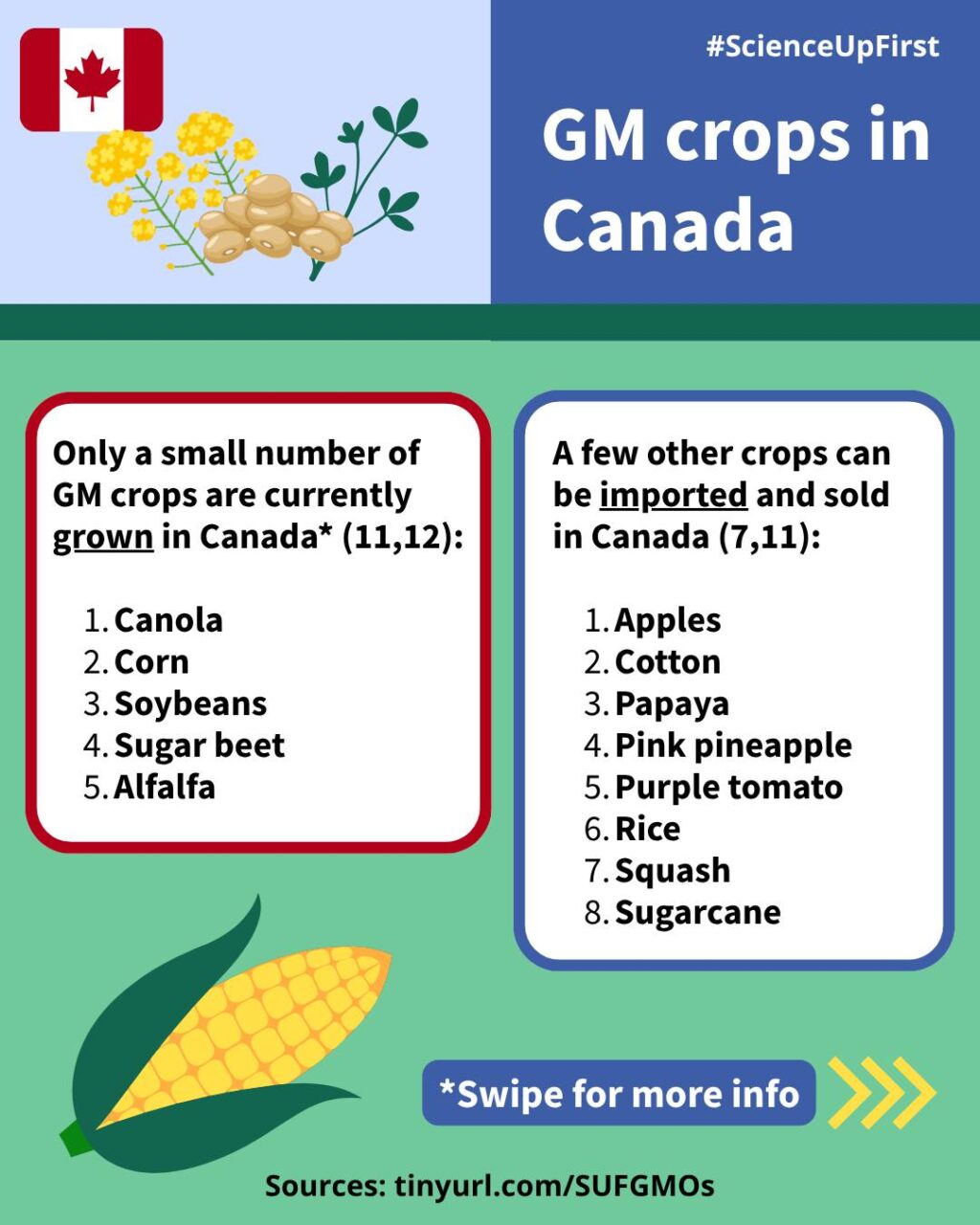
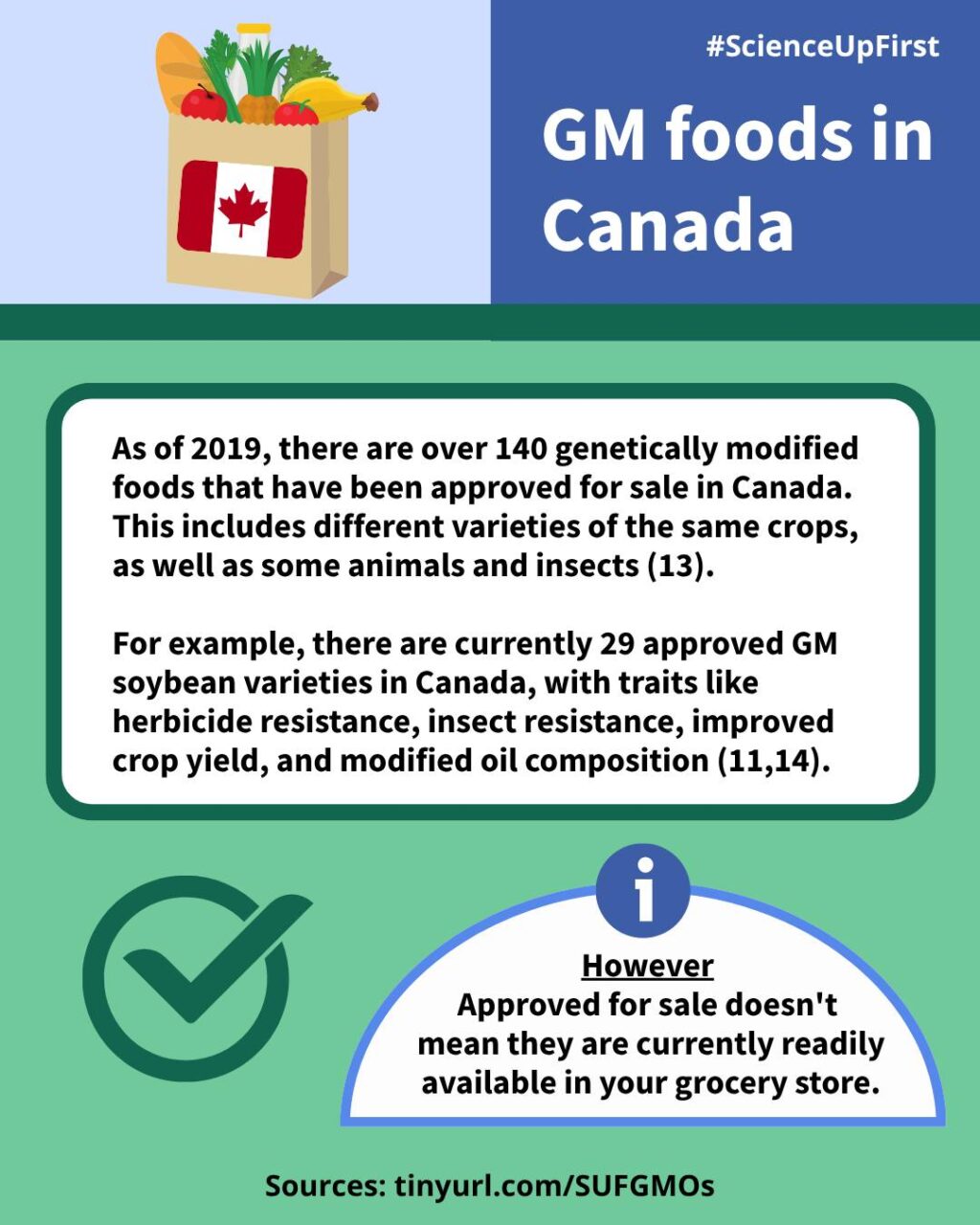
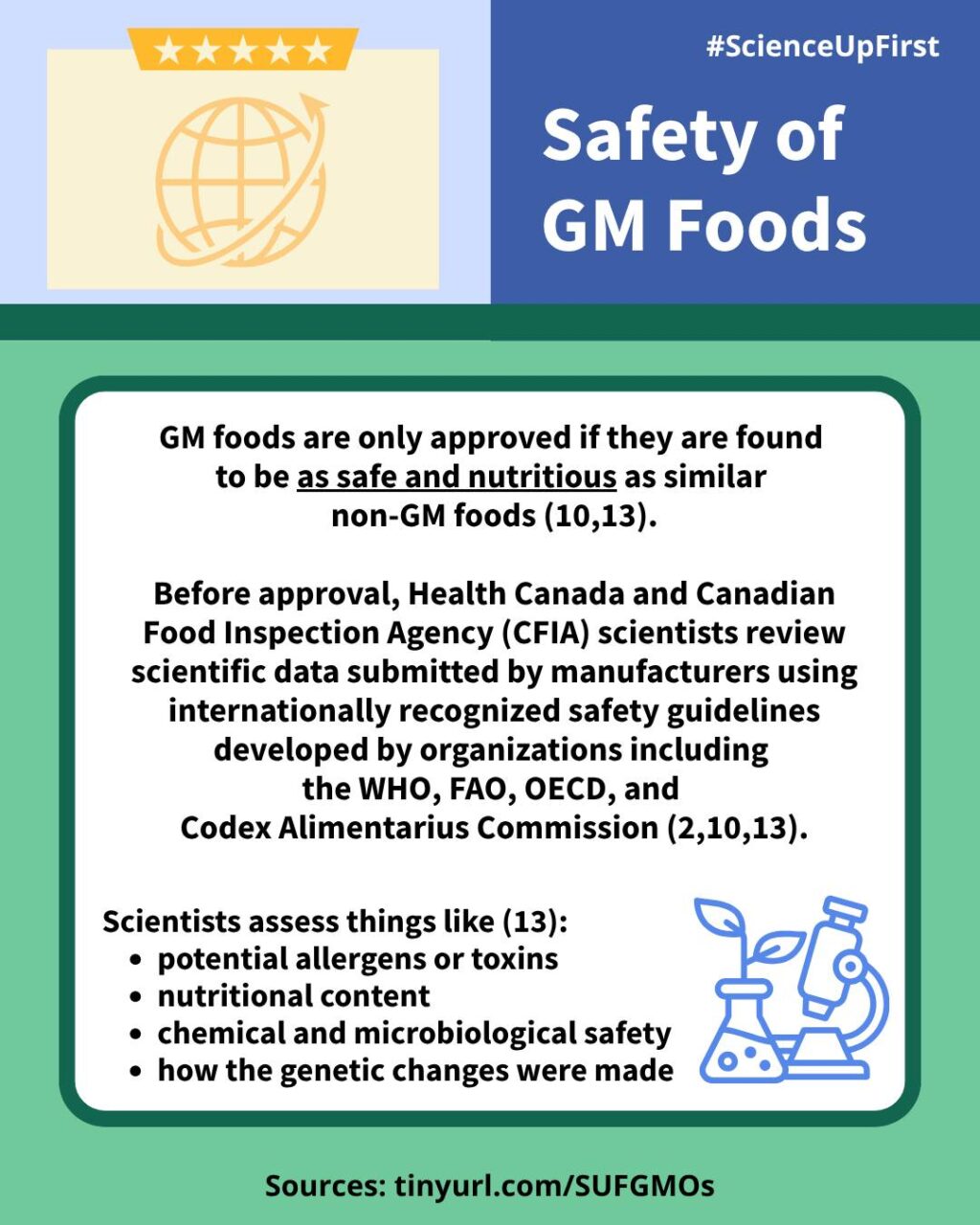
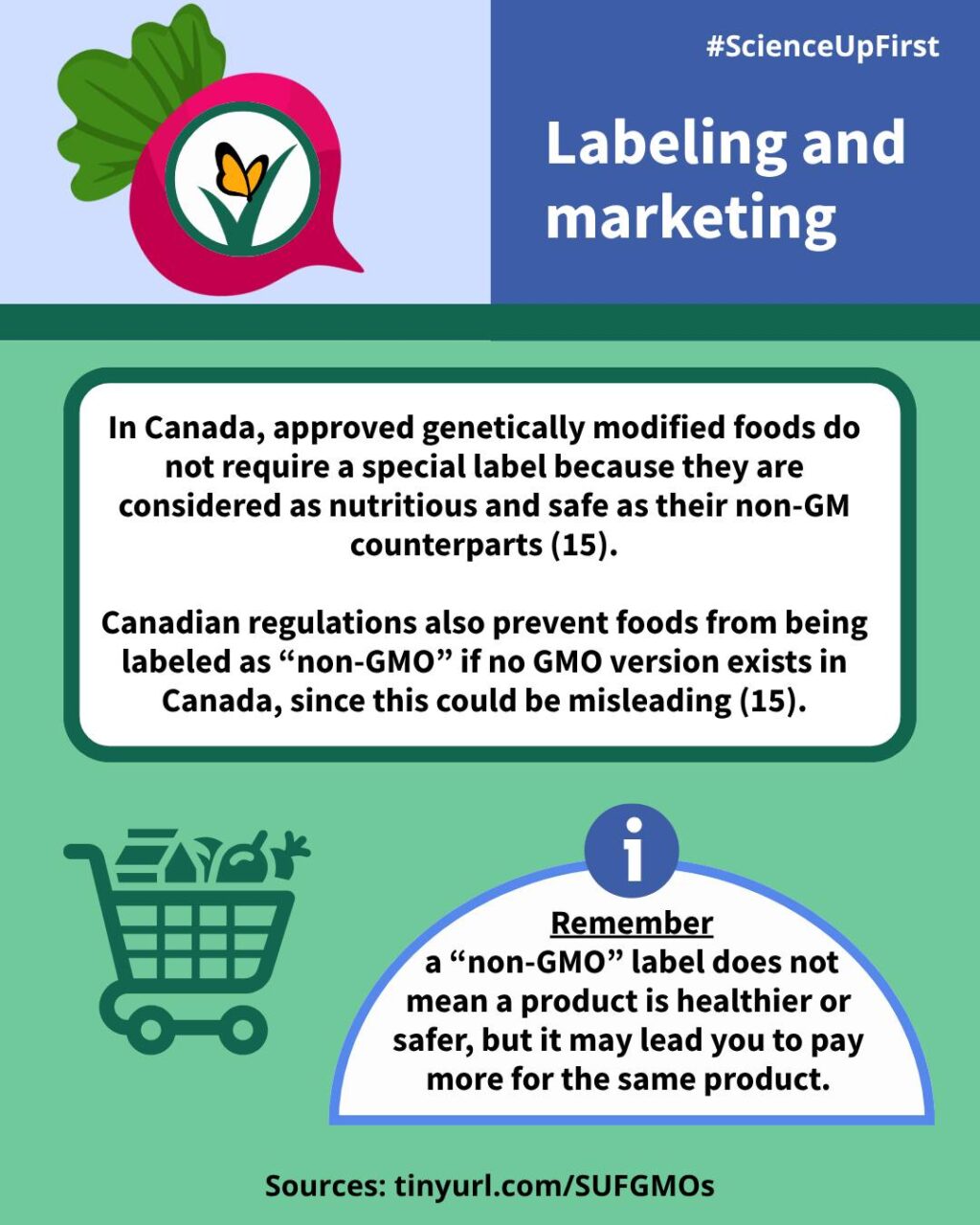
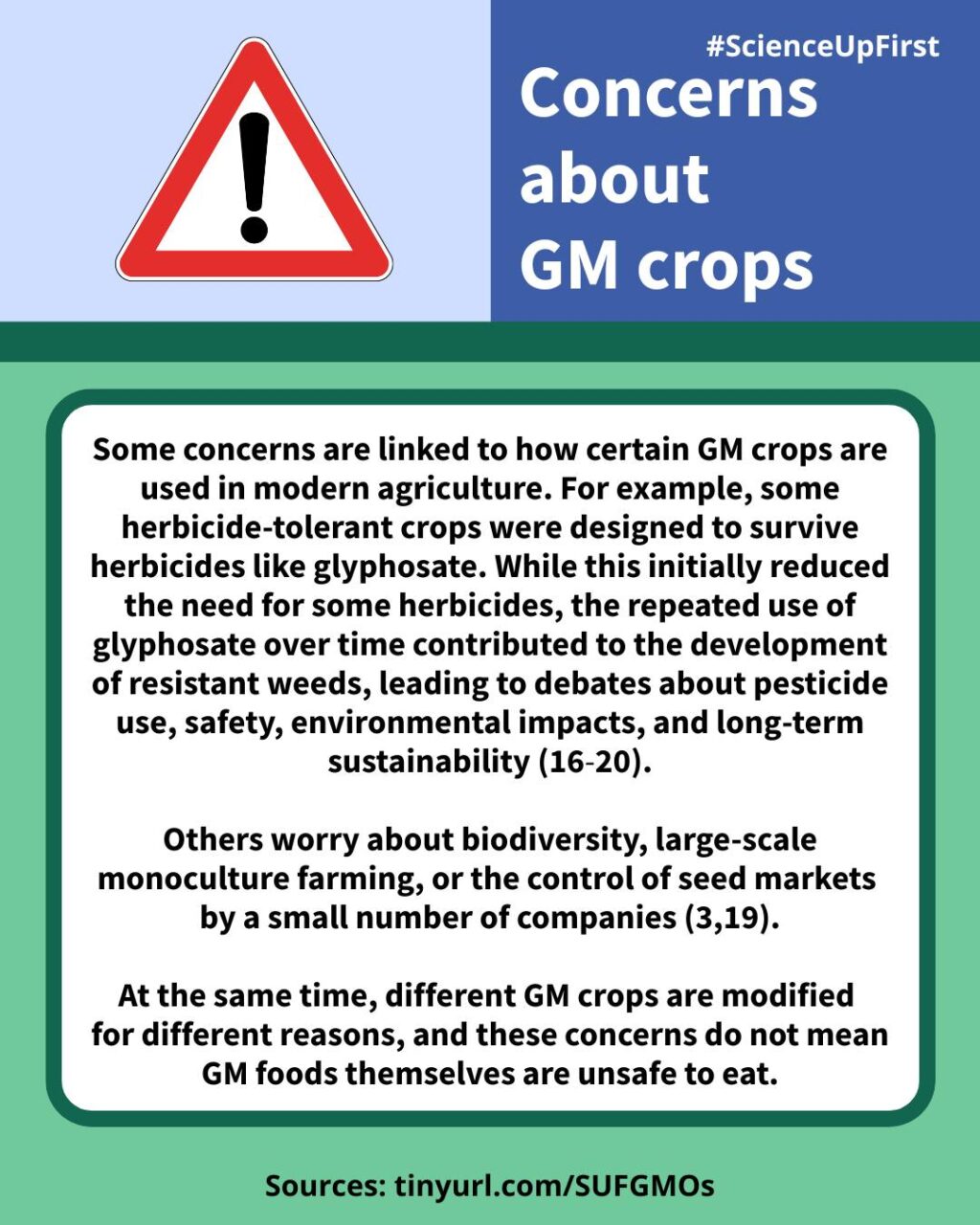
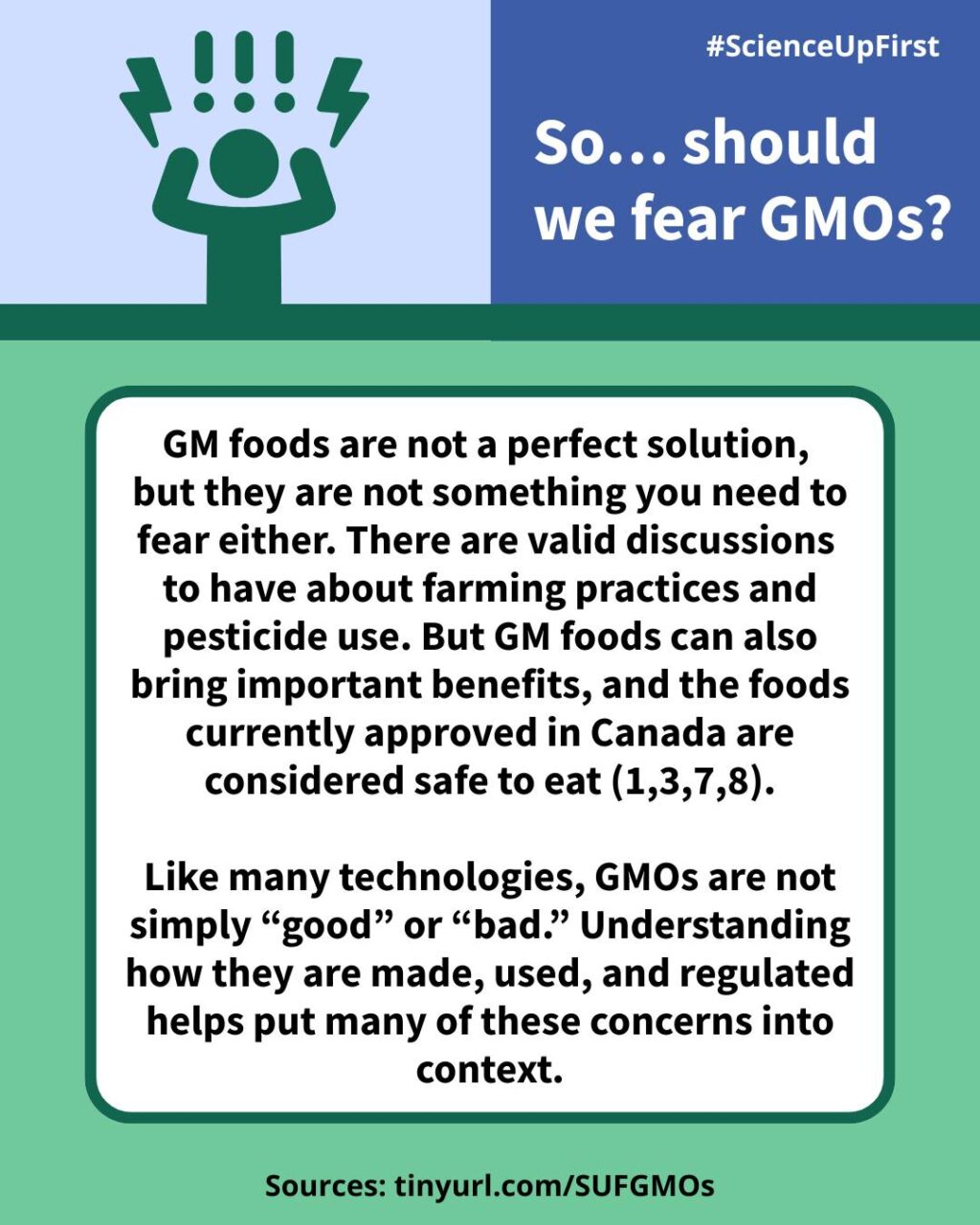
GMOs tend to get a bad reputation when it comes to environmental and health concerns, but a lot of those conversations are actually about how certain GM crops are used in modern agriculture, things like pesticide use and large-scale farming practices, not just the fact that the food itself is genetically modified. At the same time, genetic engineering can also offer some pretty major benefits.
One well-known example is insulin: today, most insulin is produced using genetically modified bacteria, allowing scientists to make insulin that is much closer to human insulin than older animal-derived versions which often caused allergic reactions (21,22).
GM foods can also help protect crops from devastating diseases. In Hawaii, papaya crops were heavily damaged by the papaya ringspot virus during the 1990s. A genetically modified papaya resistant to the virus helped protect papaya production, and there is still no equally effective conventional or organic way to control this disease today (23,24).
GMOs are not simply “good” or “bad.” Understanding how they are made, used, and regulated helps put many of these concerns into context.
Thank you to @foodtruthproject for reviewing this post!
- Science Explained: The GMO-making Process | Science Writers – SWCC
- About novel and genetically-modified (GM) foods | Government of Canada
- Food, genetically modified | World Health Organization | May 2014
- Science and History of GMOs and Other Food Modification Processes | FDA | Content current as of May 2024
- CRISPR in Agriculture | Innovative Genomics Institute (IGI)
- ZFN, TALEN and CRISPR/Cas-based methods for genome engineering | Trends in Biotechnology | July 2014
- GMOs | CropLife Canada
- How GMO Crops Impact Our World | FDA | Content current as of May 2024
- Genetically modified foods: safety, risks and public concerns—a review | Journal of Food Science and Technology | December 2012
- From Science to Seed | CropLife Canada
- Completed safety assessments of novel foods including genetically modified (GM) foods | Government of Canada
- List of Bioengineered Foods | Agricultural Marketing Service
- The safety of genetically modified (GM) foods | Government of Canada
- BE Soybean Crop Summary | Agricultural Marketing Service
- Labelling genetically modified (GM) foods | Government of Canada
- Genetically modified glyphosate-tolerant soybean in the USA: adoption factors, impacts and prospects. A review | Agronomy for Sustainable Development – Springer Nature Link | March 2008
- IARC Publications Website – Some Organophosphate Insecticides and Herbicides | International Agency for Research on Cancer (IARC) | 2017
- Glyphosate in people living in Canada | Government of Canada
- The Monsanto Controversy: From GMOs to Roundup | ScienceInsights | September 2025
- Benefits and risks associated with genetically modified food products | Annals of Agricultural and Environmental Medicine | 2013
- The History of a Wonderful Thing We Call Insulin | American Diabetes Association | July 2019
- 100 Years of Insulin | FDA | Content current as of August 2022
- How GM papaya saved Hawaii’s papaya industry | GMO Answers
- Development of genetically engineered resistant papaya for papaya ringspot virus in a timely manner: a comprehensive and successful approach | Methods in Molecular Biology | 2007
Share our original Bluesky Post!
GMOs tend to get a bad reputation but they are not simply “good” or “bad.” Understanding how they are made, used, and regulated helps put many of these concerns into context. 👇 scienceupfirst.com/nutrition/wh… What’s your take on GMOs? #ScienceUpFirst
— ScienceUpFirst (@scienceupfirst.bsky.social) June 11, 2026 at 11:29 AM
[image or embed]
View our original Instagram Post!