
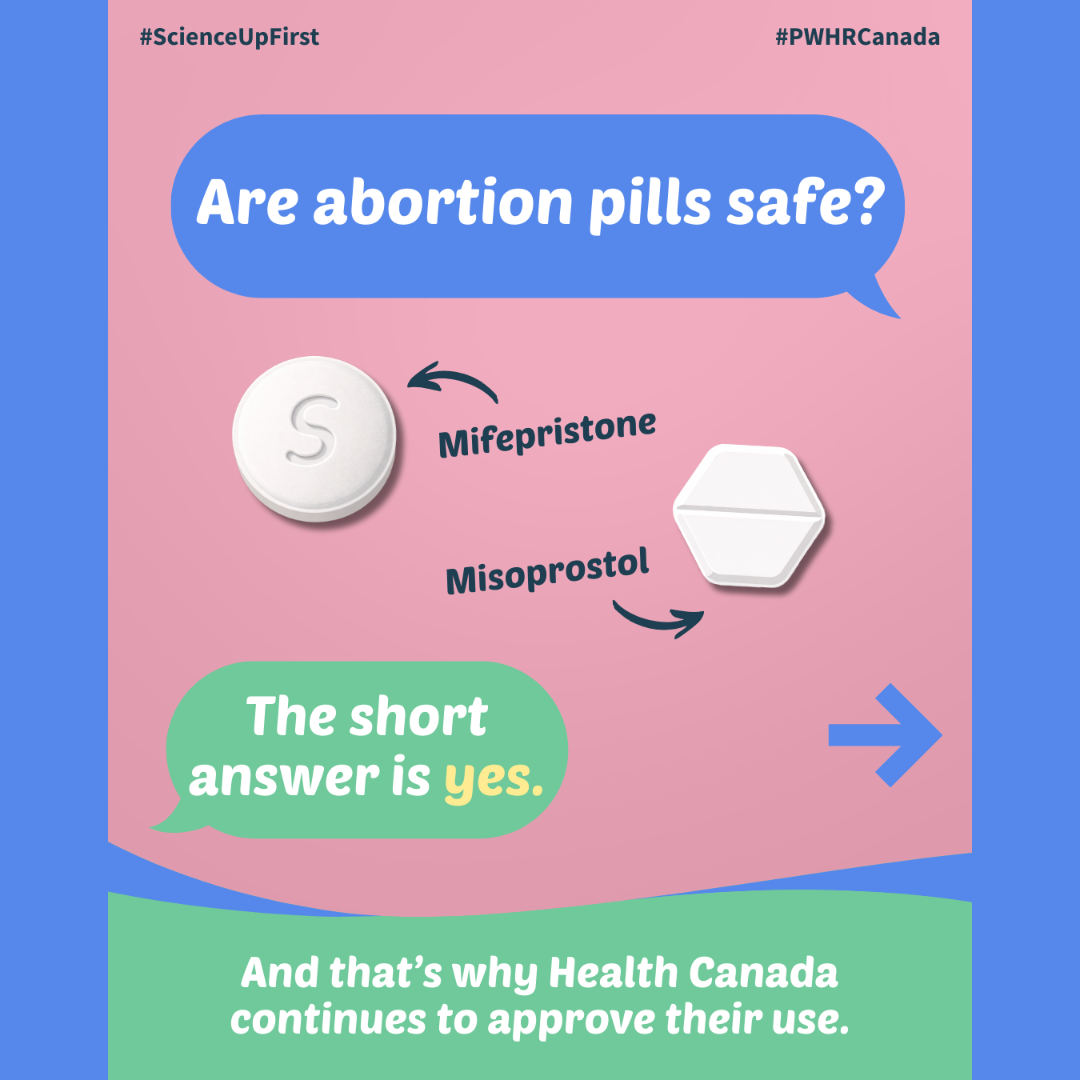
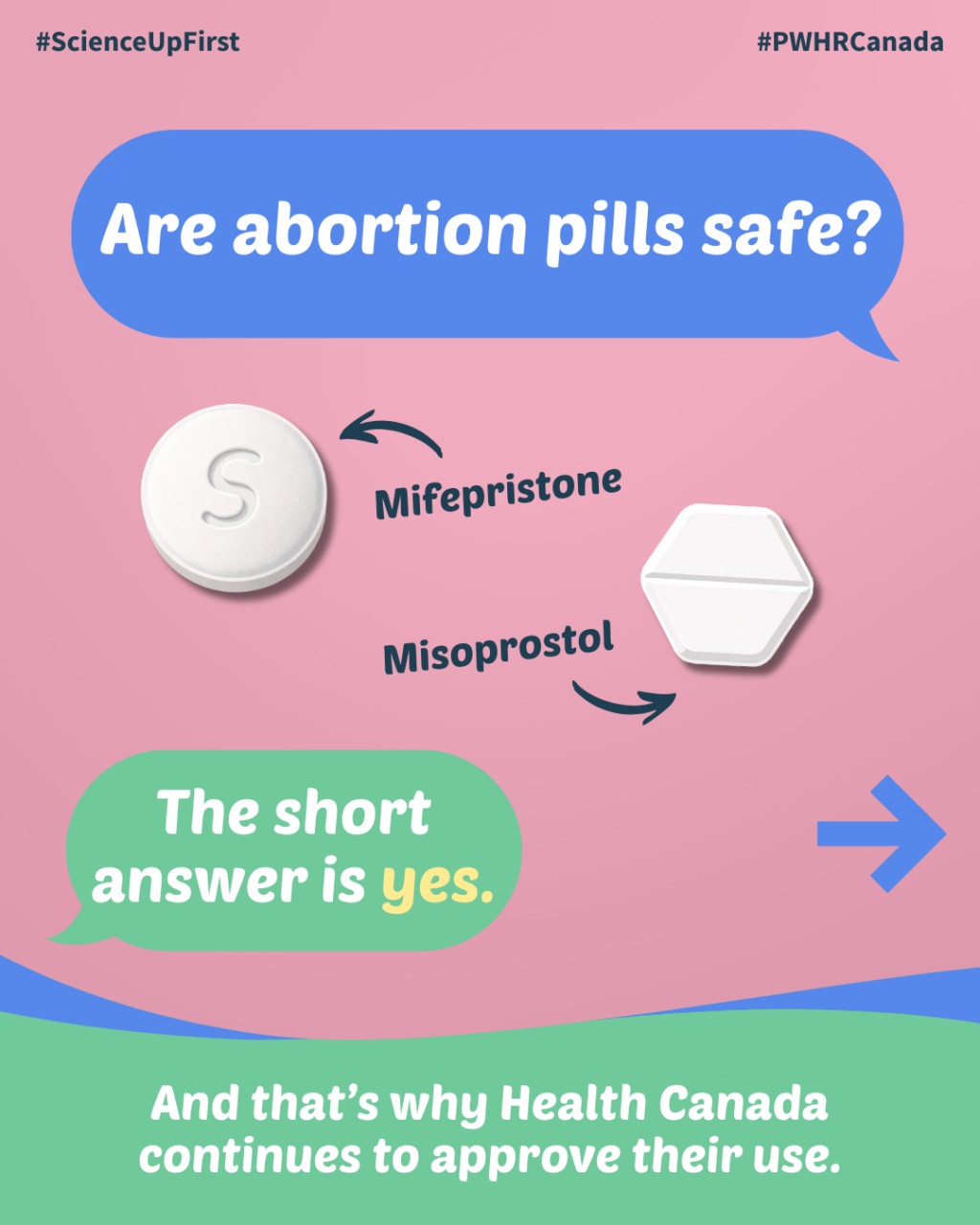
Are abortion pills safe?
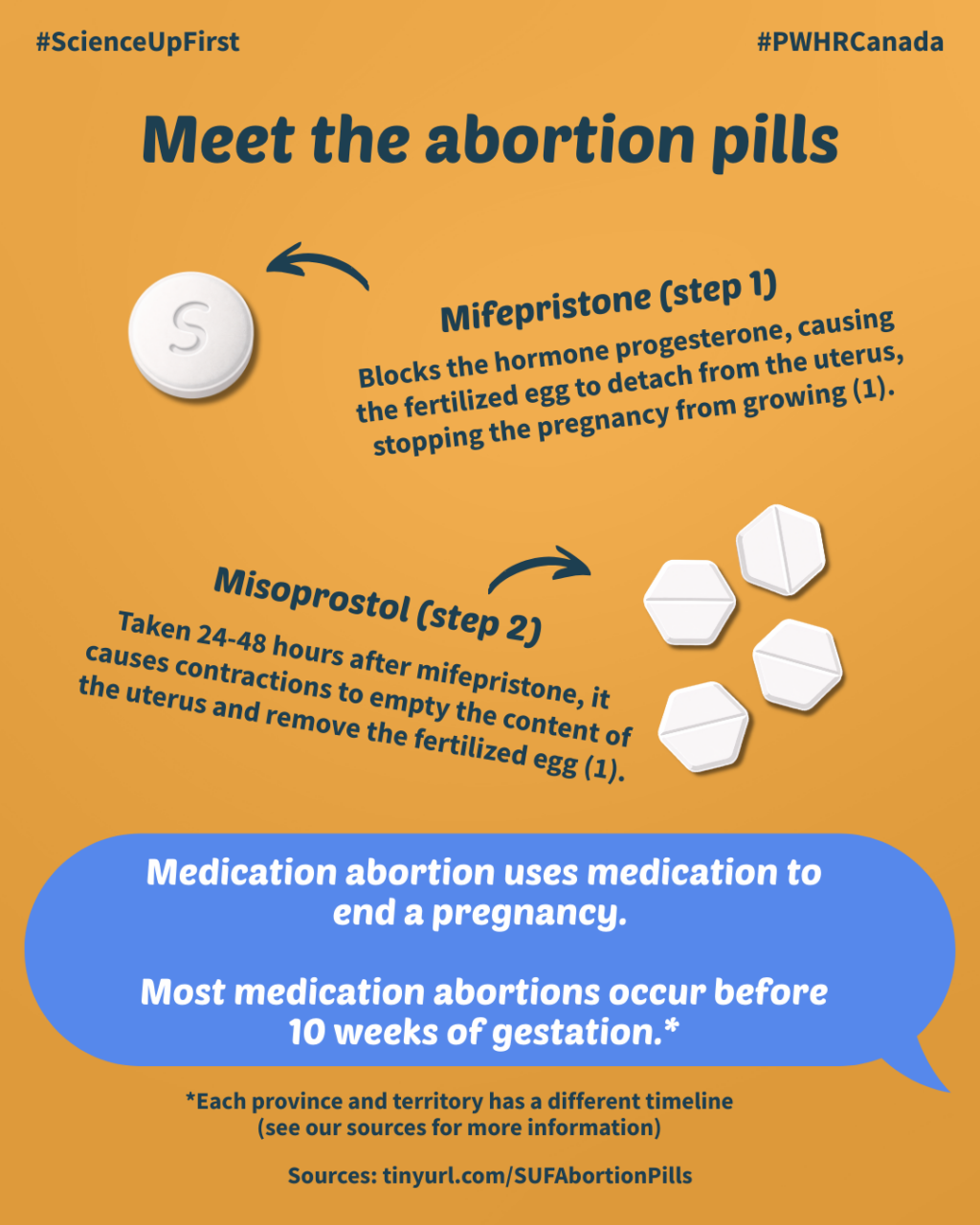
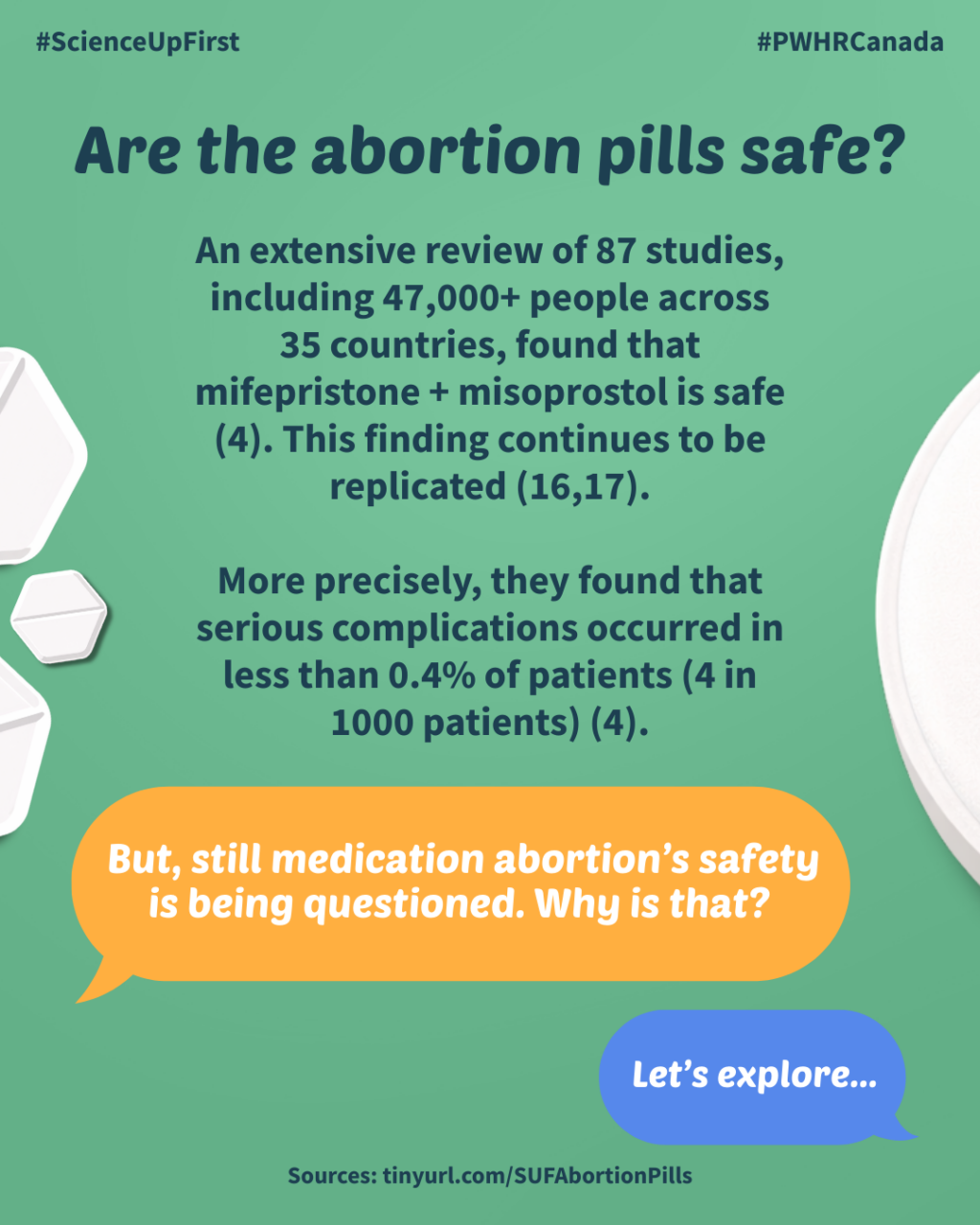
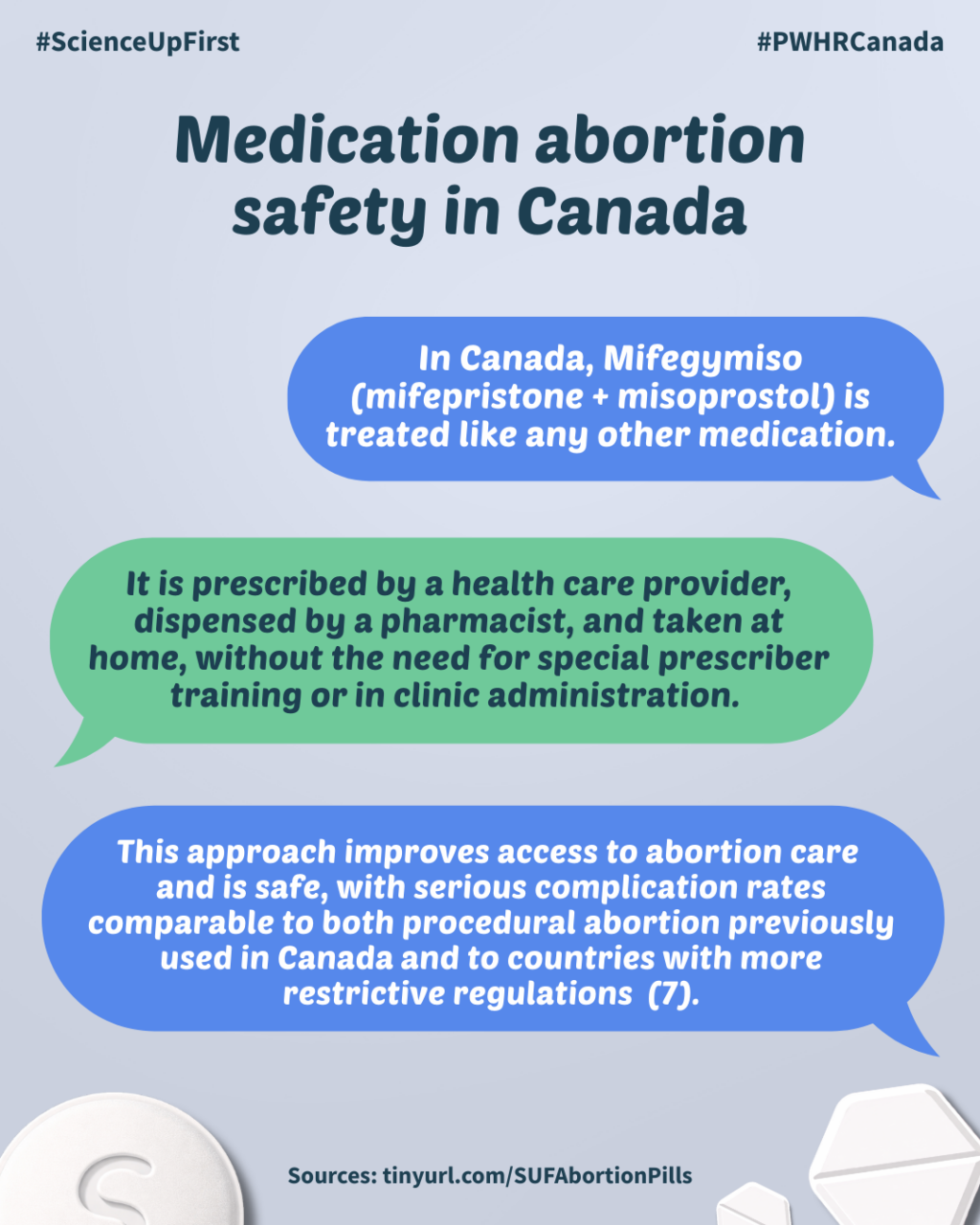
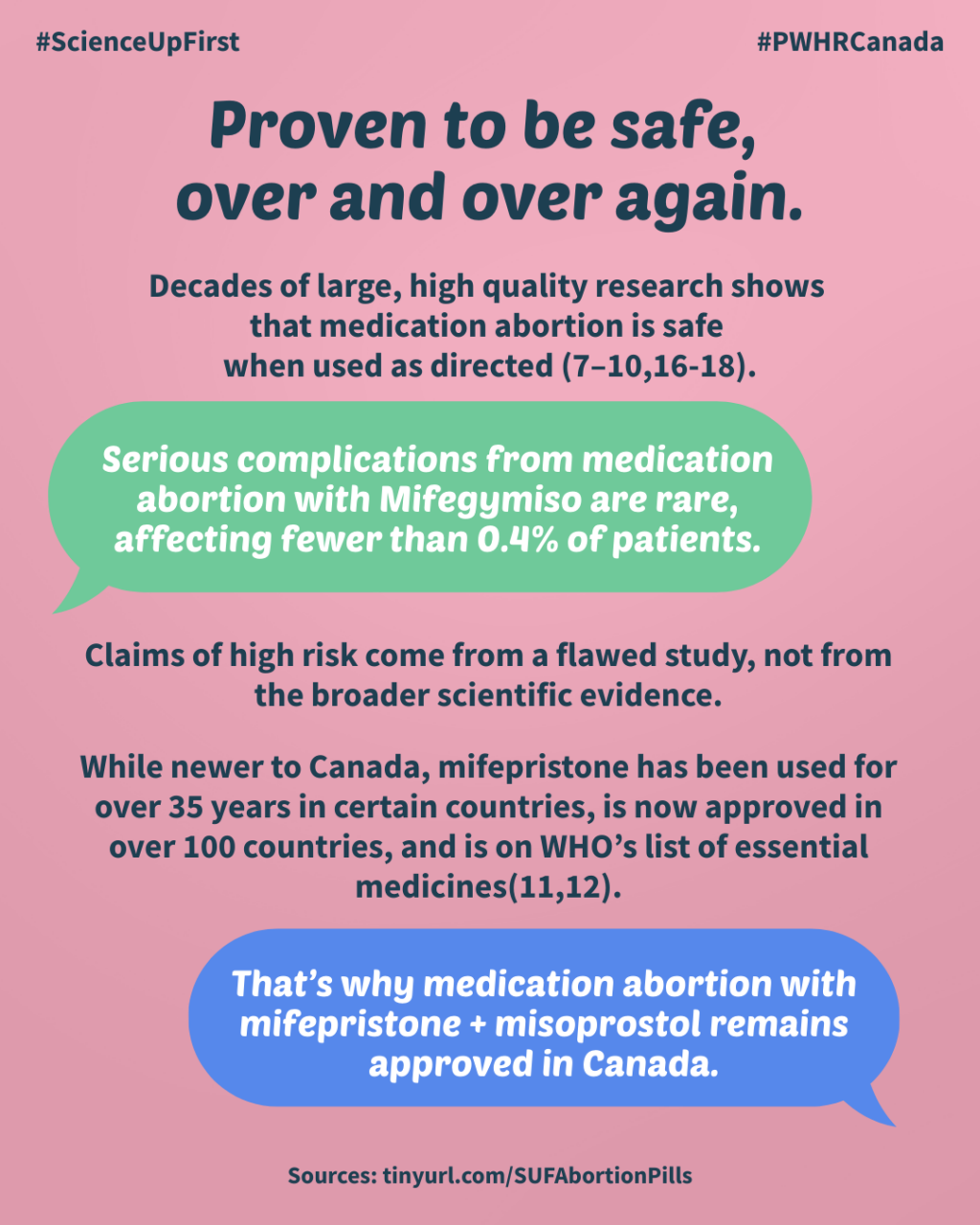
Yes. Decades of research show that medication abortion with mifepristone + misoprostol is safe, with serious complications occurring in fewer than 0.4% of patients.
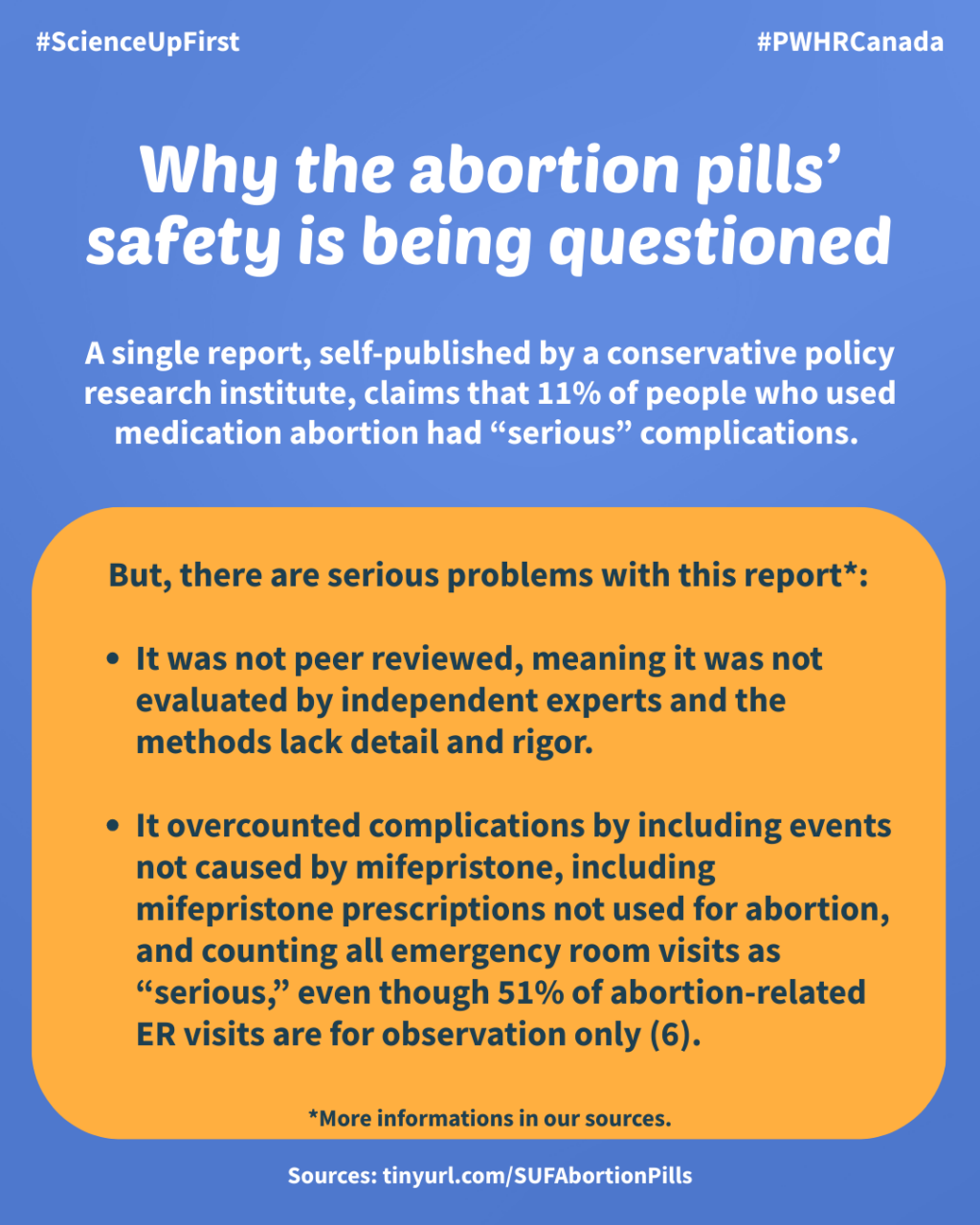
So why are people questioning it? People are using a flawed report to spread misleading claims.
This post was made in collaboration with @pwhrcanada.
Additional resources
Want more information? Here are some answers to common questions.
Who can get a medication abortion in Canada?
Medication abortions are free for residents of Canada covered by provincial or territorial health insurance, First Nations and Inuit non-insured health benefits, or the Interim Federal Health plan provided by Immigration, Refugees and Citizenship Canada (2).
When you can get a medication abortion depends on where you live. In Canada, medication abortion is available in the first 7 to 12 weeks of pregnancy, depending on the province or territory (3).
| Province or Territory | A medication abortion can be completed before |
| Alberta | 10 weeks |
| British Columbia | 10 weeks |
| Manitoba | 10 weeks |
| New Brunswick | 9 weeks |
| Newfoundland and Labrador | 9 weeks |
| Northwest Territories | 11 weeks |
| Nova Scotia | 7 weeks |
| Nunavut (NOW) | 11 weeks |
| Ontario | 9-11 weeks depending on the clinic |
| Prince Edward Island | 10 weeks |
| Québec | 12 weeks |
| Saskatchewan | 9 weeks |
| Yukon | 9 weeks |
Are there any other concerns about the report that states that medication abortion is unsafe?
This report is self-published. This can be problematic because sometimes, such as in this case, reports are produced to support an organization’s policy position and advocacy goal. As we explained in our post, this report is not peer reviewed. While the organization states that this report was created by a team of data scientists, analysts, engineers and board-certified obstetricians and gynaecologists who have a history of academic research and peer-reviewed publication, they are not listed. It is expected that authors are named in scientific publications. It allows readers to evaluate the author’s credibility based on their training and disciplinary background, previous publication, and conflicts of interest.
Our post also explained that the report overcounted serious complications. For example, the authors considered ectopic pregnancy (when a fertilized egg implants outside of the uterus) a serious complication. However, ectopic pregnancy happens before mifepristone is taken and cannot be caused by the medication (13). The report authors also counted emergency room visits as a serious complication. While they can signal a serious problem, it does not always mean that one occurred. The report also states that needing another abortion is a serious complication. However, research shows that 2-5% of people who have medication abortions require a surgical abortion (a simple procedure used to remove pregnancy tissue left in the uterus) (14,15). This follow up care is expected and appropriate and is not a severe complication.
There are some other problems with the way that the study was conducted too. This includes who was studied and a lack of transparency in defining serious consequences.
Some individuals may not have used the medication correctly:
The report included individuals who were prescribed mifepristone, but the researchers did not confirm if they actually took the medication. The report also included individuals who did not take misoprostol after taking mifepristone. Medication abortions work best when mifepristone is taken first, and then misoprostol is taken 24 to 48 hours later. This is how the medication is used in studies that show it is safe and effective. Including people who did not follow this process could explain why the study found more serious consequences.
The definition of serious consequences was unclear:
The researchers had a few clear definitions of what they considered serious consequences, however, one of the definitions of a serious consequence was a “small number of [symptoms]” chosen by their team of physicians. These symptoms were not explained. This makes it hard to know if these symptoms would be considered serious by all physicians.
For more information about deciding if you want to have an abortion, what to expect, and other resources: Abortion – Sex & U
- FAQ: The Abortion Pill Mifegymiso | Action Canada for Sexual Health and Rights
- Abortion in Canada | Government of Canada
- List of Abortion Clinics in Canada | Abortion Rights Coalition of Canada | Updated March 7, 2026
- First-trimester medical abortion with mifepristone 200 mg and misoprostol: a systematic review | Contraception | January 2013
- The Abortion Pill Harms Women: Insurance Data Reveals One in Ten Patients Experiences a Serious Adverse Event | Ethics & Public Policy Center | April 2025
- Abortion-related emergency department visits in the United States: An analysis of a national emergency department sample – PubMed | BMC Med | June 2018
- Abortion Safety and Use with Normally Prescribed Mifepristone in Canada | New England Journal of Medicine | December 2021
- Home use of mifepristone for medical abortion: a systematic review | BMJ Sexual & Reproductive Health | October 2024
- Medical termination for pregnancy in early first trimester (≤ 63 days) using combination of mifepristone and misoprostol or misoprostol alone: a systematic review | BMC Women’s Health | July 2020
- Combination of Mifepristone and Misoprostol for First-Trimester Medical Abortion: A Comprehensive Review of the Literature | Obstetrical & Gynecological Survey | January 2024
- Mifepristone Approved List | Gynuity Health Project | 2024
- Electronic Essential Medicines List | World Health Organization
- Ectopic Pregnancy | HealthLink BC
- Obstetrics & Gynecology | American College of Obstetricians and Gynecologists | 2020
- Medical Abortion – Journal of Obstetrics and Gynaecology Canada | Journal of Obstetrics and Gynaecology Canada | 2017
- Effectiveness, safety and acceptability of no‐test medical abortion (termination of pregnancy) provided via telemedicine: a national cohort study | BJOG: An International Journal of Obstetrics & Gynaecology | March 2021
- Effectiveness and safety of telehealth medication abortion in the USA | Nature Medicine | February 2024
- Safety and effectiveness of self-managed medication abortion provided using online telemedicine in the United States: A population based study | The Lancet Regional Health | June 2022
Share our original Bluesky Post!
Decades of research show that medication abortion with mifepristone + misoprostol is safe, with serious complications occurring in fewer than 0.4% of patients. So why are people questioning it? People are using a flawed report to spread misleading claims. 👇 scienceupfirst.com/sexual-healt…
— ScienceUpFirst (@scienceupfirst.bsky.social) March 23, 2026 at 12:20 PM
[image or embed]
View our original Instagram Post!