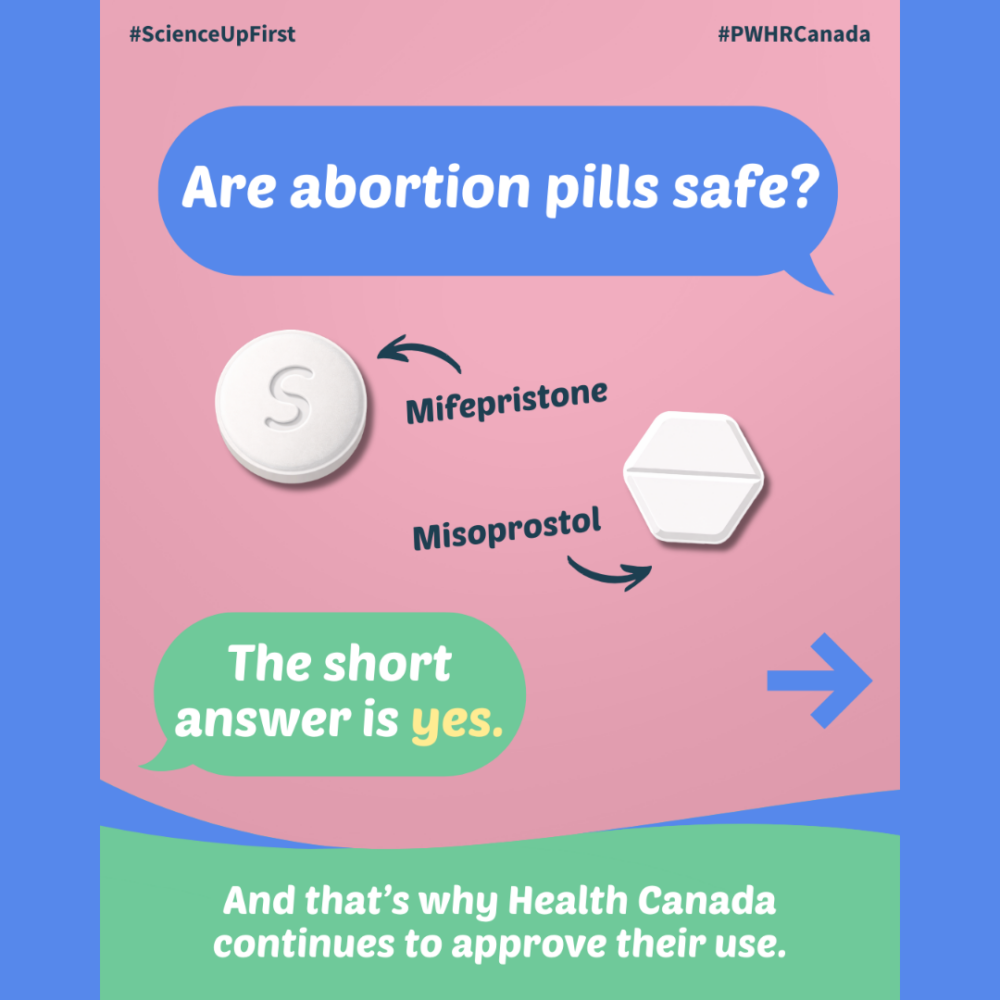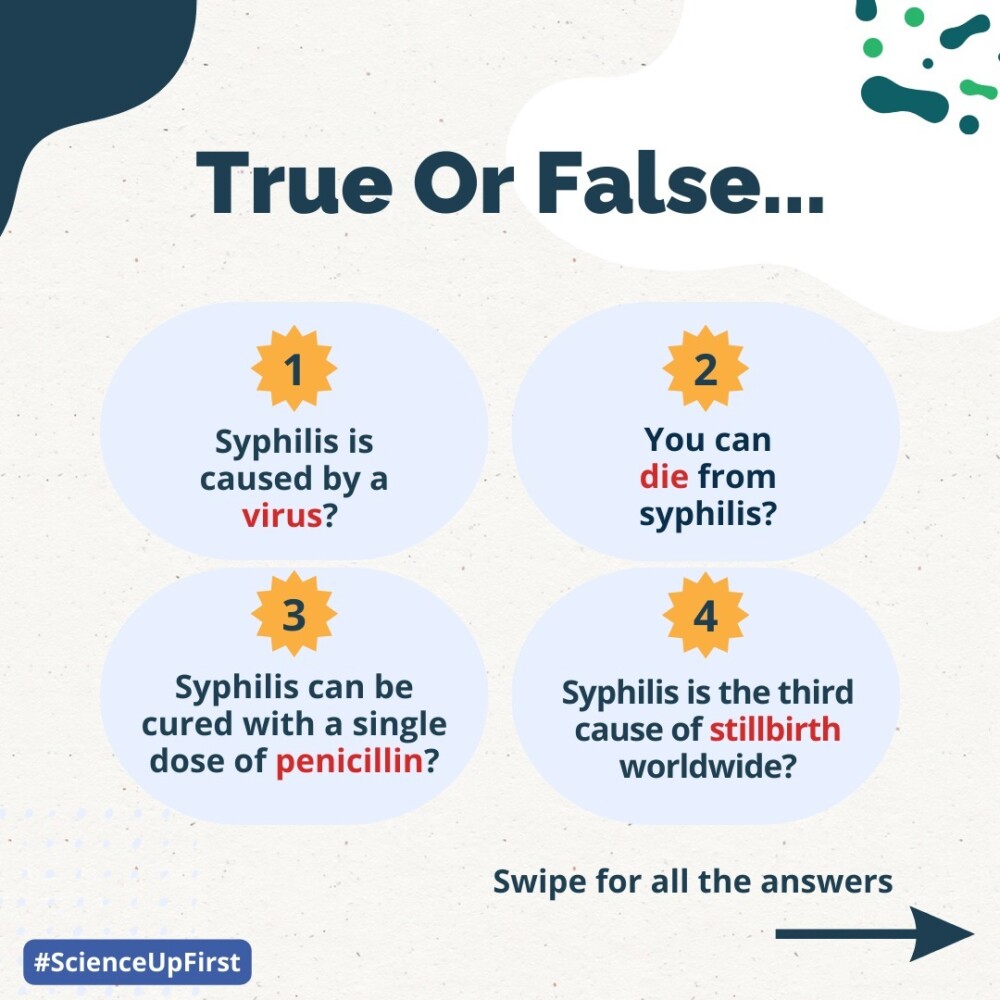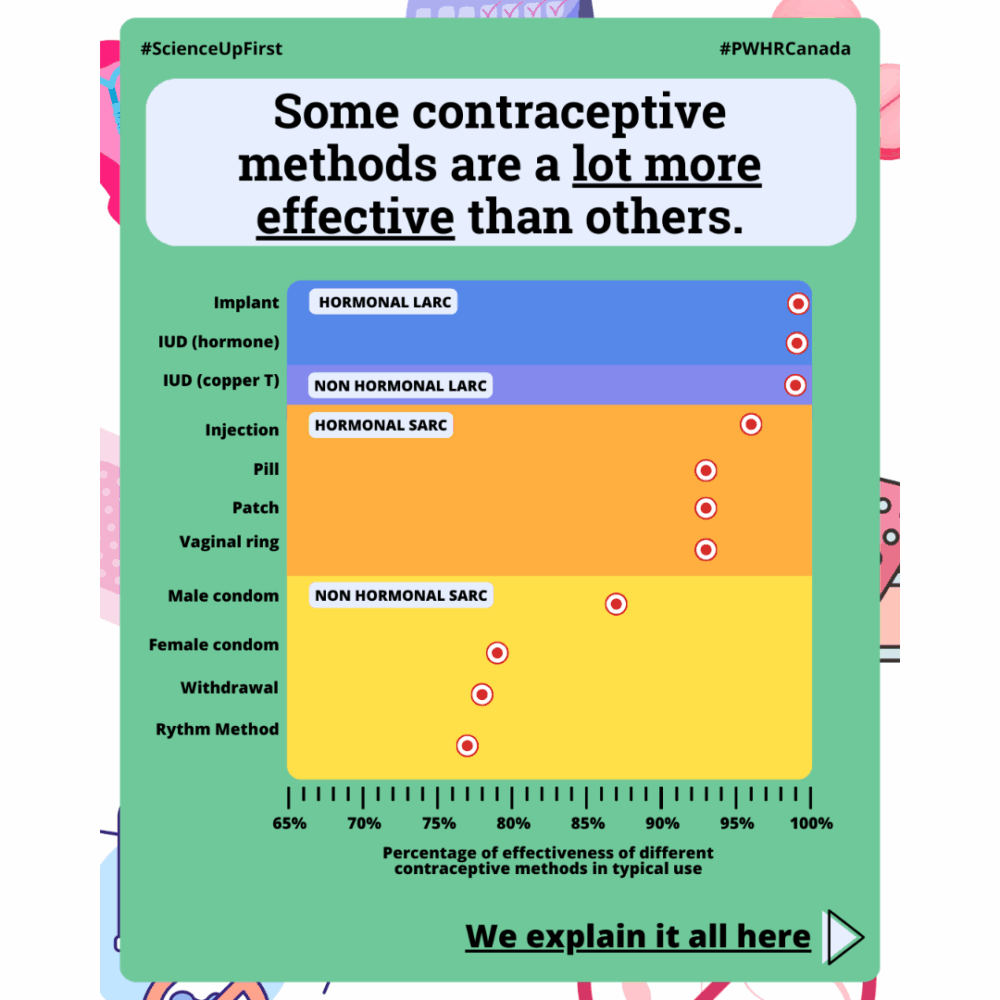

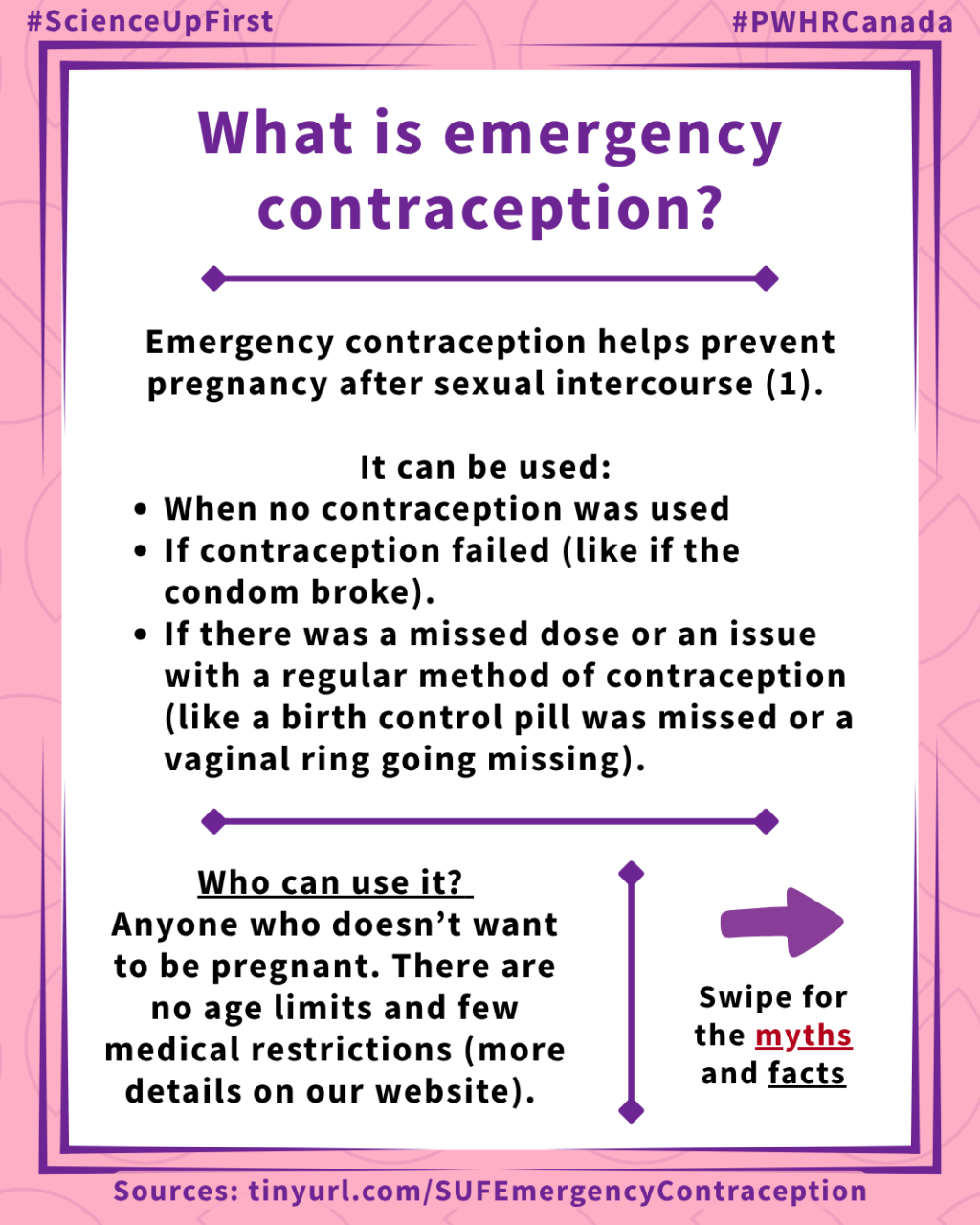
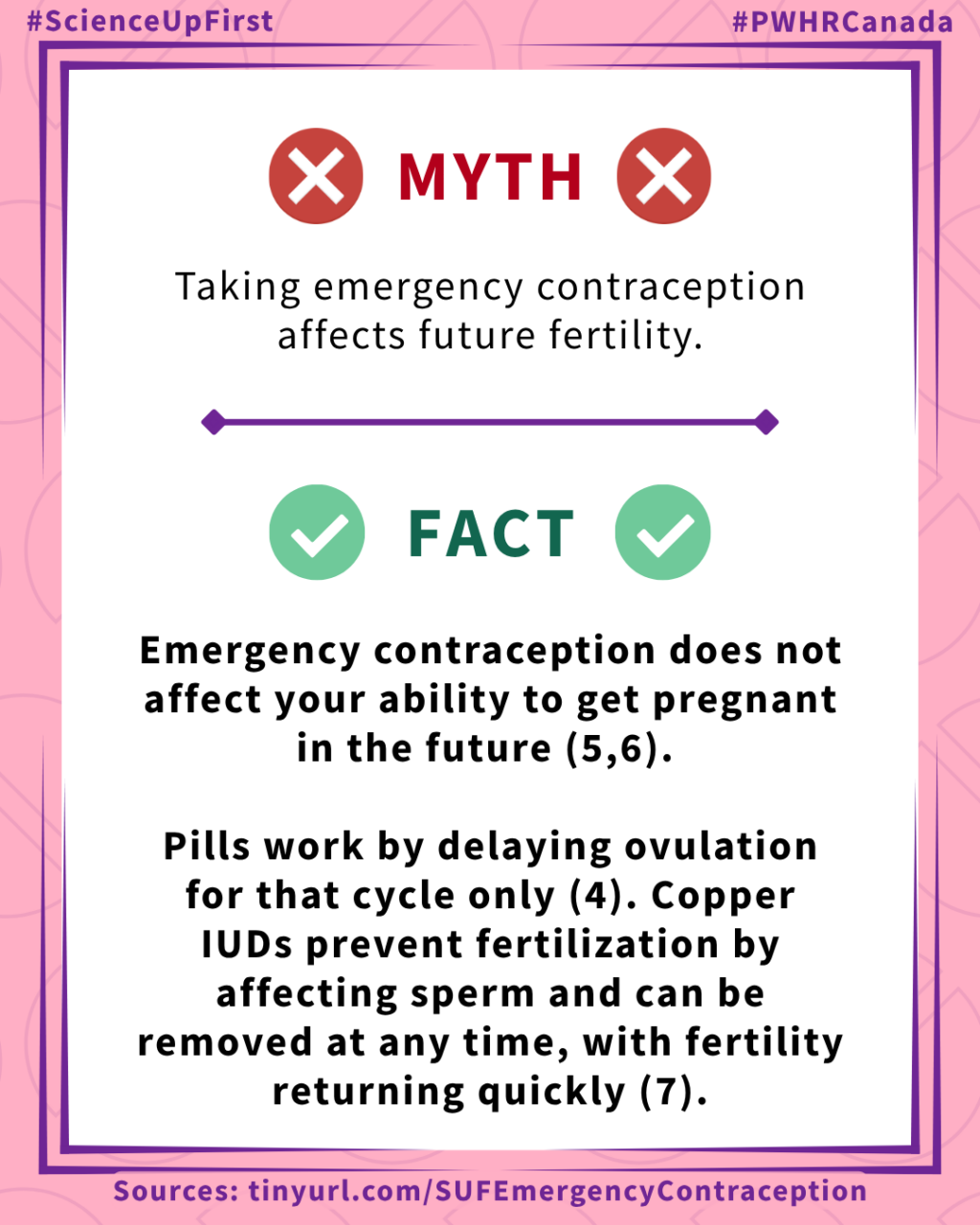
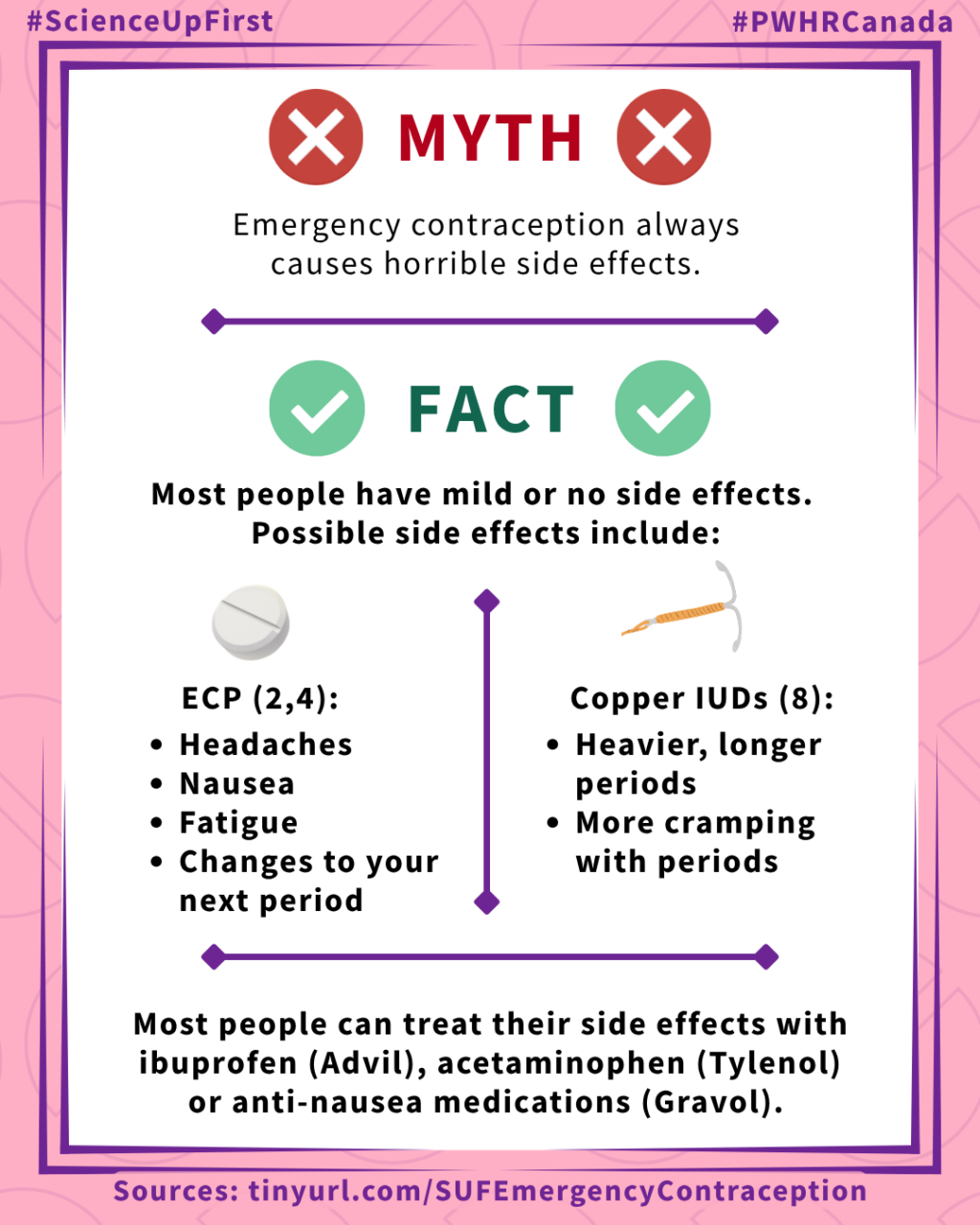
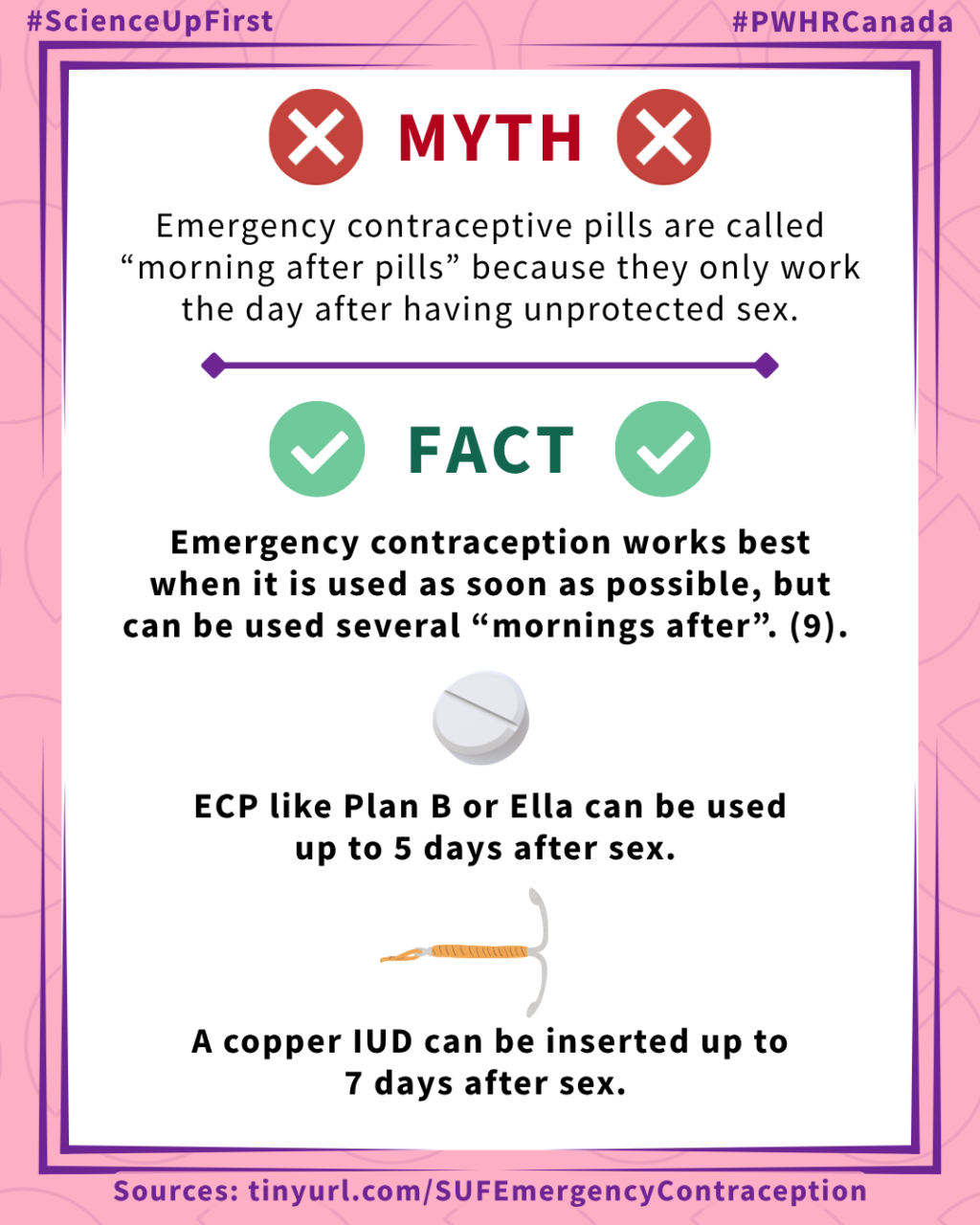
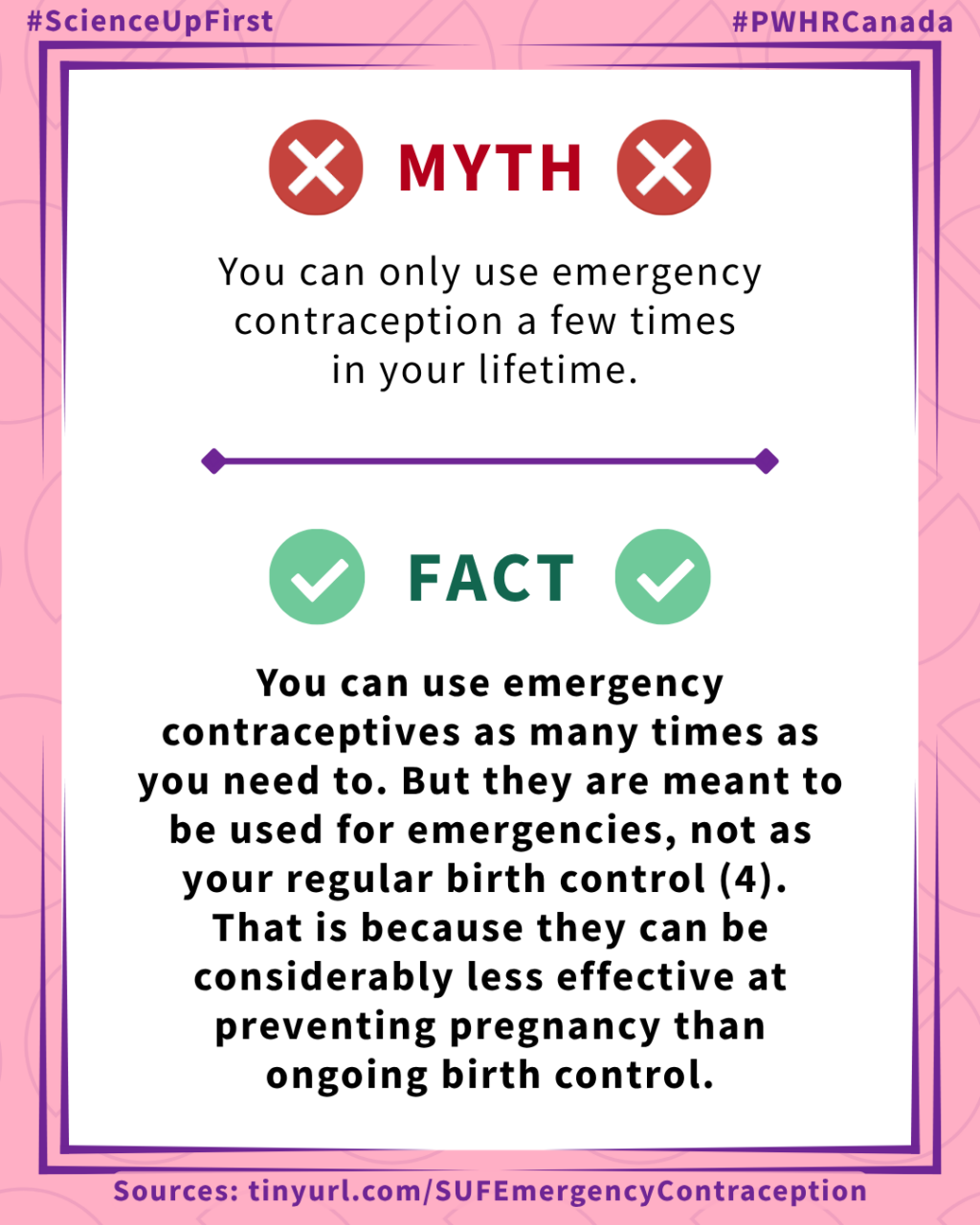
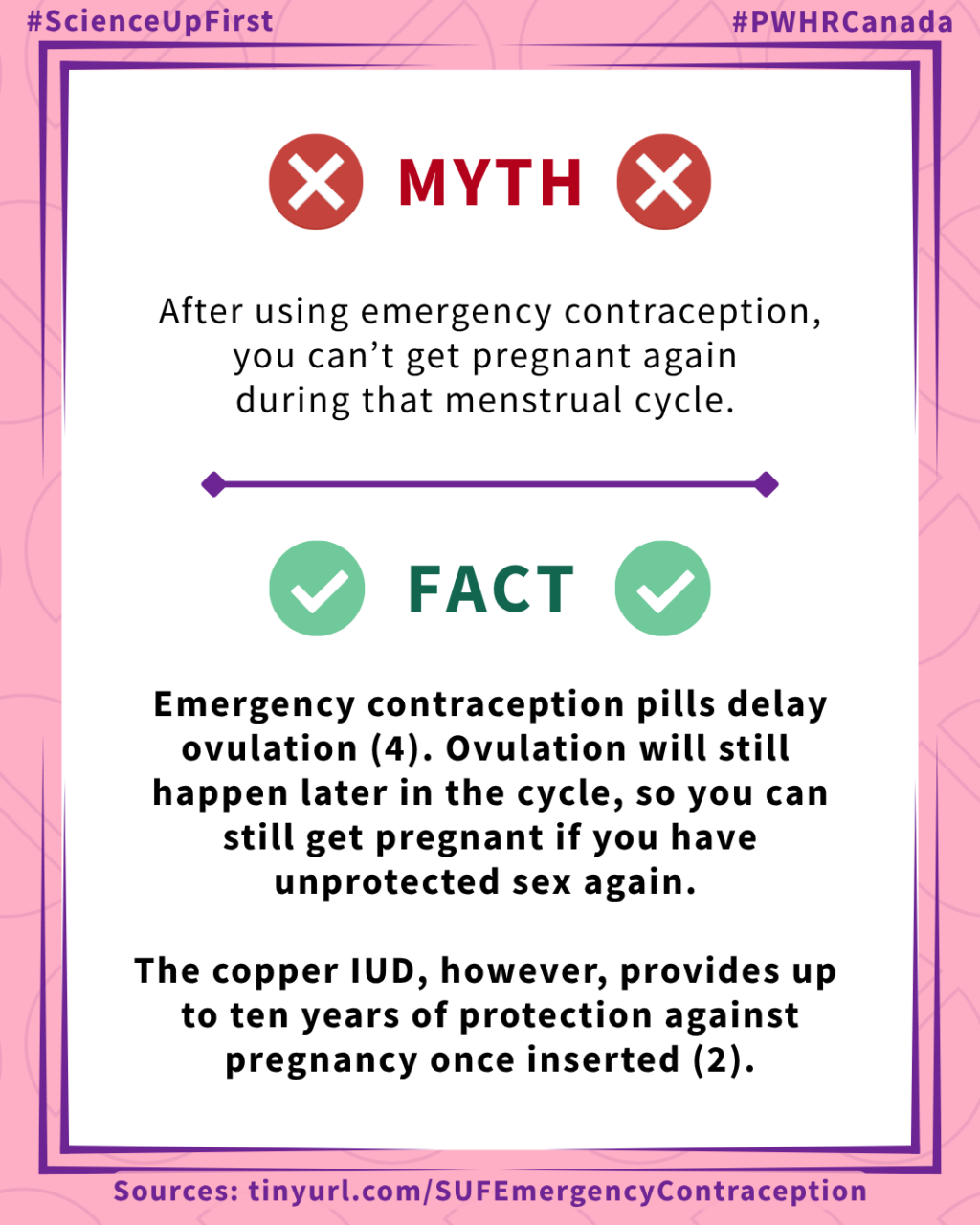
Emergency contraception is surrounded by a lot of myths and misinformation.
Can it affect fertility? Does it only work the next morning? Is Plan B the only option?
Swipe through to learn the facts about emergency contraception, how it works, and the different options available.
This post was made in collaboration with @pwhrcanada.
Resources
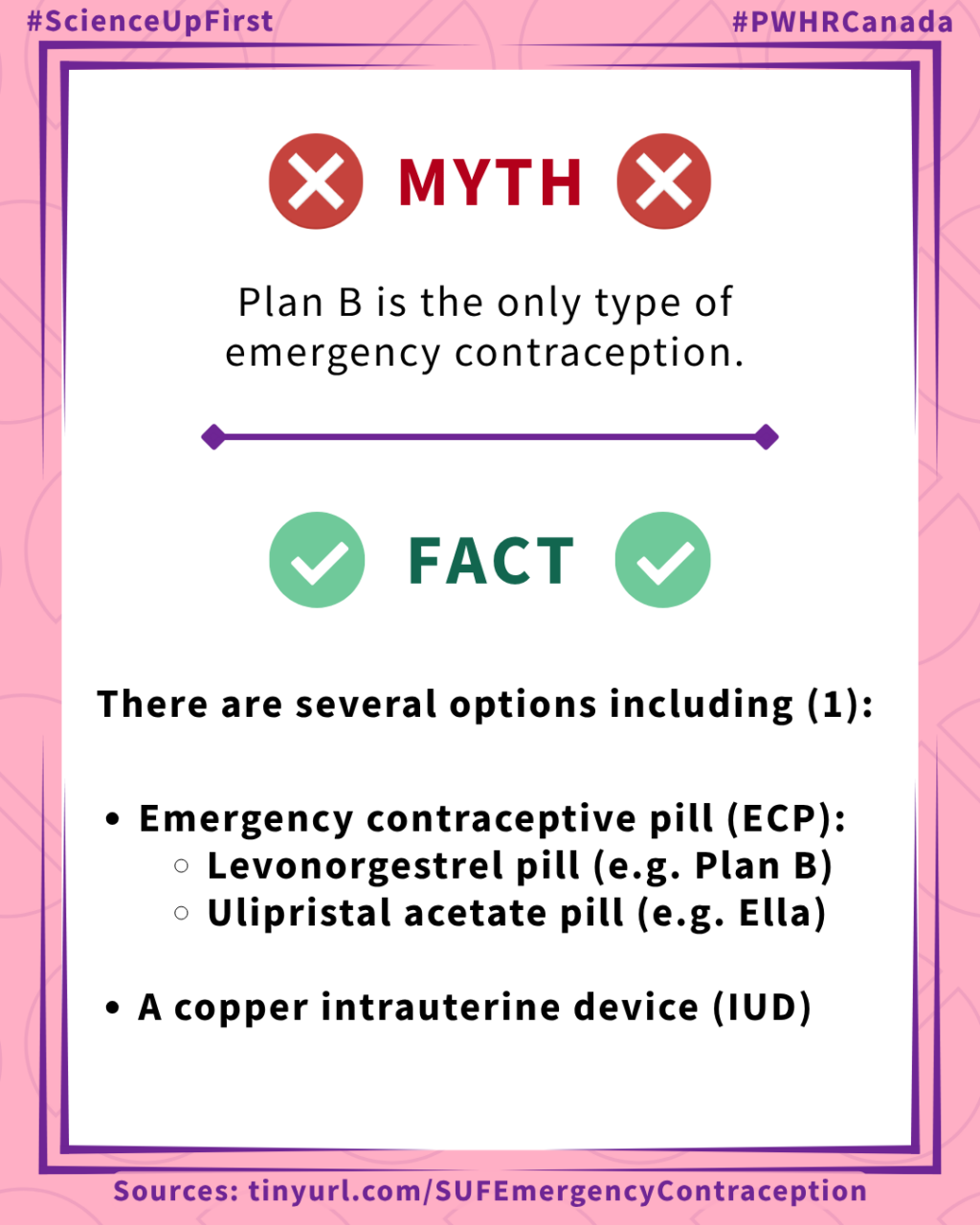
Here is an overview of the different types of emergency contraceptives.
| Type of Emergency Contraception | Key ingredient | Effectiveness | How does it work? | Where can I get it? | When should I take it? | Other things to think about |
|---|---|---|---|---|---|---|
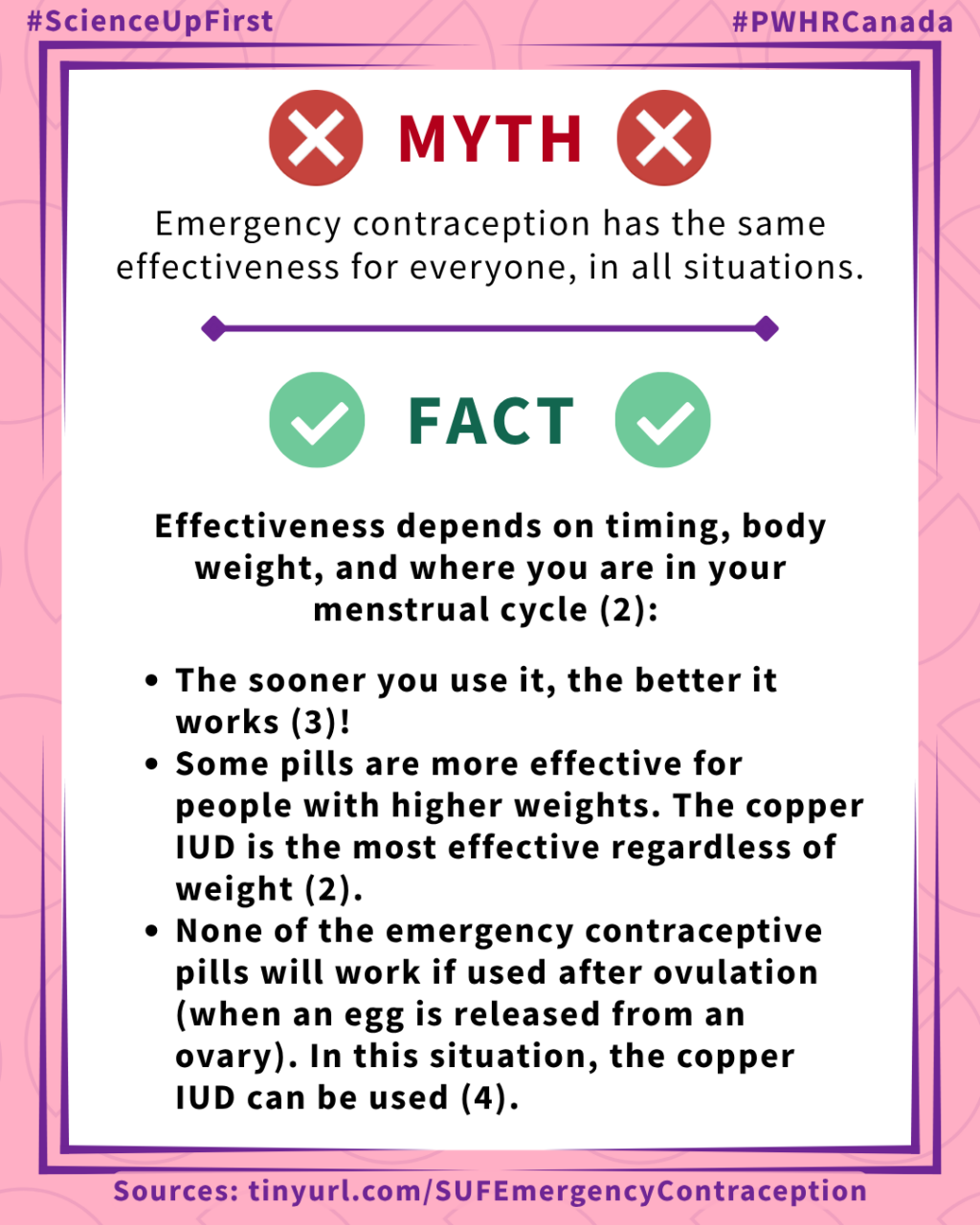
| Insertion of a Copper IUD | Copper | 99.9% (10). | Damages sperm before it can fertilize the egg (4). | Must by inserted by a health care provider. The IUD can be picked up at a pharmacy. | As soon as possible within 7 days of unprotected sex (9). | Can be used as an ongoing contraception method after insertion; talk to your health care provider to see if using a copper IUD is right for you (a small percentage of people can not use a copper IUD – more information below). |
| Ella | Ulipristal acetate | Approximately 60% (9). | Delays the release of an egg from the ovaries (4). | A physician has to write you a prescription and then it can be picked up at a pharmacy. | As soon as possible within 5 days of unprotected sex (9). | Can be used closer to ovulation than the levonorgestrel ECP. |
| Plan B, Contingency One, Backup Plan One Step, Mystep | Levonorgestrel | Approximately 50% (9). | Delays the release of an egg from the ovaries (4). | Available over-the-counter in pharmacies in Canada without a prescription. They may be located behind-the-counter to ensure proper use (2). | As soon as possible within 5 days of unprotected sex (9). | Some data suggests that it is not as effective in individuals with higher body weights (consult your healthcare provider if you have concerns) (11). It won’t work if a person has already ovulated or is about to. |
Here are some answers to other questions about emergency contraception:
Which emergency contraceptive method is the most effective?
The copper IUD is the most effective method of emergency contraception (2). The next most effective method is Ella, then Plan B (9).
Who cannot use emergency contraceptives?
There are a few cases where individuals may not be able to use their emergency contraceptive of choice. You should always talk to your healthcare provider to see what option is best for you. Individuals should not take emergency contraception pills if they have allergies or sensitivities to the ingredients in the pills. Individuals should not have a copper IUD inserted if they have uterine fibroids, pelvic inflammatory disease, or a copper allergy (2).
I might already be pregnant, can I still use emergency contraception now?
Oral emergency contraceptives have not been shown to impact a fetus. They also have not been associated with increased miscarriage (4). ECP won’t affect or end an already existing pregnancy.
Can I take emergency contraception if I’m breastfeeding?
If you take an emergency oral contraceptive, it is recommended to not breastfeed for at least 8 hours after taking Plan B and at least 24 hours after taking Ella (4).
- Emergency contraception | World Health Organization | November 2021
- Canadian Contraception Consensus Chapter 3 Emergency Contraception | Journal of Obstetrics and Gynaecology Canada | October 2015
PDF: Emergency Contraception - Effect on pregnancy rates of the delay in the administration of levonorgestrel for emergency contraception: a combined analysis of four WHO trials | Contraception | July 2011
- Emergency contraception – A narrative review of literature | European Journal of Obstetrics & Gynecology and Reproductive Biology | August 2024
- Effect of levonorgestrel emergency contraception on implantation and fertility: A review | Contraception | May 2022
- How Safe is Emergency Contraception? | Drug Safety | November 2012
- Birth Control | FDA | As of May 2024
- Side effects from the copper IUD: do they decrease over time? | Contraception | May 2010
- Canadian Guide to Emergency Contraception | The University of British Columbia & Options For Sexual Health | November 2023
- The efficacy of intrauterine devices for emergency contraception and beyond: a systematic review update | International Journal of Women’s Health | August 2019
- Frequently asked questions | Plan B®
- Emerging Options for Emergency Contraception | Sage Journals | February 2013
Share our original Bluesky Post!
Emergency contraception myths, busted 👀 No, it does not affect future fertility. No, Plan B is not the only option. And no, it does not only work the “morning after.” Learn more in our latest post 👇 scienceupfirst.com/sexual-healt… This post was made in collaboration with #PWHRCanada
— ScienceUpFirst (@scienceupfirst.bsky.social) June 4, 2026 at 4:35 PM
[image or embed]
View our original Instagram Post!