

Canada achieved measles elimination in 1998 (1). In the fall of 2025, we lost that status.
This didn’t happen overnight. Vaccination rates have been slipping for years. In Canada, the percentage of 2-year-olds fully vaccinated against measles dropped from 90.2% in 2019 to 80.4% in 2024, well below the 95% needed to stop outbreaks (2,3). The result? Canada reported over 5,000 measles cases in 2025, including two infant deaths. For comparison, there were just 16 cases reported between 2020 and 2023 in Canada, and around 100 in 2024. About 9 in 10 cases were in people who had not received any vaccine (1,4).
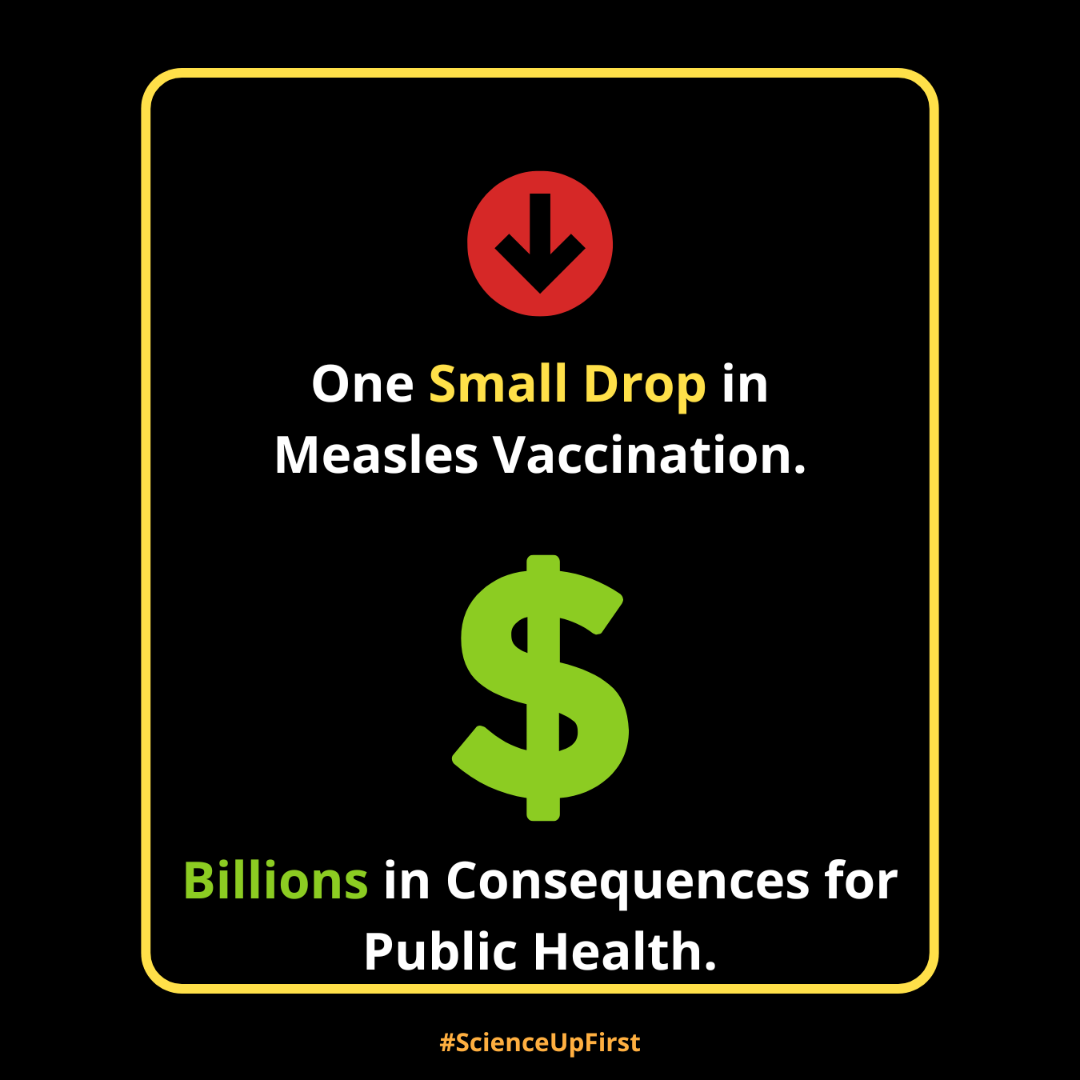
This isn’t just a Canadian story. In the U.S., vaccination coverage is also declining. About 77% of counties and jurisdictions have seen vaccination rates drop since 2019, and nearly two-thirds are now below the 95% threshold needed for herd immunity (5; read more about herd immunity here – 6). If this trend continues, things could get worse quickly. One study estimates that even a 1% yearly drop in vaccination could lead to 17,000 cases, 4,000 hospitalizations, and 36 preventable deaths every year by 2030, with costs reaching at least $1.5 billion annually (7,8).
Measles is one of the most contagious viruses on Earth. One infected person can spread it to 9 out of 10 unprotected people nearby. These infections can cause blindness, brain damage, and death, with children under 5 at elevated risk of severe complications (9).
Once herd immunity is lost, outbreaks become harder to control.
Vaccines don’t just protect individuals. They protect entire communities, especially babies and people who can’t be vaccinated.
The good news: two doses of the MMR vaccine are 99% effective (10). We’ve done this before. We can do it again. 💪
- Canada loses its official ‘measles-free’ status | Gavi – VaccinesWork | November 2025
- Highlights from the 2019 childhood National Immunization Coverage Survey (cNICS) | Government of Canada
- Standardized Reporting on Vaccination (STARVAX) – : – Vaccination coverage in children | Government of Canada | As of February 18, 2026
- Measles and Rubella Weekly Monitoring Report (2025) | Government of Canada | Last updated March 2026
- Data investigation: Childhood vaccination rates are backsliding across the U.S. | NBC News | September 2025
- “If others are vaccinated, why do I need to be?” | ScienceUpFirst | March 2024
- The health and economic repercussions of declining MMR coverage in the United States | medRxiv – PrePrint | February 2026
- More illness, greater cost spotlight brief: Childhood immunizations | Common Health Coalition | 2026
- Measles: For health professionals | Government of Canada
- Measles: Spread, prevention and risks | Government of Canada
Share our original Bluesky Post!
Measles vaccination rates have been slipping for years in Canada. Data from the US is showing that even a slight drop in coverage could lead to thousands of cases, dozens of preventable deaths, and major costs each year to public health systems. Read more 👇 scienceupfirst.com/vaccines/the…
— ScienceUpFirst (@scienceupfirst.bsky.social) April 13, 2026 at 4:25 PM
[image or embed]
View our original Instagram Post!