
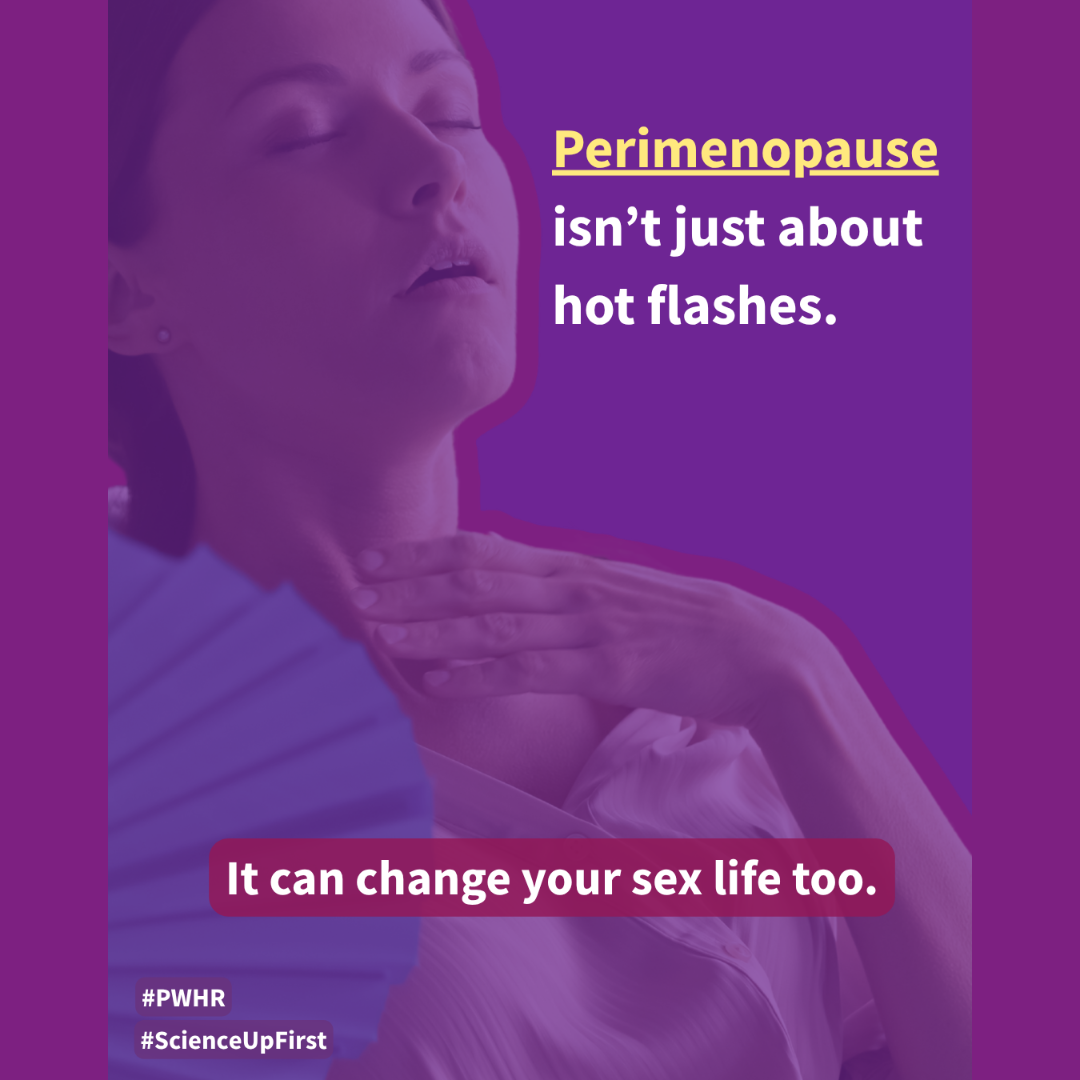
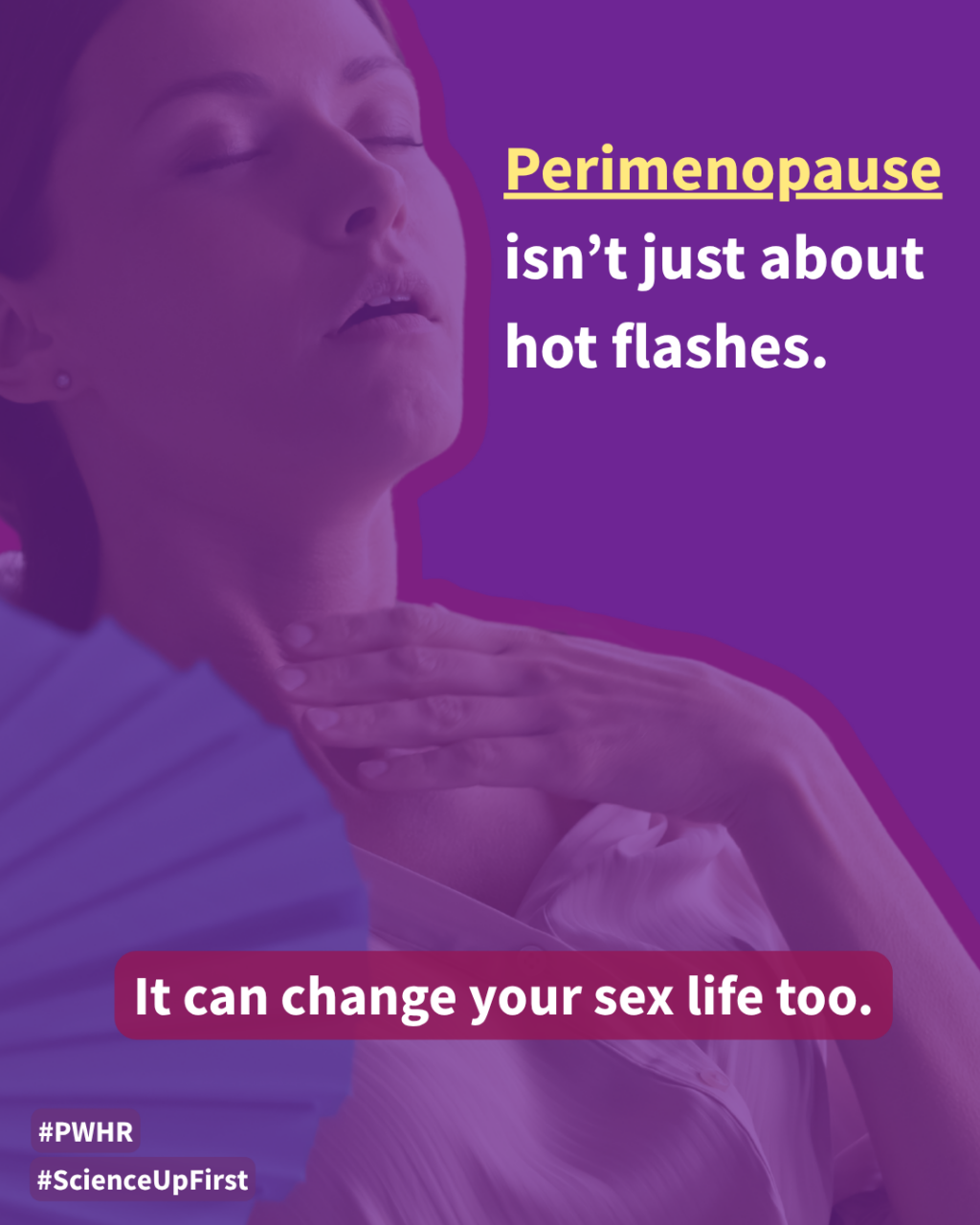
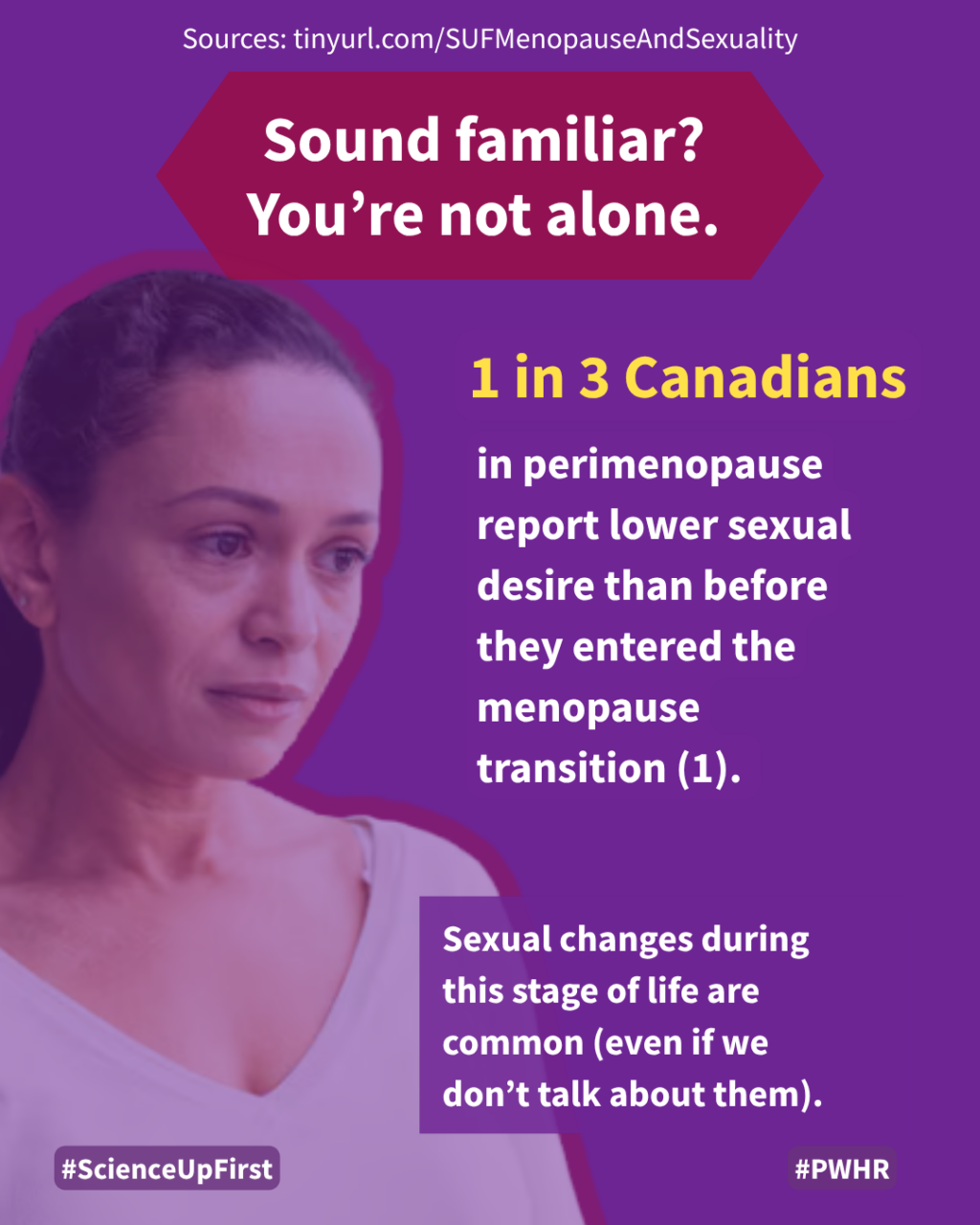
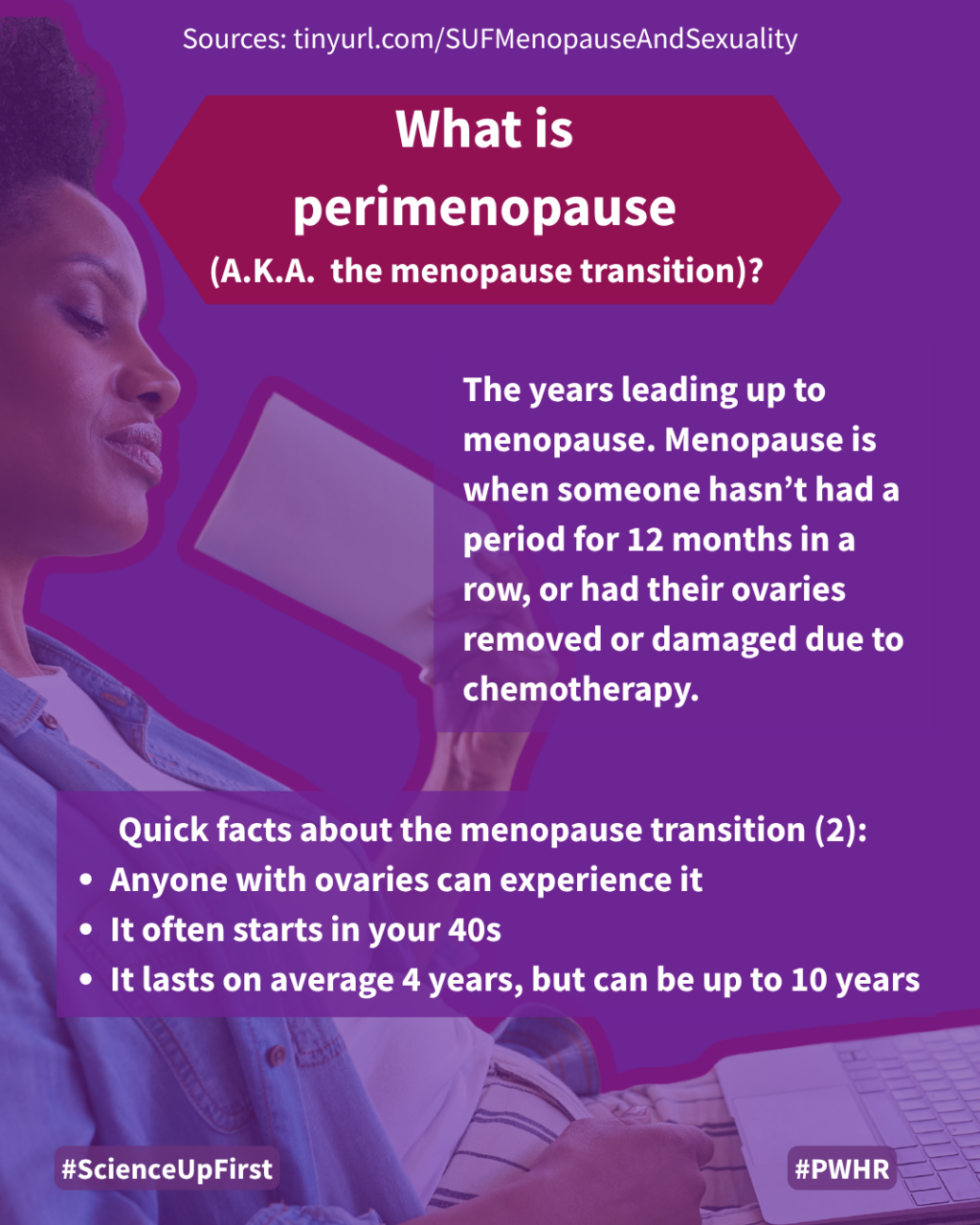
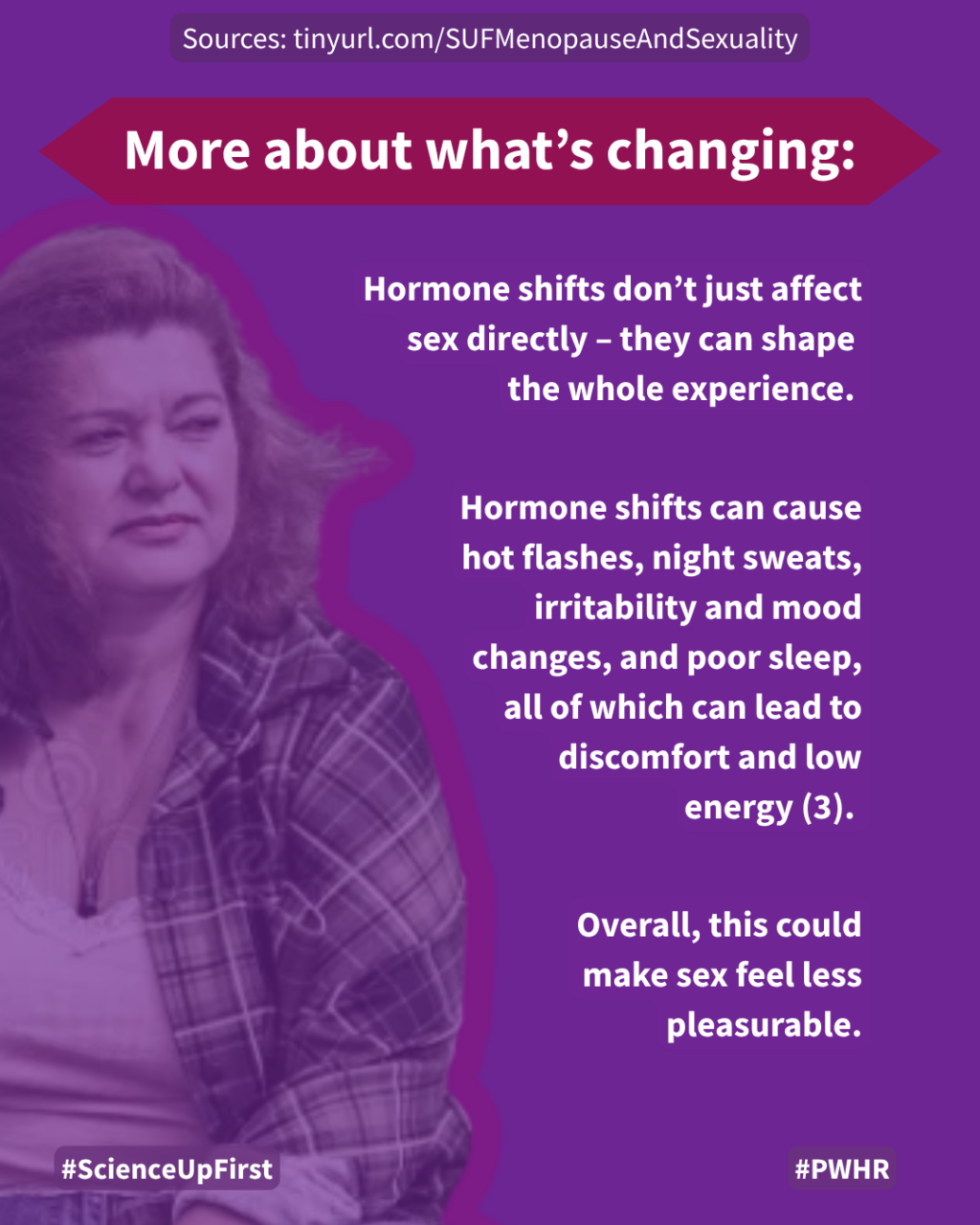
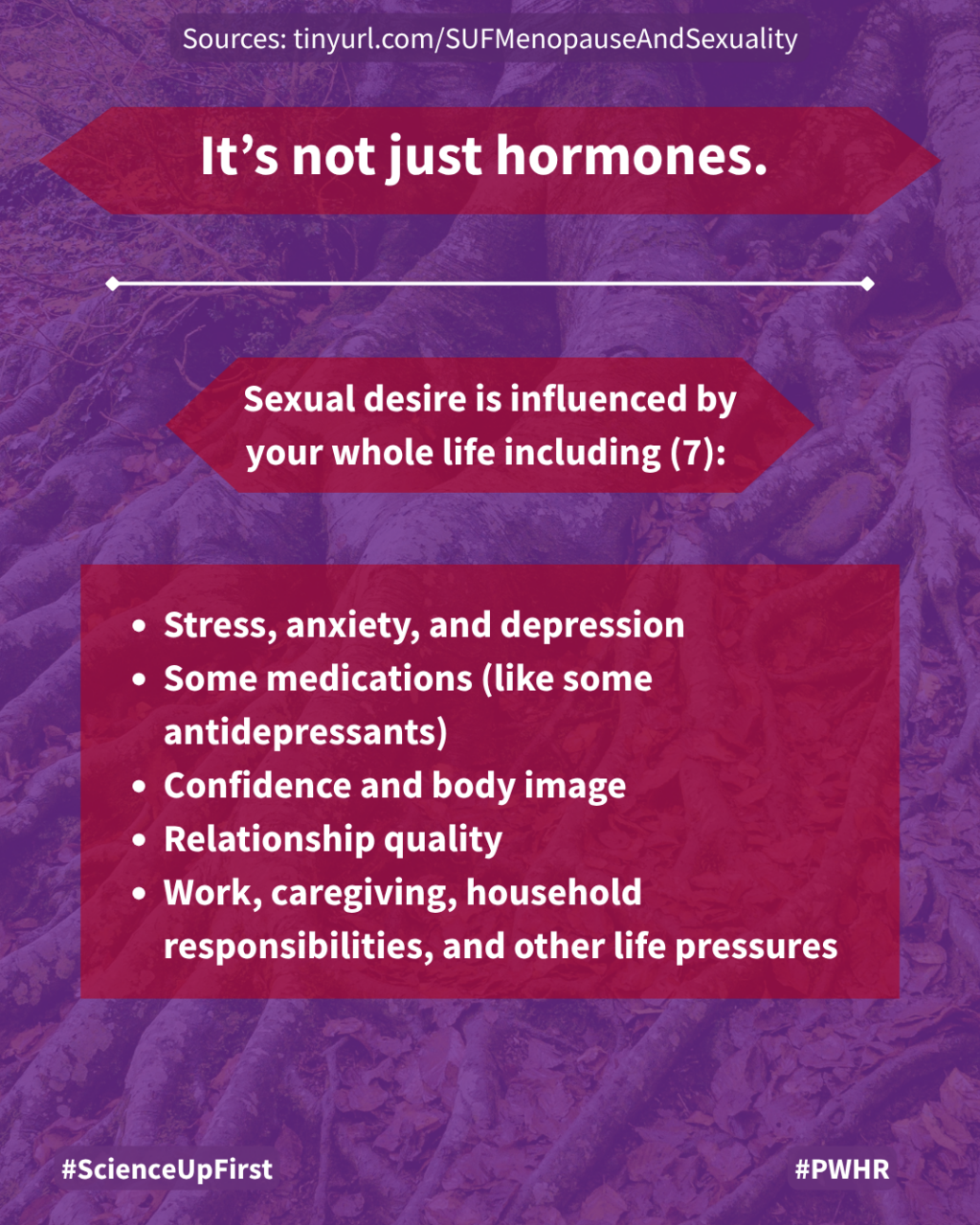

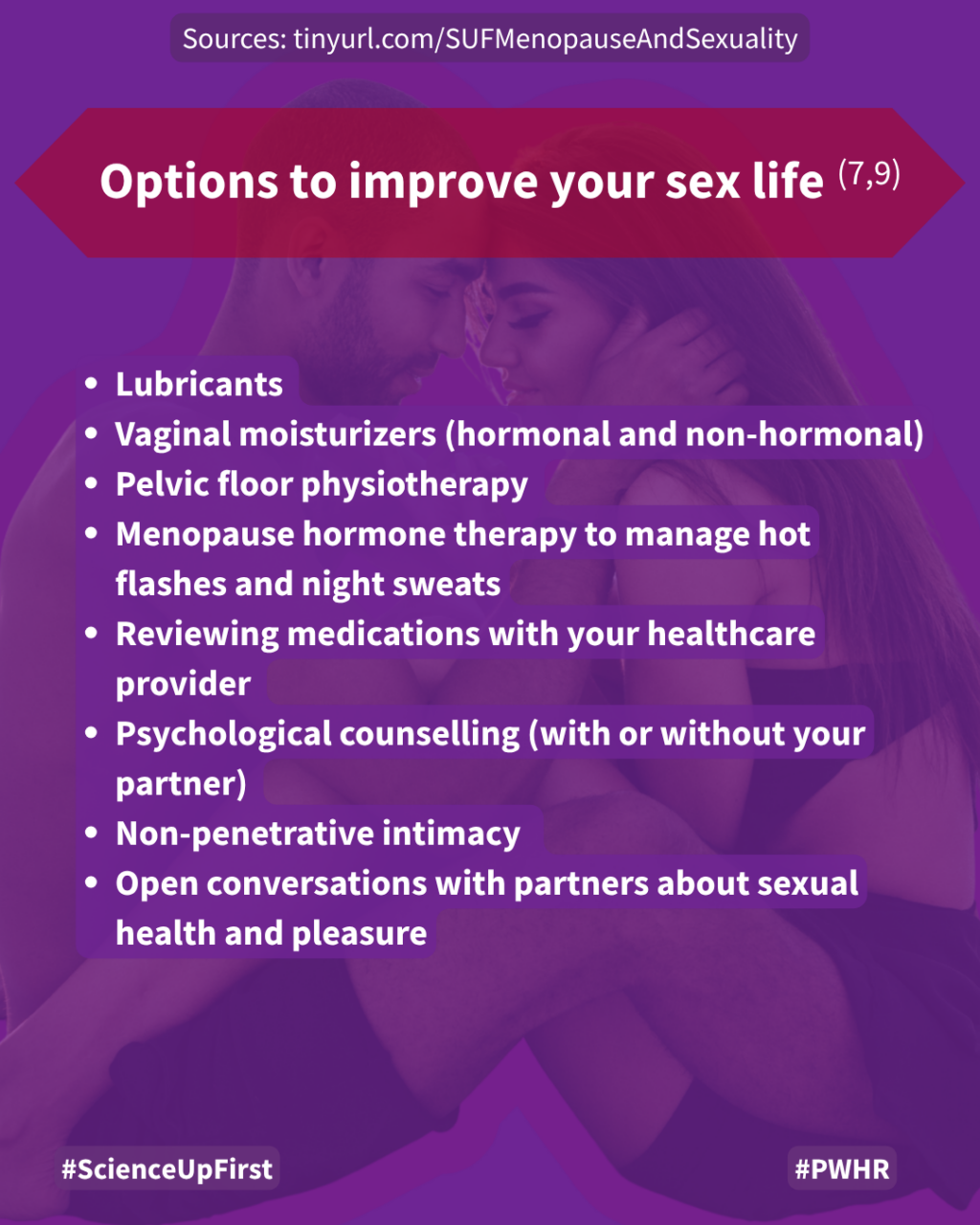
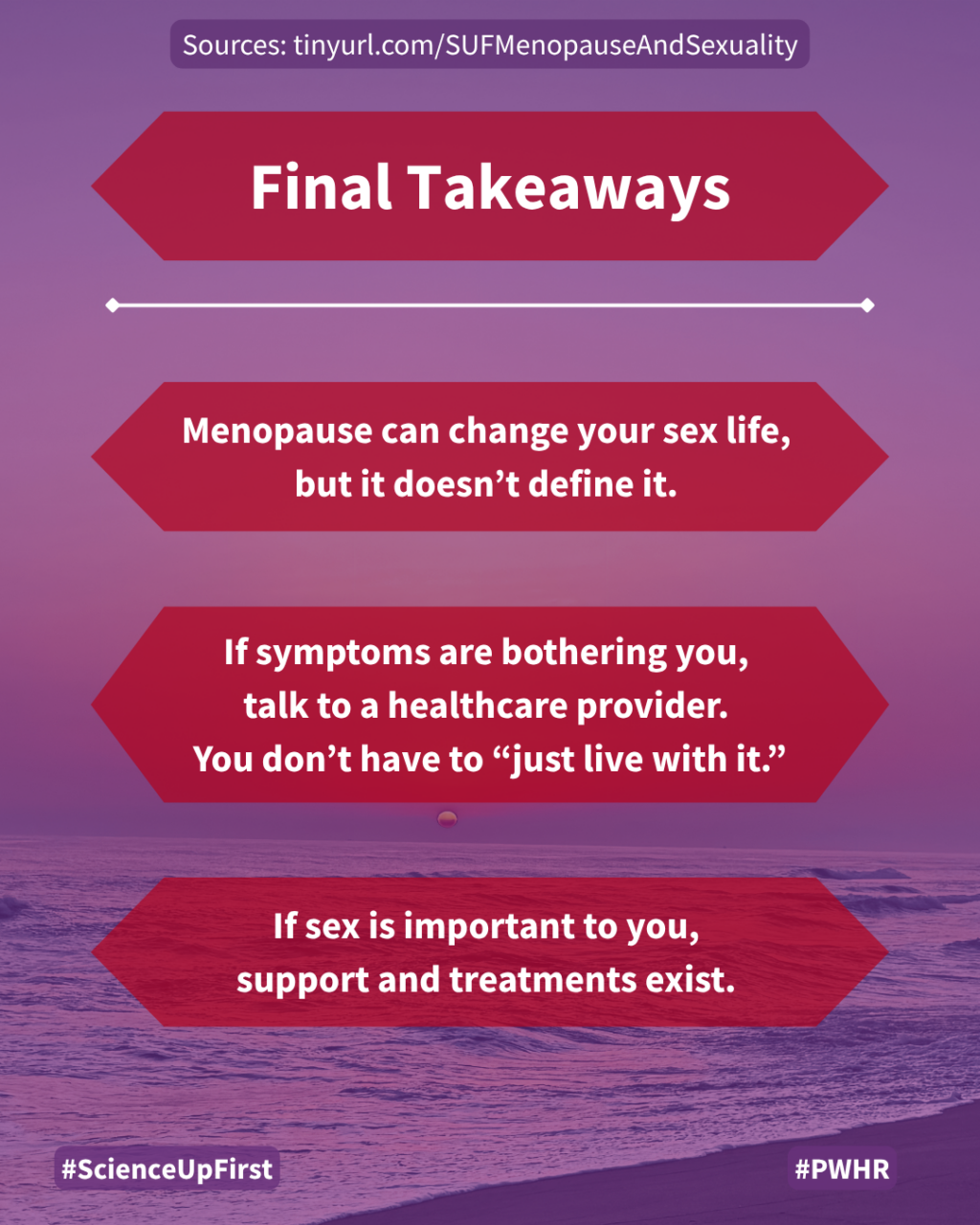
Menopause can bring changes to your sex life. If you are experiencing a decrease in libido, this is a valid and common experience.
Hormones play a role, but so do stress, relationships, and overall wellbeing.
If something feels off, there are options and support available. You don’t have to just live with it.
This post was made in collaboration with @pwhrcanada.
Additional information
Have some more questions about what we talked about in our post? Here are some answers to common questions.
What’s the biology behind changes in sexual desire during the menopause transition?
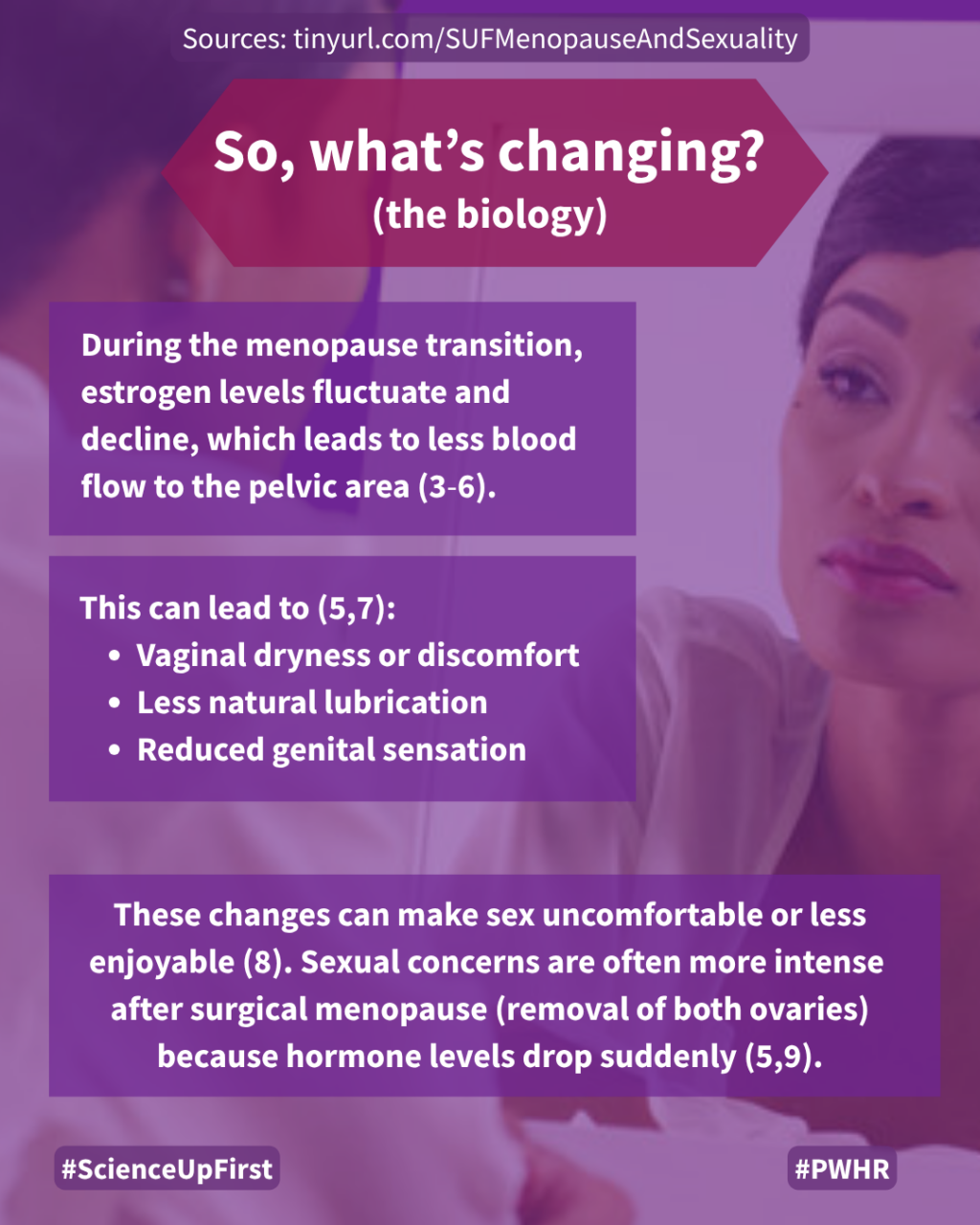
In our post, we mentioned that changes in estrogen levels can impact sex. Here’s a closer look at what that means.
During the menopause transition, estrogen levels fluctuate and gradually decline.
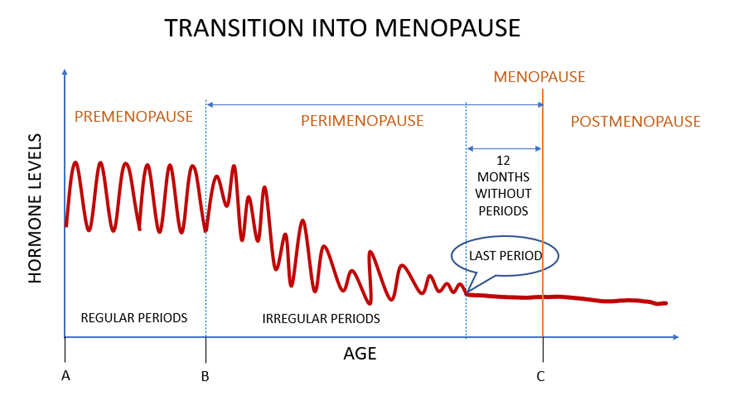
Estrogen is the name for a category of sex hormones including estradiol, estrone, and estriol. Estradiol is one of the hormones involved in moderating libido (sexual desire), so when estrogen decreases during the menopause transition, it can reduce libido (4).
Estrogen also plays an important role in keeping the vaginal and vulvar tissues healthy (7). When estrogen levels drop, blood flow to the vaginal area decreases, vaginal tissues become thinner and drier, natural lubrication is reduced, and tissues become less elastic (5,7). This can make sex feel uncomfortable or even painful. Some people may also experience irritation, small tears, burning, or itching because of these changes, leading to more pain (9). Low estrogen levels can also affect sexual enjoyment. Reduced blood flow can mean it takes longer to feel aroused, orgasms may feel less intense, and reaching orgasm may be more difficult (5). The pelvic floor muscles (which support the bladder, uterus, and bowel) can weaken with age and hormonal changes (7). This may also contribute to discomfort during sex.
Do I still need to use contraception after menopause?
After menopause, pregnancy is no longer possible because the ovaries stop releasing eggs. However, this does not mean that contraception is not needed. If you have multiple partners or a new partners, condoms are still important to help prevent sexually transmitted infections (STIs). Even after menopause, sexual health still matters!
Want some more information on sexuality during the menopause transition and after menopause?
Check out Menopause & U, a website created by the Society of Obstetricians and Gynaecologists of Canada that has great resources and information about sexuality during the menopause transition: Sexual health – Menopause and U
Check out these resources from the Sexual Health and Genito-Pelvic Pain Knowledge Empowerment Hub about pain during sex:
- Understanding vulvular pain (pain on the outside part of the genitals that you can see and touch)
- Using mindfulness to help with sexual difficulties
- Understanding how antidepressants impact sex (symptoms, management, and care)
- The Silence and the Stigma: Menopause in Canada | Menopause foundation of Canada | October 2022
- The Women and Diversity Health Guide to: Menopause | Government of Canada
- The Menopause Transition: Signs, Symptoms, and Management Options | The Journal of Clinical Endocrinology & Metabolism | January 2021
- Increasing women’s sexual desire: The comparative effectiveness of estrogens and androgens | Hormones and Behavior | February 2017
- Guideline No. 422d: Menopause and Sexuality | Journal of Obstetrics and Gynaecology Canada | November 2021
- Menopause – Frequently Asked Questions Talk to me, I can help. | Sigma Canadian Menopause Society
- Menopause and Sexuality | Endocrinology and Metabolism Clinics of North America | June 2018
- The menopause transition and women’s health at midlife: a progress report from the Study of Women’s Health Across the Nation (SWAN) | Menopause | September 2019
- Sexual health – Menopause and U | The Society of Obstetricians and Gynaecologists of Canada
Share our original Bluesky Post!
Menopause can affect your sex life but you’re not alone and you’re not stuck with it. Changes are common, and support exists if you want it. Read more here 👇 scienceupfirst.com/womens-healt… This is a collaborative post with @pwhrcanada #ScienceUpFirst
— ScienceUpFirst (@scienceupfirst.bsky.social) April 20, 2026 at 3:55 PM
[image or embed]
View our original Instagram Post!