
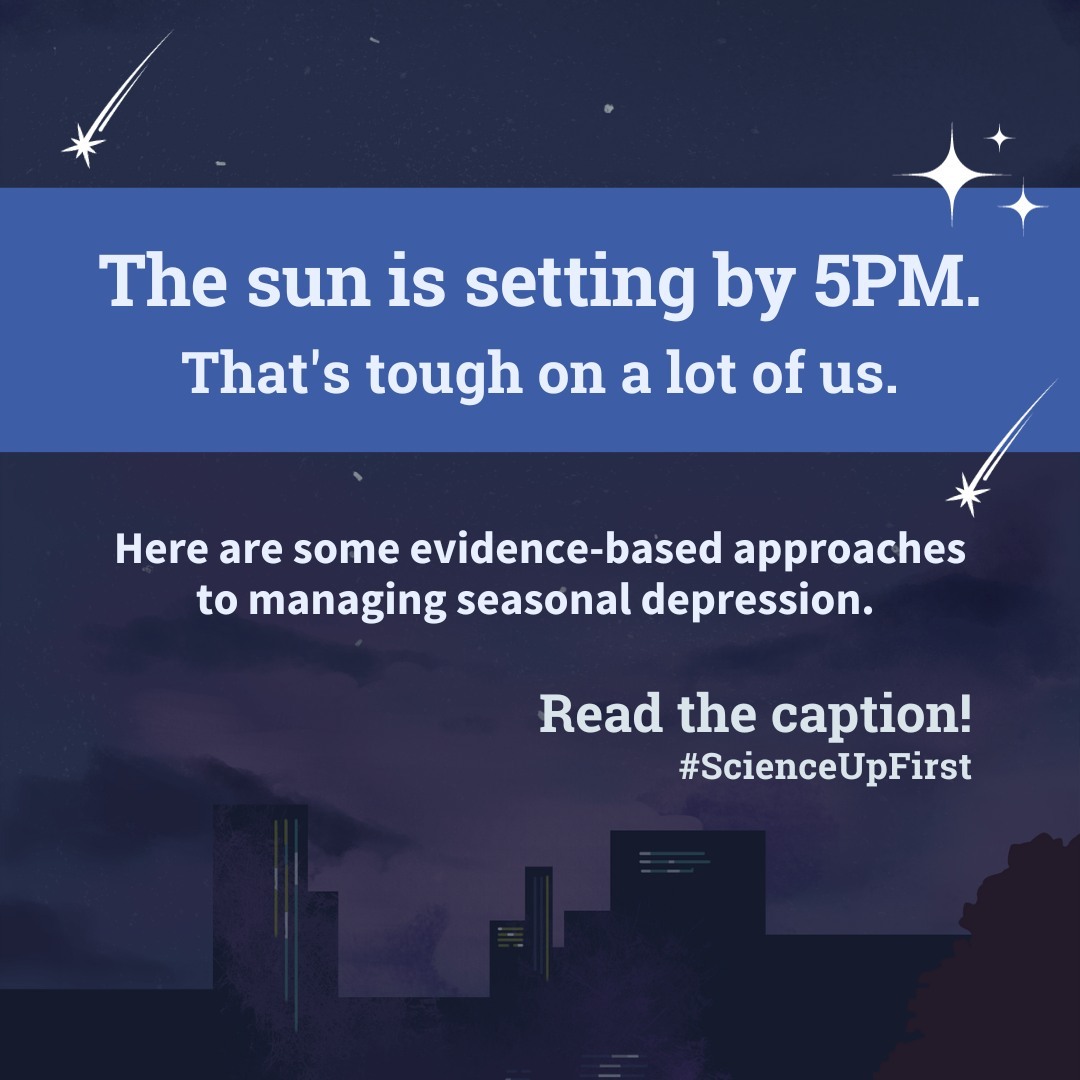
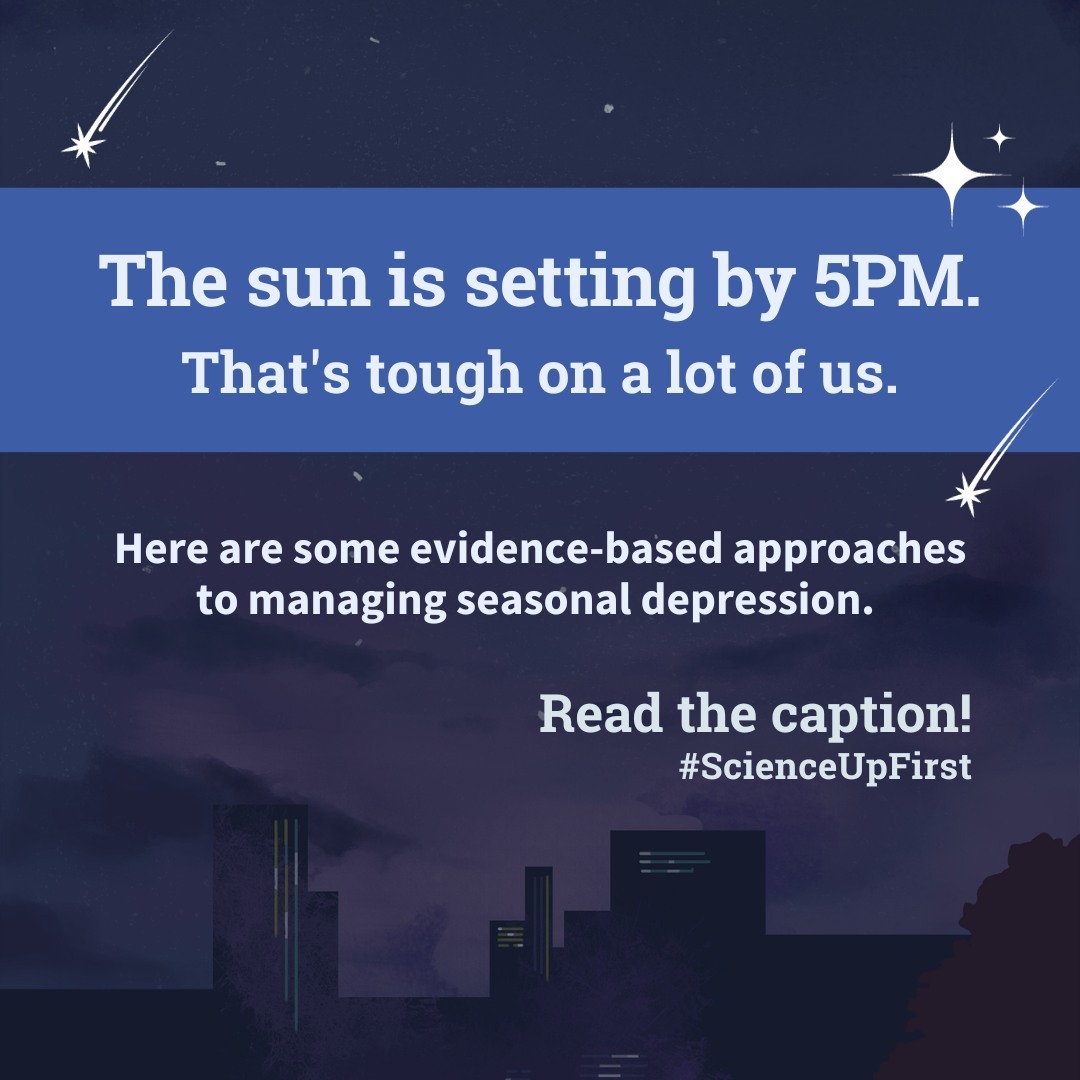
Every year, as the days get shorter and darker, some people will experience lower baseline moods, weight gain, low energy, and persistent fatigue (1-3). While 15% of people will experience mild cases of seasonal depression, up to 3% will develop full-blown seasonal affective disorder (SAD) (1-4).
Scientists are not exactly sure what causes seasonal depression, but the variation in light we receive throughout the year is a potential cause (2,3).
Here are a couple of things that have been proven to help with seasonal depression symptoms (3,4,6-8):
- Keep your curtains open to allow natural light into the room.
- Sit, work, or train close to windows.
- Use light therapy.
- Spend more time outside during daylight.
- Eat a balanced diet and exercise.
- Medication and/or counseling.
However, there is no compelling evidence that melatonin, St. John’s wort, vitamin B12, Ginkgo biloba, and vitamin D supplements can alleviate seasonal depression symptoms (4,9-15).
If you still wish to try supplements for your seasonal depression, consult your pharmacist first to avoid potential interactions with medications, which can be risky (16,17).
Just because seasonal depression only lasts a few months per year doesn’t mean that you shouldn’t seek support. Seasonal depression is a recognized type of depression that can be very serious. Don’t hesitate to talk to a healthcare professional if you notice any seasonal changes in your appetite, sleep, mood, or motivation. They can help you rule out other explanations for symptoms and discuss treatment options with you (4,7).
Do you or a loved one experience seasonal depression? If so, check out the resources below and consider talking to your doctor.
- Seasonal affective disorder (SAD) – Symptoms and causes | Mayo Clinic
- Seasonal Affective Disorder (SAD) | CAMH
- “Psychology Works” Fact Sheet: Seasonal Affective Disorder (Depression with Seasonal Pattern) | Canadian Psychological Association
- Seasonal Affective Disorder | Canadian Mental Health Association
- Seasonal Affective Disorder | National Center for Complementary and Integrative Health (NCCIH)
- 5 tips to fight seasonal depression | Canadian Red Cross Blog | Posted November 01, 2020
- Seasonal Affective Disorder (SAD) | American Psychiatric Association – Psychiatry.org
- Treatment of seasonal affective disorders | Dialogues in Clinical Neuroscience | Published April 1, 2022
- Vitamin D supplementation for treatment of seasonal affective symptoms in healthcare professionals: a double-blind randomised placebo-controlled trial | BMC Research Notes | Published August 14, 2014
- The Role of Diet, Eating Behavior, and Nutrition Intervention in Seasonal Affective Disorder: A Systematic Review | Frontier in Psychology | Published August 4, 2020
- Seasonal Affective Disorder and Complementary Health Approaches : What the Science Says | National Center for Complementary and Integrative Health (NCCIH) | Posted January 2019
- Pharmacotherapy and nutritional supplements for seasonal affective disorders: a systematic review | Expert Opinion on Pharmacotherapy | Published July 26, 2018
- Herbal medicines in the treatment of psychiatric disorders: 10-year updated review | Phytotherapy Research | Published March 25, 2018
- A controlled trial of cyanocobalamin (Vitamin B12) in the treatment of winter seasonal affective disorder | Journal of Affective Disorders | Published November 1994
- Can winter depression be prevented by Ginkgo biloba extract? A placebo‐controlled trial | Acta Psychiatrica Scandinavica – Wiley Online Library | Published July 1999
- St. John’s Wort and Depression: In Depth | National Center for Complementary and Integrative Health (NCCIH)
- Supplement Video Series – Links and References | ScienceUpFirst
Share our original Bluesky Post!
Every year, as the days get shorter and darker, some people will experience seasonal depression. Learn about what can help and what won’t help with seasonal depression symptoms here 🌨️ www.scienceupfirst.com/project/the-… #ScienceUpFirst
— ScienceUpFirst (@scienceupfirst.bsky.social) December 9, 2025 at 4:12 PM
[image or embed]
View our original Instagram Post!