
Ever seen a conversation like this?
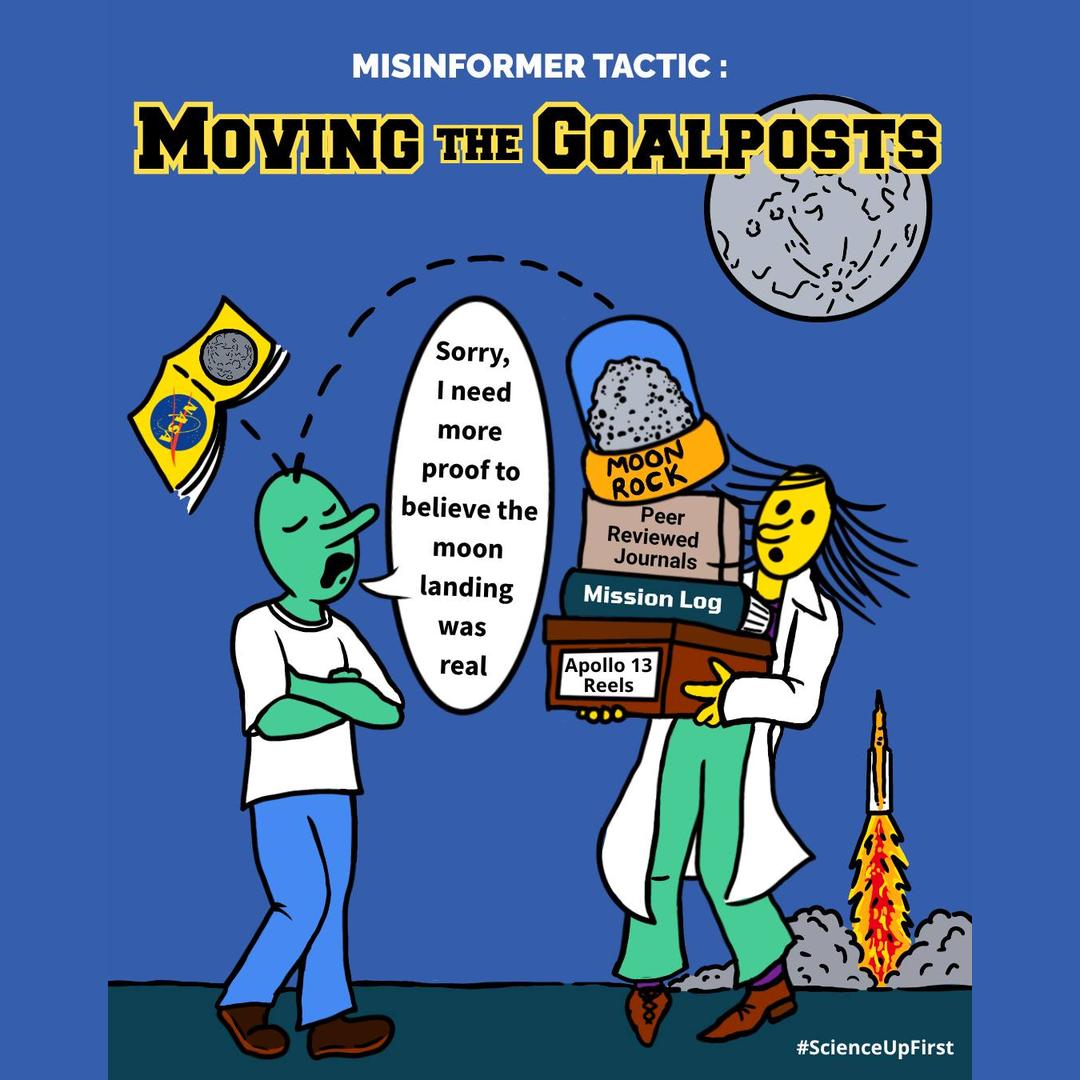
Person A: “Prove to me the moon landing isn’t fake.”
Person B: “Here are photos from the mission.”
Person A: “Those are photoshopped.”
Person B: “Okay, here’s video footage.”
Person A: “It was filmed in a studio.”
Person B: “We brought back rocks from the moon.”
Person A: “Those could be fake.”
Person B: “You can observe the landing sites from Earth.”
Person A: “I still don’t believe it.”
And it keeps going… No matter what proof you bring, it’s never enough.
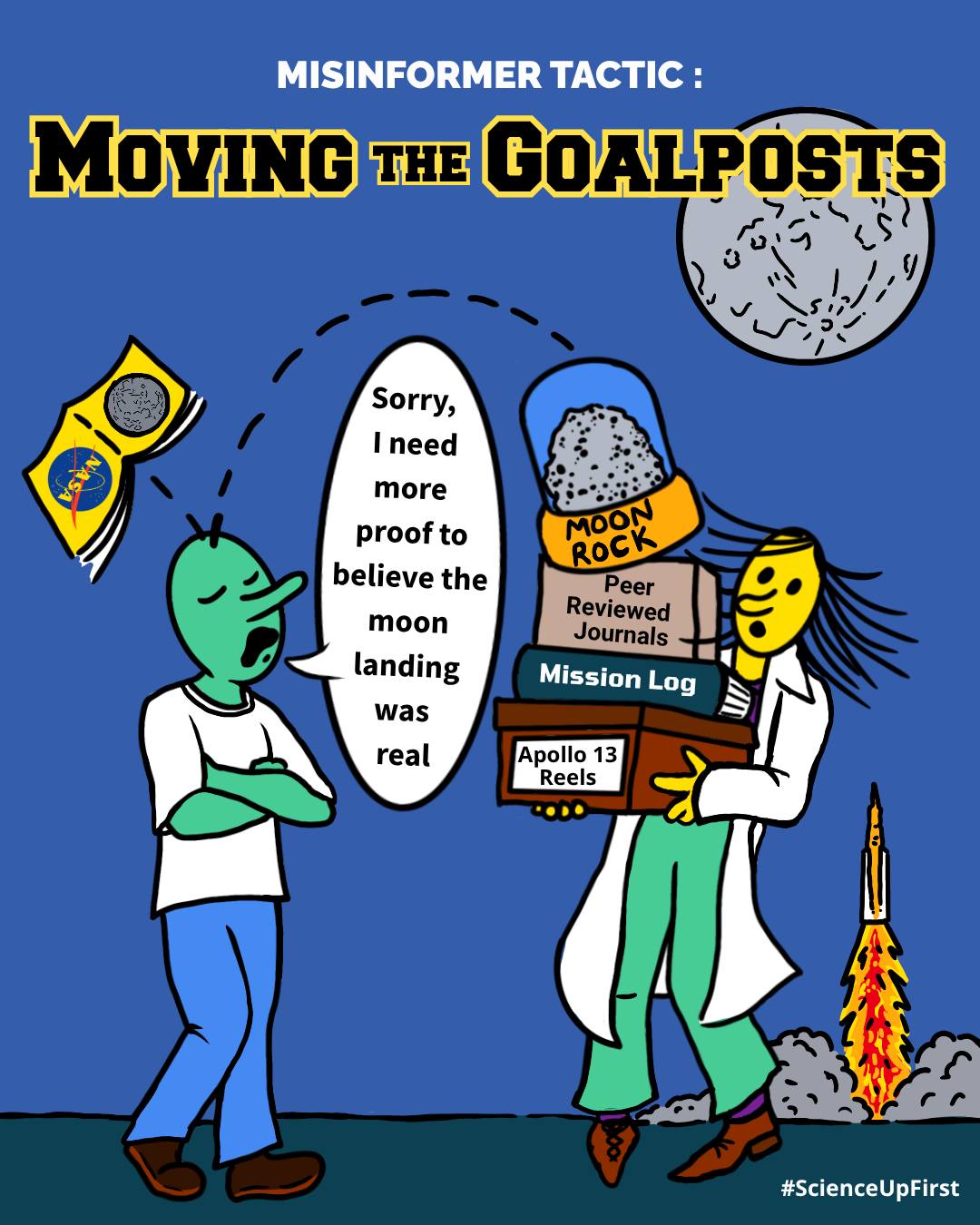
This is called moving the goalposts (1).
It happens when someone keeps changing what “counts” as proof. No matter how strong the evidence is, they ask for something new instead of engaging with what’s already there (2,3,4).
In real discussions, this can look like (3,5):
- Dismissing evidence without explaining why
- Asking for more and more proof
- Ignoring what was already shared
If you notice this happening, you can gently point it out: “Hey, it seems like the goal keeps changing. What kind of evidence would actually convince you?” (4).
That said, not every conversation will go somewhere. If someone isn’t open to changing their view, it’s okay to step away and save your energy (6,7).
- Move the Goalposts | Cambridge Dictionary
- Moving the Goalposts | Logically Fallacious
- Understanding conspiracy theory tactics: moving the goalposts | The Skeptic | December 2021
- Moving the Goalposts | Bad Arguments – Wiley Online Library | May 2018
- The Fallacy of ‘Moving the Goalposts’, Explained | Snopes.com | February 2023
- Tips on countering conspiracy theories and misinformation | SciBeh | 2020
- How to talk to conspiracy theorists—and still be kind | MIT Technology Review | July 2020
Share our original Bluesky Post!
Ever notice how some debates never move forward? No matter the evidence, the standard keeps changing. That’s called moving the goalposts, and it’s a common misinformation tactic. Read more about it here 👇 scienceupfirst.com/misinformati… #ScienceUpFirst
— ScienceUpFirst (@scienceupfirst.bsky.social) May 12, 2026 at 12:07 PM
[image or embed]
View our original Instagram Post!