
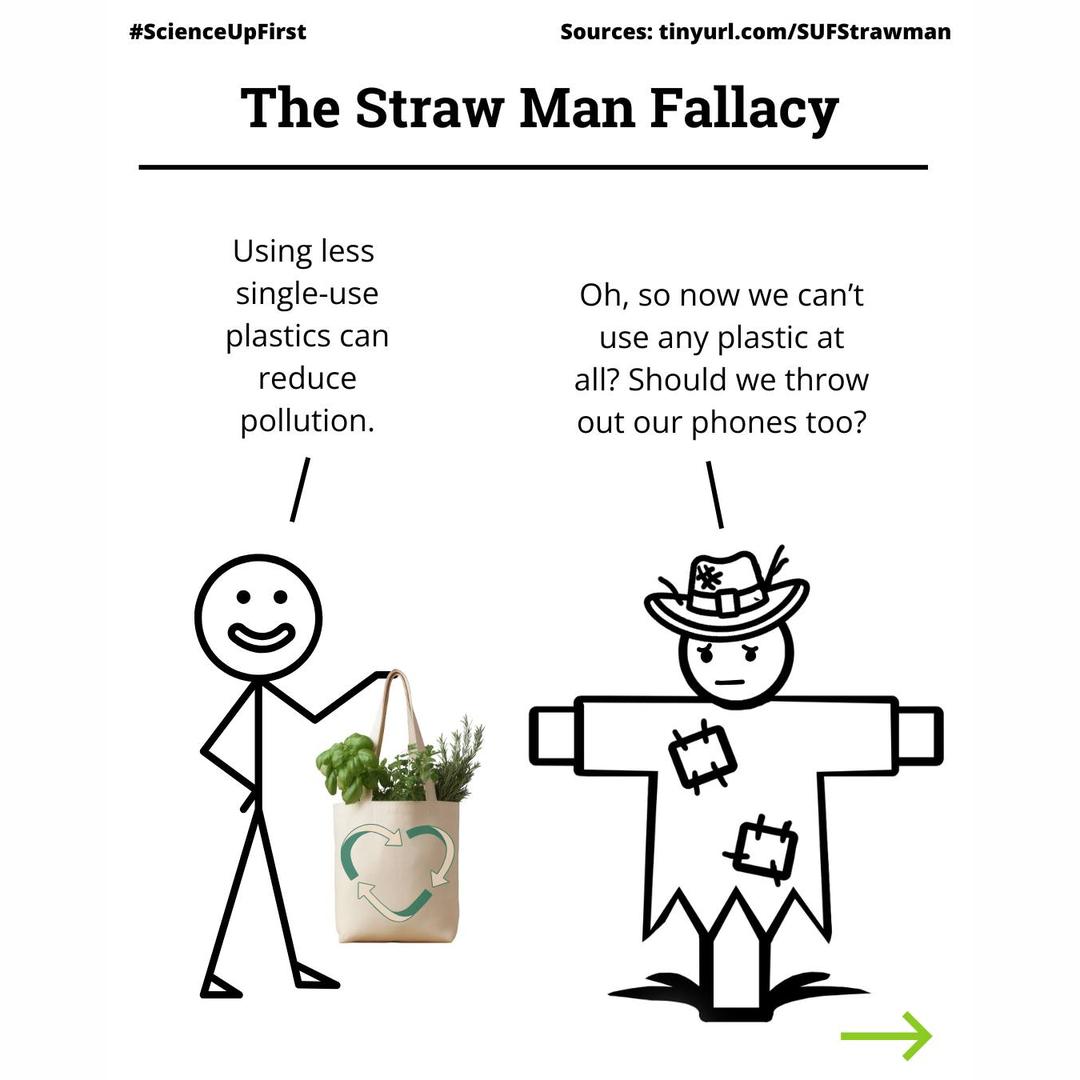
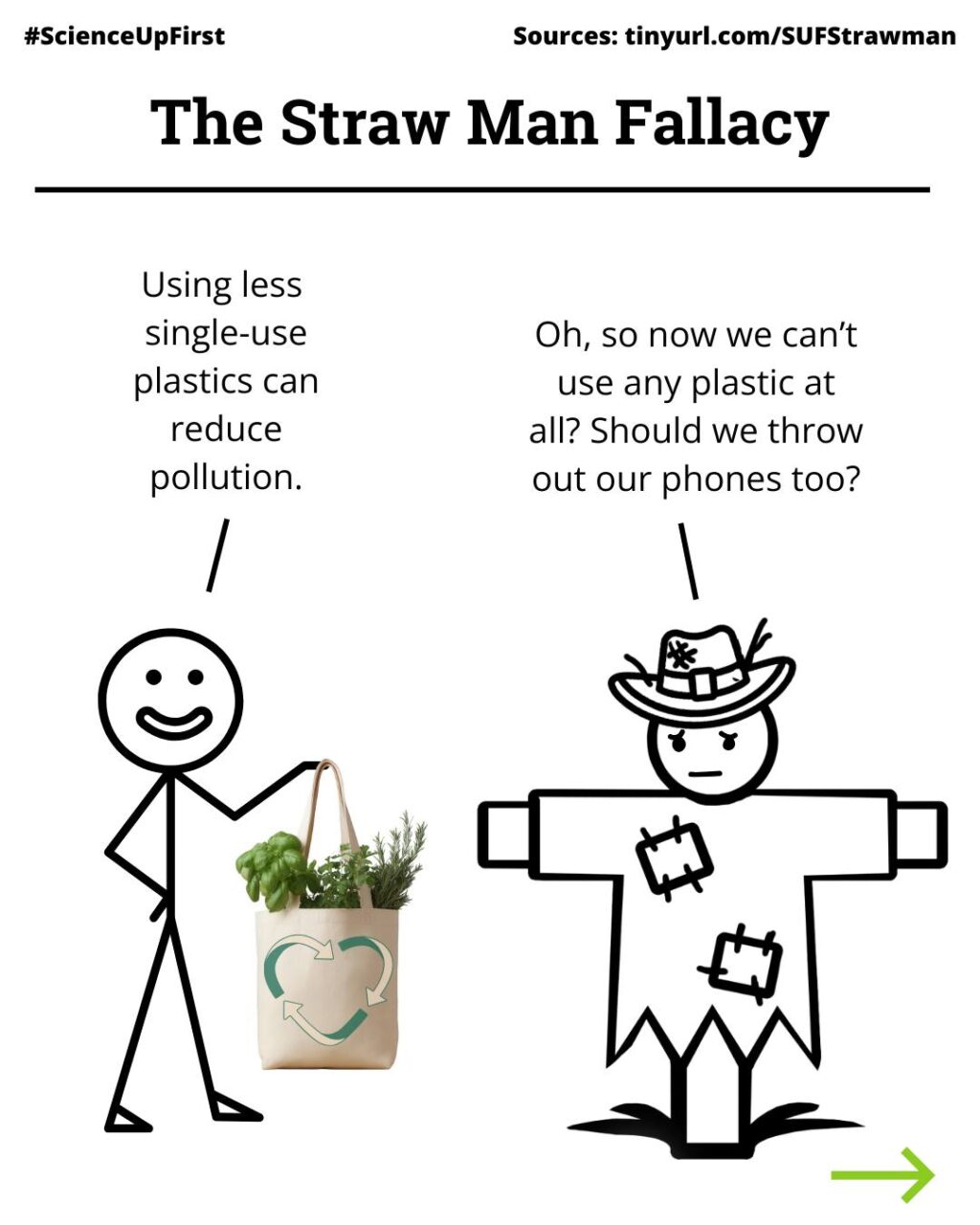
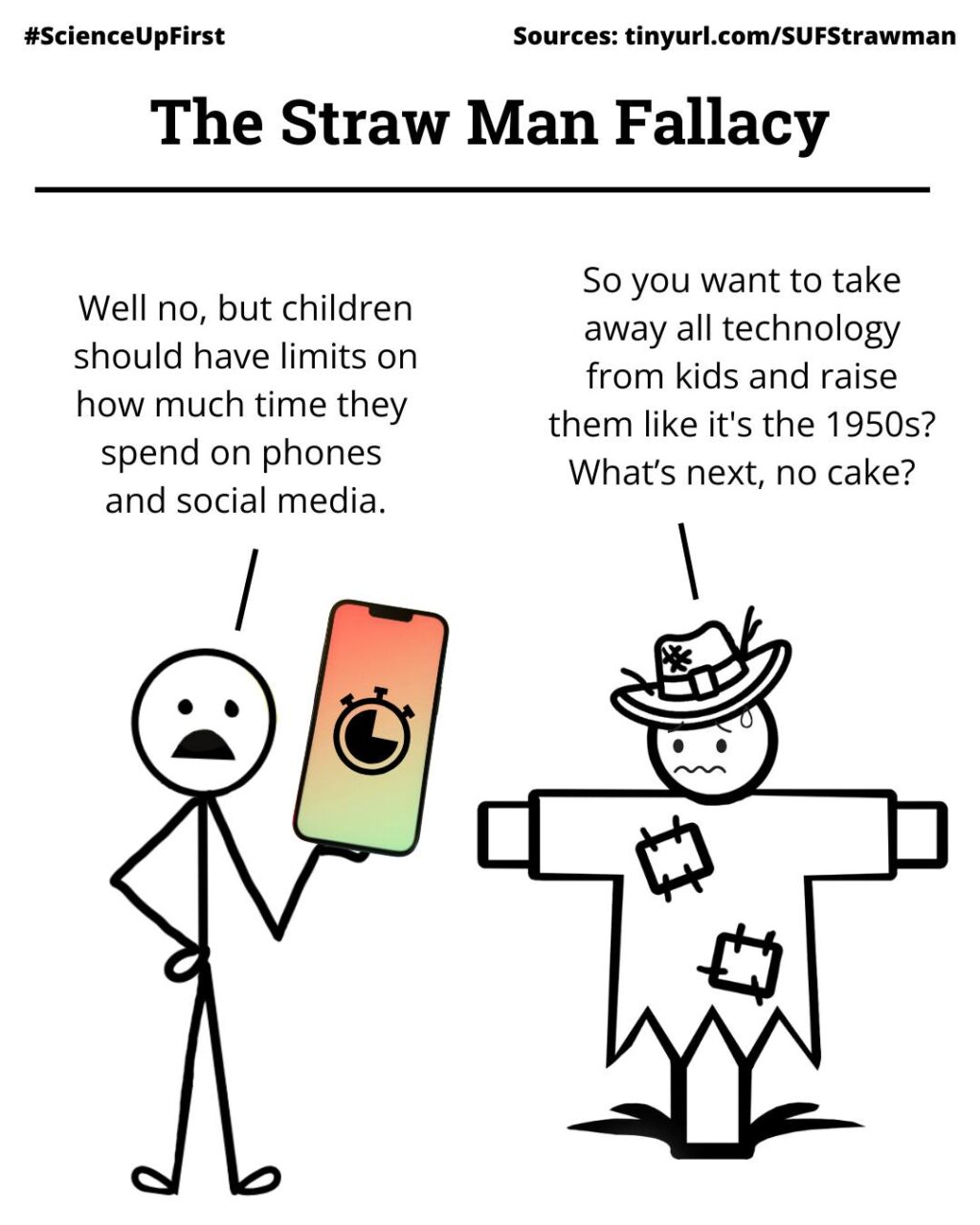
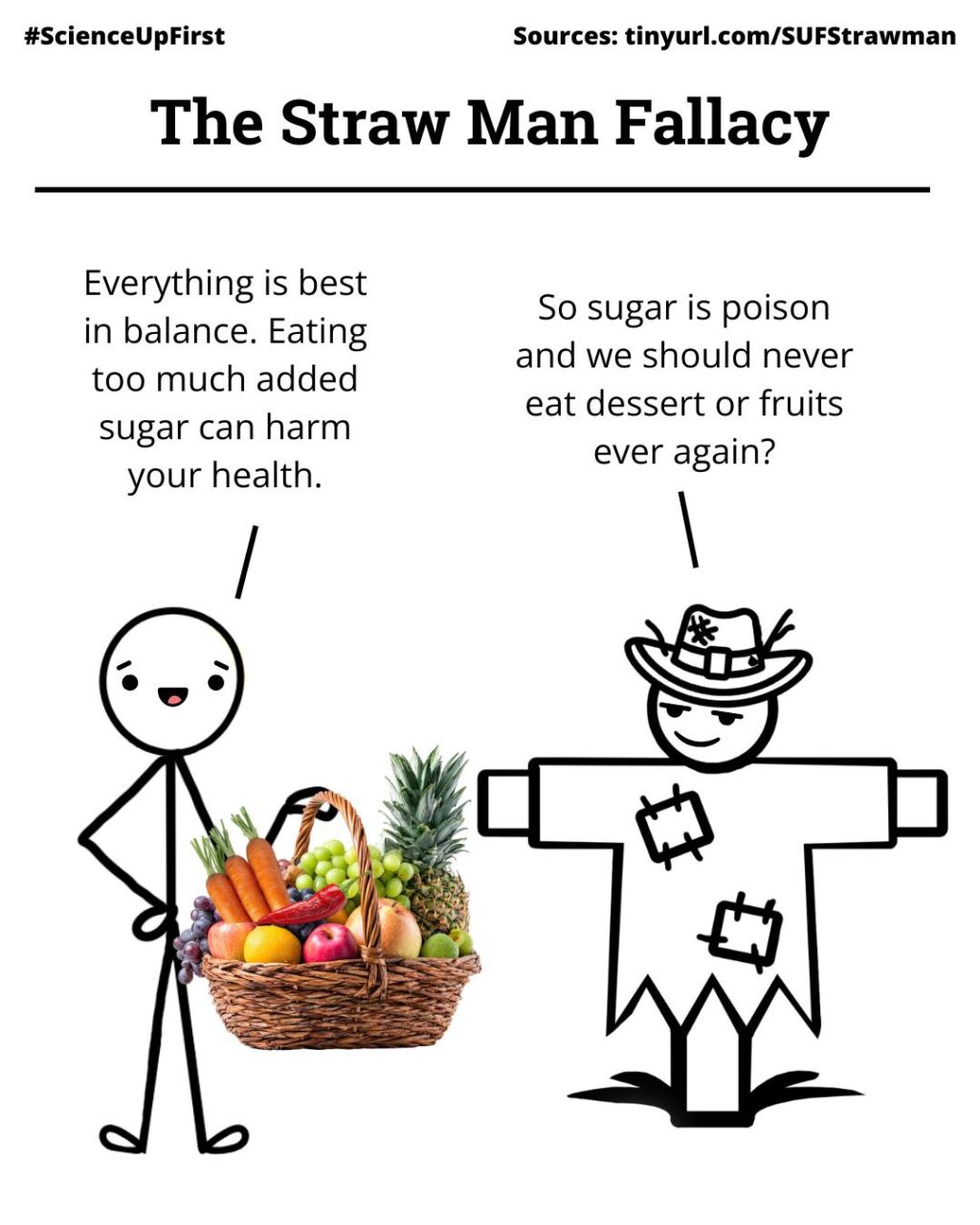
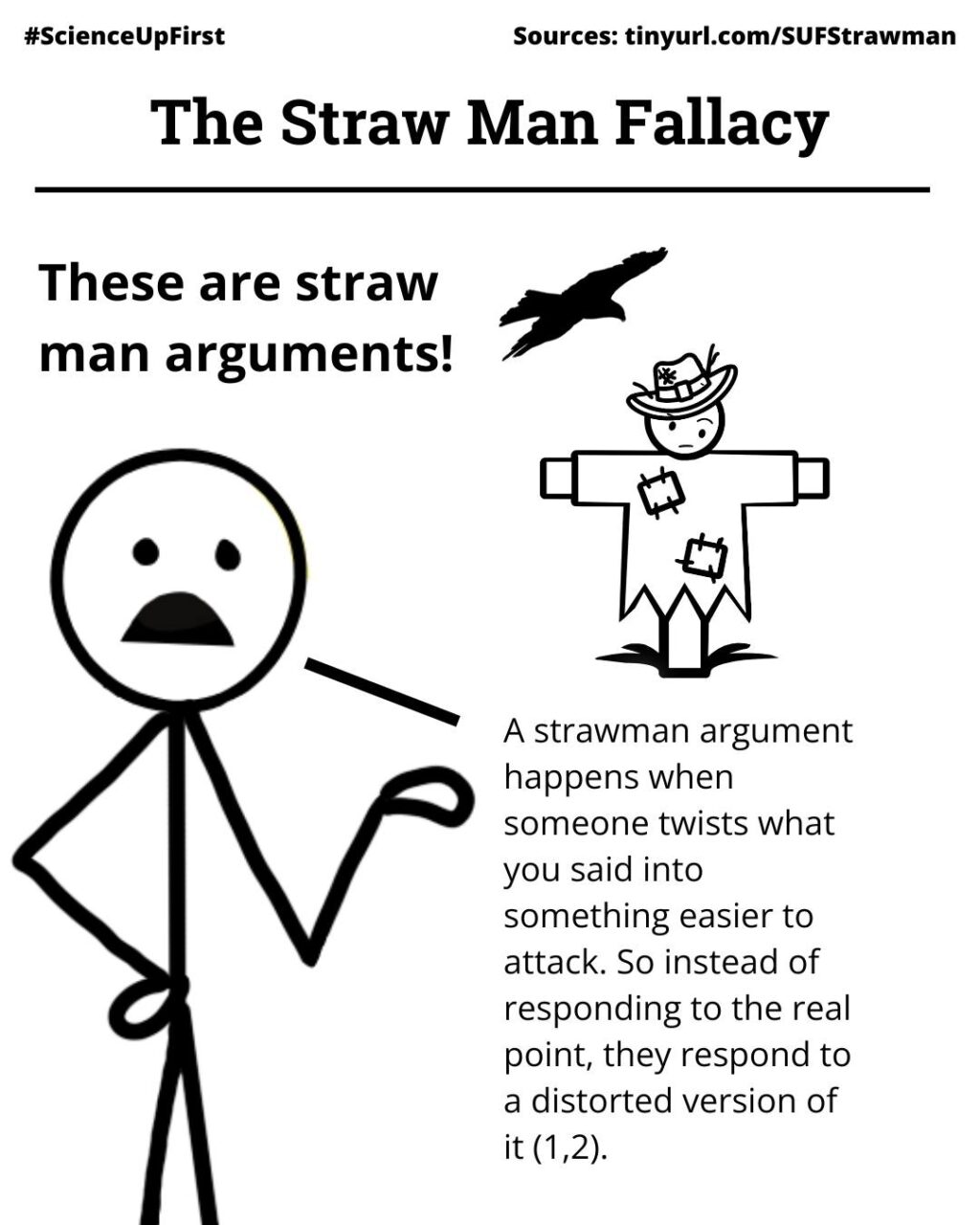
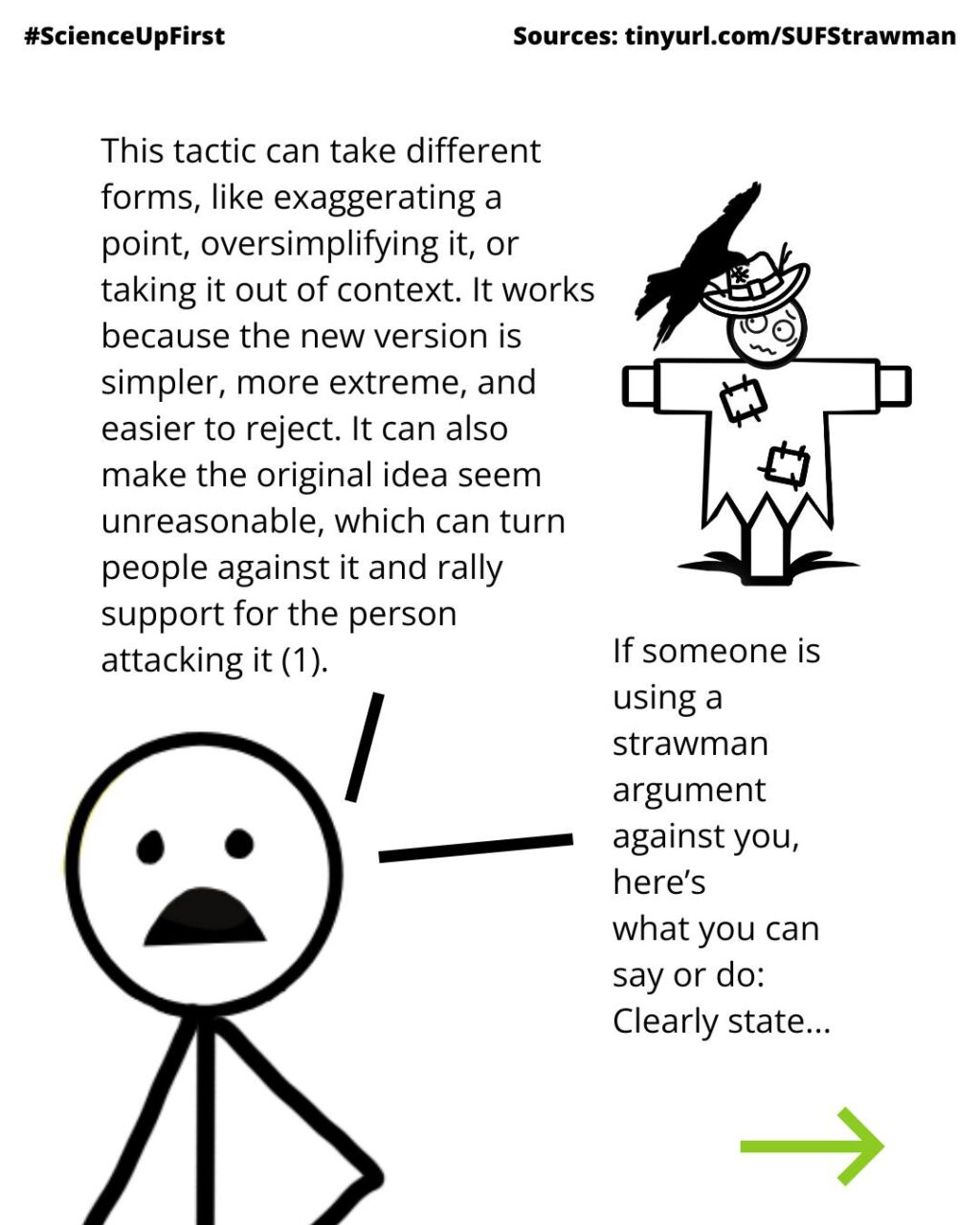
A strawman argument happens when someone twists what you said into something easier to attack. So instead of responding to the real point, they respond to a distorted version of it (1,2).
Example:
- Person A: “We should reduce plastic waste.”
- Person B: “So you think we should ban all plastic and make life impossible?”
This tactic can take different forms, like exaggerating a point, oversimplifying it, or taking it out of context. It works because the new version is simpler, more extreme, and easier to reject. It can also make the original idea seem unreasonable, which can turn people against it and rally support for the person attacking it (1).
This is different from simply misunderstanding someone. We can all misinterpret things sometimes, especially in fast conversations. If you’re not sure you understood, it’s better to ask questions or ask the person to clarify their point before assuming (3).
If someone is using a strawman argument against you, here’s what you can say or do:
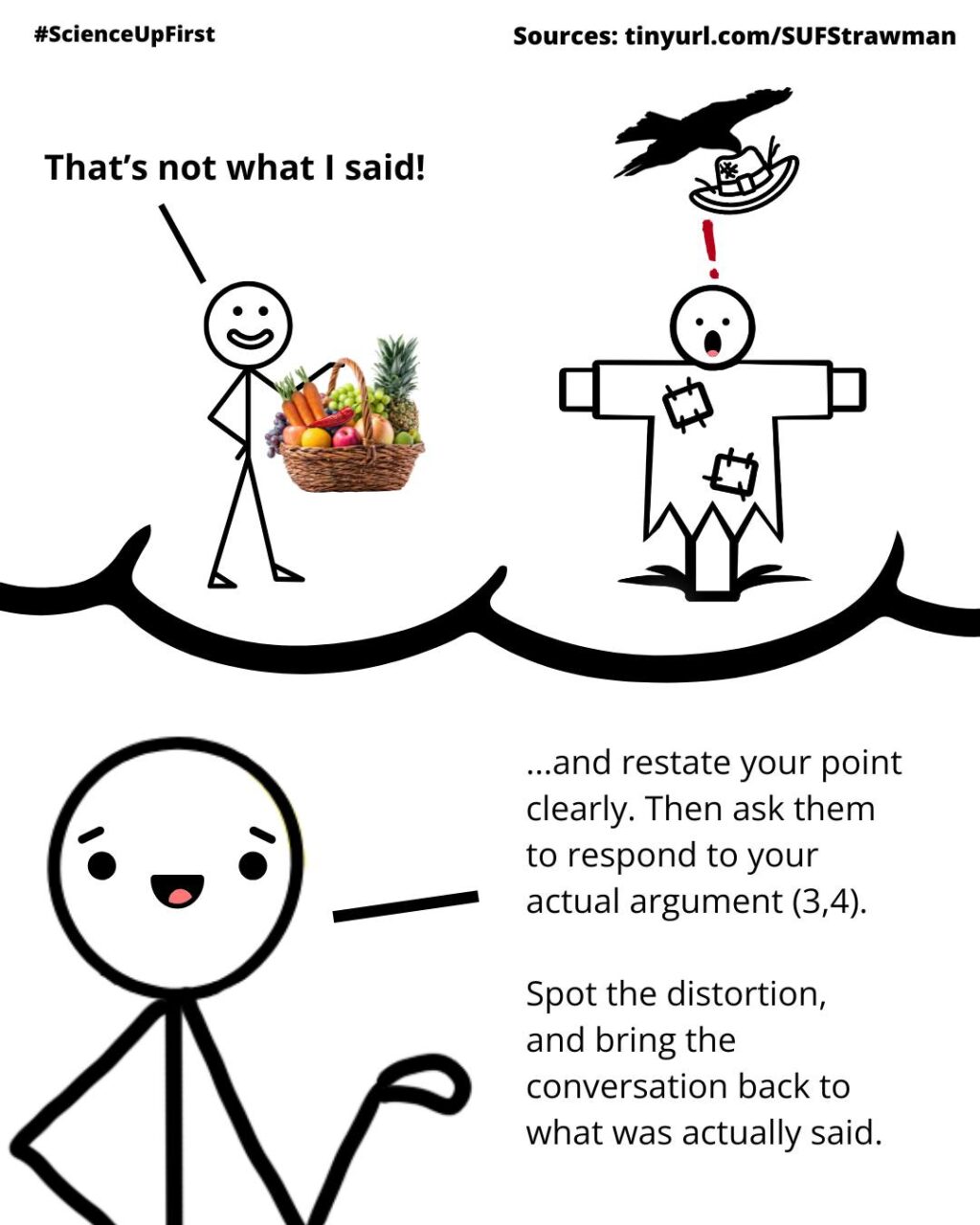
Clearly state “That’s not what I said” and restate your point clearly. Then ask them to respond to your actual argument (3,4).
Spot the distortion, and bring the conversation back to what was actually said.
- Full article: The persuasiveness of the straw man rhetorical technique | Social Influence – Taylor & Francis Online | September 2008
- Strawman Fallacy | Logically Fallacious
- Straw Man Fallacy | Excelsior Online Writing Lab
- Strawman Arguments: What They Are and How to Counter Them | Effectiviology
Share our original Bluesky Post!
A strawman argument happens when someone twists what you said into something easier to attack. There are effective ways to respond! 👇 scienceupfirst.com/misinformati… #ScienceUpFirst
— ScienceUpFirst (@scienceupfirst.bsky.social) May 14, 2026 at 5:58 PM
[image or embed]
View our original Instagram Post!