
A year ago, RFK Jr. suggested a child’s measles death was due to poor nutrition (1). Not only was this claim insensitive, it was also misleading. First, there was no evidence that this child was malnourished, and second, it misrepresents how nutrition impacts diseases like measles.
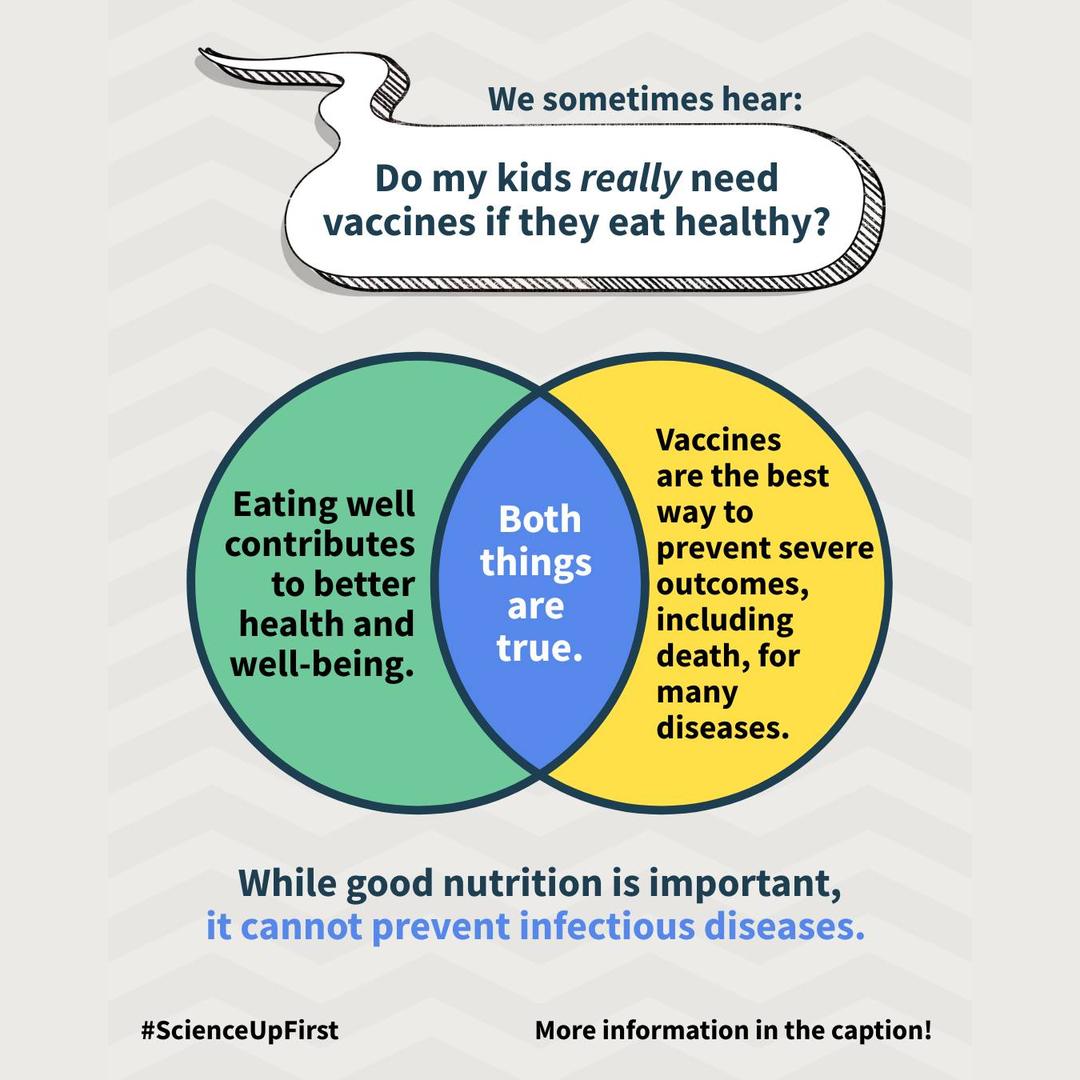
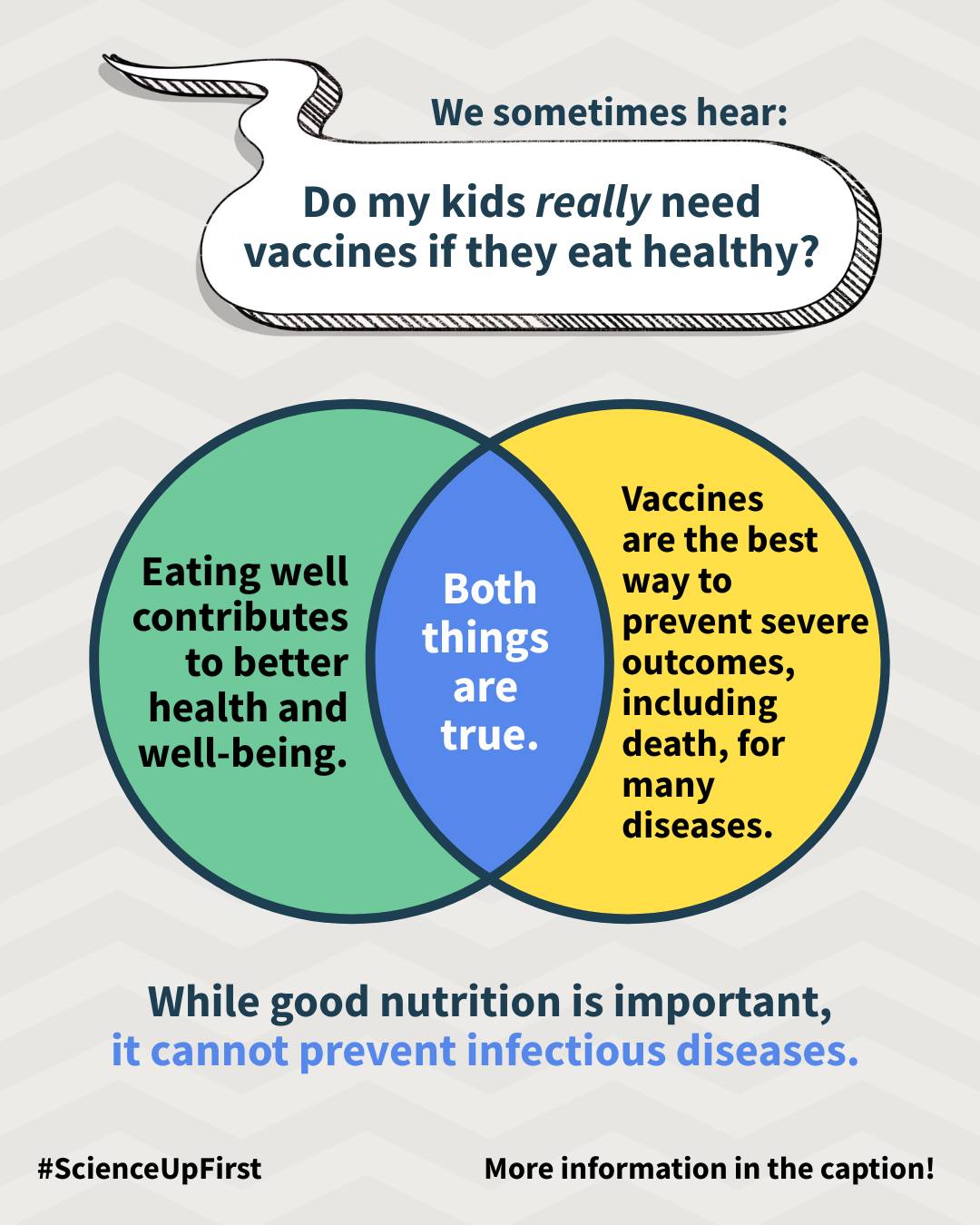
Eating a well-balanced diet supports your immune system. Nutrients like vitamins A, C, D and E help maintain the body’s physical barriers (like your skin and the lining of your lungs), support immune cells that detect and fight pathogens, and help your body respond to and recover from infections (2,3,4,5).
This is why malnutrition can make infectious diseases harder to fight off and recover from (2,4,6,7,8). At the same time, even the most well-nourished people get sick. No food, diet or vitamin can prevent infectious diseases (3). Healthy and young people have been hospitalized or died from infections like COVID-19, the flu, or measles (9,10,11).
Vaccines work in a different way. They train your immune system to recognize specific pathogens ahead of time, reducing the risk of severe illness, complications and death. They also help protect those who are unable to get vaccinated, such as infants, individuals with certain medical conditions, and those with compromised immune systems (12).
We’re constantly being fed marketing on “boosting” our immune system through “super foods” and supplements. That may sound appealing, but it’s not really how it works. Too much immune activity can actually be harmful. Good nutrition and sleep help keep your immune system healthy, including helping your body respond well to vaccines (3,4). Vaccines go a step further, by training your immune system – both are important to your health but they play different roles (3,6).
- Kennedy Links Measles Outbreak to Poor Diet and Health, Citing Fringe Theories | The New York Times | March 2025
- Optimal Nutritional Status for a Well-Functioning Immune System Is an Important Factor to Protect against Viral Infections | Nutrients | April 2020
- Nutrition and the Immune System | Food Services at University of Toronto | May 2020
- Can Taking Vitamins Combat Infection? | American Society for Microbiology | May 2025
- The relationship between nutrition and the immune system | Frontier in Nutrition | December 2022
- Why integrating nutrition and immunisation can be a game-changer | Gavi – VaccinesWork | November 2023
- Nutritional Strategies to Boost Immunity and Prevent Infection in Elderly Individuals | Clinical Infectious Diseases | December 2001
- Links between Nutrition, Infectious Diseases, and Microbiota: Emerging Technologies and Opportunities for Human-Focused Research | Nutrients | June 2020
- Influenza and pneumonia: Nothing to sneeze at | Statistics Canada | November 2024
- Characteristics of Adults Aged 18–49 Years Without Underlying Conditions Hospitalized With Laboratory-Confirmed Coronavirus Disease 2019 in the United States: COVID-NET—March–August 2020 | Clinical Infectious Diseases | March 2021
- Leading causes of death, total population, by age group | Statistics Canada | January 2026
- How do vaccines work? | World Health Organization | February 2025
Share our original Bluesky Post!
Eating well helps keep your immune system healthy. Vaccines train it to recognize specific diseases. One supports your immune system. The other prepares it. It’s not one or the other. Both matter, they just play different roles. Read more here 👇 scienceupfirst.com/nutrition/do… #ScienceUpFirst
— ScienceUpFirst (@scienceupfirst.bsky.social) May 5, 2026 at 3:48 PM
[image or embed]
View our original Instagram Post!