
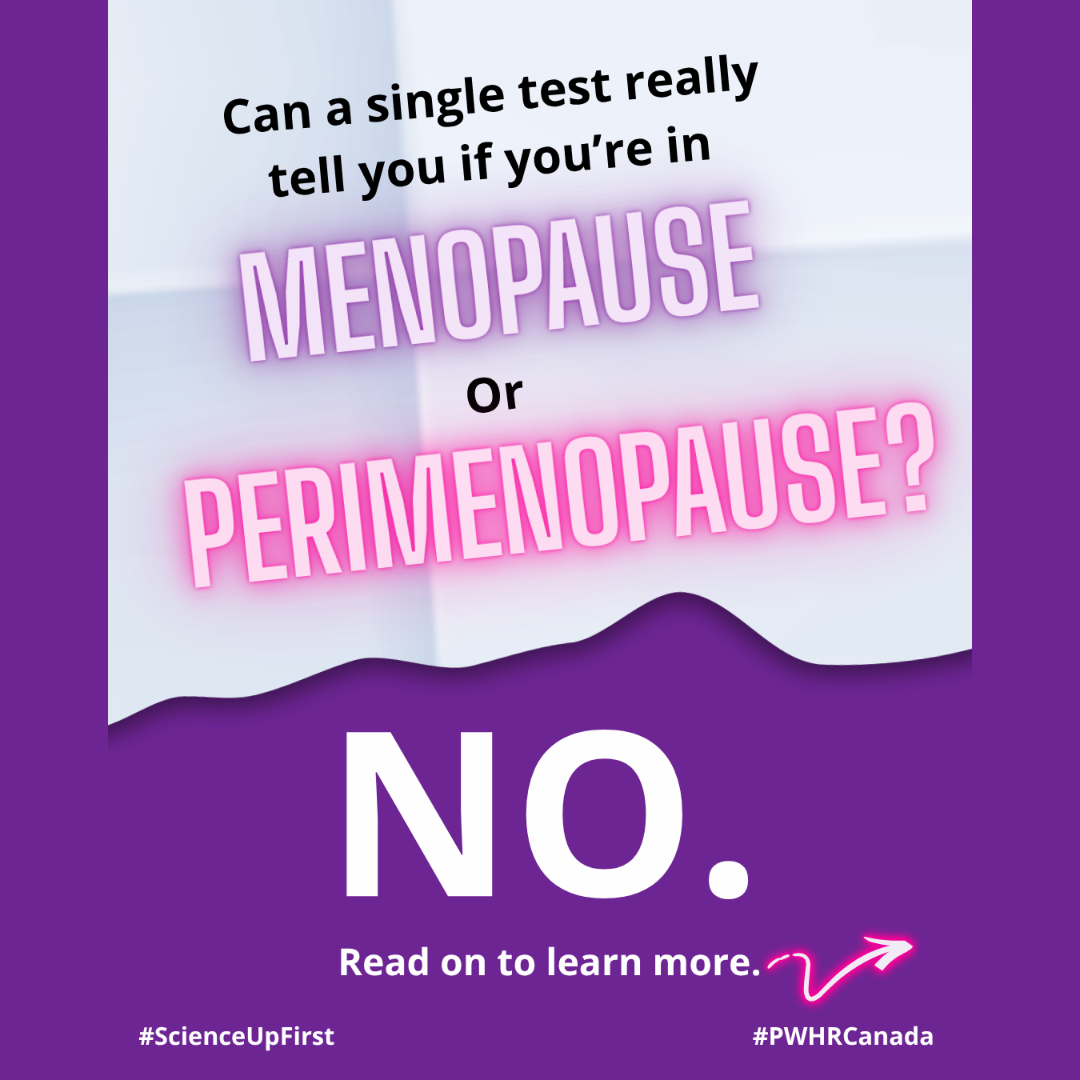
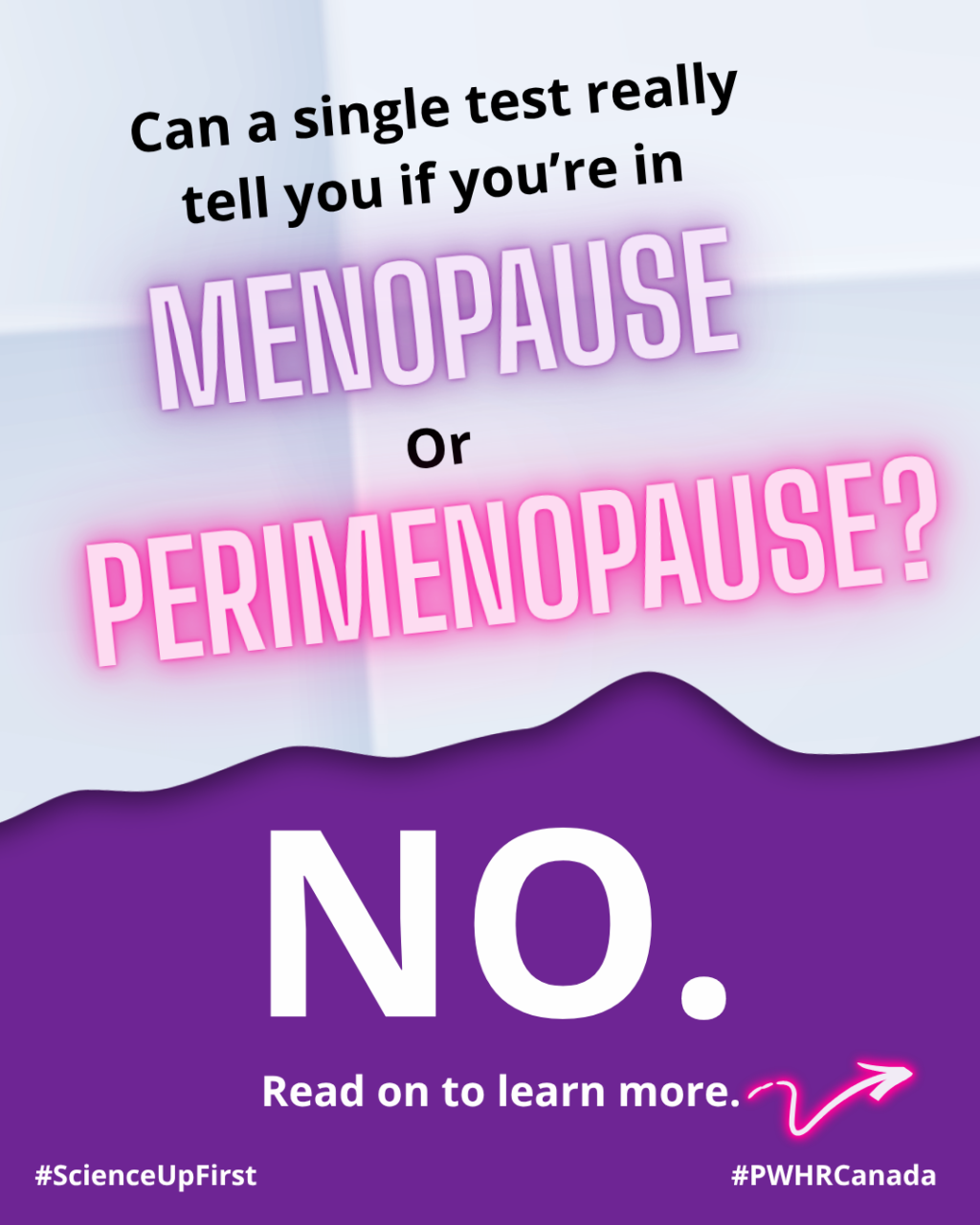
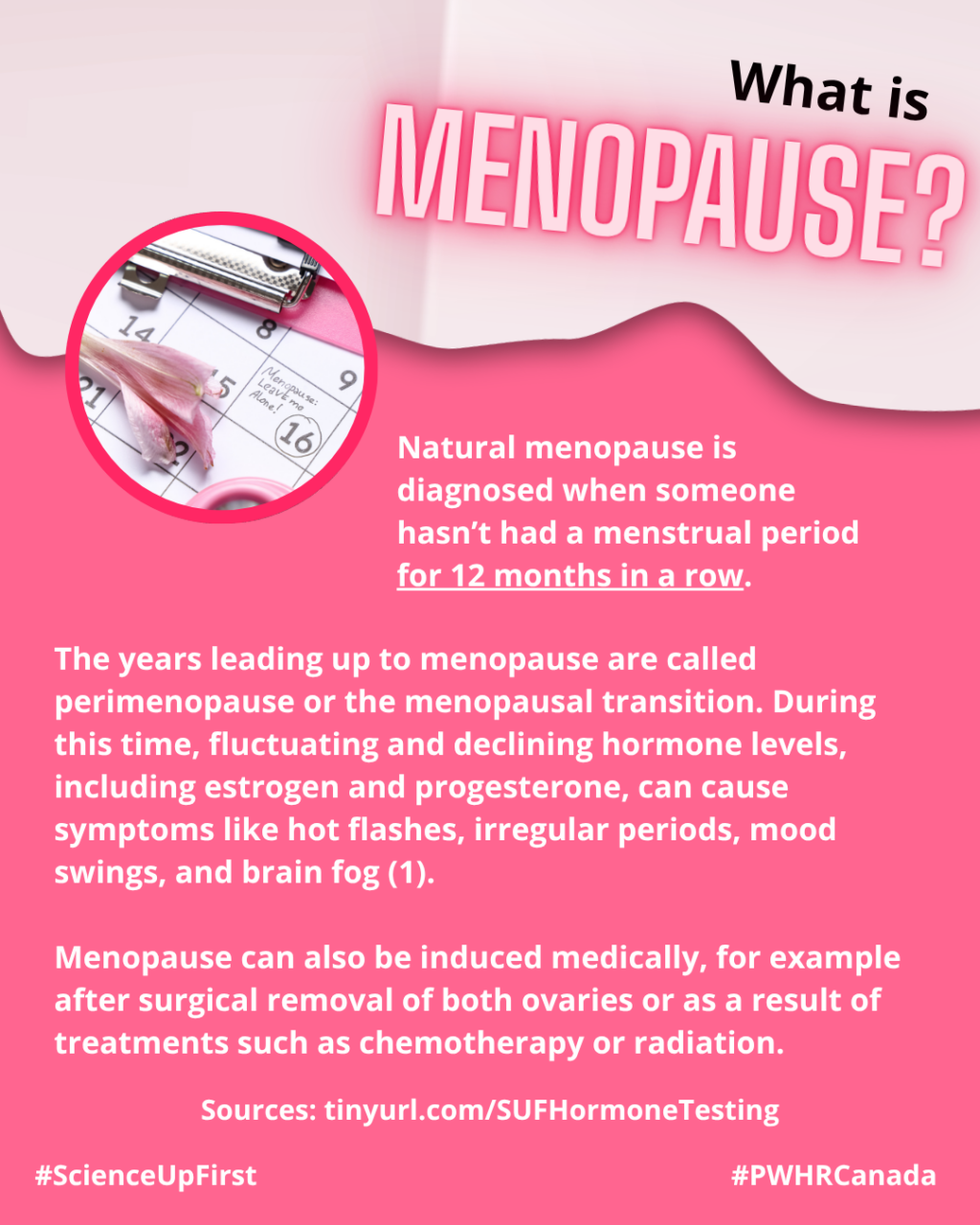
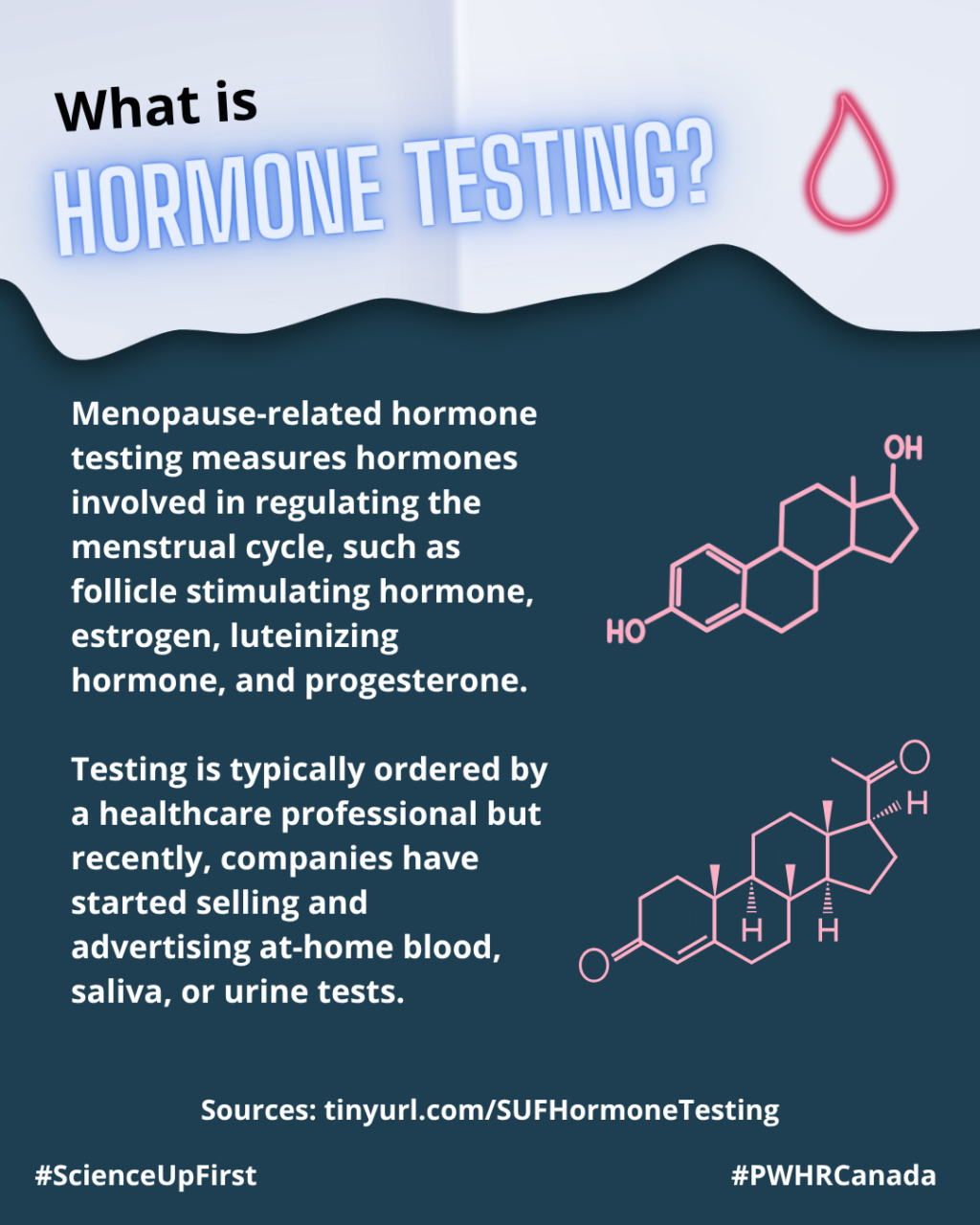
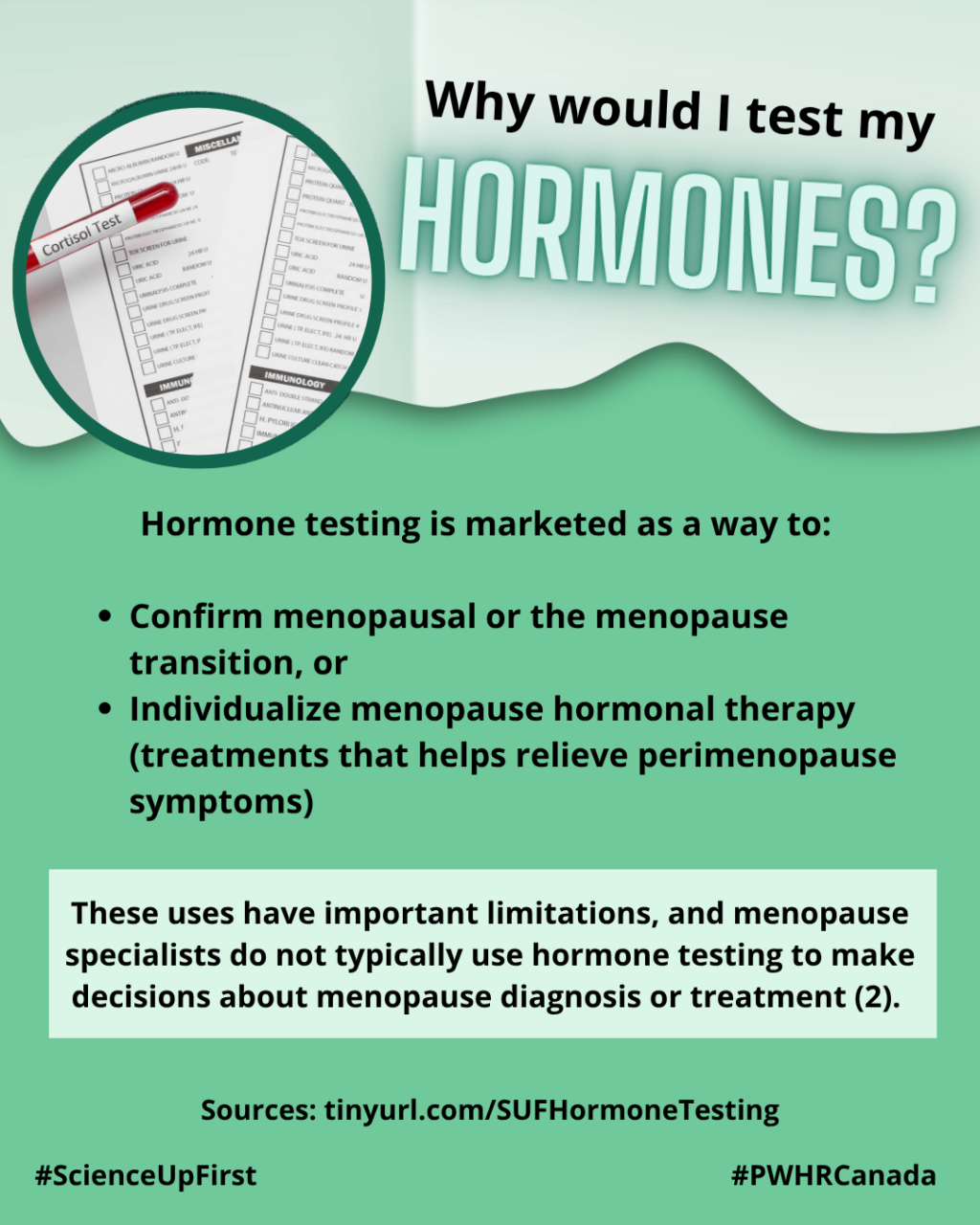
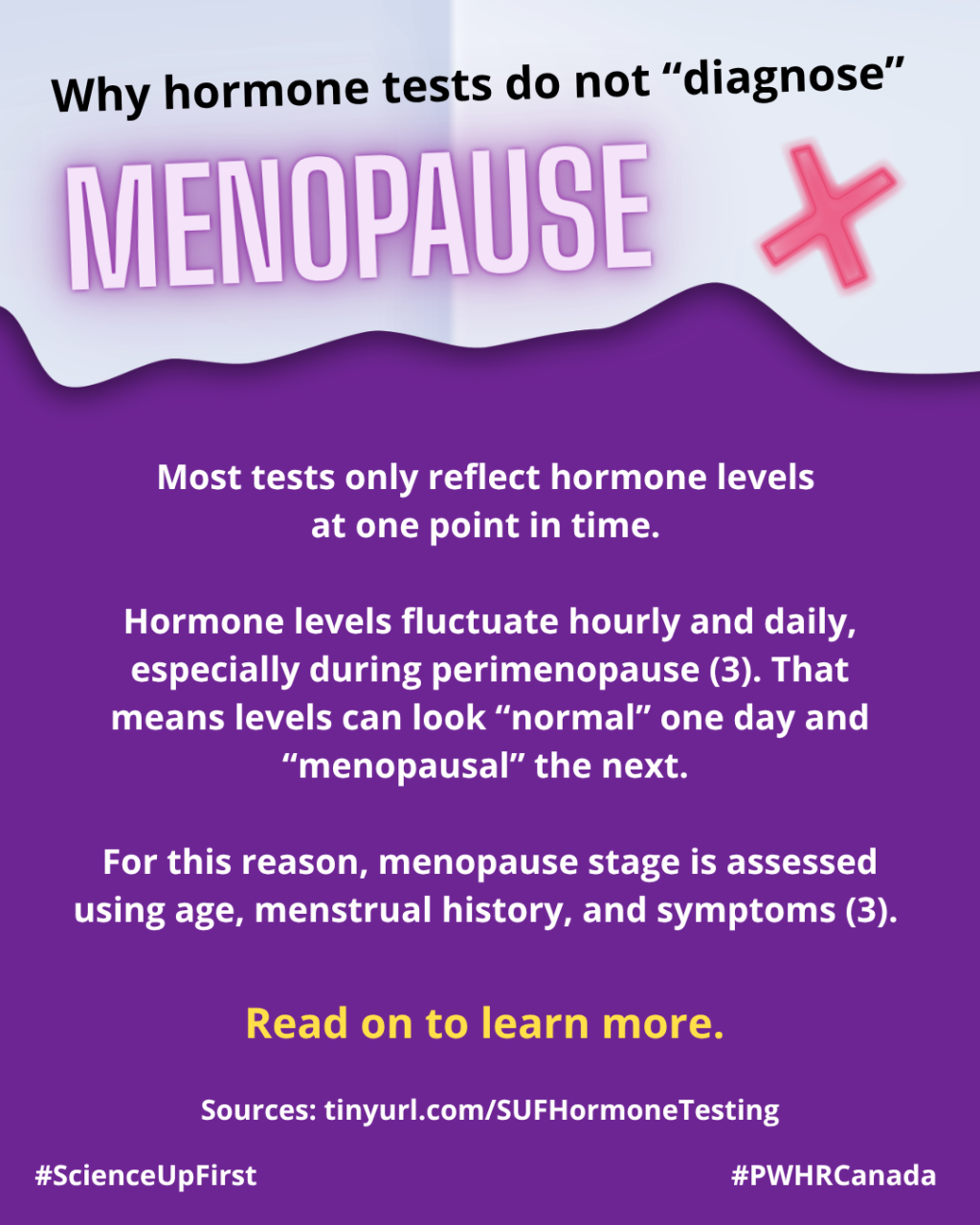
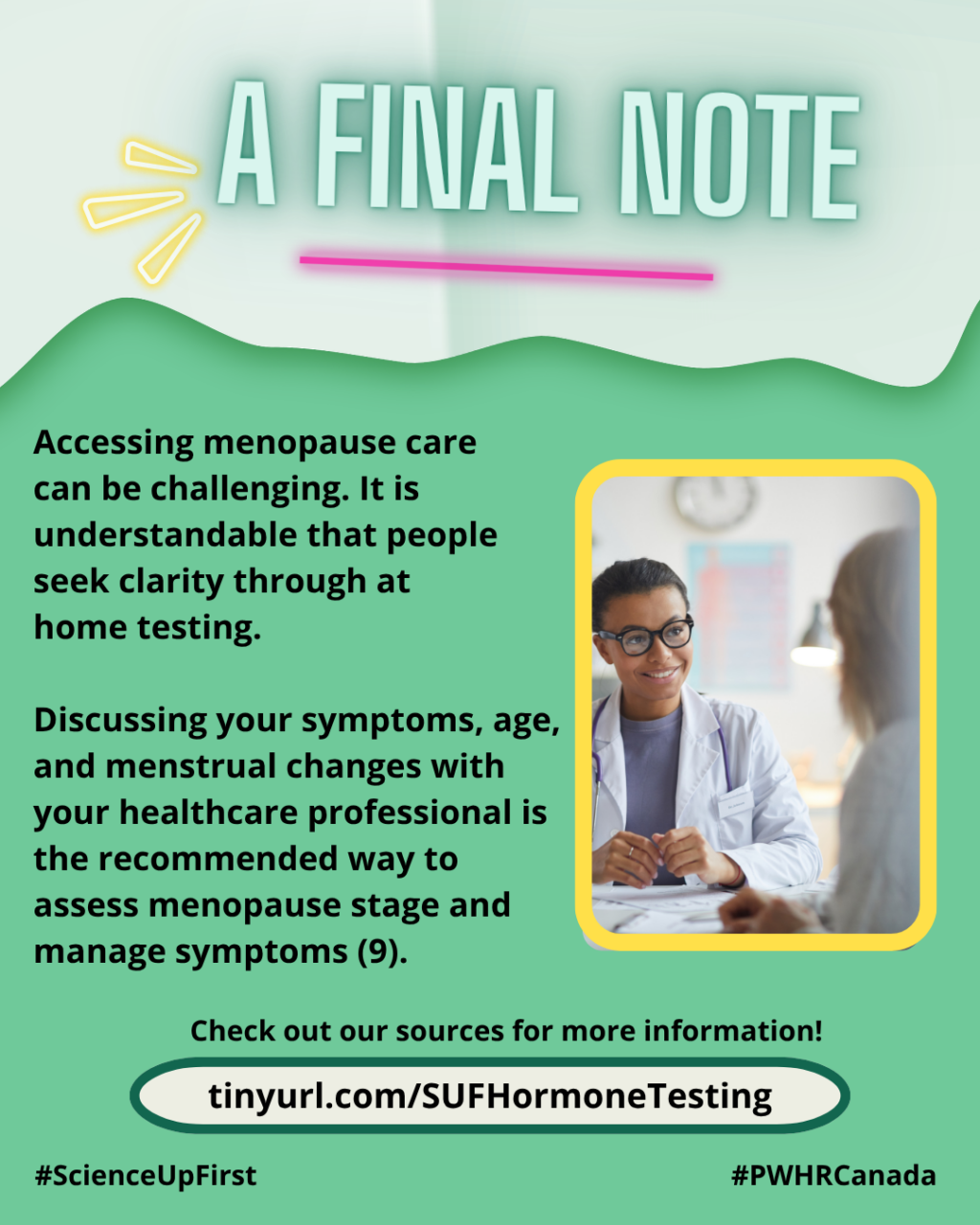
Accessing menopause care is already challenging enough.
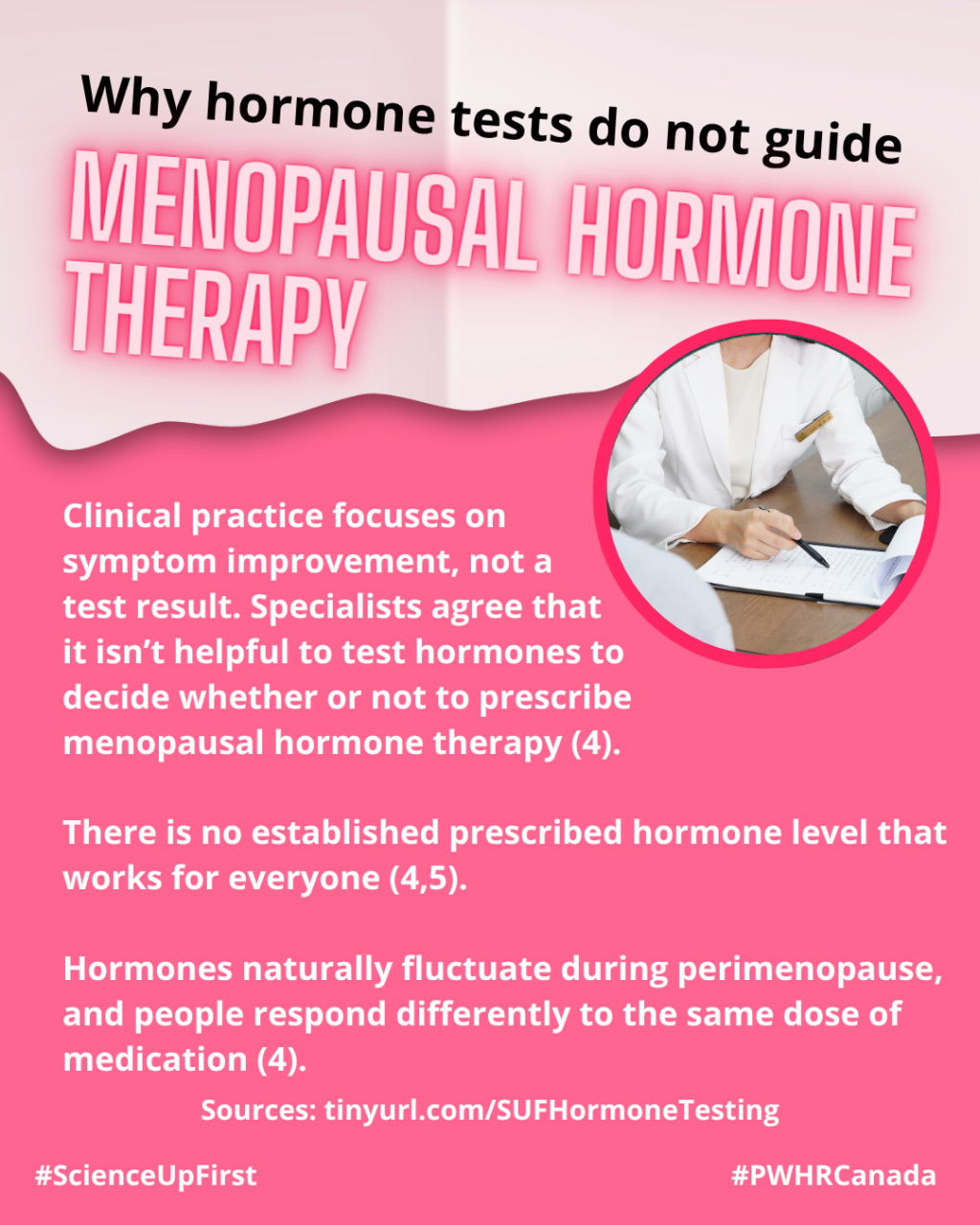
Unfortunately, this can also be an opportunity for companies to market at-home tests that do not paint a full or accurate picture. Hormones fluctuate throughout the day and the week due to many factors and a one-time snapshot is unlikely to be useful.
What’s more, specialists do not typically use hormone testing to make decisions about menopause diagnosis or treatment.
This post was made in collaboration with @pwhrcanada.
Resources
Have some more questions about what we talked about in our post? Here are some answers to common questions.
Can you explain hormone fluctuation more?
Hormone levels are meant to change. They rise and fall throughout the day and across your life to help your body respond to things like stress, aging, illness, medication, and daily activities (10,11). Because of this, a hormone level measured at one moment may look very different hours or days later.
One example is estrogen. Estrogen plays a key role in the menstrual cycle. Levels rise to help trigger ovulation (the release of an egg) and to support a possible pregnancy. After ovulation, or if pregnancy does not occur, estrogen levels naturally fall (12).
What is menopausal hormone therapy?
Menopausal hormone therapy is a prescription treatment that uses estrogen and progesterone to help relieve menopause symptoms. It works by temporarily increasing estrogen and progesterone hormone levels (hormones that decline during the menopause transition). It is available in different forms including pills, patches, creams, sprays, and vaginal tablets. Some forms affect the whole body, while others work only in the vagina. Menopausal hormone therapy is typically prescribed within 10 years of someone’s final menstrual period (13).
How is the right dose of menopausal hormone therapy determined?
There is no single correct dose for everyone, so determining the right dosage will be a conversation between you and your healthcare provider.
Current guidelines recommend starting at a low dose and adjusting as needed based on symptom improvement and side effects (5).
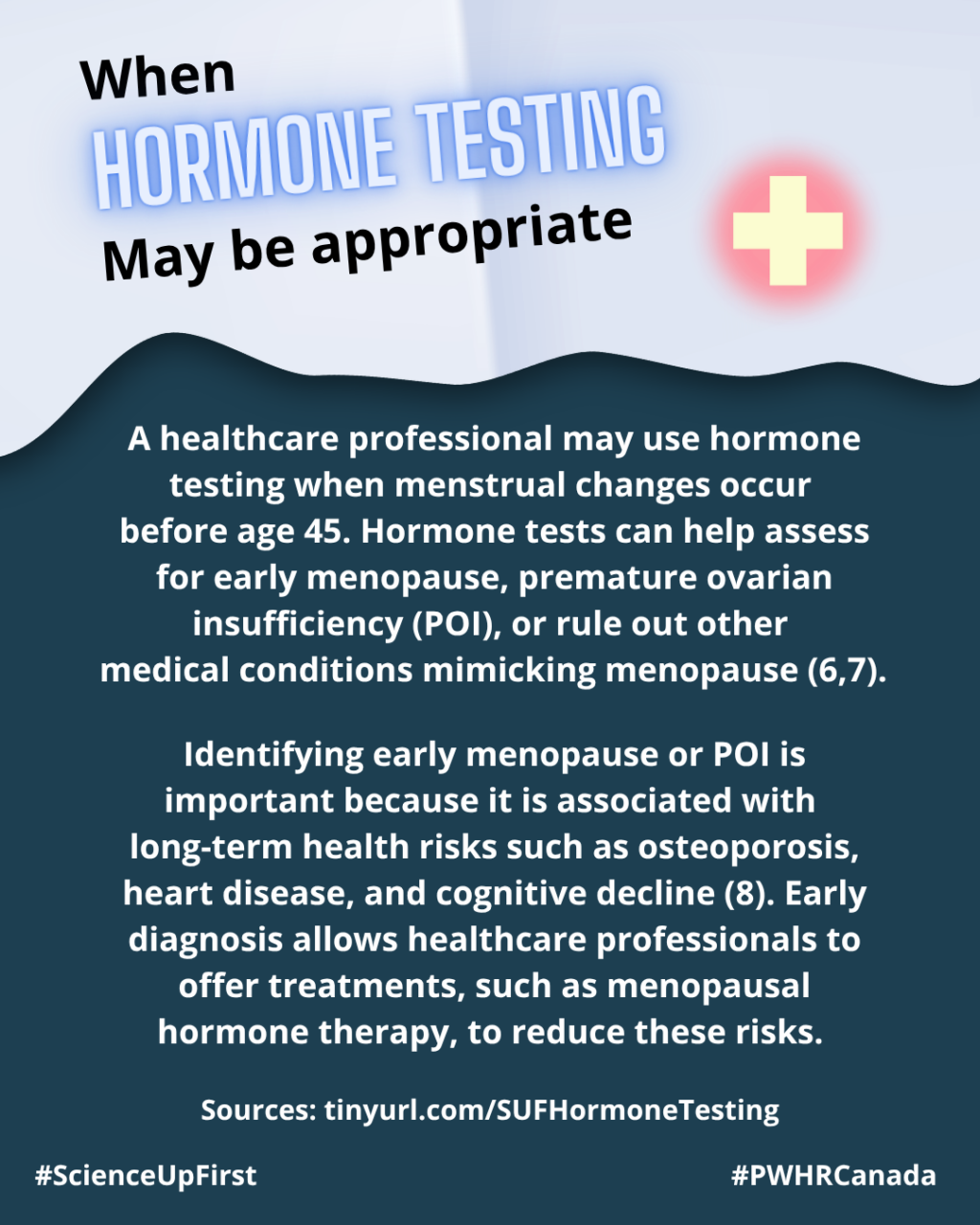
What is early menopause?
Early menopause occurs when menopause happens before age 45. It can be caused by many factors including chemotherapy or radiation to treat cancer, surgery that removes your ovaries (oophorectomy) or uterus (hysterectomy), family history of early menopause, chromosomal conditions (where individuals are missing or have duplicated chromosomes), autoimmune diseases, smoking cigarettes, myalgic encephalomyelitis (chronic fatigue syndrome), or HIV or AIDS (14).
Why is detecting early menopause important?
People who experience early menopause are often advised to use menopause hormone therapy until the average age of menopause (about 51 in Canada). Research shows that hormone therapy in this group can improve menopause symptoms, prevent bone loss, reduce cognitive decline and mood issues, and support cardiovascular health (5).
Additional resources
To read more information from a Canadian obstetrician and gynecologist: Hormone Testing and Menopause
To read more about menopause and the menopause transition: Menopause and U
- The Menopause Transition: Signs, Symptoms, and Management Options | The journal of Clinical Endocrinology & Metabolism | October 2020
- Medical Management of Menopause Symptoms | Government of Canada
- Diagnosis and Management | Canadian Menopause Society
- Answers to Your Questions on Bioidentical Hormone Therapy | SIGMA BHT Pamphlet | 2017
- Pocket Guide Menopause Management | Canadian Menopause Society
- Abnormal Pain and Menstrual Bleeding Irregular or Absent Periods | The Society of Obstetricians and Gynaecologists of Canada
- But I am only 40! Can this be menopause? | The Society of Obstetricians and Gynaecologists of Canada
- Early or premature menopause | Office on Women’s Health
- Menopause HUB | The Society of Obstetricians and Gynaecologists of Canada & Canadian Menopause Society
- Chapter 34 – Cortisol Awakening Response | Stress: Concepts, Cognition, Emotion, and Behavior | 2016
- Insulin secretion in diabetes mellitus | The American Journal of Medicine | March 1981
- The normal menstrual cycle in women | Animal Reproduction Science | April 2011
- Menopause Topics: Hormone Therapy | The menopause Society
- Premature & Early Menopause: Causes, Symptoms & Treatment | Cleveland Clinic | September 2022
Share our original Bluesky Post!
View our original Instagram Post!