
DEET, icaridin (picaridin), and P-Menthane-3,8-diol (PMD) are well-known and effective mosquito and tick repellents (5,6,20,21). Other plant-based options such as citronella, oil of lemon eucalyptus, and other essential oils could also provide some level of protection, although typically for shorter periods of time (3,6-11,20).
Most personal repellents are applied as sprays, aerosols, or lotions directly to the skin. However, there’s been a rise in alternative options like wristbands, stickers, and patches marketed as safer, and more natural (12,13).
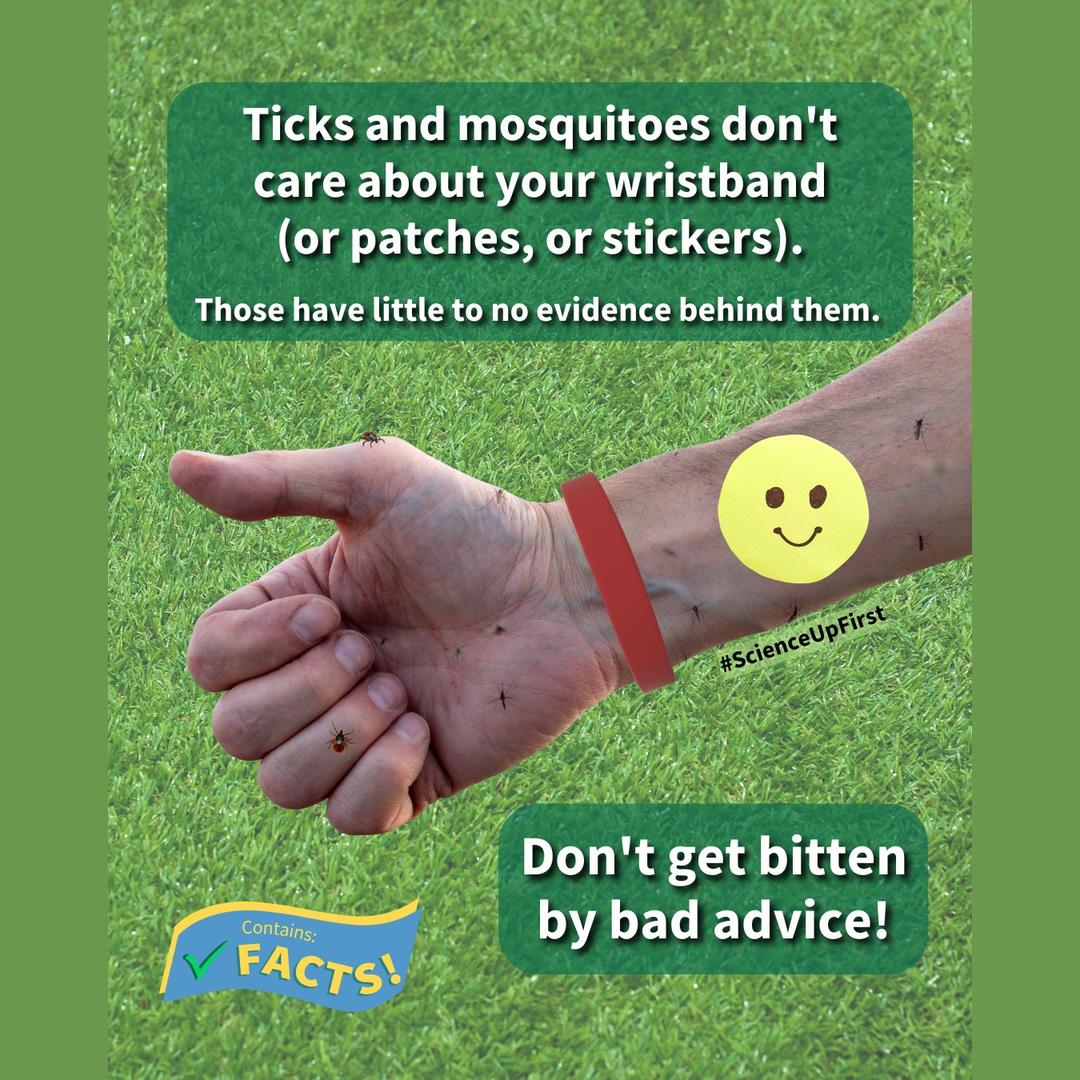
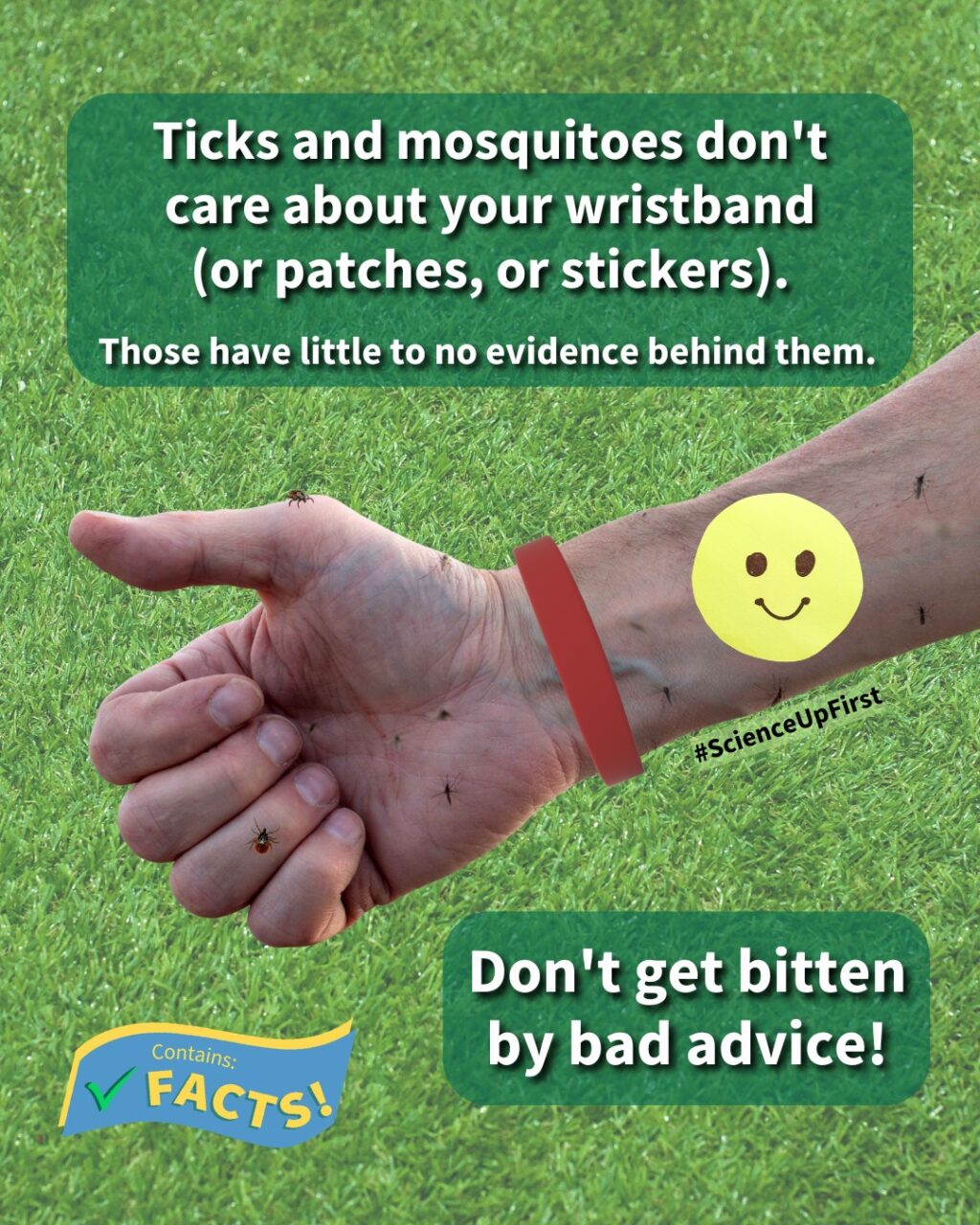
While these products might seem appealing, studies have shown they provide minimal, if any, protection against mosquito or tick bites (3,6,14,15,22). Even if infused with insect repellent, these products don’t release enough of the active ingredient to effectively repel biting insects (3,12).
Mosquitoes are the deadliest animal on Earth, transmitting diseases that cause over 400,000 deaths globally each year (16). While these diseases primarily affect tropical and subtropical regions, Canada is also at risk from mosquito-borne illnesses like West Nile virus. Ticks can also carry diseases like Lyme disease, and both mosquitoes and ticks are expanding their range in Canada with climate change (16-18,20).
To protect yourself, DEET, PMD, and icaridin-based repellents provide the best and longest protection (3,5,20). For additional protection, cover as much exposed skin as possible with tucked-in, loose, light-coloured clothes made from fabric like nylon or polyester – adults can wear permethrin-treated clothing too (19).
- How mosquitoes tell the difference between animal and human hosts (and why it matters) | NIH Medline Plus Magazine | September 2022
- How mosquitoes distinguish people from animals | National Institutes of Health (NIH) | June 2022
- Efficacy of Some Wearable Devices Compared with Spray-On Insect Repellents for the Yellow Fever Mosquito, Aedes aegypti (L.) (Diptera: Culicidae) | Journal of Insect Science | Oxford Academic | February 2017
- DEET | United States Environmental Protection Agency | May 2024
- Efficacy of four insect repellents against mosquito bites: a double‐blind randomized placebo‐controlled field study in Senegal | Fundamental & Clinical Pharmacology – Wiley Online Library | September 2009
- Personal Insect repellents | Government of Canada | September 2009
- Repellent efficacy of 20 essential oils on Aedes aegypti mosquitoes and Ixodes scapularis ticks in contact-repellency assays | Scientific Reports | January 2023
- Effectiveness of Herbal Essential Oils as Single and Combined Repellents against Aedes aegypti, Anopheles dirus and Culex quinquefasciatus (Diptera: Culicidae) | Insects | July 2022
- Evaluating repellence properties of catnip essential oil against the mosquito species Aedes aegypti using a Y-tube olfactometer | Scientific Reports | January 2024
- Effectiveness of citronella preparations in preventing mosquito bites: systematic review of controlled laboratory experimental studies | Tropical Medicine & International Health | April 2011
- How Well Does Oil of Lemon Eucalyptus Work in Bug Sprays? | Consumer Reports | June 2024
- 4 Types of Insect Repellent to Skip | Consumer Reports | June 2023
- The Efficacy of Some Commercially Available Insect Repellents for Aedes aegypti (Diptera: Culicidae) and Aedes albopictus (Diptera: Culicidae) | Journal of Insect Science | October 2015
- Do wrist bands impregnated with botanical extracts assist in repelling mosquitoes? | Informit | January 2011
- Evaluation of commercial products for personal protection against mosquitoes | Acta Tropica | February 2013
- Vector-borne diseases | World Health Organization | March 2020
- Mosquito-borne disease surveillance: Technical notes | Government of Canada | June 2024
- As Canada warms, infectious disease risks spread north | CTV News | May 2024
- Insect bite and pest prevention | Government of Canada | October 2023
- Preventing mosquito and tick bites: A Canadian update | Paediatrics Child Health | June-July 2014
- Re-evaluation Decision RVD2022-11, p-Menthane-3,8-diol and Its Associated End-use Products | Government of Canada | August 2022
- Efficacy of unregulated minimum risk tick repellent products evaluated with Ixodes scapularis nymphs in a human skin bioassay | Parasites & Vectors | February 2024
Share our original Bluesky Post!
Although bracelets, stickers or patches may look attractive, they offer minimal, if any, protection against mosquito bites or ticks. We explain it all to you here 👇 www.scienceupfirst.com/project/are-… #ScienceUpFirst
— ScienceUpFirst (@scienceupfirst.bsky.social) June 10, 2026 at 3:04 PM
[image or embed]
View our original Instagram Post!