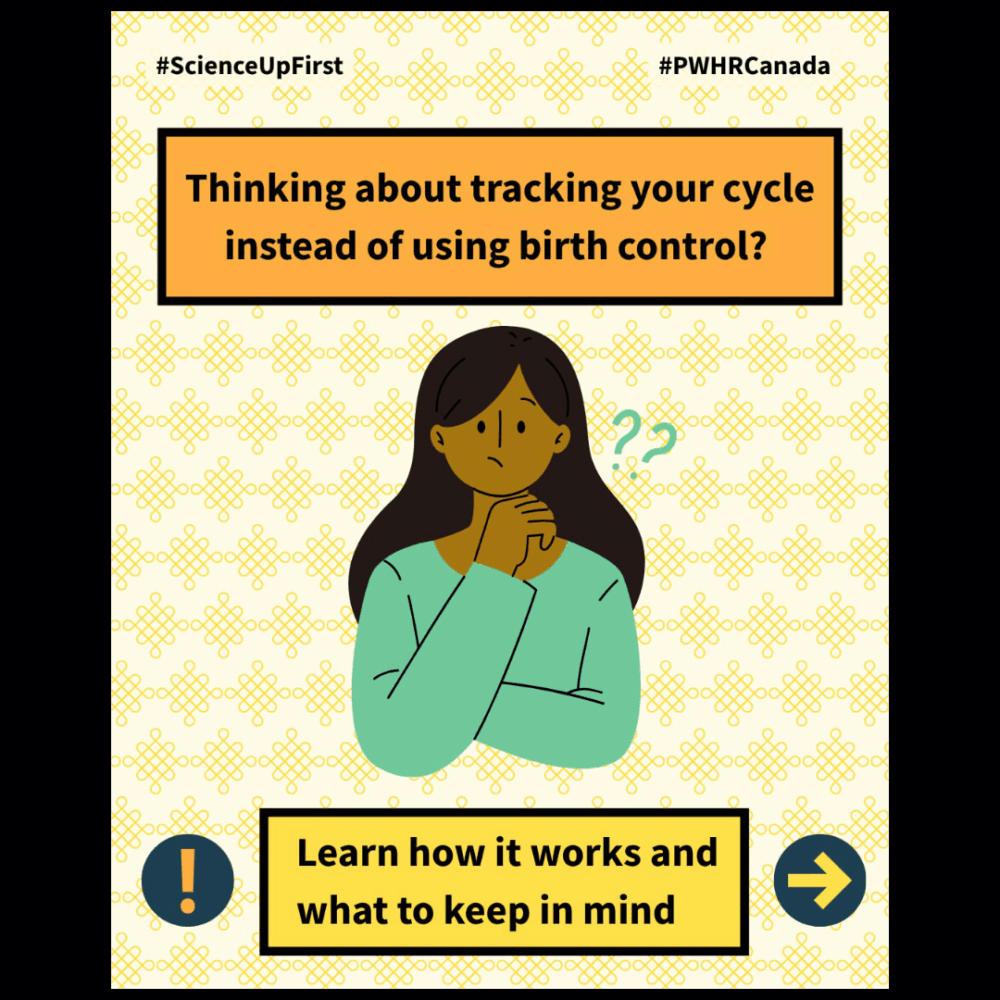

In Canada and elsewhere, use of the pill has dropped, especially among younger women (1,2,3).
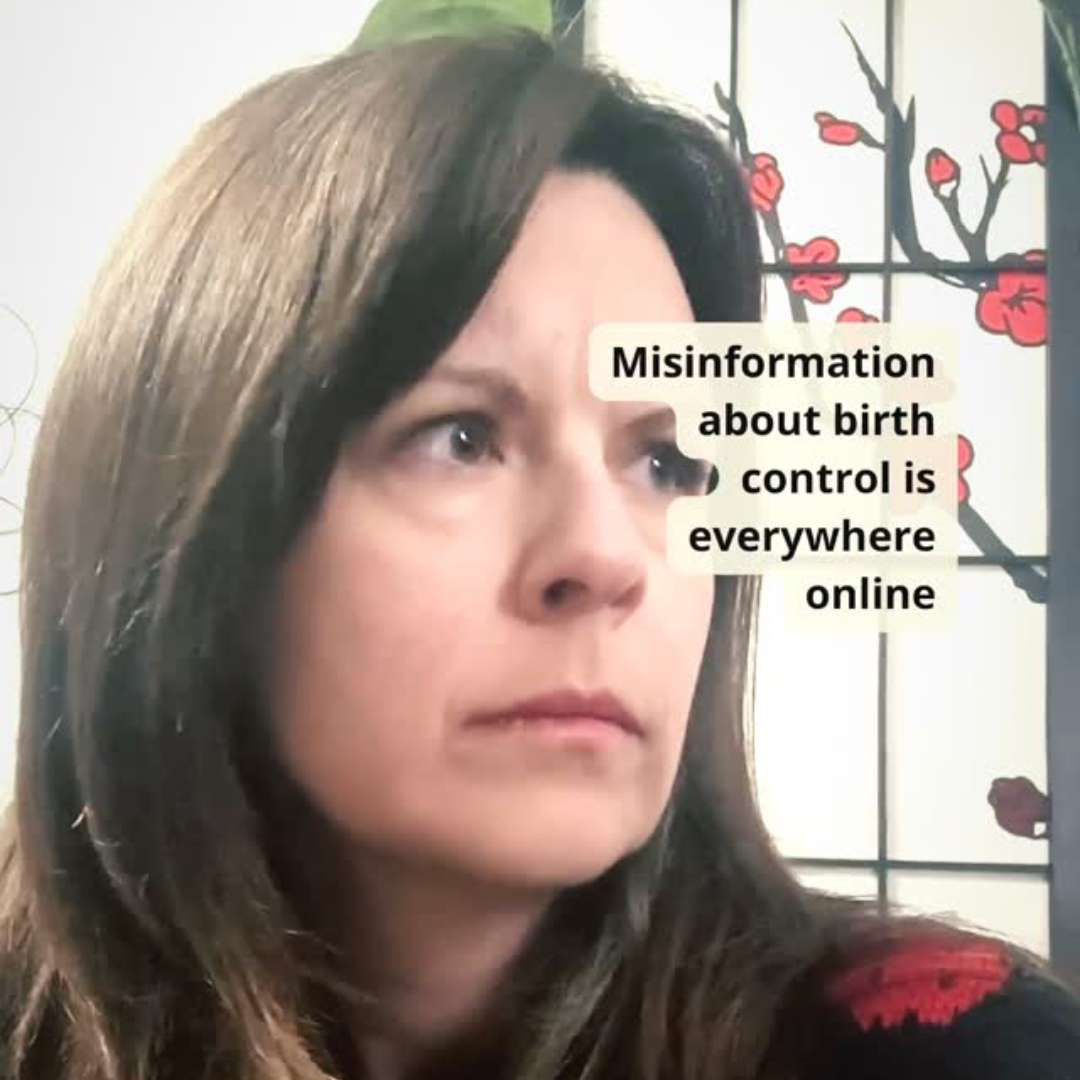
Online, misinformation about birth control is everywhere. On platforms like TikTok, most content about hormonal birth control is negative and based on personal stories. Very little of it (less than 10%!) comes from qualified health professionals (4,5).
The problem is that those stories stick. Emotional, anecdotal experiences are easier to relate to than numbers or statistics, which can make them feel more convincing when people are deciding what to do about birth control (6,7). These stories can be meaningful and validating, but without clear, reliable information alongside them, they can also fuel confusion and fear.
That confusion is made worse when people’s concerns are dismissed in medical settings (8,9). Feeling unheard, combined with misinformation that fuels mistrust in medical advice and research, can push many to look for answers elsewhere, often online, where nuance is missing and context gets lost (10,11,12,13).
And all of this creates an opening for opportunists to exploit people’s uncertainty (created by misinformation), spread fear, and roll back reproductive rights (14,15).
You deserve care that listens to your experiences and is backed by solid evidence. Both matter when making decisions about birth control.
This post was made in collaboration with @pwhrcanada
References
Why do our brains love anecdotes? | ScienceUpFirst
- Self-reported contraceptive method use at conception among patients presenting for abortion in England: a cross-sectional analysis comparing 2018 and 2023 | BMJ Journals | January 2025
- Time trends in contraceptive prescribing in UK primary care 2000–2018: a repeated cross-sectional study | BMJ Journals | November 2021
- Misinformation could be leading to a decrease in contraceptive use among young Canadians, and researchers are urging further study | The Globe and Mail | August 2025
- “Do You Know What Birth Control Actually Does to Your Body?”: Assessing Contraceptive Information on TikTok | Perspectives on Sexual and Reproductive Health on Wiley Online Library | June 2025
- An analysis of oral contraceptive related videos on TikTok | AJOG Global Reports | June 2024
- The Differential Impact of Abstract vs. Concrete Information on Decisions | Journal of Applied Social Psychology – Wiley Online Library | September 1977
- When poignant stories outweigh cold hard facts: A meta-analysis of the anecdotal bias | Organizational Behavior and Human Decision Processes | September 2020
- New report reveals women feel dismissed and overlooked by Canada’s healthcare system | The Honest Talk | May 2025
- Over half of UK women feel their pain is ignored or dismissed, new report shows | Wellbeing of Women | November 2022
- Medicine is Patriarchal, But Alternative Medicine is Not the Answer | Journal of Bioethical Inquiry | December 2018
- Demographic and psychometric predictors associated with engagement in risk-associated alternative healthcare behaviours | PLOS One | September 2023
- Why Patients Use Alternative Medicine: Results of a National Study | JAMA Network | May 1998
- The ‘gender puzzle’ of alternative medicine and holistic spirituality: A literature review | Social Science & Medicine | July 2014
- SOGC Statement: Health Misinformation is a Form of Violence Against Women | SOGC | October 2025
- Online Misleading Information About Women’s Reproductive Health: A Narrative Review | Journal of General Internal Medicine | November 2024
Share our original Bluesky Post!
Online, misinformation about birth control is everywhere, which opportunists then exploit through fear. You deserve care that listens to your experiences and is backed by solid evidence.👇 scienceupfirst.com/sexual-healt… #ScienceUpFirst @pwhrcanada.bsky.social
— ScienceUpFirst (@scienceupfirst.bsky.social) February 18, 2026 at 3:35 PM
[image or embed]
View our original Instagram Post!