
Experimental research using novel large language model-based methods demonstrates how, when it comes to the feed-ranking algorithms of social media platforms, reranking the visibility of hostile political content can reduce political polarization.
Category: Misinformation 101
-
Appeal to Authority Bias

Have you ever seen someone in a lab coat online making bold health claims?🧑⚕️
Whether that person is a doctor or not, the coat makes them appear like an authority on the subject. That’s a classic example of the appeal to authority fallacy (a.k.a. an error in reasoning (1)).
It happens when we accept a claim as true just because an “authority” says so, instead of looking at the actual evidence. That authority could be a celebrity, a “doctor,” or someone who simply looks credible (2,3).
The problem?
Not all authorities are experts. And not all experts speak within their domain of expertise. Someone can be an epidemiologist studying diseases in seal colonies, but that doesn’t make them an expert on COVID-19 in humans. And even real experts can be wrong. What makes a claim reliable isn’t just who says it, but the evidence behind it (4,5,6).This tactic works because we naturally trust people who seem knowledgeable or familiar. On social media, that might mean wearing a lab coat, using technical language, or saying “studies show…” without proof.
And it doesn’t just affect people. One recent study found that AI systems were more likely to accept false health info when it was written like a doctor’s note (7).
That doesn’t mean we should ignore experts. In fact, relying on qualified experts is often helpful (2,4).
But here’s the key (4):
- Is this person actually an expert in this topic?
- Are they showing evidence, or just asking you to trust them?
If you catch this happening, ask: what evidence supports this claim, beyond who said it (8)?
Remember, “they said so” isn’t proof. It’s just a claim (2).
Sources- Fallacies | Internet Encyclopedia of Philosophy
- Appeal to Authority Fallacy | Definition & Examples | Scribbr | June 2023
- Appeals to Authority | Open Library – Studies in Critical Thinking
- Logical Fallacies: Appeal to Authority | ThoughtCo. | March 2021
- Appeal to Authority | Logically Fallacious
- Your logical fallacy is appeal to authority | Your Logical Fallacy Is
- Mapping the susceptibility of large language models to medical misinformation across clinical notes and social media: a cross-sectional benchmarking analysis | The Lancet Digital Health | January 2026
- Appeal to Authority Fallacy: How to Avoid It | Think, But How? | July 2021
Share our original Bluesky Post!
View our original Instagram Post!
-
Social media use and well-being across adolescent development
Cohort study of one hundred thousand Australian adolescents finds that a moderate amount of social media use correlates with higher level of well-being compared with no and very high use levels. Findings, however, are based on self-reported data, making the study observational and lacking in sufficient rigour to draw strong conclusions.
-
The Quality of Evidence of and Engagement with Video Medical Claims
Analysis on health-related YouTube videos created by health practitioners shows that most medical claims were supported by “very low or no evidence,” and only 20% were supported by “high-quality” evidence. This research shows the ongoing need for online healthcare professionals to substantiate all claims with strong and accurate evidence and for audiences to maintain a critical approach when engaging social media content.
-
5 times our team thought an AI video was real
Think you can always spot an AI image? Think again. It is getting harder.
Older clues like weird hands or uneven eyes are becoming less common with newer AI tools. That means we cannot rely on visuals alone.
Here are a few smarter ways to check:
Look for the original source 🔎
Who posted the image first? Are they a trustworthy source?Check other sources 📰
Are other outlets reporting the same story or showing the same image? If a major event really happened, multiple sources should be talking about it.Pause if it triggers strong emotions 😡
Posts that make you feel shocked, angry, or excited are more likely to spread misinformation.Use fact-checking tools 🧰
Sites like Snopes, FactCheck.org, PolitiFact, and Reuters Fact Check can help verify viral claims. You can also always ask us or use MediaSmarts custom search engine that scans several of the most popular fact checker websites we just mentioned and more!You can still treat suspicious visuals as red flags (one extra finger is still a good cue the video is AI generated), but are not reliable proof anymore. AI images do not always look odd, and real photos can look unusual.
We all like to think we are good at spotting misinformation online. In reality, it can be tricky. The good news is, you do not need to be an expert to question what you see online. A quick pause and a few checks can go a long way.
Today, (March 27, 2026) is Canada’s first #AILiteracyDay hosted by our friends @mediasmarts.ca ! We pulled all these tips from their terrific resources. Visit their website to learn more.
Share our original Bluesky Post!
View our original Instagram Post!
-
About 4 in 10 teens support cellphone bans in classrooms; fewer back all-day restrictions
PEW survey research finds about 40% of American teens support banning cellphone use in classrooms but nearly 75% oppose banning them for the entire day.
-
Health misinformation can have immediate consequences


When unsupported health claims spread, they can quickly have real impacts on people’s health.
A recent example involving Tylenol and autism shows how fast that can happen.
Swipe to learn what the evidence actually says. 👉
This post was made in collaboration with @pwhrcanada and @grossesseensante
Sources- Changes in paracetamol and leucovorin use after a White House briefing | The Lancet | March 2026
- Tylenol orders in pregnant people plummeted after Trump falsely linked the medicine to autism | Scientific American | March 2026
- Does Tylenol Use during Pregnancy Cause Autism? What the Research Shows | Scientific American | September 2025
- Have a fever while pregnant? Here’s what to know and how to treat it | BabyCenter | January 2026
- Upcoming HHS report will link autism to common pain reliever, folate deficiency in pregnancy, Wall Street Journal reports | CNN | September 2025
- Tylenol has entered the chat: RFK Jr. wants to link it to autism, even though the best evidence says otherwise. | Inside Medicine | September 2025
- Evaluation of the evidence on acetaminophen use and neurodevelopmental disorders using the Navigation Guide methodology | Environmental Health | Springer Nature Link | September 2021
- Acetaminophen Use During Pregnancy and Children’s Risk of Autism, ADHD, and Intellectual Disability | JAMA | April 2024
- FDA Drug Safety Communication: FDA has reviewed possible risks of pain medicine use during pregnancy | U.S. Food & Drug Administration | 2016
- Prenatal acetaminophen use and outcomes in children | American Journal of Obstetrics & Gynecology | March 2017
Share our original Bluesky Post!
View our original Instagram Post!
-
No, vaccines don’t cause autism

While there is absolutely no evidence that vaccines cause autism, it remains one of the most persistent myths surrounding vaccines to date.
But where did this myth begin? Who started it? Finally, why is the claim that vaccines cause autism completely unfounded?
Answers to those questions on this factsheet
The clinical definition of autism is “a lifelong neurodevelopmental condition that affects the way a person communicates and relates to people and the world around them”. All autistic lives are equal in worth to any other life. Autism is not a disease or an illness to be treated or cured. All autistic lives matter.
This resource was made in collaboration with @Immunize.ca and @camhnews.
Share our original Bluesky Post!
View our original Instagram Post!
-
Shared reading interventions to promote psychosocial well-being in older adults: a systematic review
Book clubs and reading groups for the win! Based on a systematic review focused on older adults, cognitively stimulating reading has numerous social and personal benefits while shared reading can foster positive social relationships and social engagement, leading to improved psychological health and well-being.
-
Heated Rivalry: Misinformers
When mom says we have Ilya Rozanov at home… ⬆️
While our rivalry with misinformers may be heated (not that way! Come on…), all our love is for our fellow science communicators who are hard at work (not that way!!) keeping people across Canada informed, educated, and entertained.
There are too many incredible science communicators for us to tag everyone… but we don’t ever want that problem to ever go away 😉
See below for some of the communicators we love. There are many many others but we can’t tag them all!
Share our original Bluesky Post!
View our original Instagram Post!
-
Omission Bias

Have you heard of “The Trolley Problem”?
Five people are tied to a train track. A train is coming. You can pull a lever to divert it to another track, but there is one person tied there too.
What do you do?
Option A: Do nothing. Five people die.
Option B: Pull the lever. One person dies, but five are saved.If Option A feels “safer” to you, you might be experiencing Omission Bias.
Omission bias is our tendency to see harmful actions as worse than harmful inaction, even when the outcome is similar, or even worse. In other words, causing harm can feel more morally wrong, more blameworthy, than allowing harm to happen (1,2,3).
In the trolley problem, pulling the lever means someone dies because of something you did. Not pulling it means more people die, but it can feel less direct and less like your fault (1).
This bias is a mental shortcut. When a decision feels heavy or uncertain, it can feel easier to leave things as they are than to weigh risks and benefits (1,3).
We see this often with vaccines. For a hesitant parent, vaccinating can feel like pulling the lever. It is an active choice (1). Vaccines are incredibly safe, and most side effects are mild and short lived. Serious reactions are rare (4). But if something were to happen, it can feel like it happened because of a decision they made. Choosing not to vaccinate can feel safer because it avoids action, but it does not remove the risk (1,5). In fact, the risk of severe illness, complications, or death from vaccine-preventable diseases is significantly higher than the risk of serious vaccine side effects (6).
We are all vulnerable to biases that shape how we see risk and responsibility. Being aware of them can help us make more informed decisions, and also better understand where others are coming from.
Sources- Omission Bias | The Decision Lab
- Action and Inaction in Moral Judgments and Decisions: Meta-Analysis of Omission Bias Omission-Commission Asymmetries | Personality and Social Psychology Bulletin | October 2022
- Omitting Omission Bias in the ICU | CHEST Critical Care | January 2026
- Vaccine safety and possible side effects | Government of Canada
- Omission bias and pertussis vaccination | Medical Decision Making | 1994
- Myth Busters – A Series of Essays Giving the Research Evidence Behind Canadian Healthcare Debates | Immunize Canada | December 2026
Share our original Bluesky Post!
View our original Instagram Post!
-
Multimodal Analysis of Stories Told by Mental Health Influencers on TikTok
Mental health wellness influencers on Tiktok blend informing practices used by health professionals with visual narration techniques of shared experience to communicate inaccurate and evidence-lacking health solutions that sound both authoritative and authentic.
-
Bandwagonning

Have you ever bought a book just because it was on the best-seller list? You might have succumbed to the bandwagon fallacy.
Also called the appeal to common belief or the appeal to popularity, it is used to convince someone that something is true (or untrue) simply because lots of people think it is (1). There is nothing wrong with popular things (popular things are often popular for a reason!), but the fallacy lies in claiming that because it is popular, then it must be true (1,2,3,4,5). It is a mental shortcut: if many people believe it, it is easier for our brain to assume it must be right than to take the time to question and fact check it (4).
Think of it this way: There was a time when the most popular belief was that the Earth was flat. Today, the popular belief is that it’s round (it’s actually an irregularly shaped ellipsoid, but you get the idea!) (6). Both were popular theories, but only one is actually backed by facts.
Similarly, lots of people believe they need supplements to be healthy. However, science has said time and again that most people don’t need supplements if they eat a healthy diet and that they can even be harmful and dangerous (7,8,9,10,11,12,13,14,15).
Others jump on the bandwagon to fit in, or out of fear of missing out (4,5). If we see protein enriched products everywhere, then surely it must mean most people must not eat enough right? In reality, most people in Canada already get enough protein through their usual meals. For most Canadian adults, protein intake is not a major concern (16,17), even if protein-enriched products are everywhere (check out our latest post on protein consumption!).
Next time someone tells you “Everyone knows that…” or “people say…” ask yourself (and maybe ask them too!): “Am I believing this because lots of people believe it is true/untrue or because there are facts backing it up?” (3).
Sources- Your logical fallacy is bandwagon | Your Logical Fallacy
- Bandwagon Fallacy | Excelsior University OWL
- Guide to the Most Common Logical Fallacies | Thinking is Power
- Bandwagon Fallacy: Definition and Examples | Grammarly | September, 2022
- Bandwagon Effect | The Decision Lab
- Is the Earth round? | National Ocean Service – National Oceanic and Atmospheric Administration
- Do you need a daily supplement? | Harvard Health | February 2021
- Is There Really Any Benefit to Multivitamins? | Johns Hopkins Medicine
- Vitamin C for preventing and treating the common cold | Cochrane Library | January 2013
- The Vitamin Myth: Why We Think We Need Supplements | The Atlantic | July 2013
- Antioxidant Supplements to Prevent Mortality | JAMA | September 2013
- Long-term multivitamin supplementation and cognitive function in men: a randomized trial | Annals of Internal Medicine | December 2014
- Vitamin and mineral supplements in the primary prevention of cardiovascular disease and cancer: An updated systematic evidence review for the U.S. Preventive Services Task Force | Annals of Internal Medicine | December 2013
- Vitamins, Are They Safe? | Advanced Pharmaceutical Bulletin | December 2016
- Meta-analysis: high-dosage vitamin E supplementation may increase all-cause mortality | Annals of Internal Medicine | January 2005
- Protein consumption in Canadian habitual diets: usual intake, inadequacy, and the contribution of animal- and plant-based foods to nutrient intakes | Canadian Science Publishing | November 2020
- Protein | Government of Canada
Share our original Bluesky Post!
View our original Instagram Post!
-
The Base Rate Fallacy: Men’s Olympic Hockey

It’s true that more Americans were watching the Sunday game than Canadians: 8.7 million Canadians vs. 26 million Americans, to be exact (1,2).
Looking at the stats sheet alone, it may seem like Americans care more about hockey than Canadians. But that would be a base rate fallacy.
The Base Rate Fallacy is the tendency for people to incorrectly judge the likelihood of a situation by benching relevant data. The way data is presented can greatly influence how we perceive it (3,4).
Yes, only 8.7 million Canadians watched the game last Sunday, but there are also only 41.5 million people living in Canada. Compared to the 342.4 million people living in the United-States of America, that nuance matters. It matters because 8.7 million of 41.5 million is 20.9% of the population, while 26 million of 342.4 million is only 7.6% of the American population. Quite a lot of people, but still, not quite as much as Canada (proportion wise!) (5,6). We will take the percentage win. 💪
We hope the American men’s hockey team enjoys their gold, because based on their track record they won’t see another one until the 2070s…
Come on, what’s hockey without some chirping?!
And remember: Numbers without context? That is a power play for misinformation.
Sources- 8.7 million Canadians watched end of men’s Olympic gold-medal hockey game | CBC Sports | February 24, 2026
- Hughes’ OT goal in Olympic final averages 26M live viewers on NBC and Peacock | NBC New York | Updated February 25, 2026
- Base Rate Fallacy | The Decision Lab
- Base Rate Fallacy | Logically Fallacious
- Canada’s population clock (real-time model) | Government of Canada | As of February 25, 2026
- Population Clock | United States Census Bureau | As of February 25, 2026
Share our original Bluesky Post!
View our original Instagram Post!
-
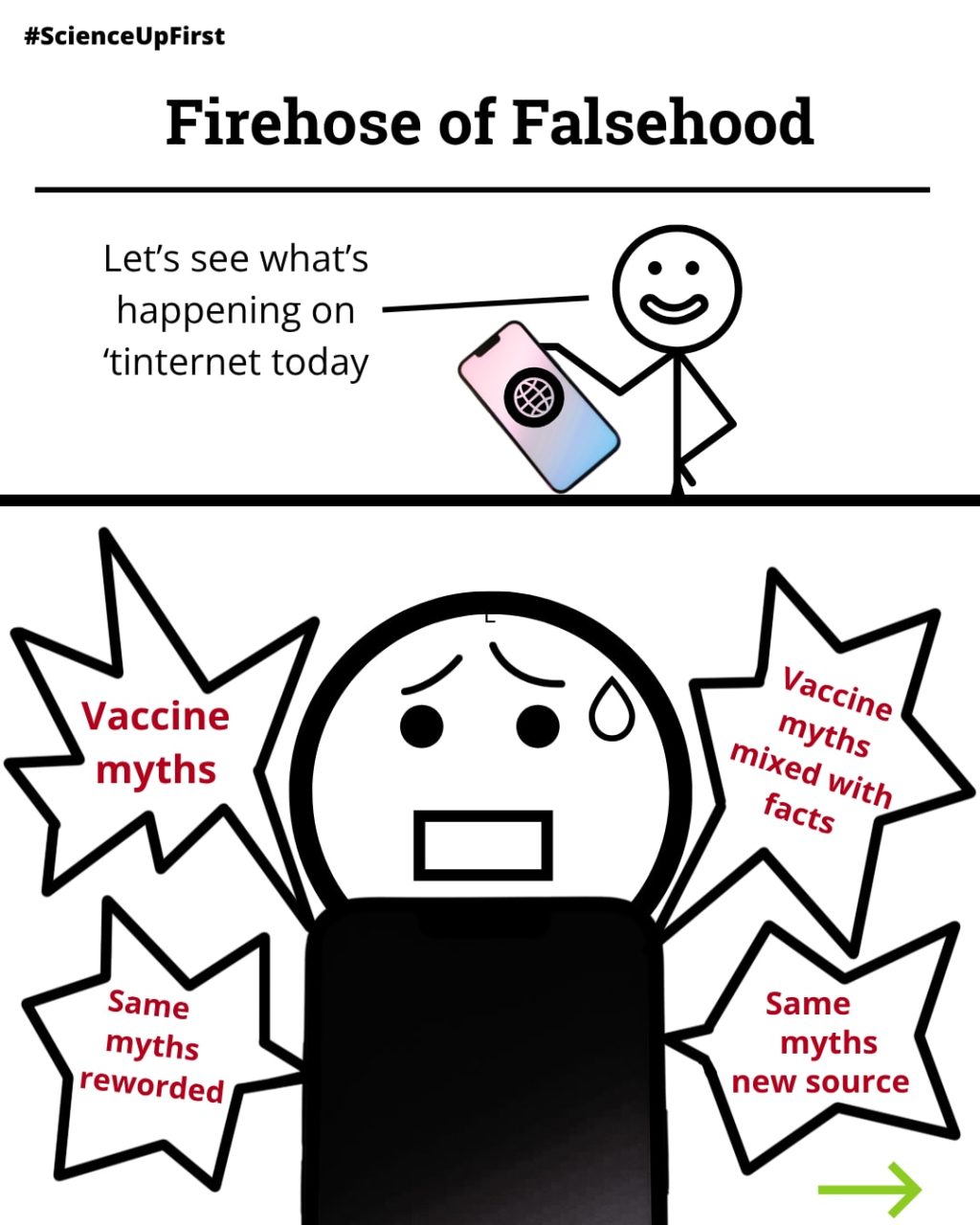
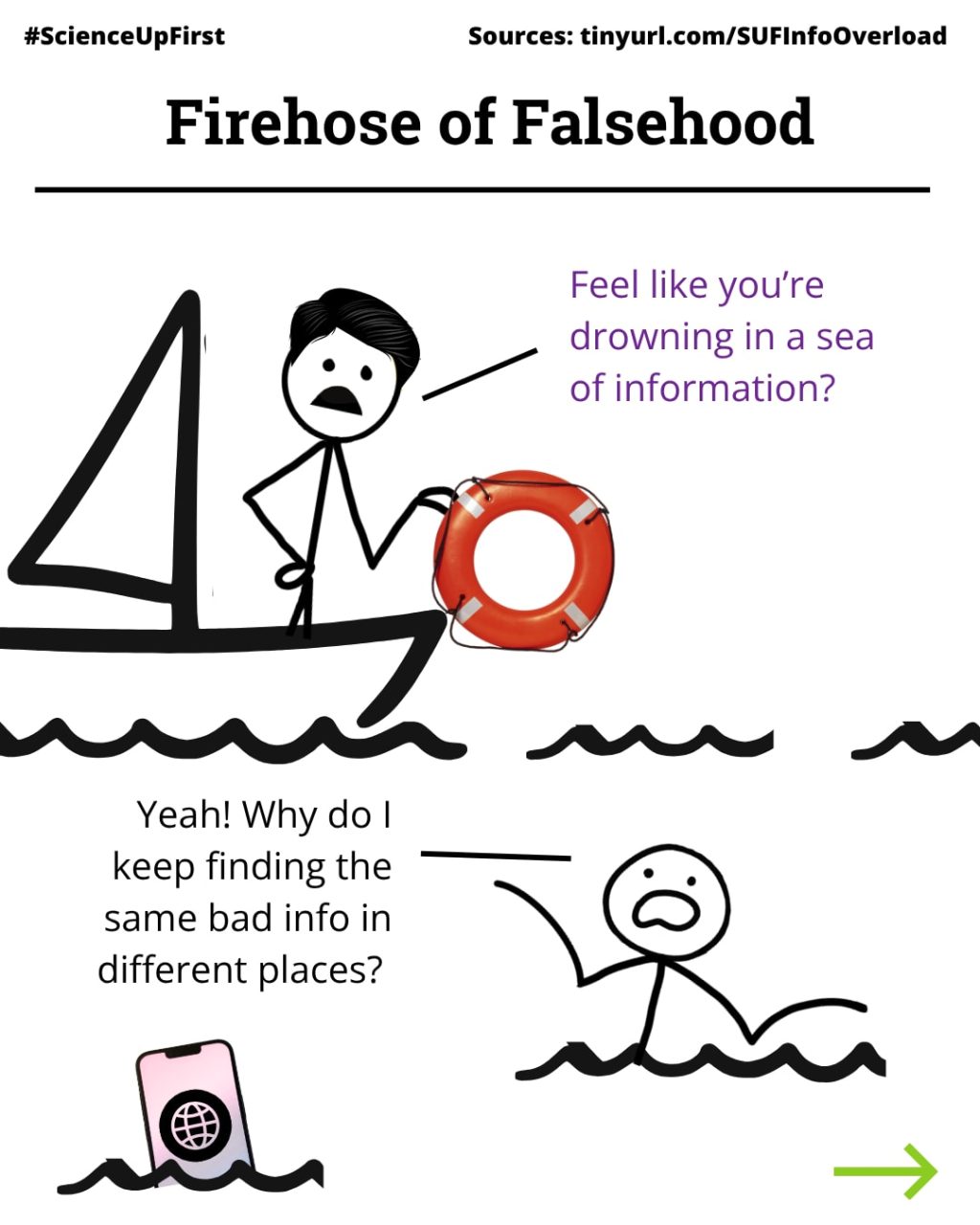
Misinformer Tactic: Firehose of Falsehood

Just because a story is repeated does not make it true.
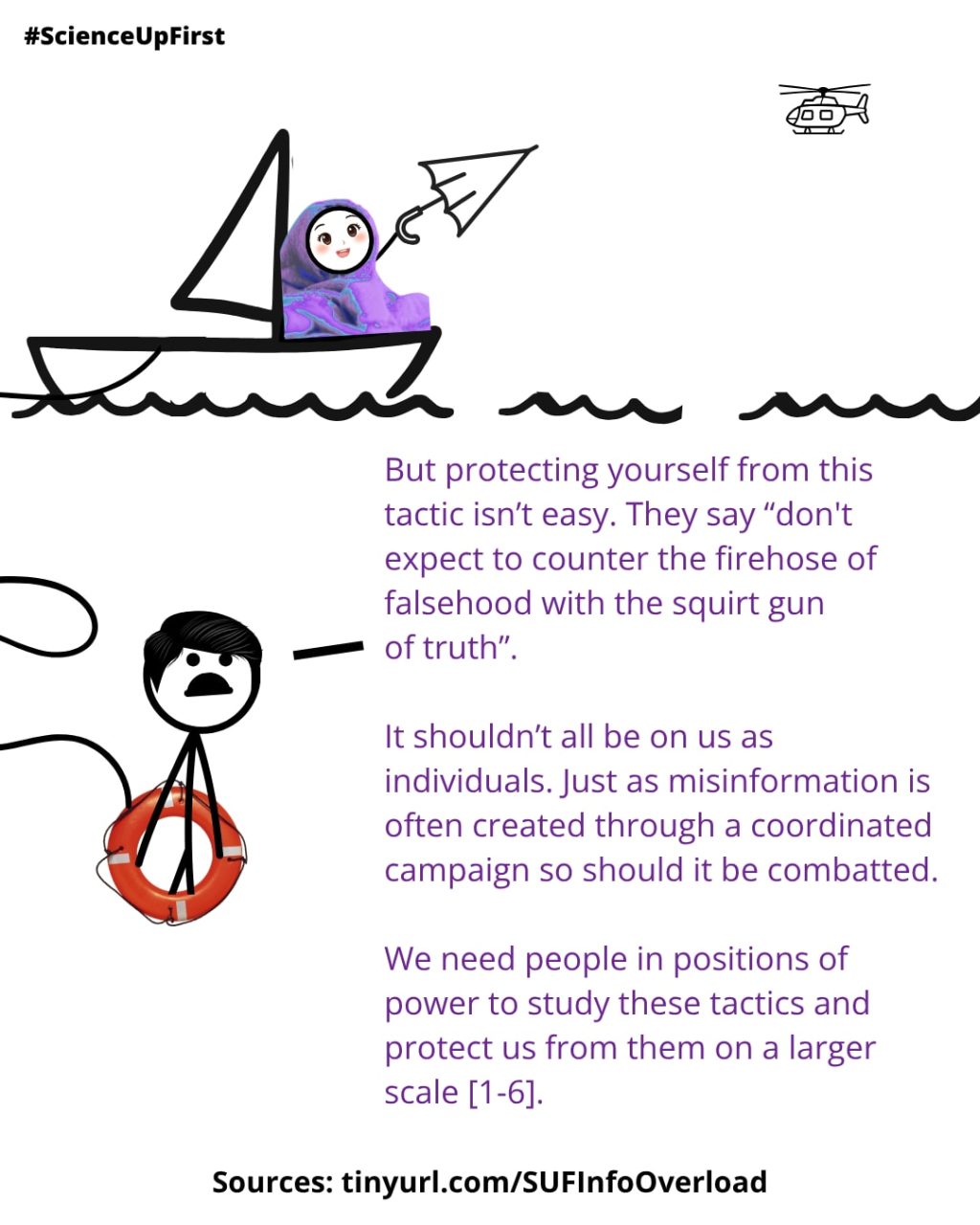
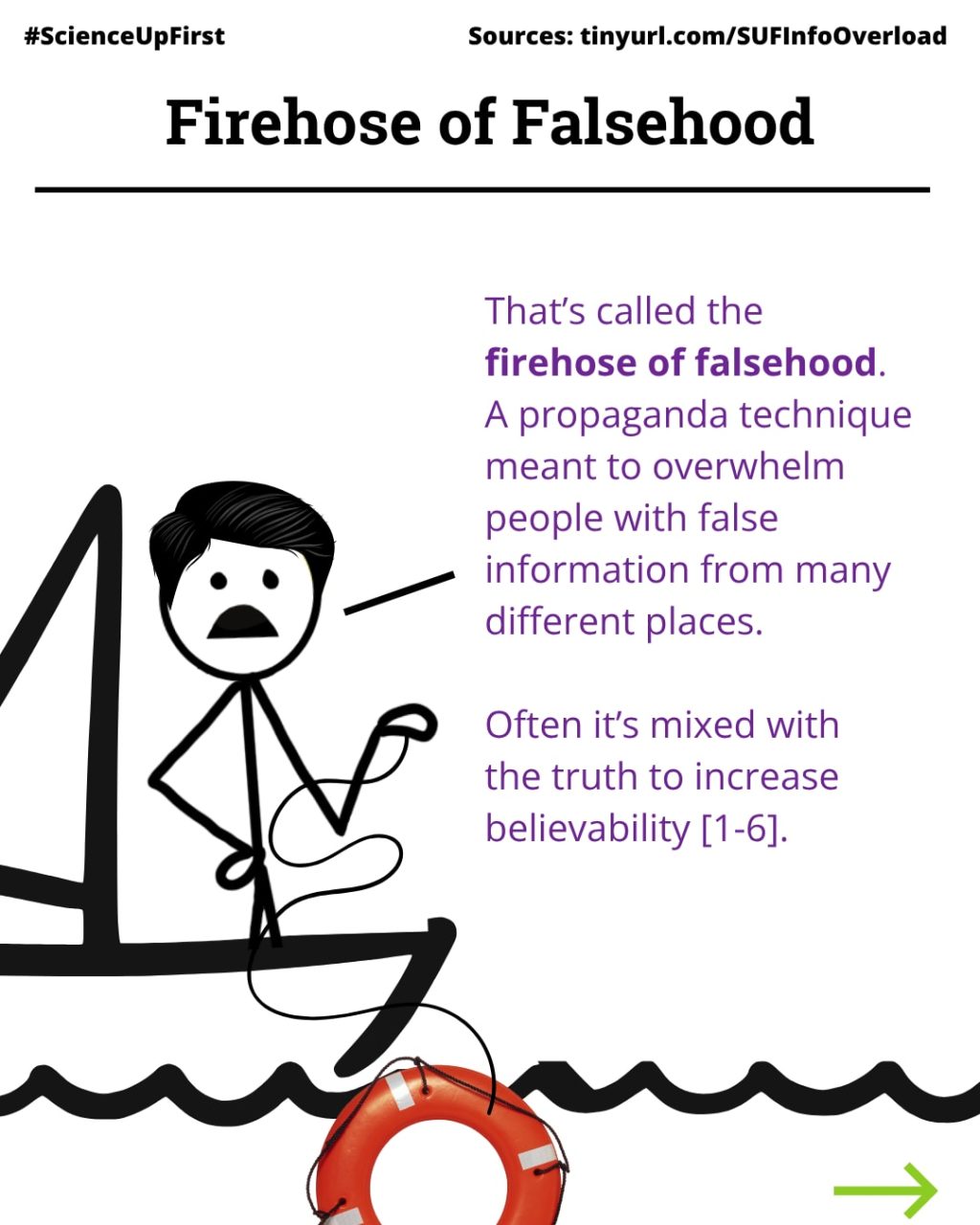
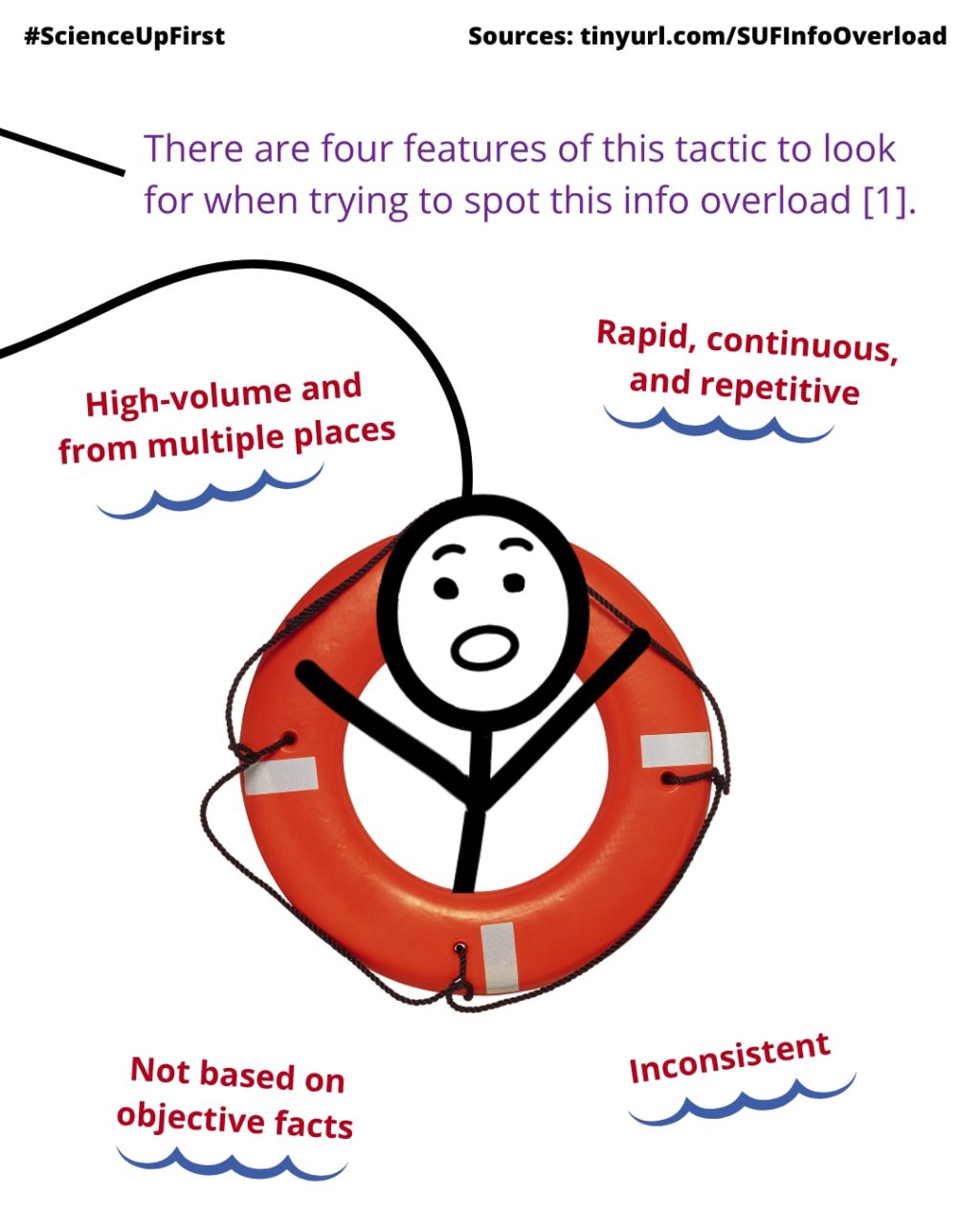
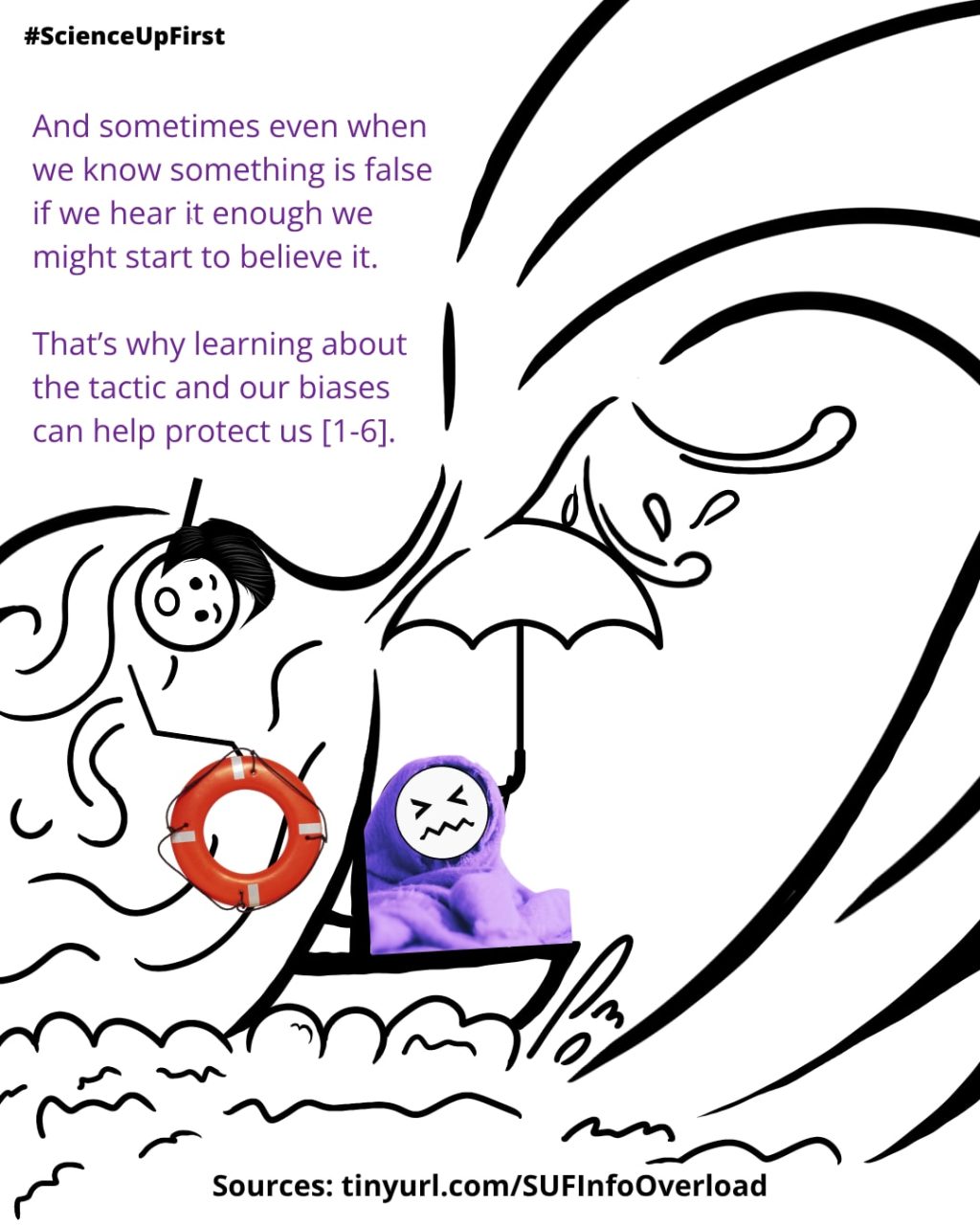
Firehose of falsehood, or firehosing, is a propaganda technique that aims to confuse and overwhelm the audience with continuous, rapid, and repetitive messaging over multiple platforms. The messaging is often false, or composed of half-truths and lacks consistency and objectivity (1).
This tactic is used by Russian president Vladimir Putin (1), U.S. president Donald Trump (2), but also by anti-vaccine groups to spread misinformation about vaccines (3).
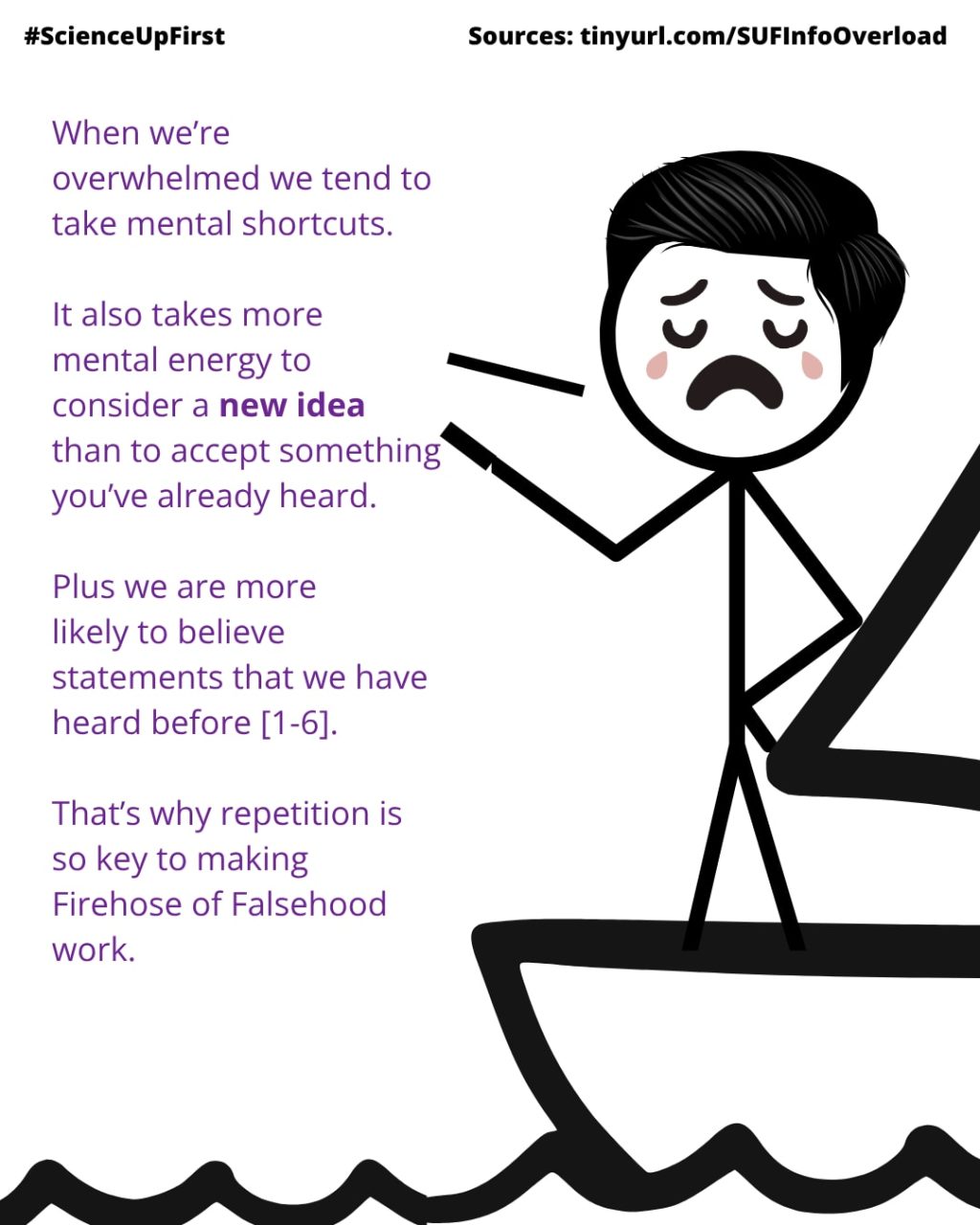
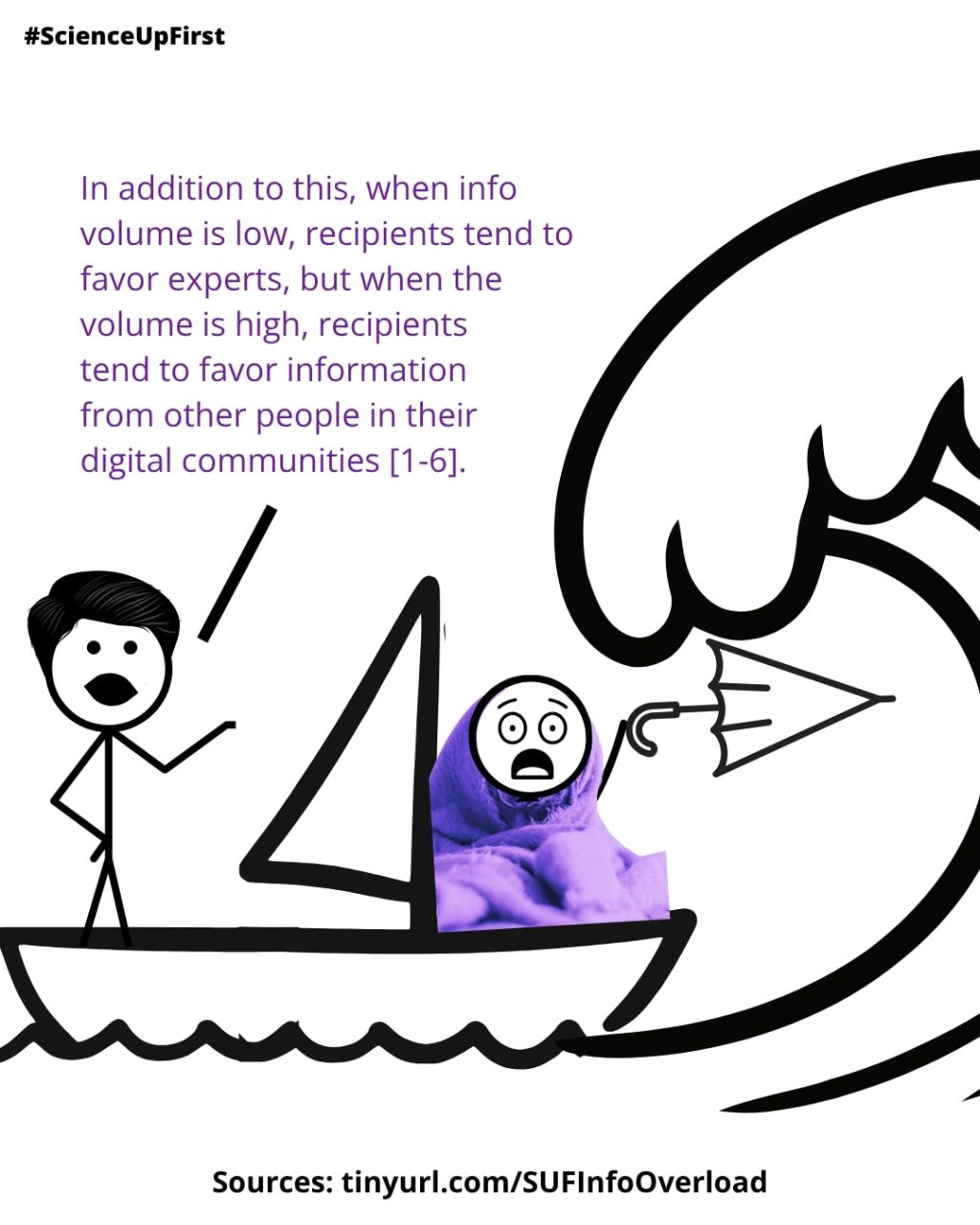
It works because it uses a number of varied sources to spread its lies (4,5), as well as tapping into our needs for conformity (6). When you see something being shared by multiple sources, you are more likely to think it is true (1). With firehosing, the lies don’t even have to be believable because the goal is not to persuade, but to bombard people with so much information they become too overwhelmed to fact-check everything (3).
The best way to counter-attack firehosing is to be aware of the tactic (3), keep reporting false content to disrupt the disinformation’s flow (3), and share evidence-based information instead of getting into comment wars refuting misinformation (1).
Many thanks to Jordan Collver for collaborating with us on this project! Check out his work on his website (jordancollver.myportfolio.com) and on Twitter (@JordanCollver)
Sources- The Russian “Firehose of Falsehood” Propaganda Model
- ‘Firehose of falsehood:’ How Trump is trying to confuse the public about the election outcome
- Firehosing: the systemic strategy that anti-vaxxers are using to spread misinformation
- Information utility and the multiple source effect
- Trusting expert- versus user-generated ratings online: The role of information volume, valence, and consumer characteristics
- Discrediting in a Message Board Forum: The Effects of Social Support and Attacks on Expertise and Trustworthiness
Share our original Bluesky Post!
Same misinformation repeated again and again? That’s part of the firehose of falsehood tactic. Learn why this propaganda technique works so well here 👇 www.scienceupfirst.com/project/misi… #ScienceUpFirst
— ScienceUpFirst (@scienceupfirst.bsky.social) October 16, 2025 at 11:51 AM
[image or embed]View our original Instagram Post!