
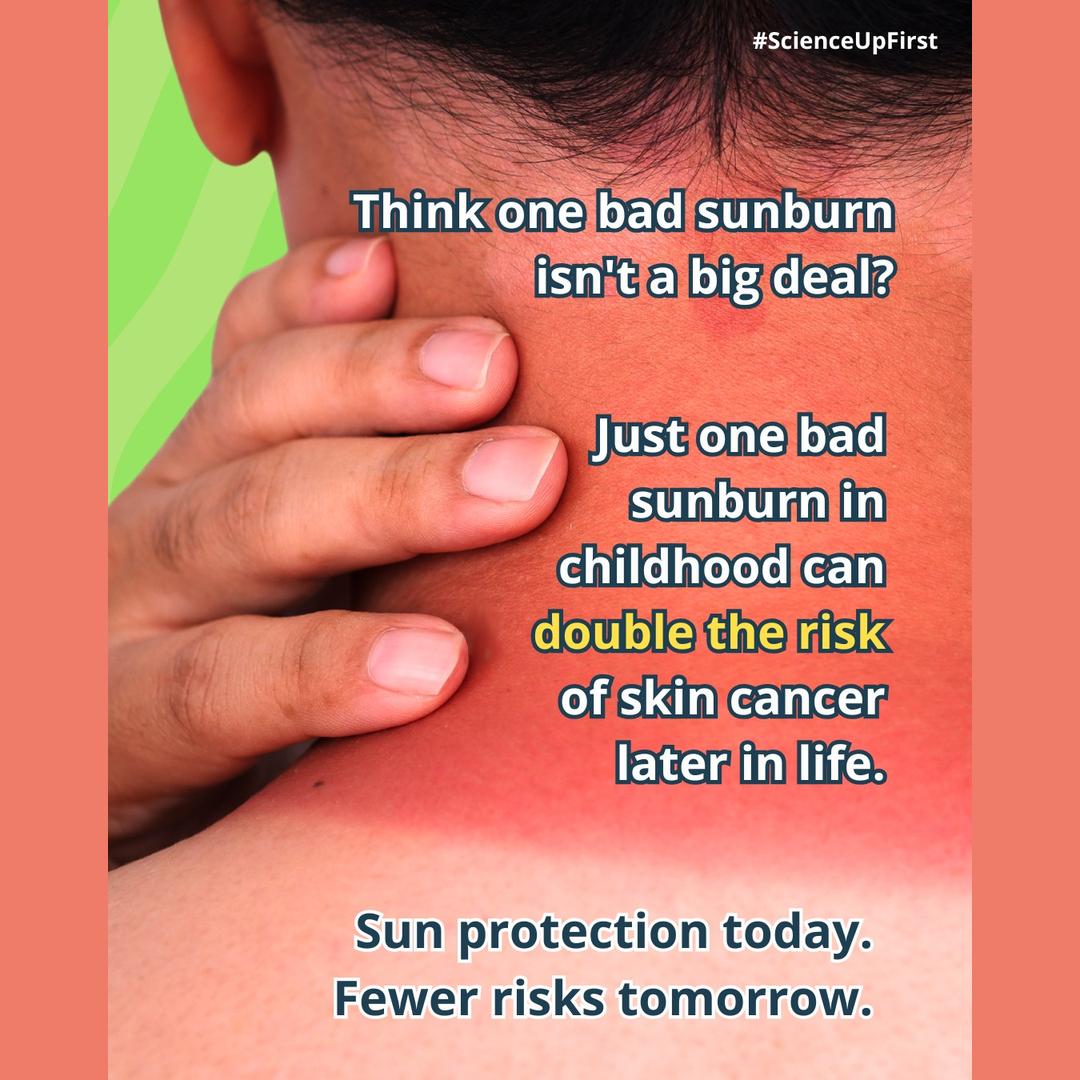
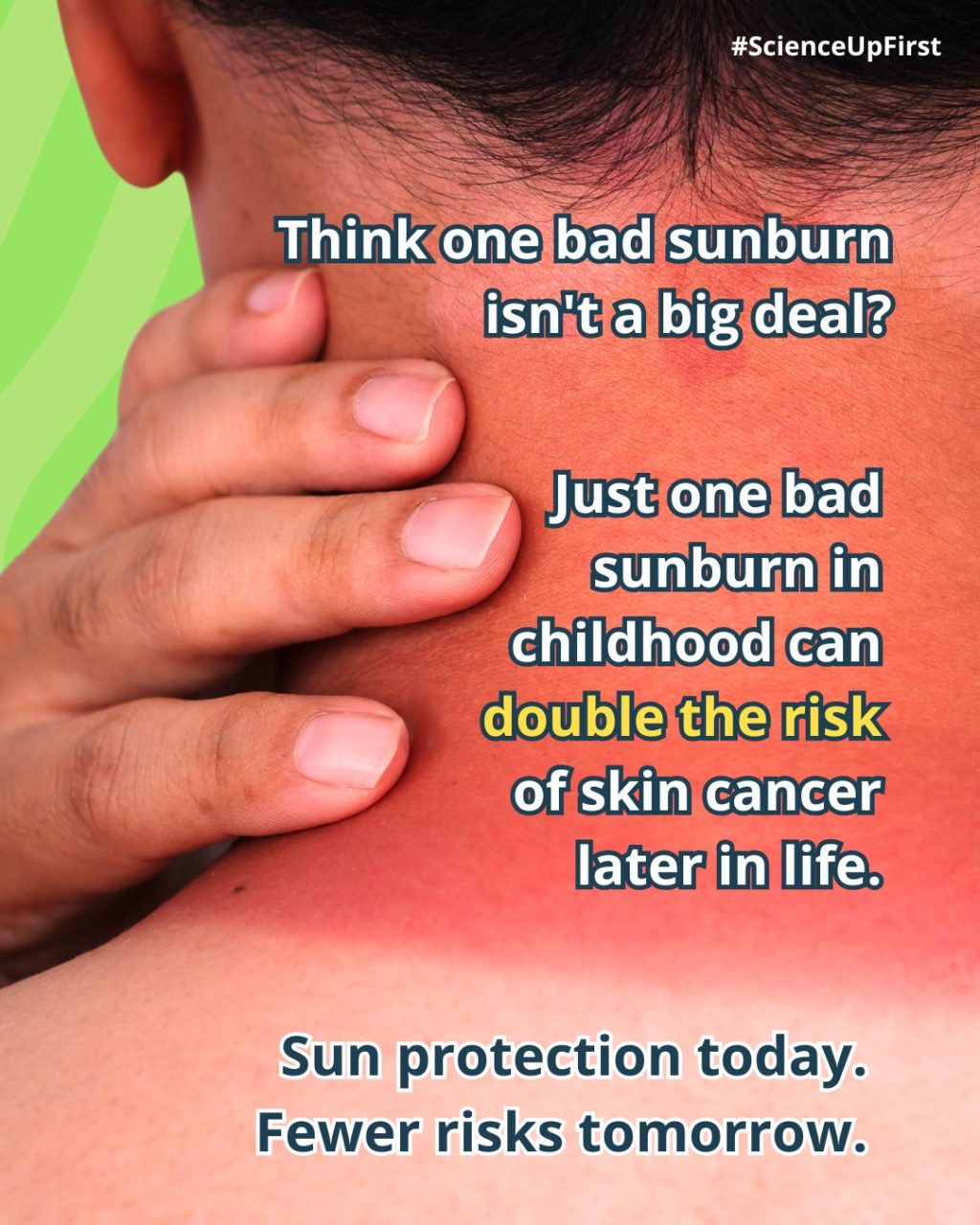
Sunburn isn’t just a temporary inconvenience. It’s a sign that UV rays have damaged skin cells. While the redness fades, some of that damage can remain and build up over time, increasing the risk of skin cancer.
Research suggests that children and teens who experience even one blistering sunburn have twice the risk of developing melanoma, the most fatal type of skin cancer, later in life. The risk rises even further with repeated blistering sunburns. Five or more between the ages of 15 and 20 are associated with about an 80% higher risk of melanoma (1-6).
But you don’t need blistering sunburns for the risk to increase. Experiencing five or more “typical” sunburns over your lifetime also doubles your risk to develop melanoma (4,5,7). Even mild sunburns are a sign of UV damage, and skin damage from the sun can happen even without a noticeable burn (8,9).
The good news is that using sunscreen everyday can reduce the risk of skin cancer by half (7,10)!
Children burn more easily than adults and can become dehydrated from the heat more quickly. When outside, dress your child in loose clothing, a wide-brimmed hat, and sunglasses, and apply a broad-spectrum sunscreen with an SPF of at least 30 on any skin not covered by clothing. Reapply every 2 hours, or right after swimming or playing hard (9,11,12).
Limit their time in direct sunlight, particularly when the sun is at its strongest and UV levels are high. This is especially important for babies younger than 6 months, who are often too young to wear sunscreen (check with your doctor) (11).
A few simple sun safety habits started early in life can help prevent sunburns today and reduce the risk of skin cancer in the future.
- Skin cancer | Government of Canada
- Risks for melanoma skin cancer | Canadian Cancer Society | June 2025
- Skin Cancer Prevention | Canadian Skin Cancer Foundation
- Childhood sunburns are raising the risk of melanoma skin cancer | Melanoma Focus | May 2024
- Epidemiology does not support the existence of a critical period of high susceptibility to solar ultraviolet radiation- induced melanoma | British Journal of Dermatology | March 2001
- Long-term ultraviolet flux, other potential risk factors, and skin cancer risk: a cohort study | Cancer Epidemiology, Biomarkers & Prevention | June 2014
- Skin Cancer Facts & Statistics | Skin Cancer Foundation
- Sunburn & Your Skin | Skin Cancer Foundation
- Sun safety | Caring for kids
- Reduced melanoma after regular sunscreen use: randomized trial follow-up | Journal of Clinical Oncology | December 2010
- Sun safety tips for parents | Government of Canada
- Sun Safety for Every Day | Canadian Dermatology Association
Share our original Bluesky Post!
View our original Instagram Post!