
After the internet went wild with conspiracy theories about Her Royal Highness Princess Catherine (aka Kate Middleton), the Princess of Wales, stepping back from her public duties for a few months, the Royal Family has now released a statement about her health.
This was none of our business. So why was the internet so obsessed with #KateGate ?
Swipe through for just some of the key reasons why Princess Catherine’s absence captivated our conspiratorial minds.
Have you ever noticed the use of percentages in health product advertisements? They’re useful tools for expressing the change between two numbers, but without context, they’re meaningless and can be misleading.
Make sure you see the big picture!
Thank you to @figures.first for this great collaborative post!
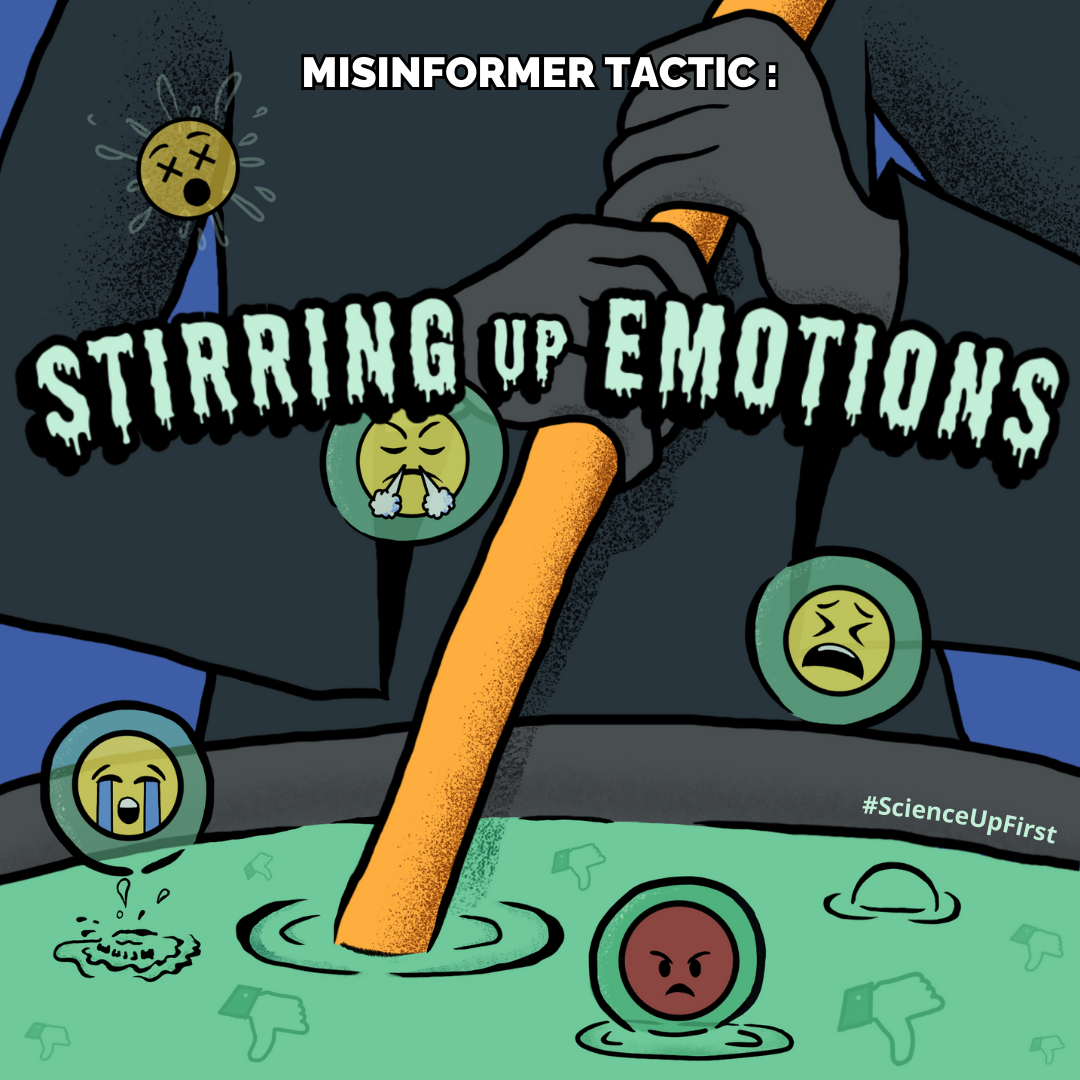
This tactic aims to make the ‘hero’ appear more trustworthy than institutional authorities and mainstream media. This narrative works like this (1,2):
Claims the world is controlled by biased and corrupt elites.
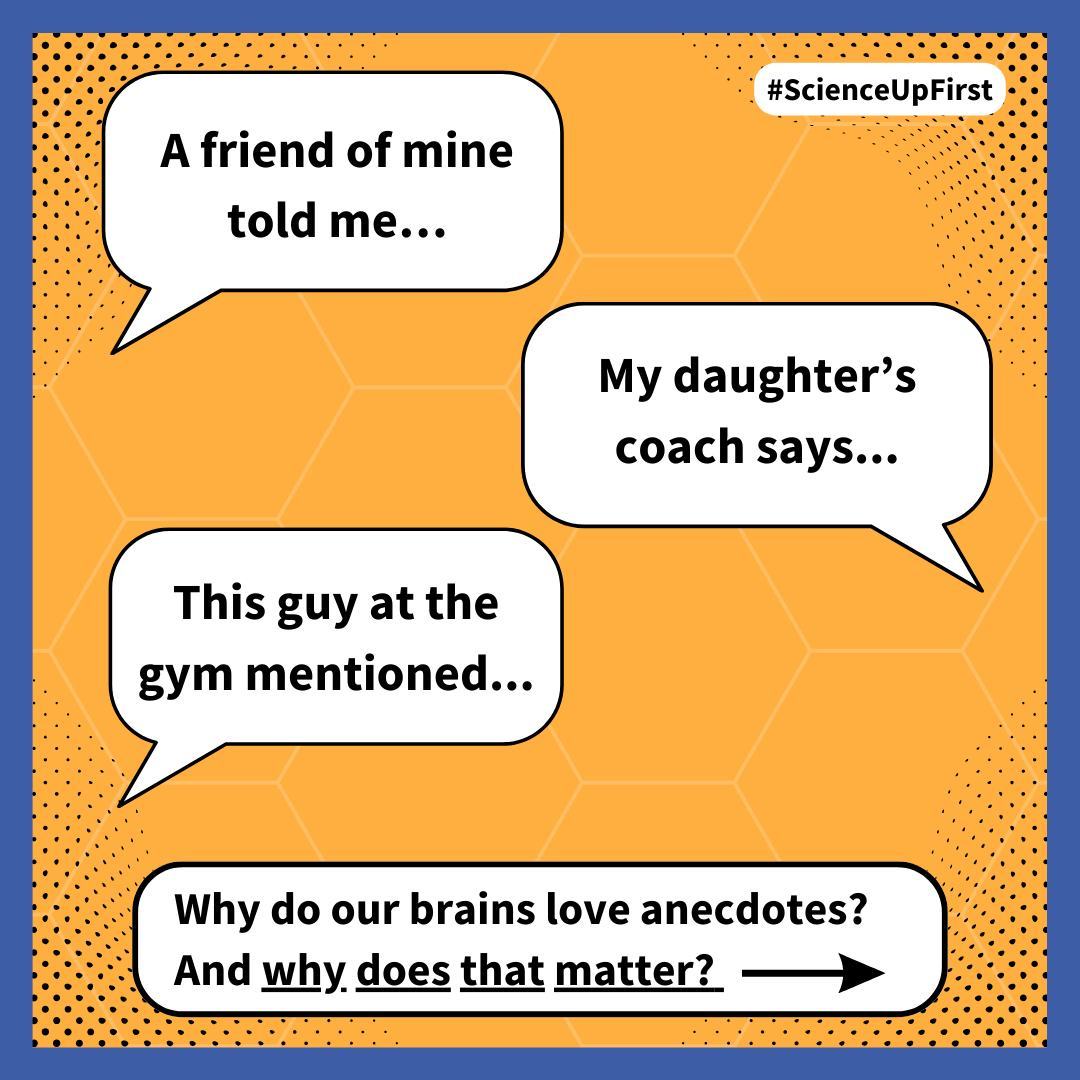
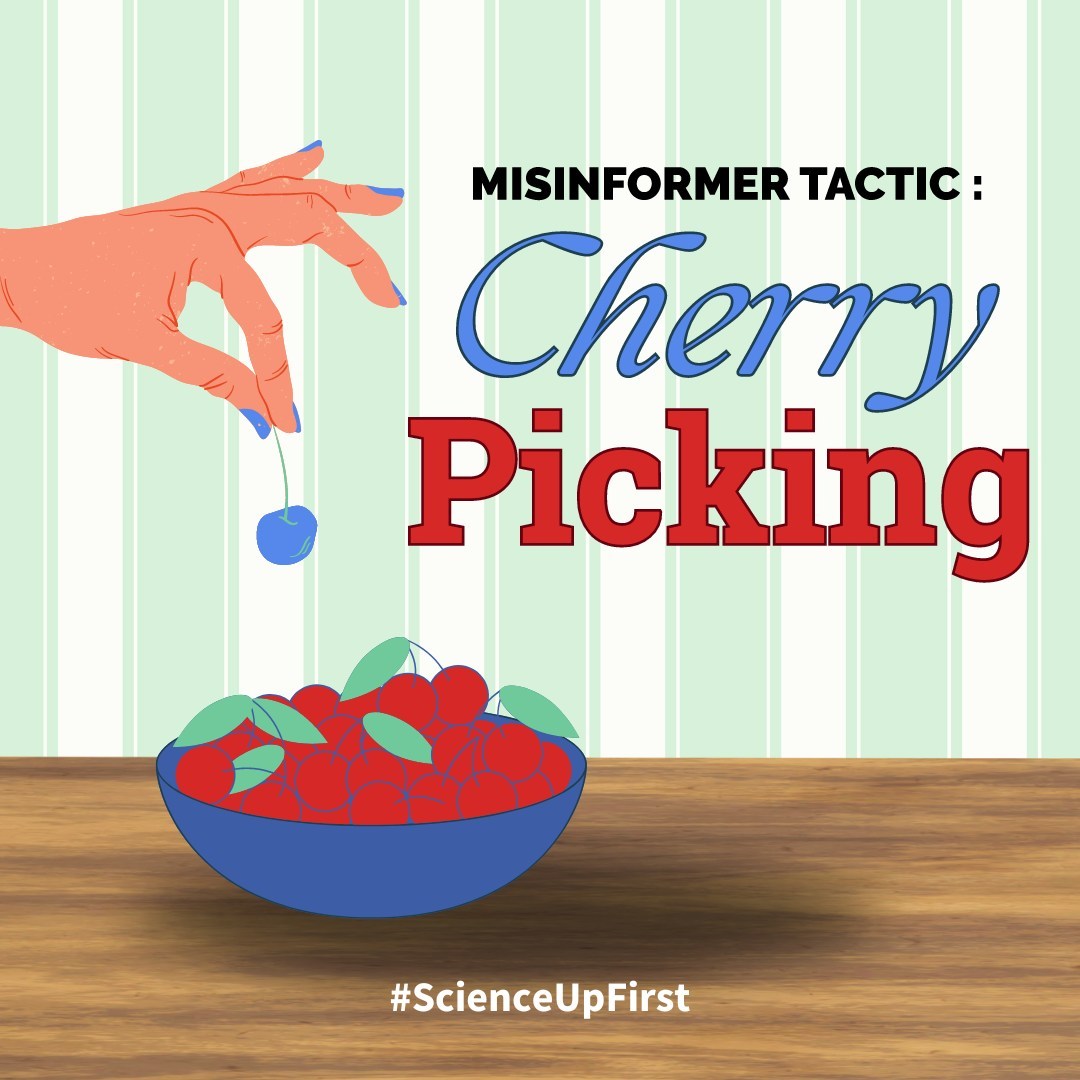
“Exposes” said corruption by cherry-picking information and using anecdotal evidence to seem more relatable.
Presents themselves as the hero who bravely reveals hidden truths, implying that those who trust institutional authorities are merely “sheep” following blindly.
Claims they are being censored and persecuted for telling you the truth.
Rallies followers in the name of freedom and justice.
By posing as the censored hero that is risking it all in the name of the truth, justice and freedom, they create a common enemy (e.g. mainstream media), and build a community of followers ready to defend the same goal (1,3). They also profit from spreading misinformation (2,4).
While causation and correlation can exist at the same time, the two events are often unrelated. Even if the rooster does not crow, the sun will still come up.
Here is a COVID-19 example of the causal fallacy.
Misinformer: “My cousin got the vaccine and one month later had a heart attack. The shot caused him to have a heart attack!”
Thanks to Jordan Collver for collaborating with us on this post. Jordan is an illustrator and science communicator specializing in using the visual and narrative power of comics to explore themes of science, nature, and belief.
We’re working on a series of misinformer tactics with Jordan so stay tuned for more.
Can you tell different types of problematic information apart?
We often use ‘misinformation’ as an umbrella term for any false content online, but sometimes more specific language can help clear up confusion. So here’s your vocab lesson!
Misinformation: False information spread unintentionally. Disinformation: False information spread intentionally. Malinformation: True information spread intentionally in a way meant to cause harm.
Share our original Tweet!
Misinformation can be a useful umbrella term, but sometimes more specific language is needed. Read more about • Misinformation • Disinformation • Malinformation And learn to spot the difference! 👇https://t.co/br1ZffLu54#ScienceUpFirstpic.twitter.com/6Y5QqsJQe1
— ScienceUpFirst | LaScienced’Abord (@ScienceUpFirst) January 10, 2024
Putting yourself in someone else’s shoes is one of the hardest things we can do. Good science communicators think about a topic from their audience’s perspective. Once we put ourselves in that frame of mind, real conversations become much easier.
Today’s artwork is brought to you by the uber-talented Ameesha Lee from Ontario! ⭐ ️
This illustration was inspired by the science of brain cells called mirror neurons. These create an echo of another person’s emotions in our own minds. Rad!
Ameesha Lee is an art director & illustrator who has worked in the broadcast & design industry for over 15 years. Using hand drawn and digital techniques, she loves collaborating with other inspiring creatives to produce beautiful and meaningful work, both static and in motion.
Putting yourself in someone else’s shoes is one of the hardest things we can do. 👟 Good science communicators think about a topic from their audience’s perspective.
Always check the source of information before you share it. A common method you can use to verify sources is called the CRAAP method. It helps you spot CR… bad information.
Currency: How recent is it? For example, during a crisis, you want information that’s as up-to-date as possible.
Relevance: Is it written at the right level for the audience? Is it really about the topic, or something else?
Authority: Who wrote it? Are they qualified to speak on this topic?
Accuracy: Is it true? Can you find evidence for the claims in other reputable sources?
Purpose: Why was it written? Did the author have biases you should consider?
When you come across what might be bunk science… put it through the CRAAP test.
Share our original Tweet!
Remember: Check the source of information before you share it.
Just because something is on the internet, doesn’t make it true.
A recent study found 80% of participants cared about sharing only accurate content online. And yet a lot of misinformation is out there!
The solution? A simple nudge to think about accuracy could help stop the spread.
In the same study, participants split into two groups.
Group 1 answered how likely they were to share 24 different news headlines on Facebook. This was the control group.
Group 2 rated the accuracy of a single headline. Then they were asked the same question as Group 1, how likely they were to share 24 different headlines. This was the treatment group.
Researchers found that Group 2 shared way less fake news than Group 1.
So the next time you are about to repost a juicy story, ask yourself, “is this accurate?” before you share.
Share our original Tweet!
Most people don’t WANT to share false information. By taking a moment to reflect on whether something is accurate, we can reduce how much misinformation we spread.
So, before clicking that share button, just think!
Chances are someone you care about has been affected by breast cancer – it’s one of the leading causes of death from cancer for women across Canada (13).
But early diagnosis is the key to recovery, which starts with awareness. Let’s start by getting our facts right by debunking some myths about breast cancer.
We’re working on a video on how to perform a self-exam. We’ll include why this useful tool has its limitations. Stay tuned!
Share our original Tweet!
Chances are someone you care about has been affected by breast cancer.
Family dinners can be scary, but they don’t have to be. If you find yourself in a tense conversation over the holidays here are a few tips that might help you navigate it a little easier.
It’s important not to shame the person. Ideally, you want to have a conversation, actively listening to each other and trying to find some common ground.
Be empathetic, it’s a vulnerable thing to have your values questioned and it can make people defensive.
Pick your battles, not every situation is ideal for talking things through and sometimes it’s better to just change the subject. It may be best to wait for a moment when you can talk to the person alone, without distractions. This might also help make them feel less “on the spot”.
If the conversation goes well, feel free to ask if you can share some credible information with them. It’s important to ask their permission first.
Lead with your relationship and be patient. This is someone you care about even if you can’t manage to see eye to eye. Change doesn’t happen in an instant.
View our original Tweet!
Family dinners can be scary, but they don’t have to be.#ScienceUpFirst
Have you ever felt uncomfortable or embarrassed with a decision/action you made?
You might have experienced cognitive dissonance, which describes the feeling of unease or discomfort one experiences when their actions/behaviours contradict their beliefs/values (1,2,3).
Here are some examples of situations that can result in feelings of discomfort (e.g. guilt, shame, embarrassment, anxiety, anger, irritability) due to cognitive dissonance (2,4):
Being against animal cruelty, but still craving hamburgers.
Wanting to be healthy, but not exercising.
Buying fast fashion, despite knowing the repercussions.
Cognitive dissonance can arise from (2,3,4):
Social or work expectations that you don’t agree with (i.e. peer pressure, FOMO).
Learning new information.
Making a decision.
An investment of time, money, or effort.
Addiction
Because the feelings associated with cognitive dissonance are so uncomfortable, we tend to want to avoid them. This can lead people to (2,5):
Seek information that confirms their existing beliefs (i.e. confirmation bias (6)).
Hide their beliefs or actions from others to avoid shame or guilt.
Change their beliefs to justify their behaviours.
Cognitive dissonance can play an important role in the spread of misinformation. When confronted with facts that challenge their misconceptions, people may experience discomfort and, to alleviate it, might resist accepting accurate information that contradicts their beliefs or seek out more information to rationalize their behaviour (7,8).
Cognitive dissonance, in of itself, is not a bad thing as it can help you change unwanted behaviours. When faced with cognitive dissonance, try to (2,3):
Acknowledge it.
Identify the conflicting ideas.
Reflect on what you can do to alleviate it.
Decide if you want to change your behaviour, mindset or beliefs.
Share our original Tweet!
Have you ever felt uncomfortable or embarrassed with a decision/action you made?
You might have experienced cognitive dissonance. But what is it? #ScienceUpFirst
Just because two points of view are presented side by side, doesn’t mean they are equal. ⚖️
False balance, false equivalency, or bothsidesism is a bias where two opposing facts/ideas are given the same amount of interest or presented as equally valid, even when the evidence for one side is stronger (1,2,3).
This has been seen, among other places, in climate change, gender, abortion, vaccine, and masking discussions (4,5,6,7,8).
Impartiality in journalism is important for an informed society and enables people to make the best decision for themselves (9,10). But presenting two sides as being equivalent, even when the evidence says they are not, is misleading and certainly doesn’t allow for truly informed decision making (3,9,11,12).
In fact, false balancing can lead the public to (3,5,13,14):
Doubt the scientific consensus.
Have difficulty distinguishing truth from falsehood.
Believe the problem is less serious than it actually is.
Have a tendency toward the most comforting option.
(See also the doubt mongering tactic – 15)
Media is often accused of having an agenda if they give more weight to a specific angle. For example, the fact that climate change is caused by humans. But that likely has less to do with an agenda and more with the collective knowledge of a community of scientists built throughout the years – AKA the scientific consensus (16).
Thus when presenting both viewpoints there should be an emphasis on the expert consensus (5,13). This has been shown to help correct misperceptions (13,17,18).
Next time you see two points of view presented as being equally valid, ask yourself (2):
What is the scientific consensus on the topic?
Are the interviewed experts speaking outside their field of expertise?
What are other sources saying?
Share our original Tweet!
False balance, false equivalency or bothsidesism is a bias where two opposing facts/ideas are given the same amount of interest or presented as equally valid, even when the evidence for one side is stronger.#ScienceUpFirst#SciLit
You may have heard or already been affected by Meta and Google blocking Canadian news online in response to Bill C-18.
No, that does not mean that news is being censored in Canada. It means that for an indeterminate period of time (until an agreement is struck) news won’t automatically appear on your Facebook or Instagram feed. You will have to count on other platforms or go directly to the source instead.
But do you know why this is happening and why Bill C-18 was drawn in the first place? Canada isn’t the first place where news has been blocked in such a way and is unlikely to be the last as governments worldwide are locking horns with news aggregators like Meta and Google.
Whether you agree that the law would achieve what it intended to do or not, it’s important to understand the context in which it is happening.
It’s also a good opportunity to reconsider our news consumption habits. Check out some tips on the last slide.
Share our original Tweet!
You may have heard or already been affected by Meta and Google blocking Canadian news online in response to Bill C-18.