
Evaluations of NewsGuard, a source providing trust-reliability ratings to popular news sources, overall found the site to offer fairly rigorous assessments of source trustworthiness. When using the site, this research recommends assessing the database critically by assessing, for example, trustworthiness ratings at multiple timepoints (and whether ratings have changed), as well as the methods used to determine the reliability ratings. Researchers are cautioned against assuming all content from an “untrustworthy” site has accuracy issues.
Category: Misinformation 101
-
The role of narratives in promoting vaccine confidence among Indigenous peoples in Canada, the United States, Australia, and New Zealand: a scoping review
Results from a scoping review show that vaccine hesitancy among Indigenous can best be addressed by engaging communities and community leaders in the (co)creation of culturally relevant messaging that can include concise and coherent narratives. Mistrust in health care systems can be addressed through building respectful relationships among all parties.
-
Perceptions and Concerns About Misinformation on Facebook in Canada, France, the US, and the UK
Survey research on the populations in four countries (Canada, France, UK, and the US) finds that overall perceptions and concerns of misinformation on Facebook are strongly correlated. France differs from the other three countries in that perceptions and concerns of misinformation on Facebook, while present, are decreasing over the past half decade. Perceptions of incivility among those discussing politics adds to the misinformation concerns.
-
DIEA: A Glossary
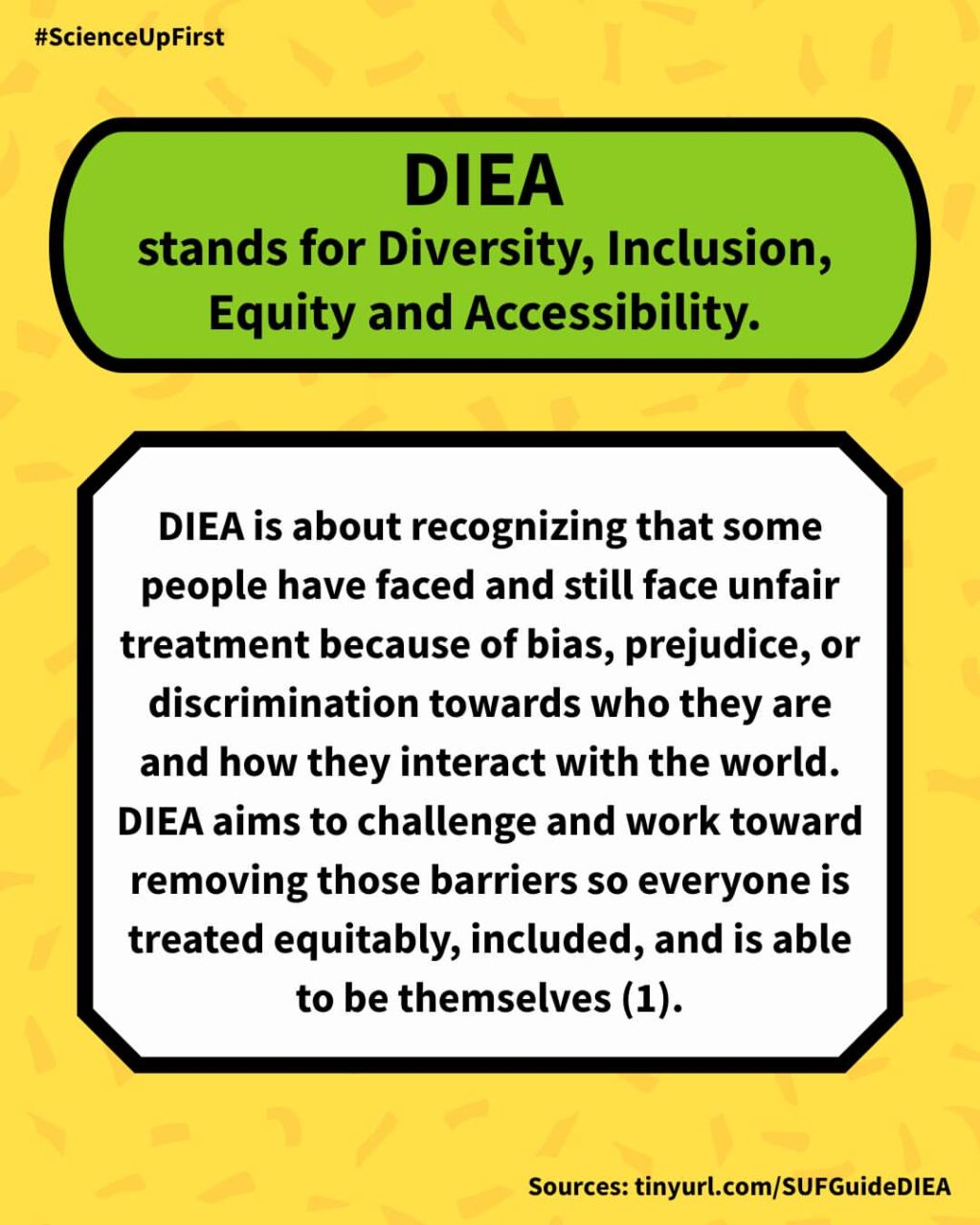
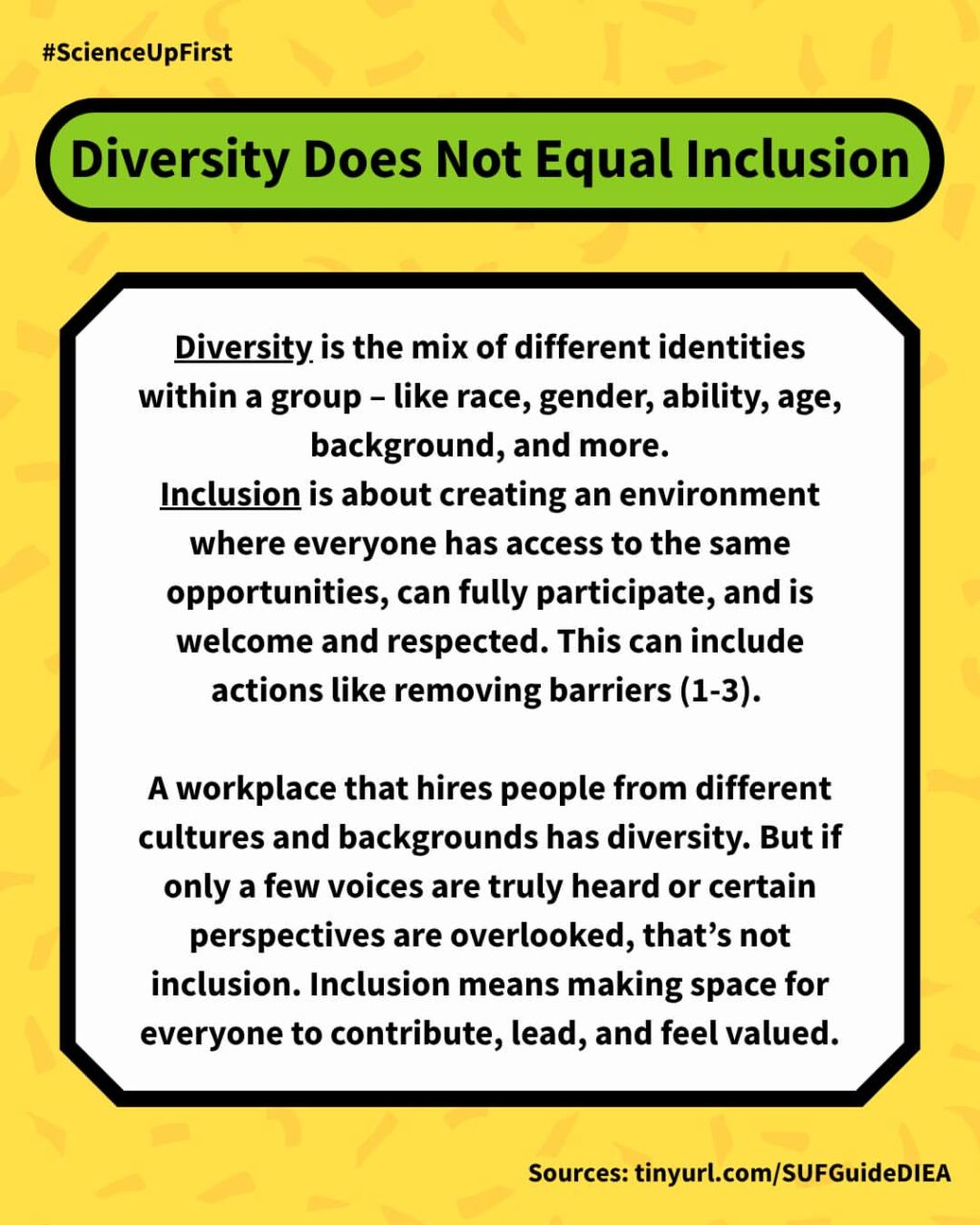
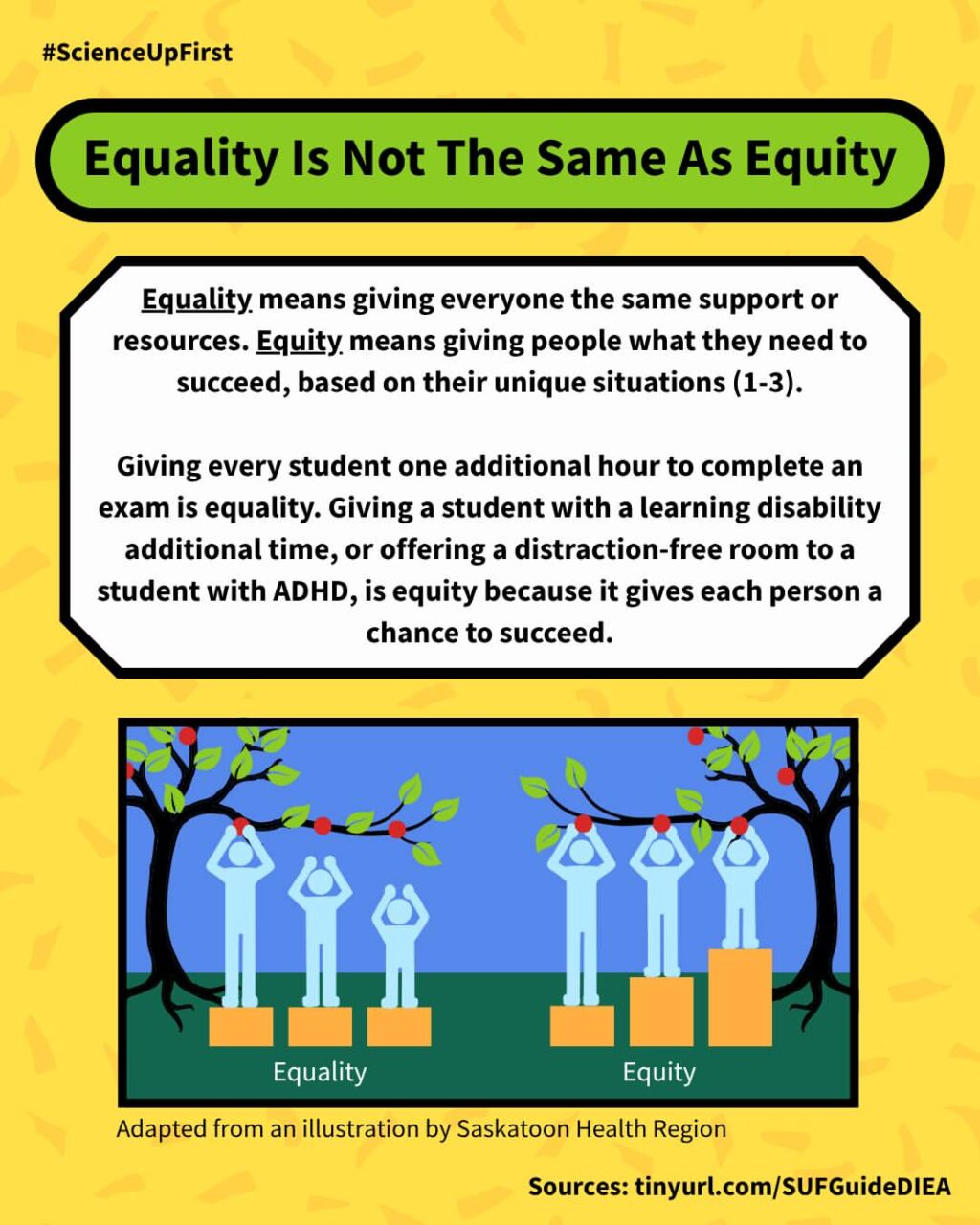
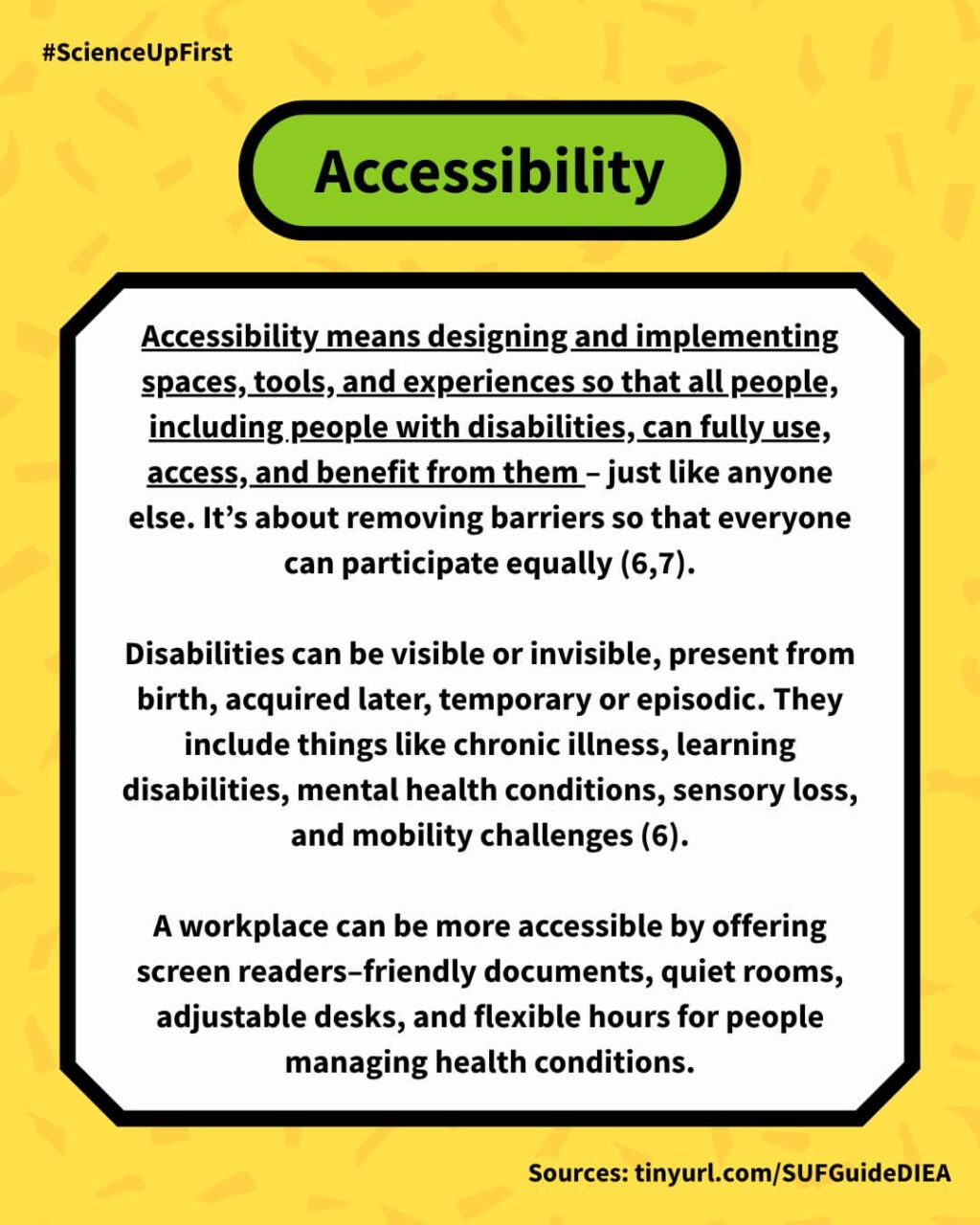
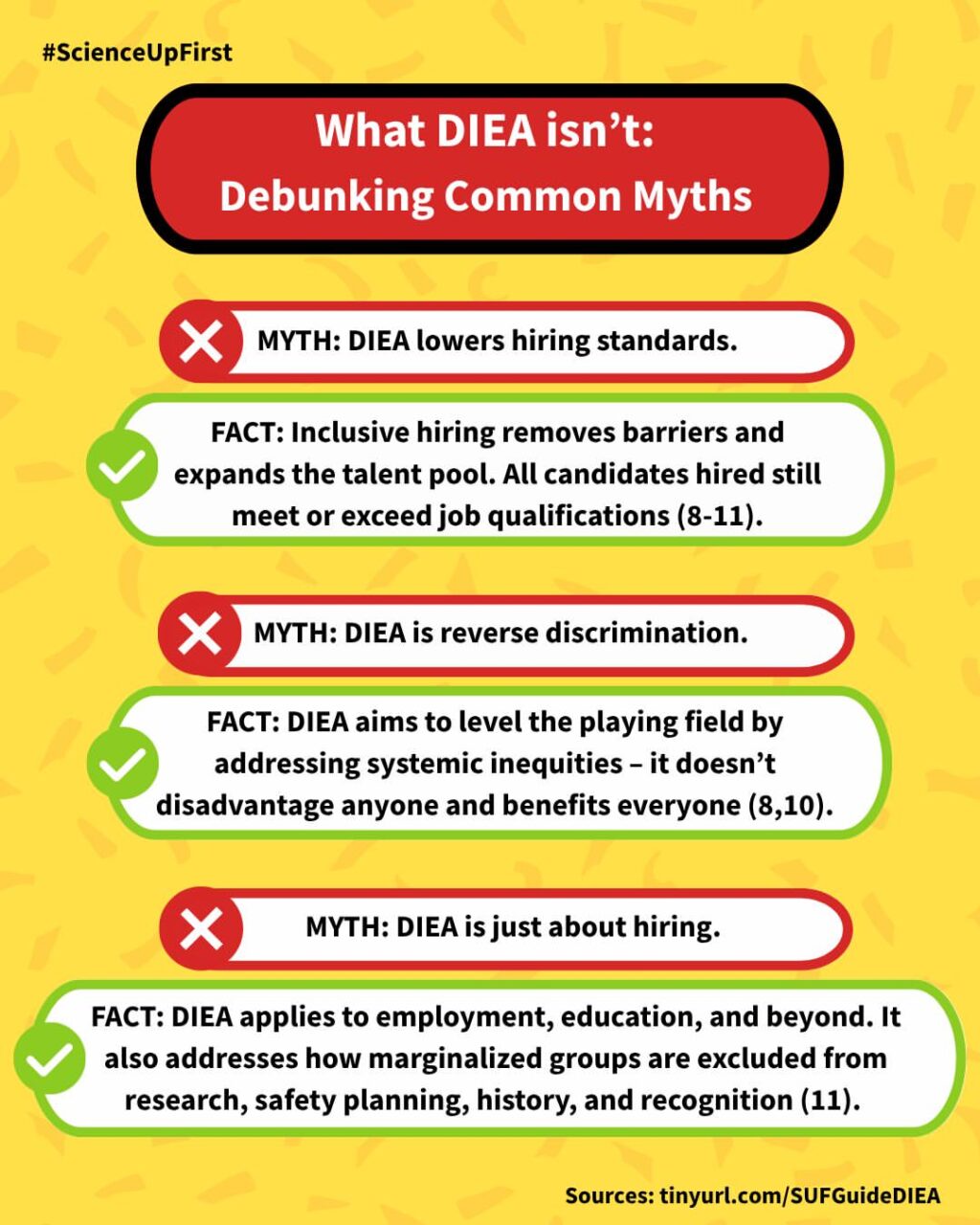
Five years ago, organizations throughout the world were making commitments to diversity, inclusion, equity and accessibility (DIEA) (12). Today, there is a backlash towards DIEA policies, with many being rolled back (13). But these terms are often misrepresented and misunderstood.
We break it down for you ☝️
Though some organizations are leaning away, our team is leaning in. Why? Because we know the evidence points towards teams being stronger and science working better when diverse perspectives are included (14,15,16,17,18,19,20,21).
Bonus Definitions 📝
- Bias: The conscious (explicit) or unconscious (implicit) opinion, preference, prejudice, or inclination formed without reasonable justification that prevents a balanced or even-handed judgement (6).
- Stigma: Stigma is defined as negative attitudes, beliefs, or behaviours about or toward an individual or group of people because of a characteristic they share. Stigma can include stereotypes, prejudice, and discrimination (22).
Share if you think these terms are getting a bad rap.
A big thank you to IDEA-STEM (@idea_stem) and Ingenium’s (@ingeniumcanada) truth, reconciliation, equity, diversity, inclusion, and accessibility (TREDIA) team for reviewing this post.
Sources- Diversity, Equity, and Inclusion in the Workplace | Canadian Centre for Occupational Health and Safety (CCOHS)
- The Importance of DEI and Why it Matters | CultureAlly
- DEI: What it is and why you should have a strategy | Canadian Chamber of Commerce | February 2023
- Types of Diversity in the Workplace To Be Aware Of | CultureAlly
- What Does Intersectionality Mean? | CultureAlly
- Glossary of Terms | Canadian Centre for Diversity and Inclusion | January 2022
- Disability inclusion glossary | Understood
- What DEI Is—And What It Isn’t | The Seeker Newsmagazine Cornwall | February 2025
- Three of the most popular DEI Myths debunked | Forbes | January 2024
- Can We Talk About What DEI Isn’t: 5 Myths I Hear All the Time | Medium | March 2025
- Explaining Diversity, Equity, Inclusion and Accessibility (DEIA), The Trump Administration’s Recent Actions on DEIA, and the Impact on Disabled Americans | AAPD | February 2025
- The History of DEI: Why It’s Critical for Its Future Survival | Forbes | December 2024
- Corporate Mentions Of ‘DEI’ Dropped 72% In 2025, Analysis Finds | May 2025
- Our Approach | Canadian Association of Science Centres
- The 50 – 30 Challenge: Your Diversity Advantage | Government of Canada
- Diversity, Equity, and Inclusion | National Bureau of Economic Research (NBER) | May 2023
- Diversity, Equity and Inclusion in Medicine: Why It Matters and How do We Achieve It? | Journal of Surgical Education on ScienceDirect | August 2021
- The impact of diversity and equality management on firm performance: Beyond high performance work systems | Human Resource Management | November 2010
- How Diverse Leadership Teams Boost Innovation | BCG | January 2018
- How Diversity Can Drive Innovation | Harvard Business Review | December 2013
- Building a Diverse and Inclusive Public Service: Final Report of the Joint Union/Management Task Force on Diversity and Inclusion | Government of Canada
- Mental health – Recognizing and Addressing Stigma at Work | Canadian Centre for Occupational Health and Safety (CCOHS)
Share our original Bluesky Post!
You may have heard of DIEA (diversity, inclusion, equity, accessibility), but often the deeper meaning gets lost. We’ve made a glossary with IDEA-STEM and reviewed by Ingenium @ingeniumcanada.bsky.social 👉 scienceupfirst.com/misinformation-101/diea-a-glossary/ #ScienceUpFirst
— ScienceUpFirst (@scienceupfirst.bsky.social) July 23, 2025 at 4:13 PM
[image or embed]View our original Instagram Post!
-
Skeptic vs Cynic
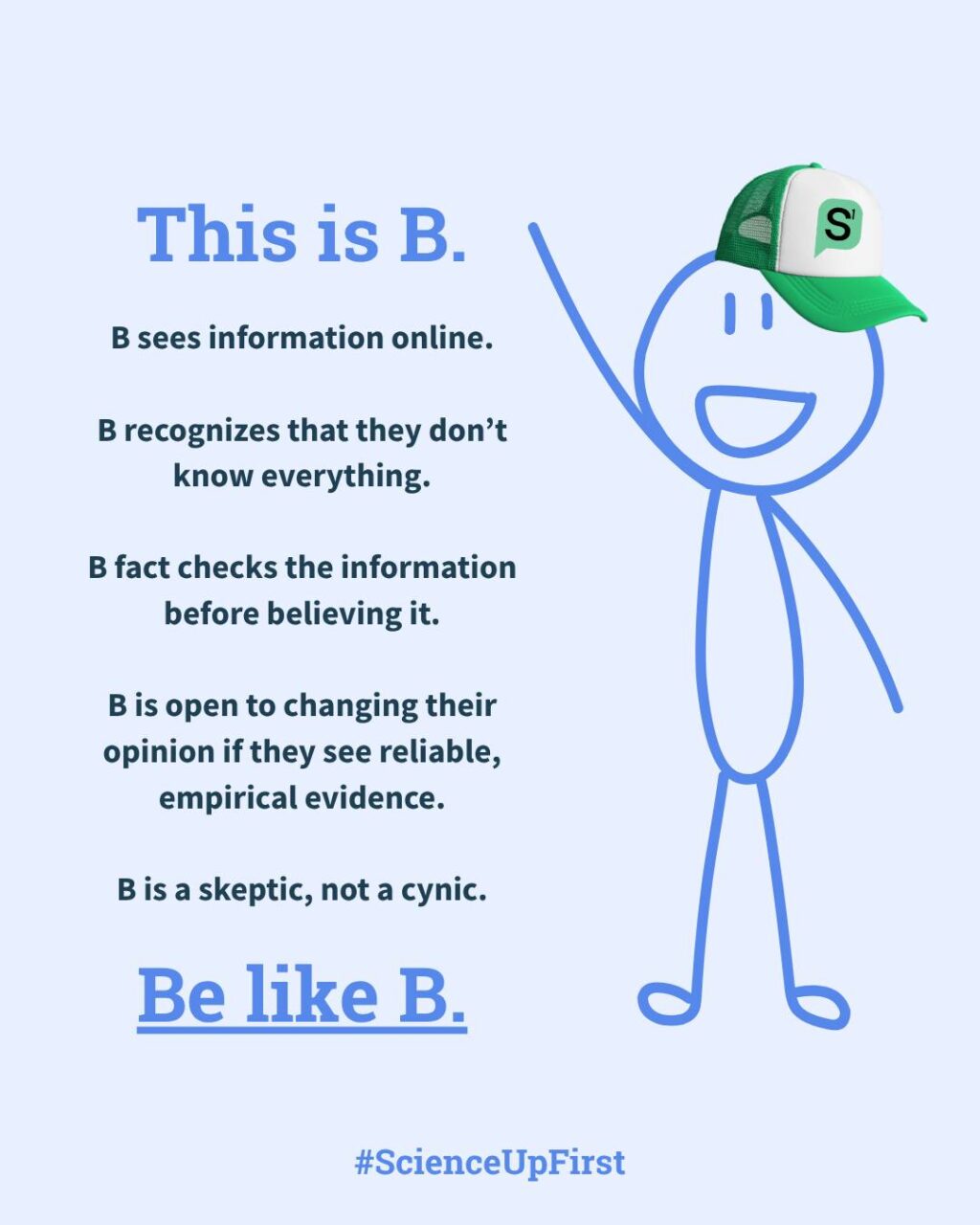
When you see a claim online, how do you process it? Do you believe everything you see? Or nothing? 🤔
Many people nowadays are cynical, meaning that they assume the worst of other people (1-4). Globally, trust in media, institutions, and fellow citizens is quite low (4-6). In Canada, only 33% believe that ‘most people can be trusted’ (7)! People who are cynical are more likely to dismiss information from media and institutions without evaluating the claim, because they assume the author is untrustworthy (2,8,9). This can actually make cynical people MORE likely to believe misinformation and conspiracy theories, which often criticize experts and people in power without evidence, appealing to a cynical perspective (10).
Of course, you can’t just believe everything you see online! Naïve trust means falling for scams, believing harmful misinformation, and being unable to determine which conflicting information is true (8,9).
The happy medium is to be skeptical. Skeptics question the claims they see and investigate them (1,2,4,8-11). They will not believe without proof, and can question their own assumptions, but will accept a fact or change their mind when provided with solid evidence (1,3). This level of questioning is healthy for democracy, can improve trust in media and confidence in other institutions, and can help skeptics be better informed and less likely to fall for false information and scams (3,8,9,11,12).
Explore our other posts for tips on fact checking, spotting misinformation, and developing your science and media literacy. 🔍
Feeling skeptical? Check out our sources!
Sources- Instead of Being Cynical, Try Becoming Skeptical | Behavioral Scientist | 7 October 2024
- How is skepticism different than cynicism? Find the answer in ancient Greece | Columbia Journalism Review | 15 October 2018
- Are You a Skeptic or a Cynic? | Psychology Today | 10 January 2025
- How Hopeful Skepticism Rather Than Cynicism Can Make A Big Difference | Forbes | 5 September 2024
- 30% of adults say most people can be trusted | Ipsos | 24 March 2022
- Trust and Distrust in America | Pew Research Center | 22 July 2019
- Only One-Third Of Canadians Believe Most People Can Be Trusted | Ipsos | 24 March 2022
- Constructive Skepticism, Dysfunctional Cynicism? Skepticism and Cynicism Differently Determine Generalized Media Trust | International Journal of Communication | 2021
- Media Cynicism, Media Skepticism and Automatic Media Trust: Explicating Their Connection with News Processing and Exposure | Communication Research | 25 March 2025
- Skepticism, cynicism, and cognitive style predictors of the generality of unsubstantiated belief | Applied Cognitive Psychology | 19 November 2021
- How Skepticism (not Cynicism) Can Raise Scientific Standards and Reform the Health and Wellness Industry | Human Kinetics Journals | 2023
- Confidence in institutions and the media, 2023 | Statistics Canada | February 13 2024
Share our original Bluesky Post!
Do you believe everything you see online or nothing at all? – Cynicism makes you dismiss information without evaluating it. – Naivety makes you believe everything. The solution: informed skepticism 💡 More info and resources here 👇 scienceupfirst.com/misinformati… #ScienceUpFirst
— ScienceUpFirst (@scienceupfirst.bsky.social) July 16, 2025 at 1:15 PM
[image or embed]View our original Instagram Post!
-
Psychological booster shots targeting memory increase long-term resistance against misinformation
Misinformation inoculation interventions in the form of text and video can be effective but their influence diminishes after approximately 30 days. Motivating memory models should incorporate developments in cognitive science to increase the durability, and ultimately impact, of misinformation countering interventions.
-
Your mom just shared some false information on Facebook. What do you do?
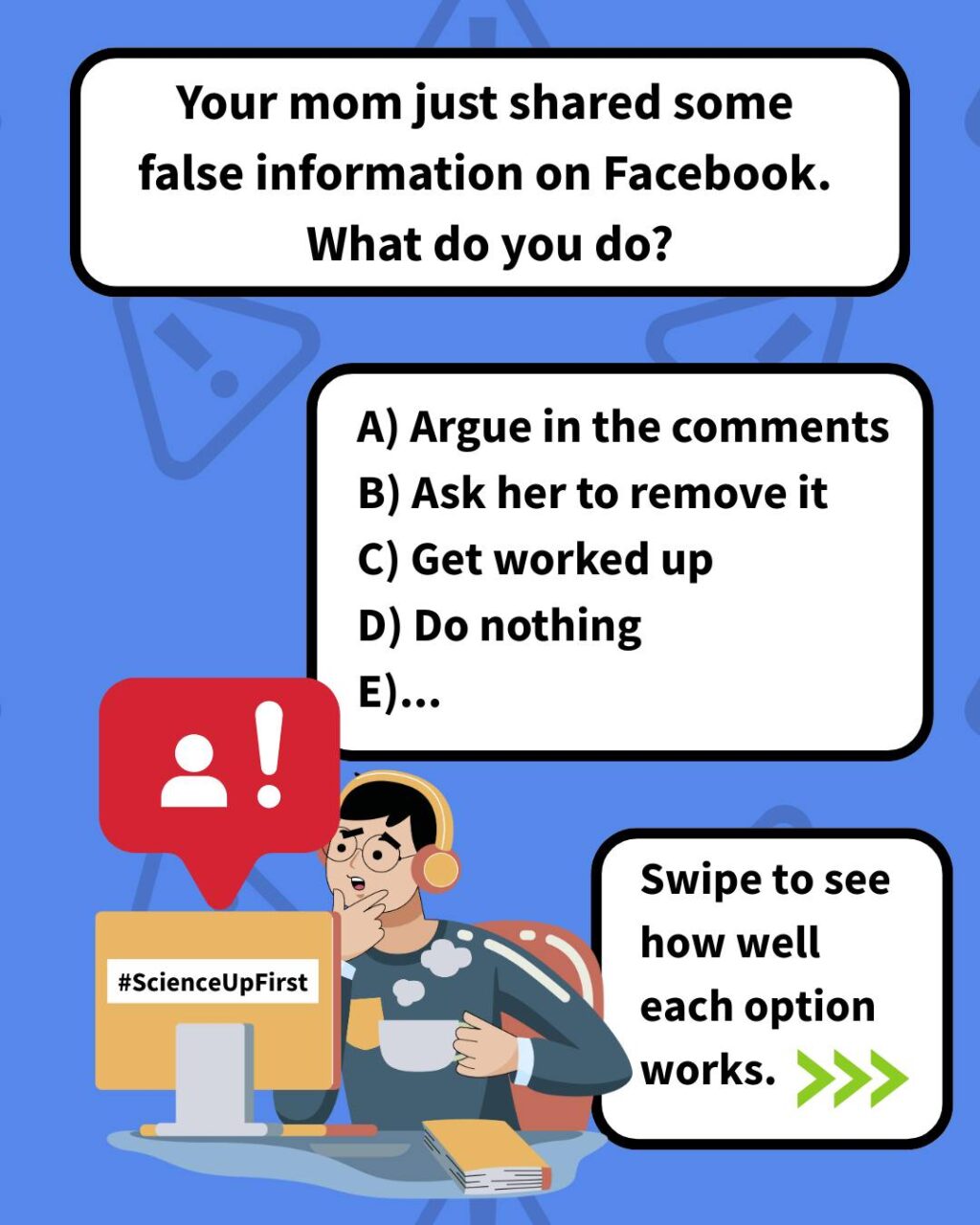
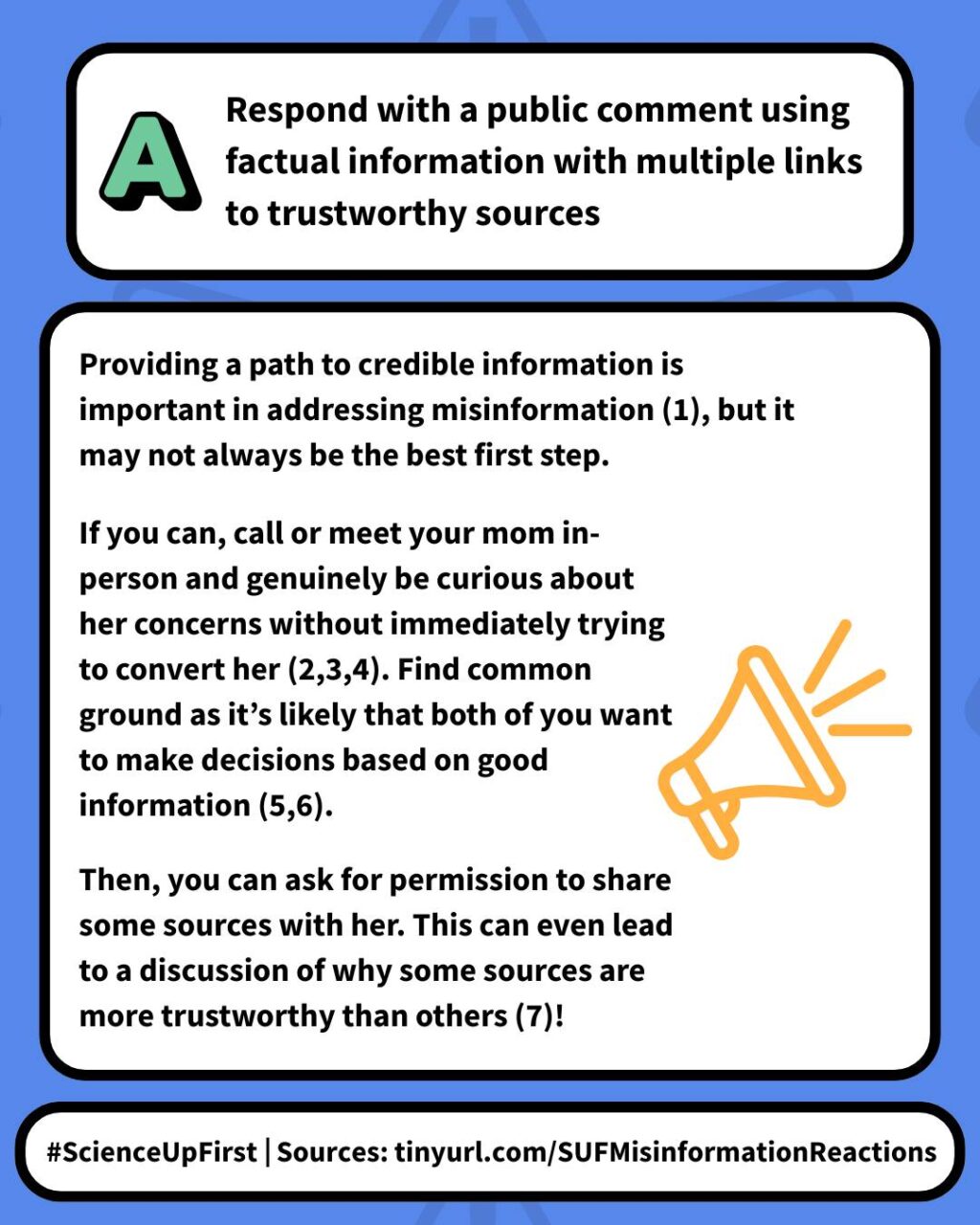
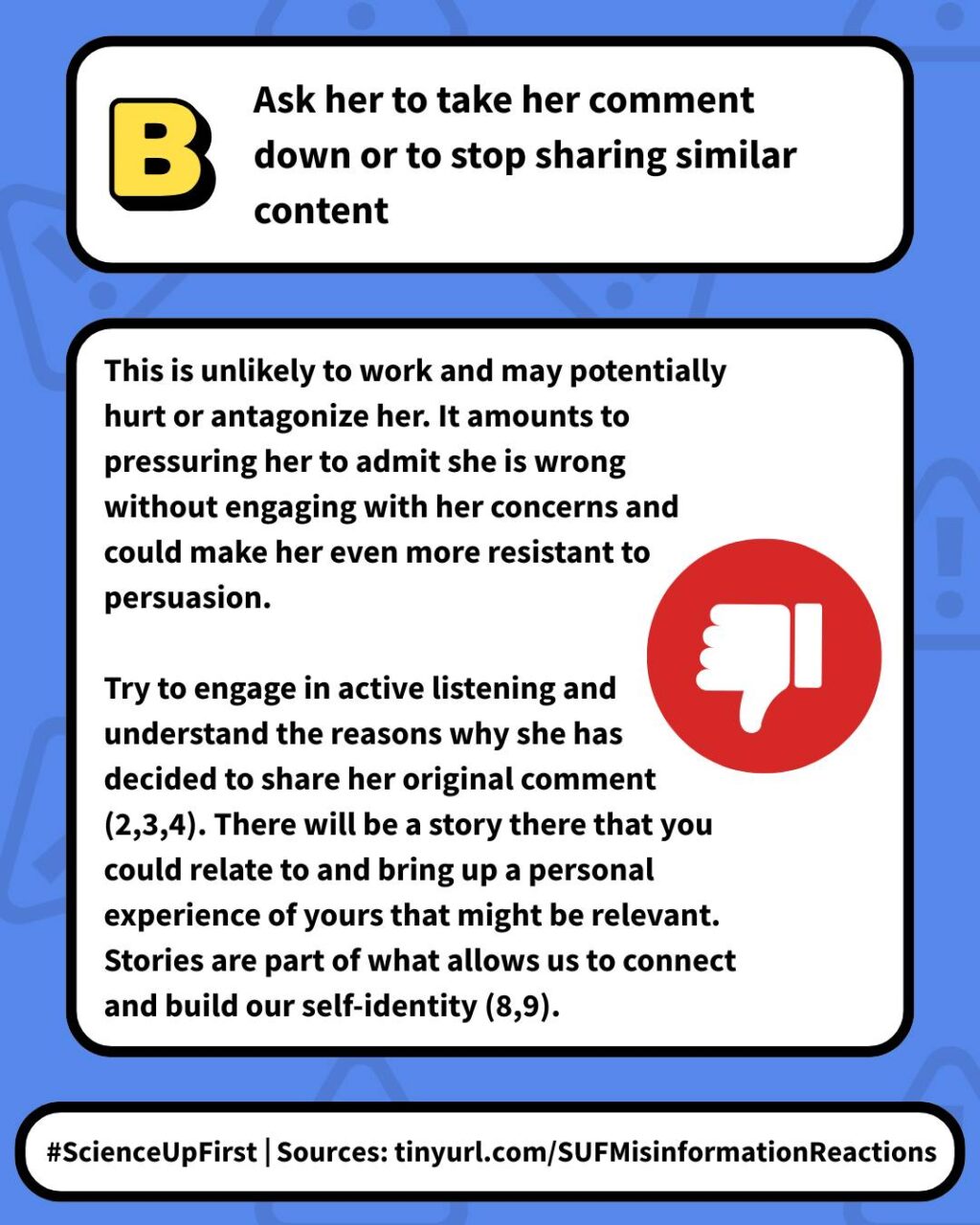
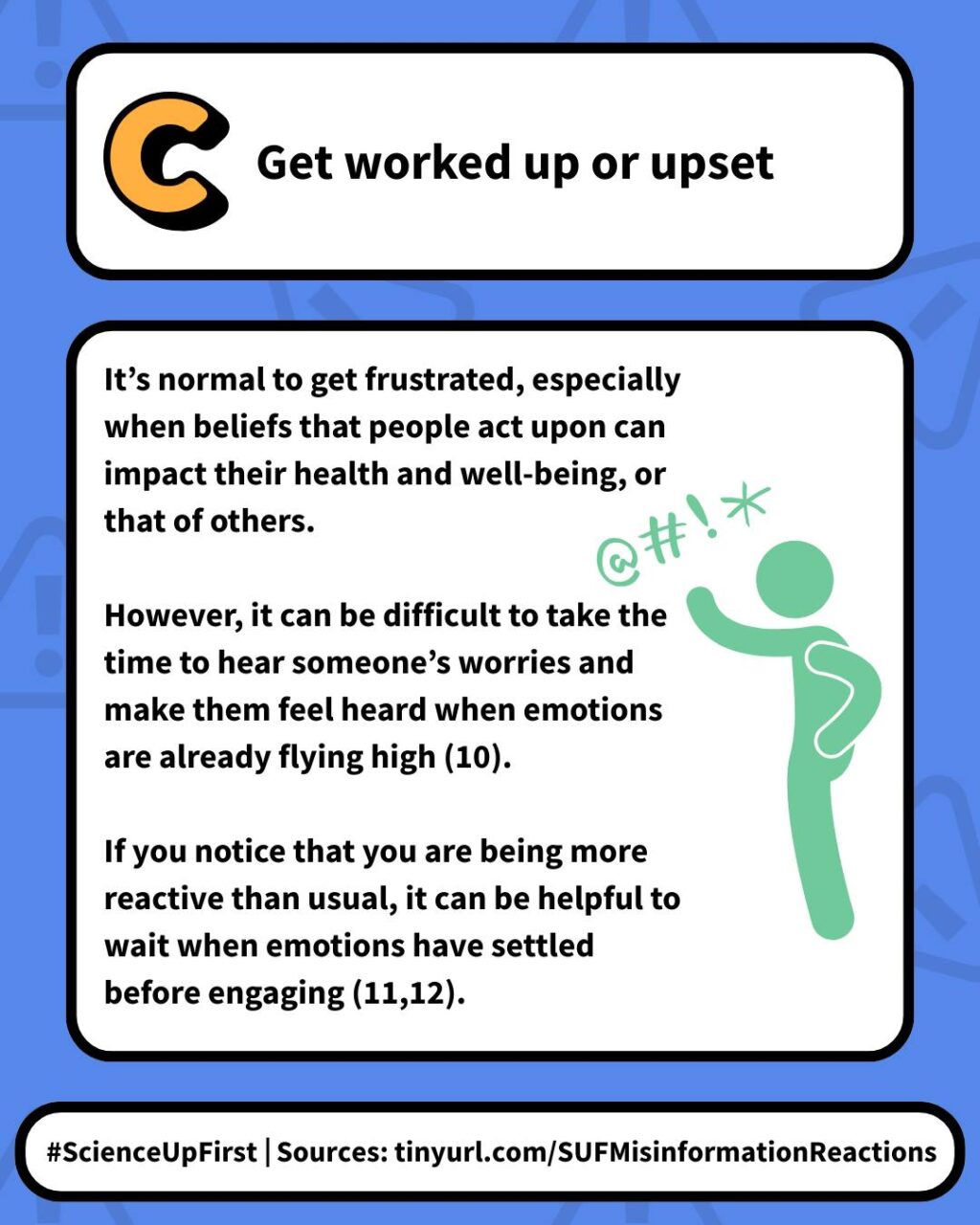
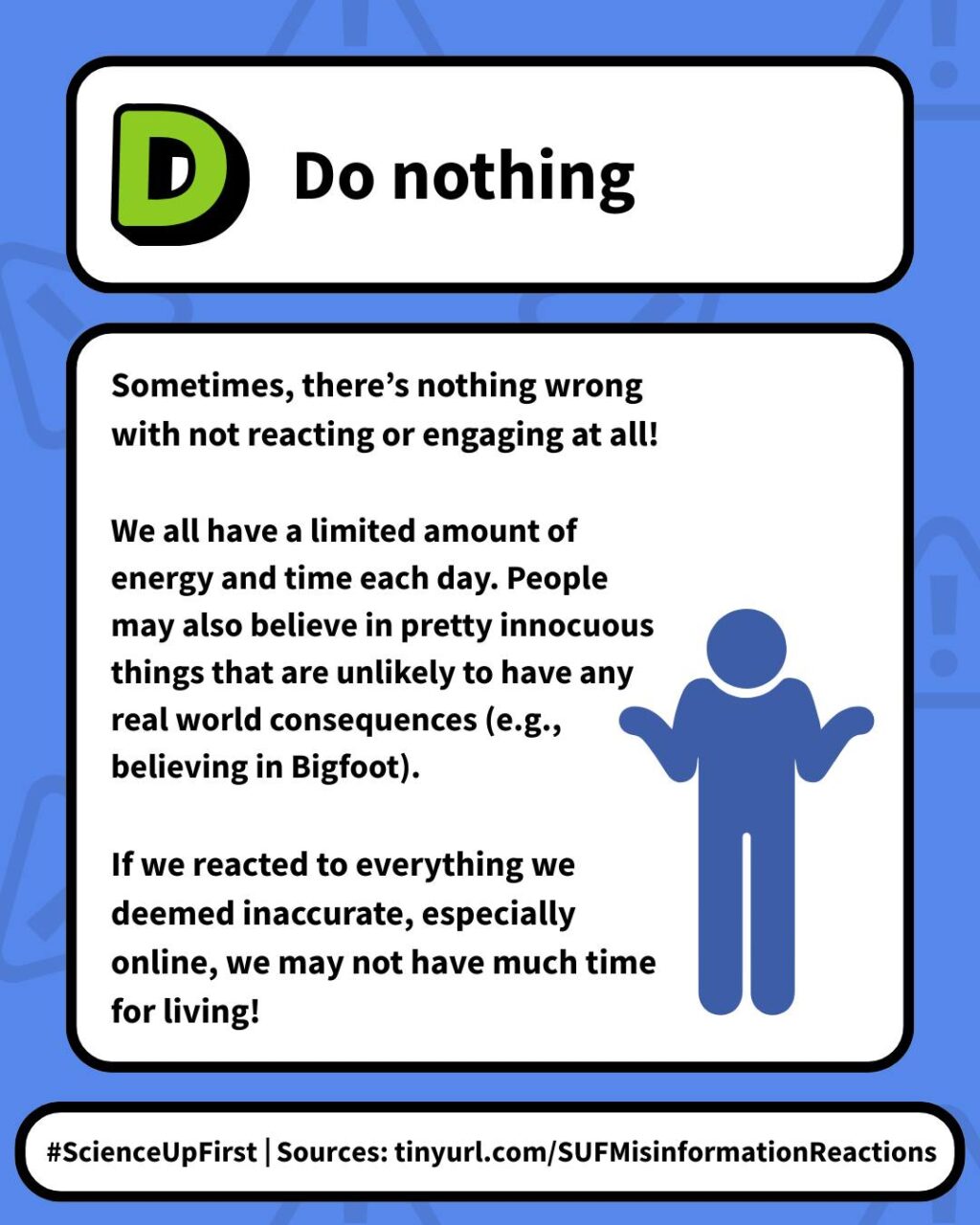
You’re browsing social media absentmindedly (is there any other way?) and you notice your mom sharing what you believe is obvious misinformation. Maybe it’s an AI-generated video; maybe it’s a long debunked myth about vaccines; maybe it’s long-withheld information about Bigfoot.
You also know that you will be seeing your mom tomorrow for dinner and it will inevitably come up.
Is it worth addressing? Is it likely to sour your dinner with her? Is there a risk of spreading harmful misinformation? These are all relevant questions that many of us have to deal with. Some ways of dealing with these situations are more productive than others (13).
And you? How have you reacted to similar situations?
Sources- Identifying Credible Sources of Health Information in Social Media: Principles and Attributes | National Academy of Medicine Perspectives | July 16, 2021
- Active Listening | StatPearls – NCBI Bookshelf | September 13, 2023
- The Role of “Active Listening” in Informal Helping Conversations: Impact on Perceptions of Listener Helpfulness, Sensitivity, and Supportiveness and Discloser Emotional Improvement | Western Journal of Communication | January 3, 2015
- Conversational receptiveness: Improving engagement with opposing views | Organizational Behavior and Human Decision Processes | September 2020
- The language of cooperation: shared intentionality drives variation in helping as a function of group membership | Proceedings of the Royal Society B: Biological Sciences | September 20, 2017
- A Shared Intentionality Account of Uniquely Human Social Bonding | Perspectives on Psychological Science | October 26, 2023
- Hierarchy of Evidence – Evidence-Based Practice in Health – UC Library Guides at University of Canberra | June 17, 2025
- How can we use the ‘science of stories’ to produce persuasive scientific stories? | Humanities and Social Sciences Communications | December 22, 2017
- Narrative Persuasion and Storytelling as Climate Communication Strategies | Oxford Research Encyclopedia of Climate Science | August 22, 2017
- Family Communication Patterns and Difficult Family Conversations | Journal of Applied Communications Research | April 2, 2013
- How to Control Your Emotions During a Difficult Conversation | Harvard Business Review | December 1, 2017
- How to Stabilize Emotions in Difficult Conversations | Psychology Today Canada | November 1, 2022
- Our tips for conversations on polarizing topics | ScienceUpFirst | February 23, 2024
Share our original Bluesky Post!
@bsky.appYou're scrolling and… your mom shared a questionable video. Tomorrow, family dinner, what do you do? – Is it worth responding? – Will it ruin dinner? – Is it harmful to say nothing? We've all been there, but which way is best? scienceupfirst.com/misinformati… #ScienceUpFirst
— ScienceUpFirst (@scienceupfirst.bsky.social) July 15, 2025 at 11:34 AM
[image or embed]View our original Instagram Post!
-
Identifying Misinformation About Unproven Cancer Treatments on Social Media Using User-Friendly Linguistic Characteristics: Content Analysis
New methods exist for identifying cancer misinformation online by building misinformation-detecting algorithms that can identify core linguistic characteristics. These characteristics can include for example, certain hashtags, expressions using absolutes, and specific URLS. Combined with manual labeling, these algorithms can help aid detection efforts.
-
Human Reviewers’ Ability to Differentiate Human-Authored or Artificial Intelligence–Generated Medical Manuscripts: A Randomized Survey Study
Medical manuscripts generated by AI are perceived by humans to be almost indistinguishable from human generated ones. There is heightened concern around the potential for fake research to be created and shared.
-
Survivorshop Bias
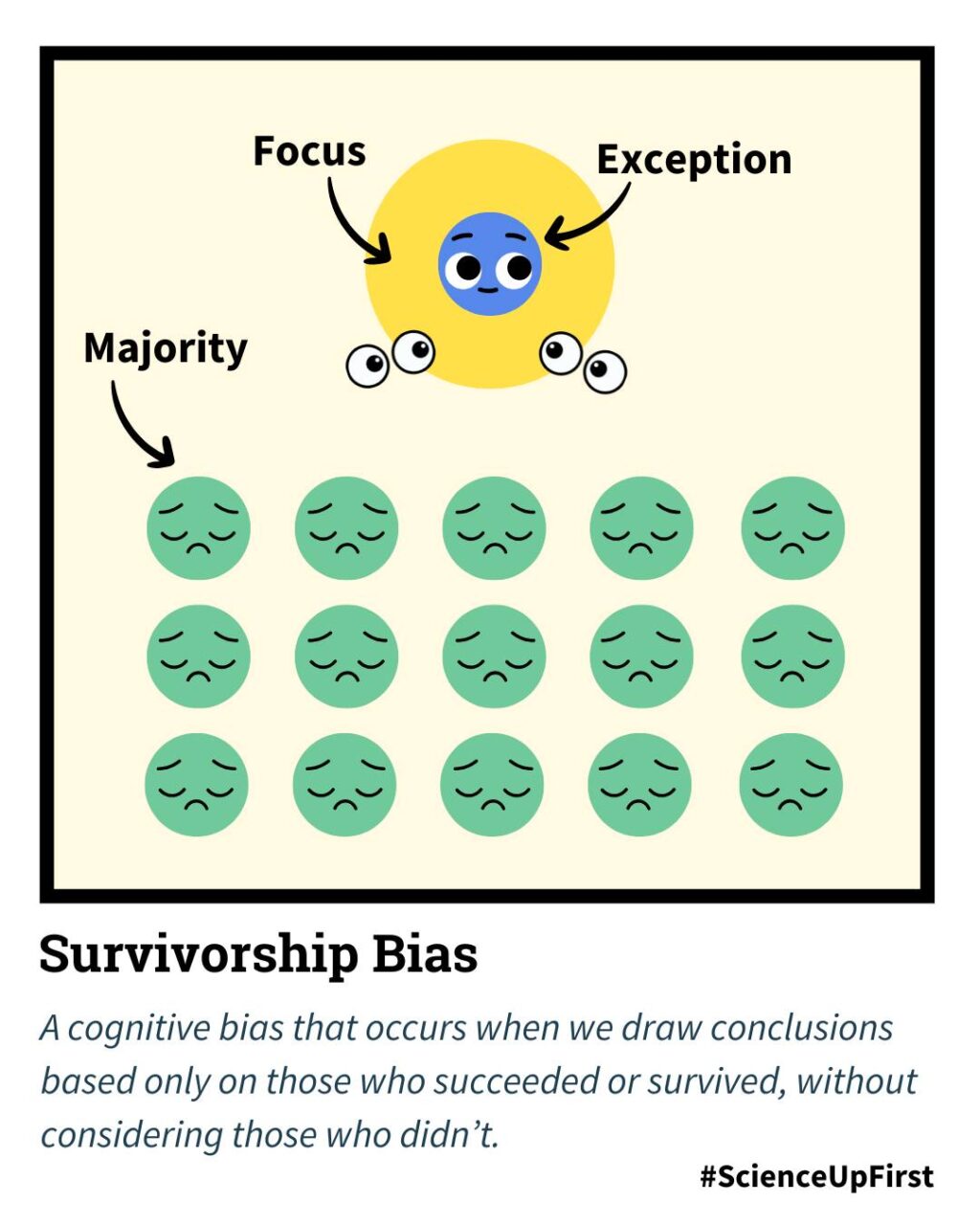
Survivorship bias is a cognitive bias that happens when we focus – sometimes unintentionally – only on the people or things that “made it through” a situation, and ignore those that didn’t. When that happens, we get a distorted picture of reality (1).
This bias shows up in many ways. Someone might say, “My great-uncle smoked his whole life and lived to 90, so smoking can’t be that bad.” But the people who smoked and died young aren’t here to tell their story – their stories are missing. The same thing happens when people say, “I didn’t get the vaccine and I was fine,” without considering the many who weren’t so lucky (1,2,3).
Survivorship bias can also affect research (1,3). For example, a study suggested that older adults who drank more wine lived longer than those who drank less or not at all – implying that drinking wine helps people live longer (4). But this can be misleading. Many people who were harmed by heavy drinking may have already died before the study started, so they weren’t counted. Others might have quit drinking because of health problems and ended up in the “non-drinker” group, making the drinkers look healthier by comparison (3,4,5).
Another great example comes from how the American military decided where to reinforce WWII airplanes. If they had only considered the bullet holes on the planes that returned, they would have missed a crucial piece of insight – those areas weren’t fatal. The real areas that needed reinforcement, were the places where bullets hit and caused planes not to return (6).
When we only look at people who completed a treatment or succeeded in a program, we miss those who dropped out or didn’t make it. That can lead us to believe something works better than it actually does (1,7,8,9).
This matters because it can lead us to make decisions based on incomplete data (1). Looking at both successes and setbacks helps us see the full picture – and make better choices.
Sources- Why do we misjudge groups by only looking at specific group members? | The Decision Lab | 2024
- Never take health tips from world’s oldest people, say scientists | The Guardian | 24 August 2024
- Nutrition and venous thrombosis: An exercise in thinking about survivor bias | Research and Practice in Thrombosis and Haemostasis | January 2019
- Wine Consumption and 20-Year Mortality Among Late-Life Moderate Drinkers | Journal of Studies on Alcohol and Drugs | January 2012
- Do “Moderate” Drinkers Have Reduced Mortality Risk? A Systematic Review and Meta-Analysis of Alcohol Consumption and All-Cause Mortality | Journal of Studies on Alcohol and Drugs | 16 March 2016
- Survivorship Bias: The Mathematician Who Helped Win WWII | Cantor’s Paradise | 29 October 2020
- Uncovering survivorship bias in longitudinal mental health surveys during the COVID-19 pandemic | Epidemiology and Psychiatric Sciences | 26 May 2021
- The impact of survivorship bias in glioblastoma research | Critical Reviews in Oncology/Hematology | August 2023
- Survivor bias and risk assessment | European Respiratory Journal | 2012
Share our original Bluesky Post!
"I smoked all my life and I'm fine" doesn't erase the stories of those who are no longer here to testify. That's survivorship bias. It distorts our view of reality—and can lead to poor decisions. 👉https://scienceupfirst.com/misinformation-101/survivorshop-bias/ #ScienceUpFirst
— ScienceUpFirst (@scienceupfirst.bsky.social) June 19, 2025 at 12:19 PM
[image or embed]View our original Instagram Post!
-
Misinformation Research Matters!
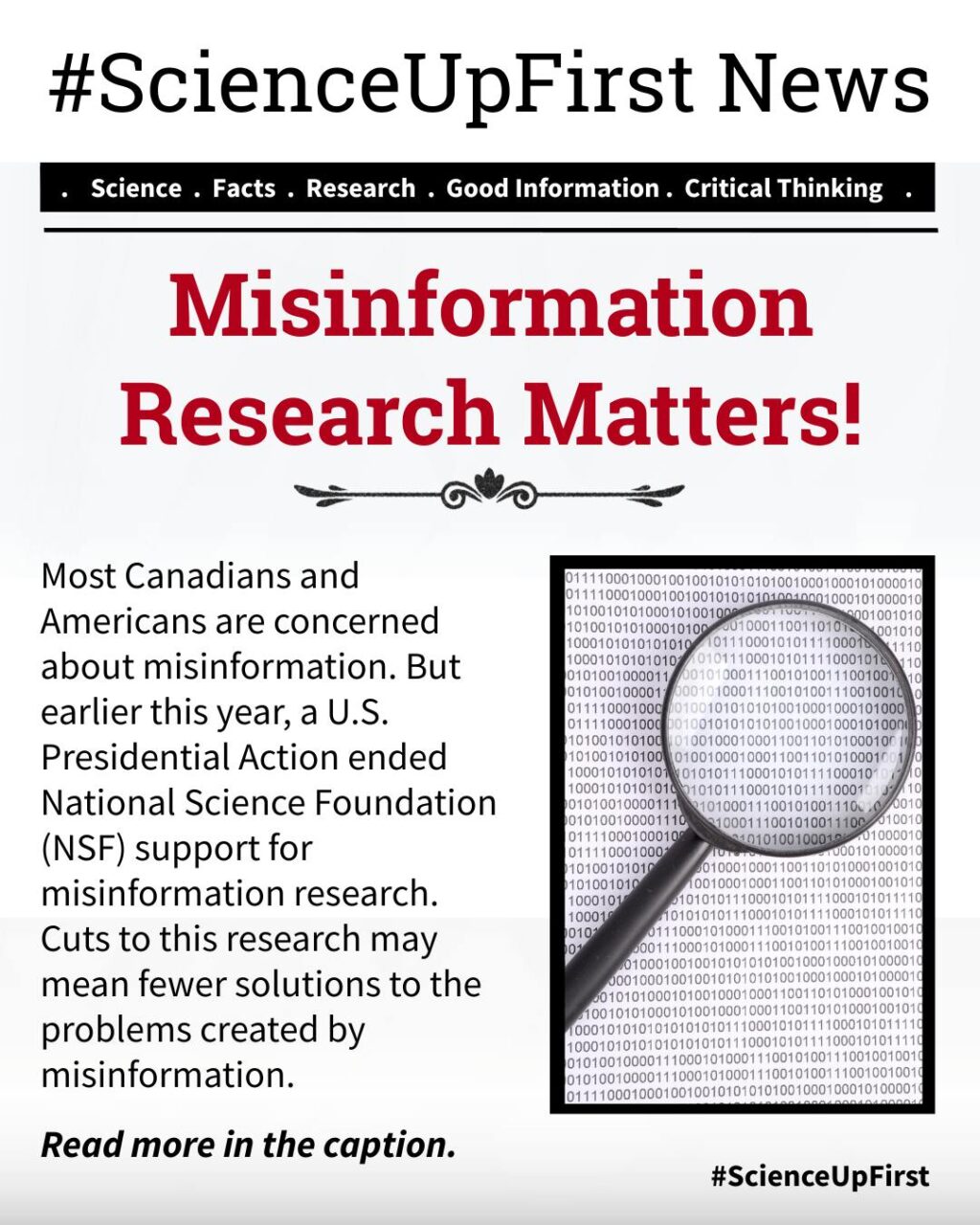
Most Canadians and Americans are concerned about misinformation (1,2). But earlier this year, a U.S. Presidential Action ended National Science Foundation (NSF) support for misinformation research, claiming that it interferes with free speech (3-6).
This research is important, and restricting it can cause harm.
Individually, misinformation can cause loss of trust, confusion, stress, and lead to physical harm (7-17). For society, misinformation can create economic and political distress, prevent effective emergency responses after crises, threaten public health, and create or worsen violence and discrimination (7,8,12,15-25).
Misinformation has broad impact, and is studied by many disciplines including computer science, economics, politics, law, and social science (16,26). This research helps us understand how false information spreads, how it can harm us, and what we can do about it (16,26,27). Cuts to this research may mean fewer solutions to the problems created by misinformation.
The statements from the White House and the NSF claim that misinformation research hurts free speech (3,4). This is not true. Many evidence-based responses to misinformation involve empowering people to navigate the internet better without removing any posts (17,28,29). Moderating false information online – which is supported by most Americans, though support has declined slightly over the past few years – is only one tool in the toolbelt (30-32).
Sources- Concerns with misinformation online, 2023 | Statistics Canada | 20 December 2023
- The majority of Americans are concerned about misinformation in the news, according to new research | BBC Media | 29 October 2024
- RESTORING FREEDOM OF SPEECH AND ENDING FEDERAL CENSORSHIP | The White House | 20 January 2025
- Updates on NSF Priorities | U.S. National Science Foundation | 9 June 2025
- Trump Administration Cancels Scores of Grants to Study Online Misinformation | The New York Times | 15 May 2025
- Trump science cuts target bird feeder research, AI literacy work and more | AP News | 24 April 2025
- Infodemics and health misinformation: a systematic review of reviews | Bulletin of the World Health Organization | 30 June 2022
- The impact of fake news on social media and its influence on health during the COVID-19 pandemic: a systematic review | Zeitschrift fur Gesundheitswissenschaften [Journal of Public Health] | October 2021
- Fake News and Alternative Facts: Finding Accurate News: Why is Fake News Harmful? | ACC Library Services | 13 June 2025
- Nigeria records chloroquine poisoning after Trump endorses it for coronavirus treatment | CNN | 23 March 2020
- Prevalence of Health Misinformation on Social Media: Systematic Review | Journal of Medical Internet Research | 20 January 2021
- The disaster of misinformation: a review of research in social media | International Journal of Data Science and Analytics | 15 February 2022
- Dealing with Propaganda, misinformation and fake news – intro | Council of Europe – Democratic Schools for All | 2019
- The Landscape of Disinformation on Health Crisis Communication During the COVID-19 Pandemic in Ukraine: Hybrid Warfare Tactics, Fake Media News and Review of Evidence | JCOM – Journal of Science Communication | 8 September 2021
- The causes, impacts and countermeasures of COVID-19 “Infodemic”: A systematic review using narrative synthesis | Information Processing and Management | 4 August 2021
- (Why) Is Misinformation a Problem? | Perspectives on Psychological Science | 16 February 2023
- How to Address Misinformation—Without Censorship | TIME | 6 May 2025
- PROPAGANDA AND CONFLICT: EVIDENCE FROM THE RWANDAN GENOCIDE | The Quarterly Journal of Economics | November 2014
- Another Hurdle in Recovery From Helene: Misinformation Is Getting in the Way | The New York Times | 6 October 2024
- COVID-19: time to flatten the infodemic curve | Clinical and Experimental Medicine | 8 January 2021
- Facilitators and Barriers of COVID-19 Vaccine Promotion on Social Media in the United States: A Systematic Review | Healthcare | 8 February 2022
- What factors promote vaccine hesitancy or acceptance during pandemics? A systematic review and thematic analysis | Health Promotion International | 17 February 2022
- Misinformation of COVID-19 vaccines and vaccine hesitancy | Nature | 11 August 2022
- Parental Perspectives on Immunizations: Impact of the COVID-19 Pandemic on Childhood Vaccine Hesitancy | Journal of Community Health | 23 July 2021
- COVID-19 pandemic fuels largest continued backslide in vaccinations in three decades | World Health Organization | 15 July 2022
- A survey of expert views on misinformation: Definitions, determinants, solutions, and future of the field | Harvard Kennedy School Misinformation Review | 27 July 2023
- Liars know they are lying: differentiating disinformation from disagreement | Humanities and Social Sciences Communications | 31 July 2024
- Evidence-based strategies to combat scientific misinformation | Nature Climate Change | 14 January 2019
- Countering Disinformation Effectively: An Evidence-Based Policy Guide | Carnegie Endowment for International Peace | 31 January 2024
- Across parties, Americans accept removal of false health info by social media companies, survey says | Boston University College of Communication | 25 January 2025
- Support dips for U.S. government, tech companies restricting false or violent online content | Pew Research Center | 14 April 2025
- Online content moderation: What works, and what people want | MIT Management Sloan School | 31 March 2025
Share our original Bluesky Post!
Research on misinformation is vital and recent funding cuts in the U.S. have put everyone at risk. Understanding misinformation = better protection against it. 👉 scienceupfirst.com/misinformati… #ScienceUpFirst
— ScienceUpFirst (@scienceupfirst.bsky.social) June 18, 2025 at 9:35 AM
[image or embed]View our original Instagram Post!
-
AI has a search citation problem
Analysis on different AI search engines (Chatbots) finds an inability for the AI programs to decline answering questions when they are unsure of accuracy, thus creating false or ambiguous content in response to prompts. Links and citations found in the AI’s answers often contain false, inaccurate, or faulty links and citations.
-
You don’t always have to debunk a false claim to make a difference.
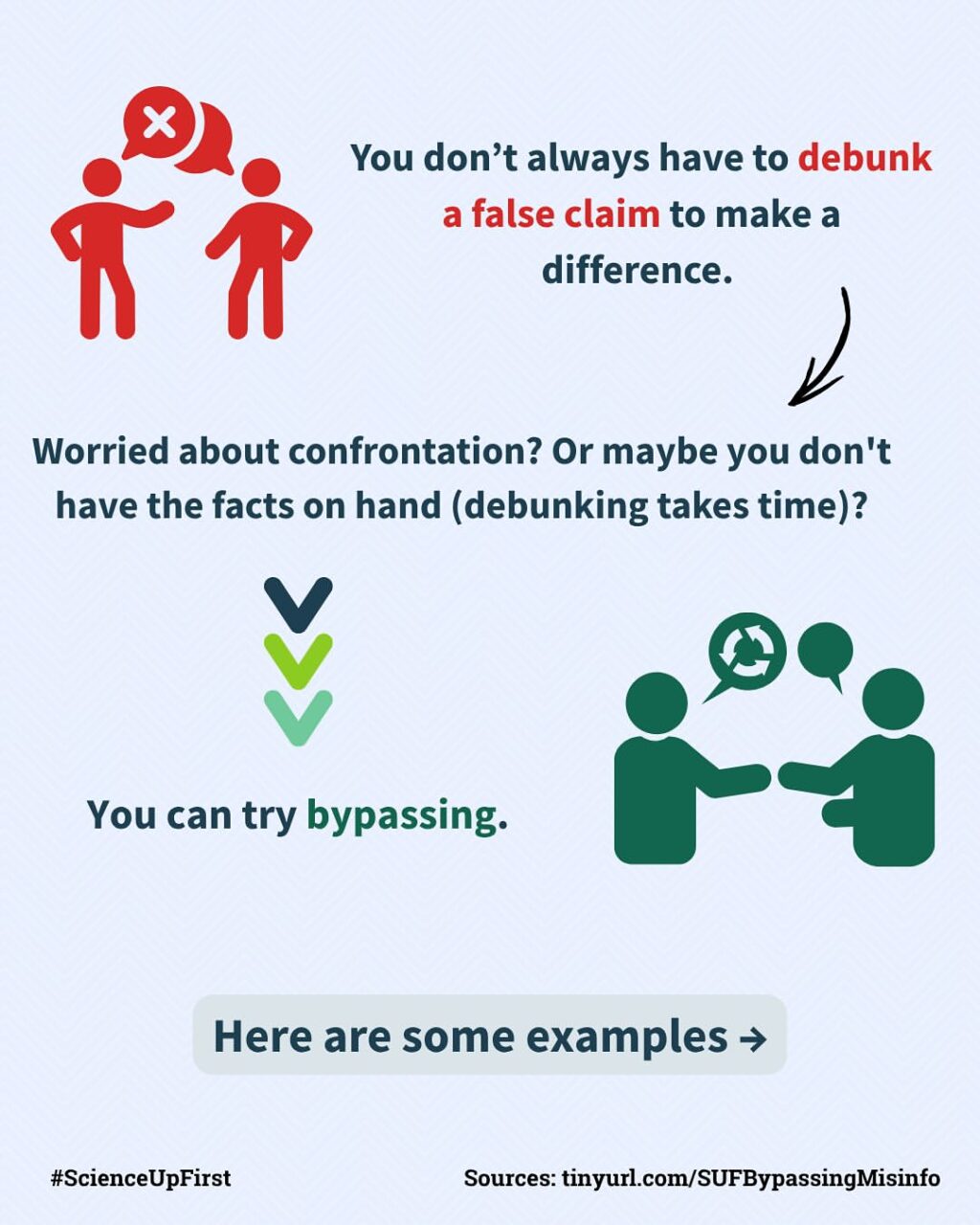
When someone believes something that’s inaccurate, our first instinct is often to correct it with facts. But that doesn’t always work like we hope it would.
Most people don’t like to be contradicted – especially if they care deeply about the topic. Plus, it’s not always easy to find the right words in the moment. You might know something sounds off, but might not have the right facts or numbers to explain why. Even experts sometimes need time to fact-check and respond clearly (1,2,3).
That’s where bypassing can come in handy.
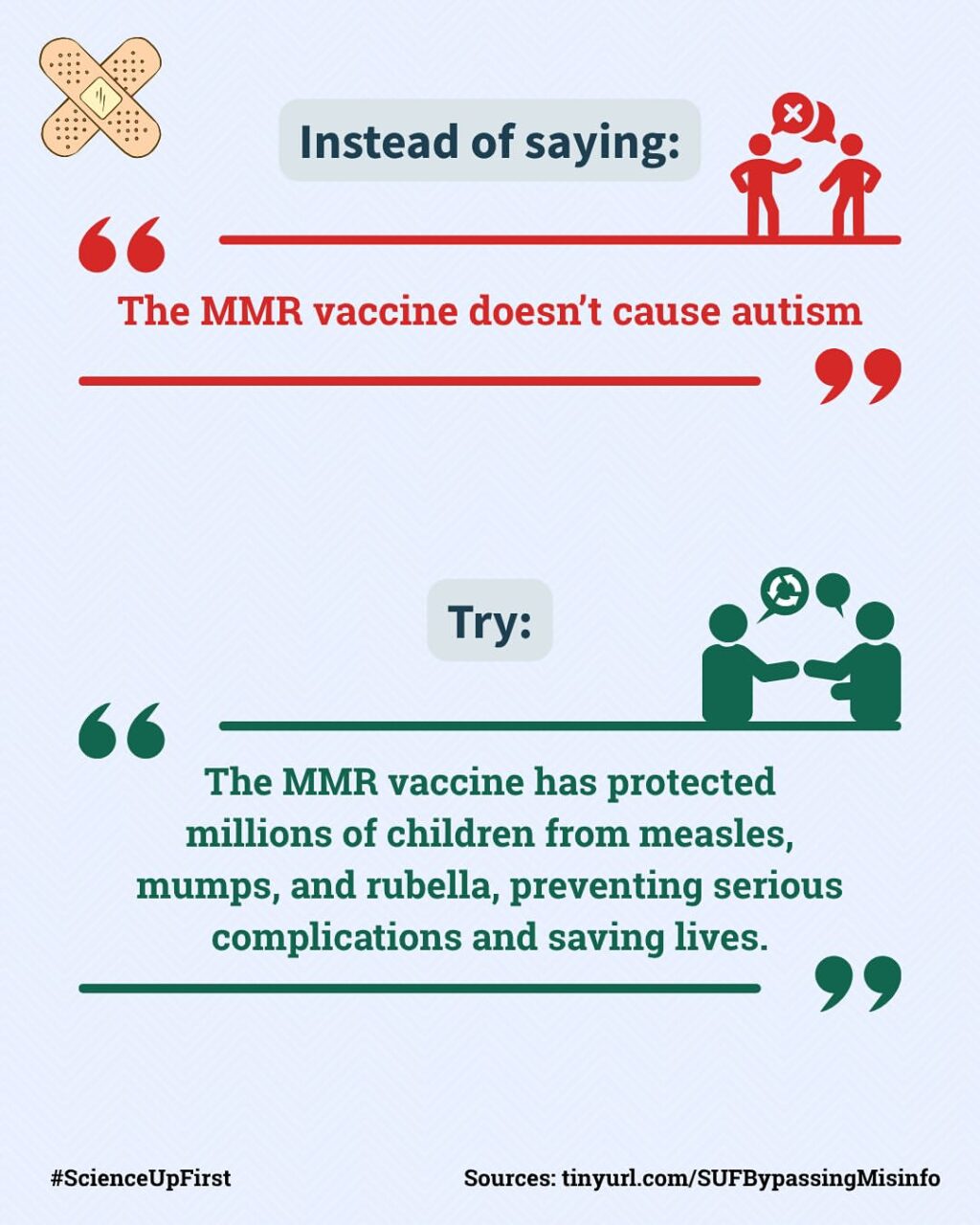
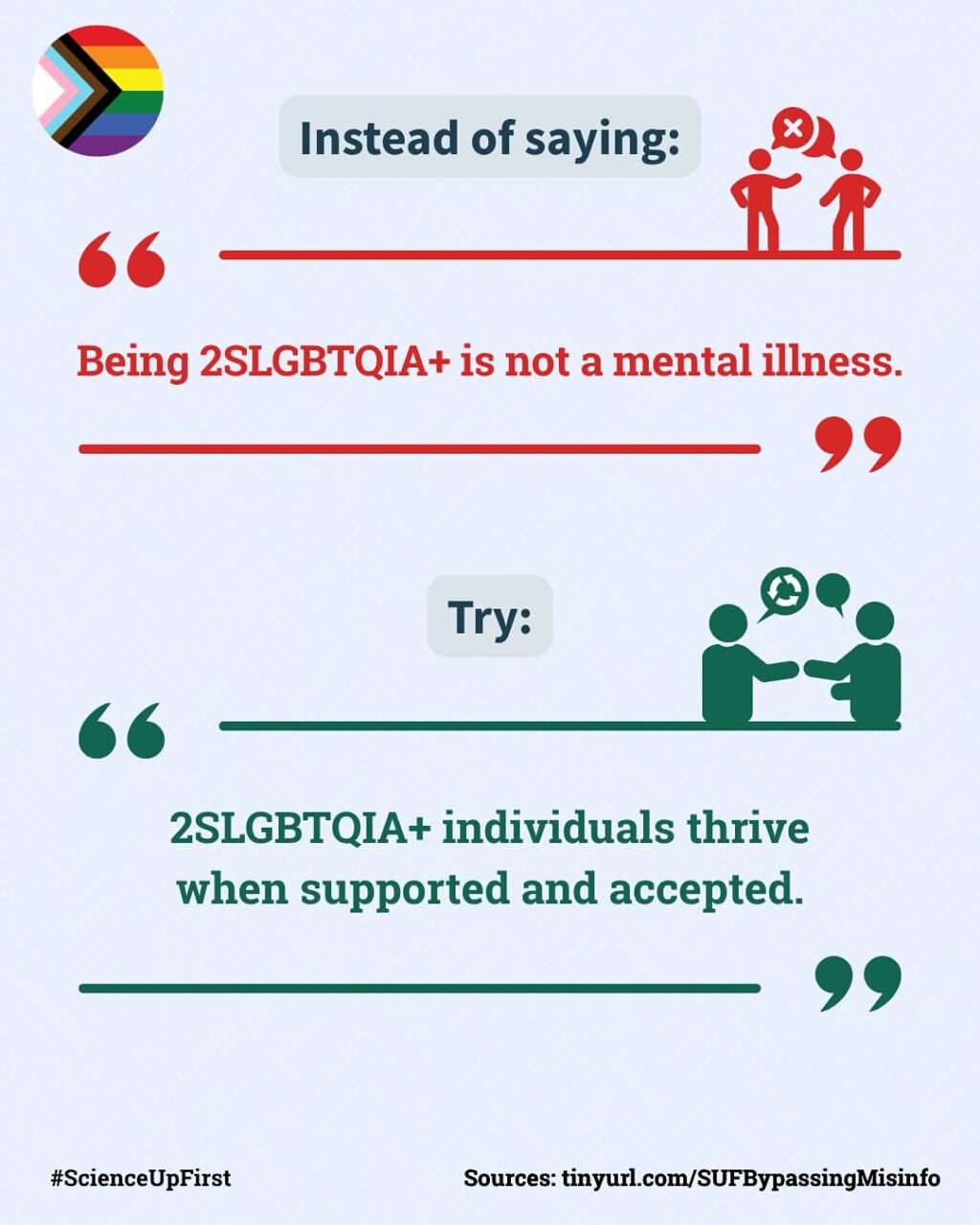
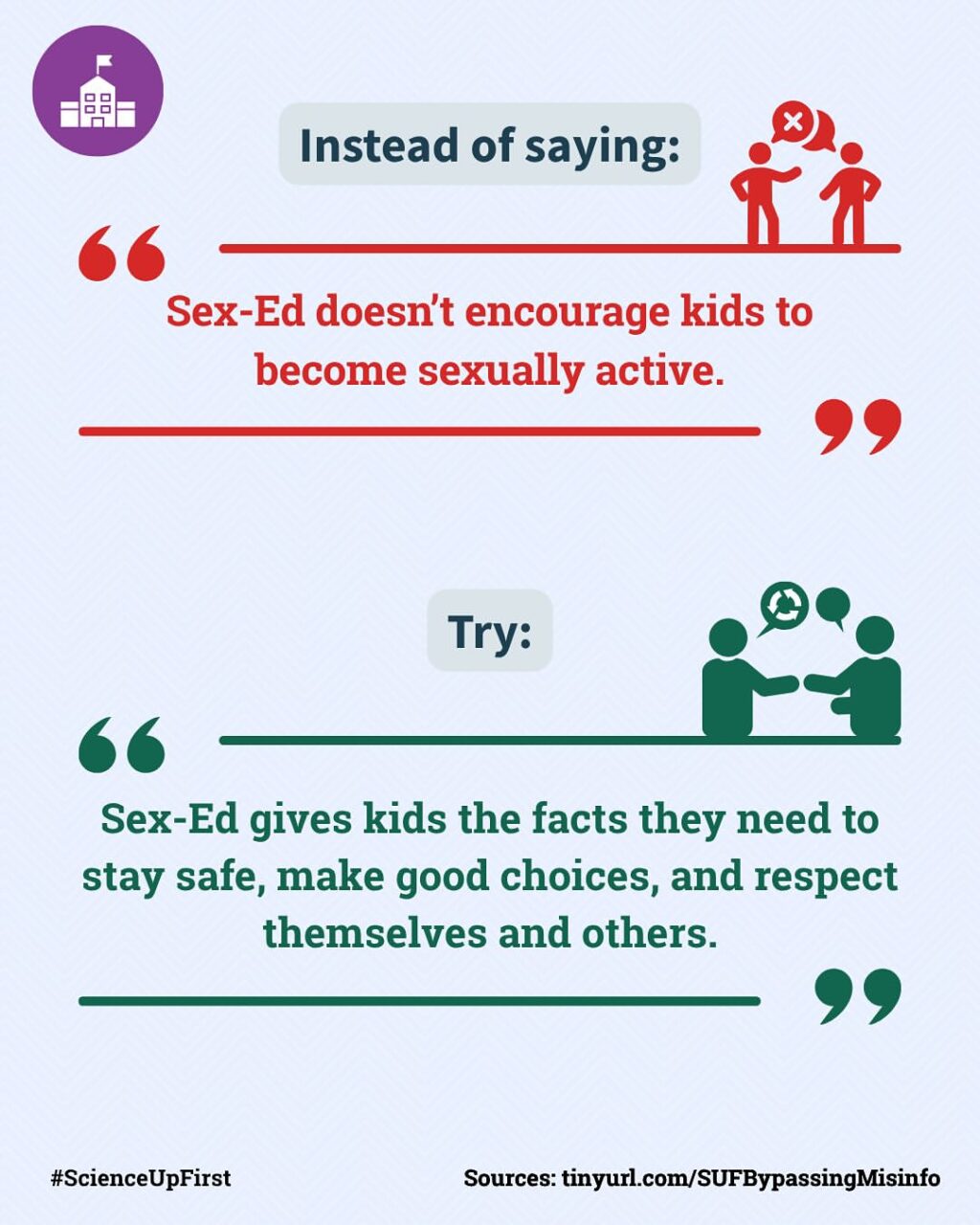
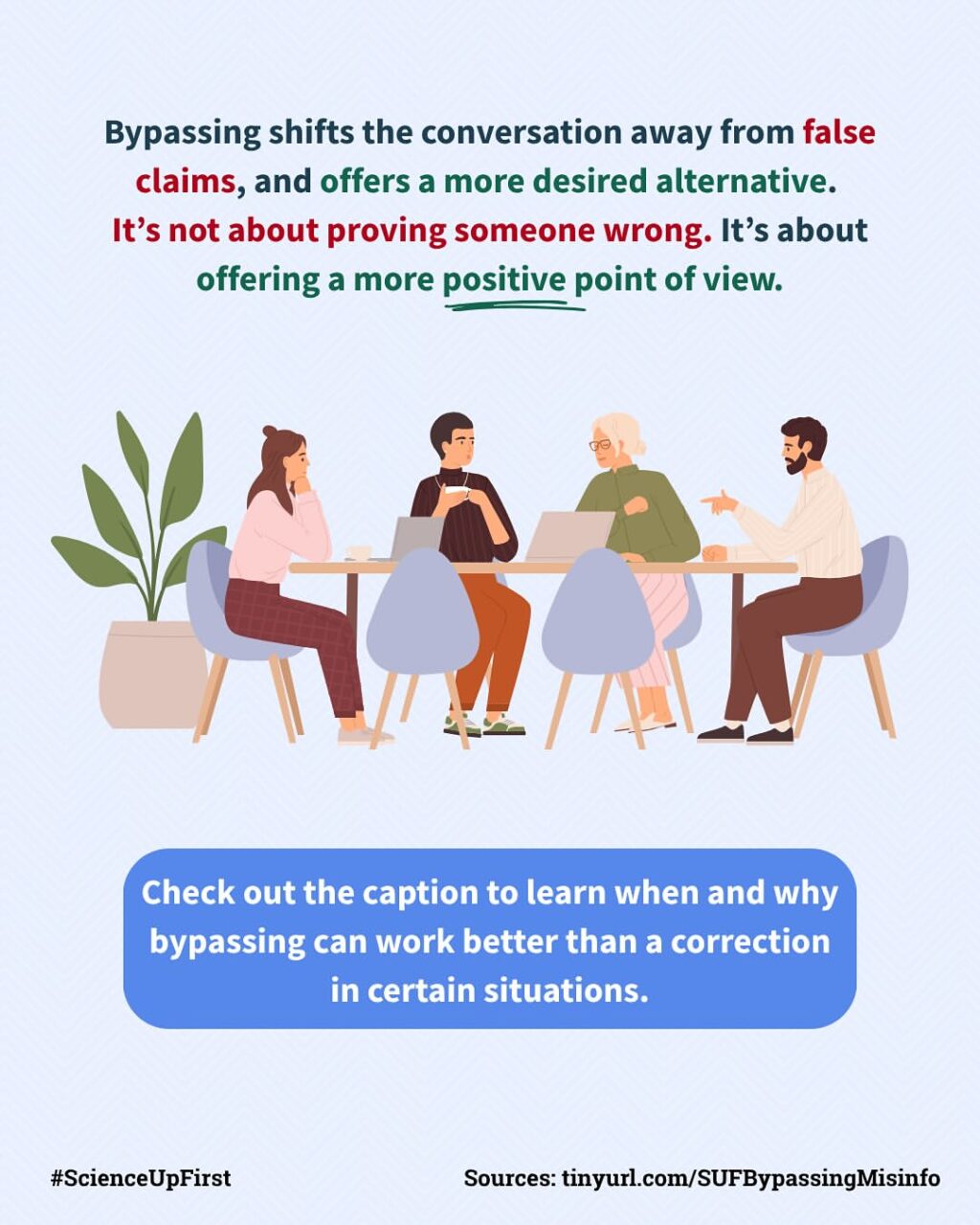
Instead of arguing about what’s false, bypassing shifts the focus from the false information toward a new, more positive alternative (1,2,4).
For example, instead of saying, “No, vaccines don’t cause X,” you might say: “Vaccines have saved millions of lives and reduced childhood mortality worldwide.” (5).
By bypassing misinformation, you avoid confrontation and shift the conversation toward something about the same topic that is both accurate and positive (2,3,4).
But, keep in mind that, bypassing doesn’t aim to correct specific misconceptions or deeply held beliefs. And in some cases – like public health emergencies – a direct correction might still be your best tool. So before jumping in, ask yourself: What’s my goal here? Is it to prove that “vaccines don’t cause harm”? Or to reinforce that “vaccines save lives”? While the first might call for a correction, the second might benefit from bypassing (2,4).
Bypassing (1,4):
• Avoids making people feel attacked.
• Redirects the conversation toward shared values or outcomes.
• Makes space for more than one idea to co-exist – you can hold concerns, while also recognizing the benefits of something.By bypassing misinformation you are not erasing a false belief, but you are helping build up an alternative one, and that shift in focus can make a big difference (1,2,4).
Sources- Bypassing Versus Correcting Misinformation: Efficacy and Fundamental Processes | Journal of Experimental Psychology: General | November 2024
- Instead of Refuting Misinformation Head-On, Try “Bypassing” It | Annenberg | April 2023
- Is ‘Bypassing’ a Better Way to Battle Misinformation? | Annenberg | November 2024
- Don’t waste time correcting misinformation. Instead, try the “bypassing technique” | Big Think | January 2025
- Global immunization efforts have saved at least 154 million lives over the past 50 years | World Health Organization | April 2024
Share our original Bluesky Post!
Instead of arguing about what's false, bypassing shifts the focus from the misinformation to a new, more positive alternative. Here are some examples and why bypassing can be useful 👉 scienceupfirst.com/misinformati… #ScienceUpFirst
— ScienceUpFirst (@scienceupfirst.bsky.social) May 30, 2025 at 3:50 PM
[image or embed]View our original Instagram Post!